Quick Summary
Thermostats for Residential HVAC Systems are not one-size-fits-all devices. In apartment buildings, villas, and residential retrofit projects, thermostat selection must align with system architecture, control logic, power supply, and installation conditions. This guide provides an application-based overview to help HVAC engineers and installers select the right thermostats for residential HVAC systems across different project scenarios. It also includes expert insights and practical recommendations for everyday installation and maintenance challenges.
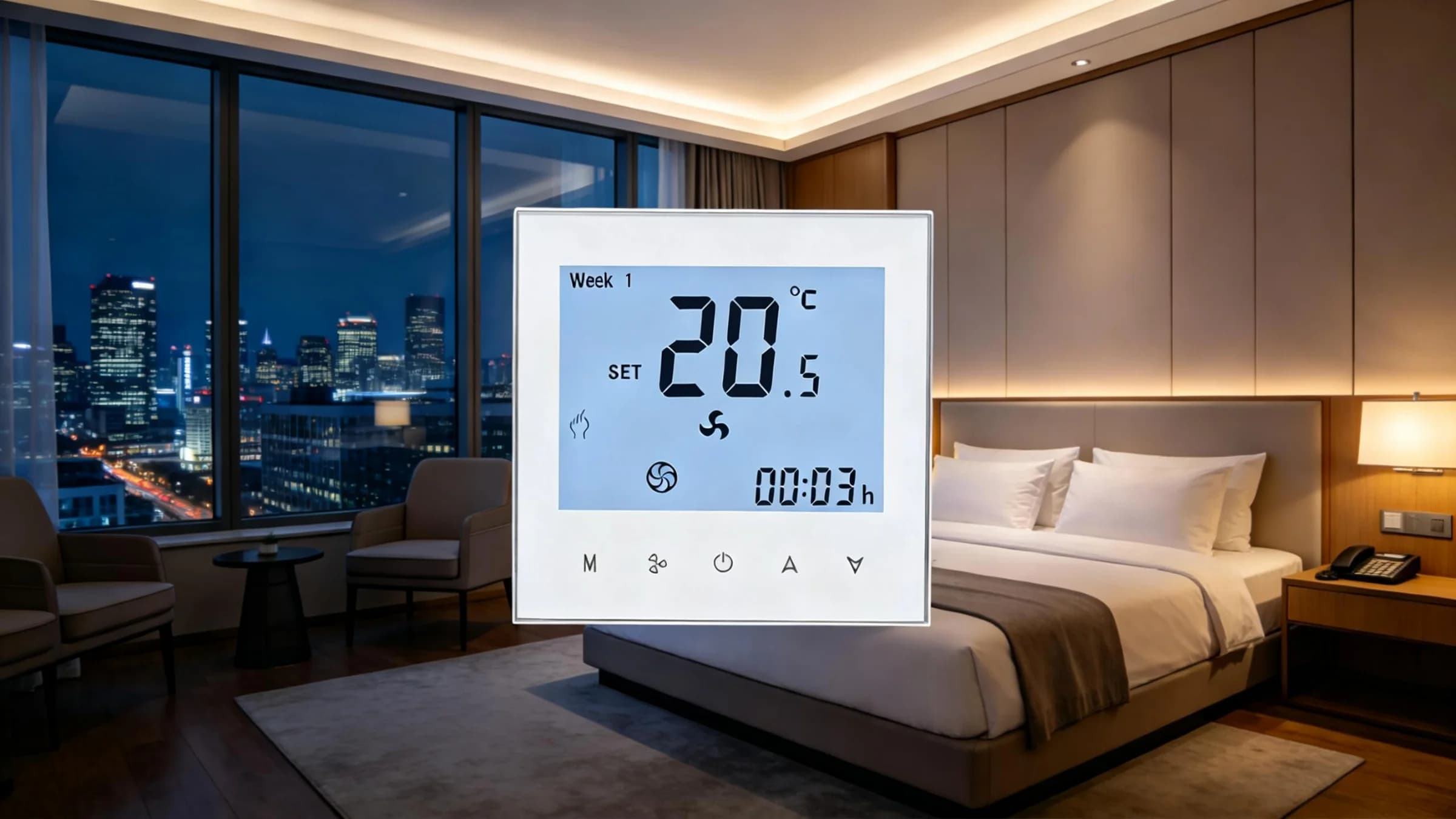
Thermostats for Residential HVAC Systems
Introduction
In residential HVAC projects, thermostats are often treated as small accessories. In reality, they play a critical role in system stability, comfort control, and long-term maintenance efficiency. A poorly selected thermostat can lead to temperature fluctuations, higher energy bills, and even system failure.
Choosing the right thermostats for residential HVAC systems is not about selecting a display style or adding smart features. It is about ensuring that the thermostat matches the HVAC system type, control method, electrical standards, and project requirements. This includes understanding fan coil configurations, heat pump logic, underfloor heating control, and multi-zone system integration.
This article serves as a central reference for thermostats for residential HVAC systems, helping professionals make informed, application-driven decisions rather than specification-only choices. It also emphasizes energy efficiency, reliability, and user comfort in real-life residential projects.
What Is a Residential HVAC Thermostat?
A residential HVAC thermostat is a room-level control device used to regulate heating, cooling, and ventilation equipment in homes and residential buildings. Using the right thermostats for residential HVAC systems ensures system efficiency and occupant comfort.
- Individual room or zone control
- Simple and reliable control logic
- Wall-mounted installation with intuitive user interface
- Compatibility with common residential HVAC systems
In residential projects, thermostats act as the interface between occupants and HVAC equipment. Incorrect selection can lead to discomfort, reduced system performance, and increased maintenance costs.
Typical Residential HVAC System Types
Fan Coil Unit (FCU) Systems
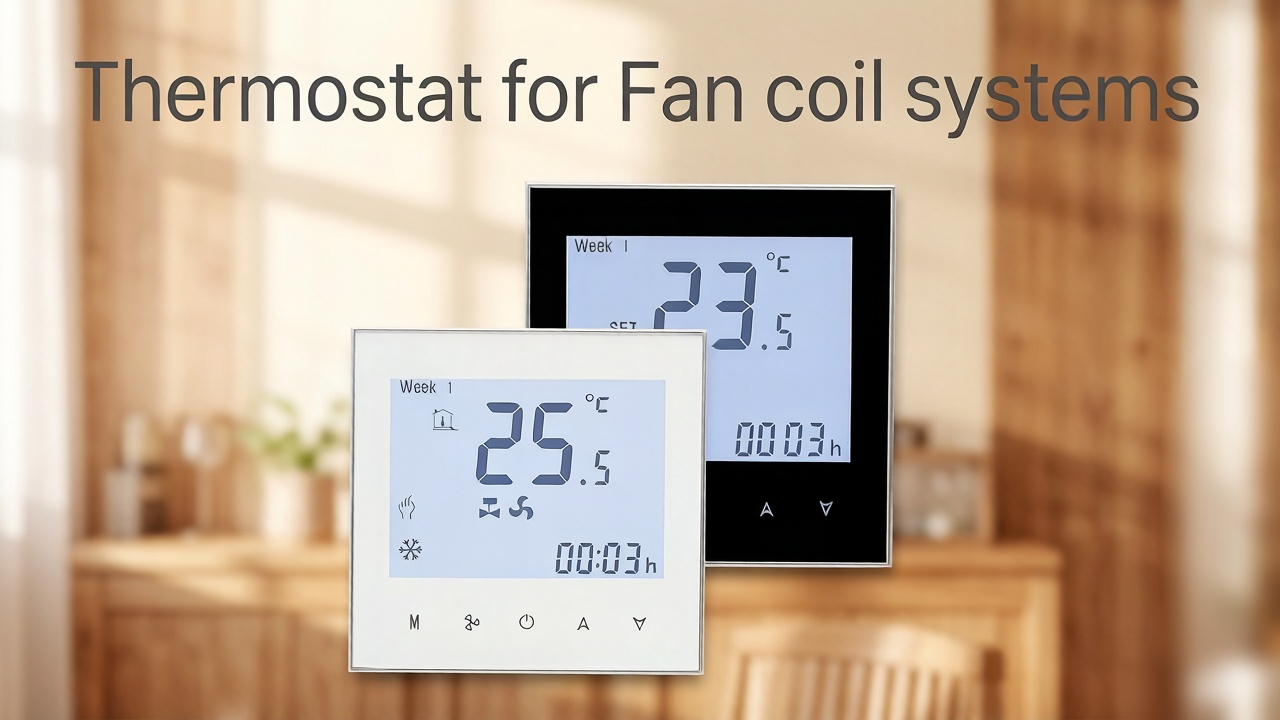
Fan coil systems are widely used in apartments, residential towers, and serviced residences. Selecting the correct thermostat involves:
- 2-pipe or 4-pipe configurations
- On/off or modulating valve control
- 3-speed or EC fan motors
Thermostats for residential HVAC systems used for FCU systems must support the correct fan control and valve output logic. Experts recommend testing thermostats in a sample room to ensure proper fan and valve coordination before large-scale installation.
Heat Pump Systems
Residential heat pump systems are increasingly popular due to energy efficiency standards and environmental considerations. Key points for thermostat selection include:
- Heating and cooling mode switching
- System interlock logic
- Stable temperature regulation under varying loads
Thermostats for residential HVAC systems applied to heat pump systems must handle specific mode switching sequences. Experts advise verifying manufacturer documentation to avoid inefficiency or compressor short-cycling.
Underfloor Heating Systems
Underfloor heating provides consistent and comfortable warmth, commonly used in villas and high-end projects. Selection considerations:
- Floor temperature sensing
- Safety temperature limits to prevent overheating
- Precise temperature control with minimal fluctuations
Dedicated thermostats for residential HVAC systems are essential here. General-purpose room thermostats cannot protect the floor or provide accurate heating schedules.
Multi-Zone Residential Systems
Large apartments or villas often require independent temperature control for multiple rooms or zones. Important factors include:
- Zoning logic and control hierarchy
- Wiring complexity and integration with main panels
- System scalability for future upgrades
Proper selection of thermostats for residential HVAC systems ensures comfort, energy efficiency, and simplified maintenance. Multi-zone controllers or multiple thermostats may be used depending on project size.
Key Factors in Residential HVAC Thermostat Selection
System Compatibility
The thermostat must match the HVAC system type, including:
- FCU, heat pump, or electric heating
- Valve type (on/off or 0–10V)
- Fan speed control requirements
Using an incompatible thermostat can cause continuous fan operation, valve failures, or heating/cooling mismanagement, resulting in higher energy costs and occupant complaints.
Power Supply Requirements
Residential projects use different power standards depending on region and system design:
- 100–240 VAC for main residential circuits
- 24 VAC for low-voltage HVAC systems
Verifying thermostat power supply is crucial. Some digital thermostats fail to operate or may damage the HVAC system if connected to the wrong voltage.
Control Functions
- Heating and cooling mode selection
- Fan speed control
- Temperature setpoint adjustment
- Optional scheduling, setback, or smart connectivity
Selecting thermostats for residential HVAC systems based on real project requirements—not marketing hype—ensures long-term reliability and user satisfaction.
Installation and Maintenance
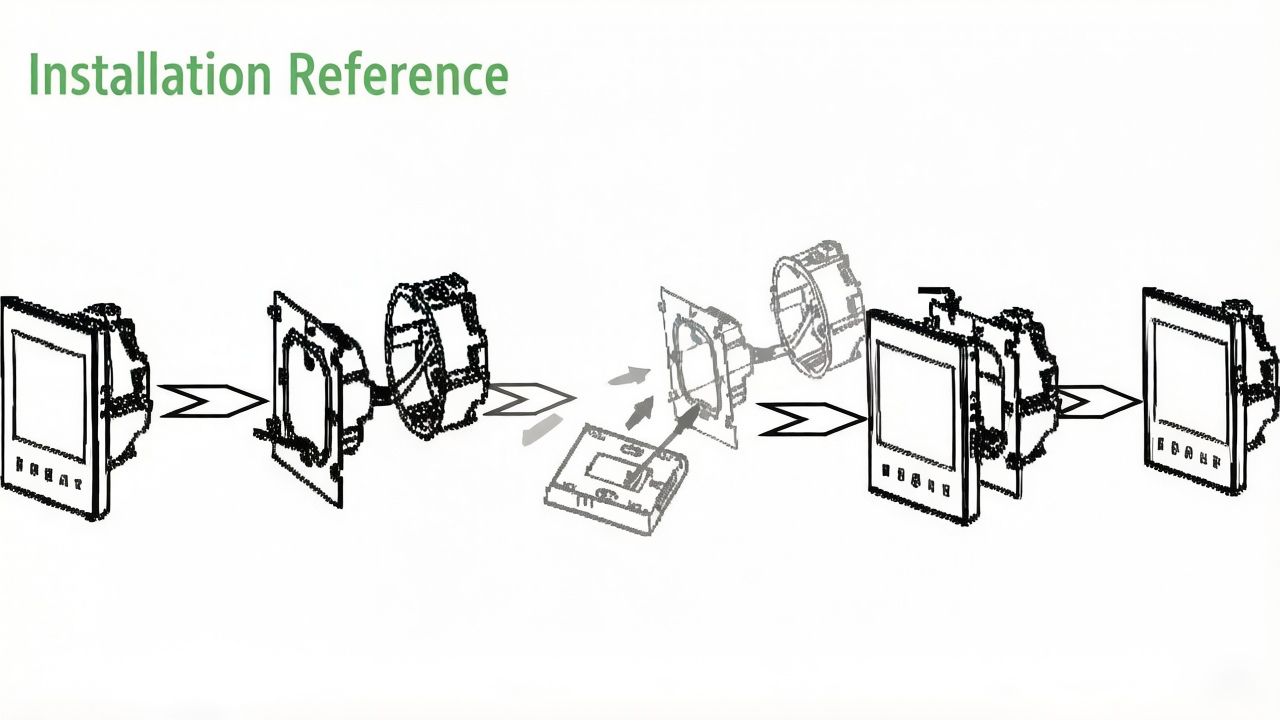
- Standard wall mounting size and clear labeling
- Accessible wiring terminals for easy installation
- Replaceable components in retrofit projects
- Remote sensor integration for complex setups
Thermostats that simplify installation reduce labor cost and installation errors, especially in multi-unit residential buildings.
Industry Experts Commentary
John Reynolds, Senior HVAC Engineer, BuildTech Consulting: “In residential projects, FCU valve compatibility is often overlooked. Selecting the wrong thermostat output can cause operational issues, including continuous fan operation or valve misalignment.”
Dr. Maria Chen, HVAC Systems Specialist, GreenBuild Labs: “Heat pumps require mode-aware thermostats. Many generic models can’t handle heat pump sequences efficiently, resulting in energy waste and occupant complaints.”
Alex Thompson, Installation Manager, Urban Retrofit Projects: “Retrofit projects often face wiring mismatches. Modern thermostats must be verified for compatibility with legacy 24V AC systems to avoid installation delays.”
Application-Based Thermostat Selection Scenarios
- Apartment buildings and residential towers: focus on standardization, cost control, and system consistency. Use thermostats with simple installation and reliable fan/valve control.
- High-end residences and villas: prioritize comfort precision, zoning flexibility, and optional scheduling features.
- Retrofit and replacement projects: verify wiring compatibility, system type, and ease of maintenance to minimize on-site errors.
Working with HVAC Thermostat Manufacturers
- Seek application-specific model recommendations
- Verify OEM or project customization options
- Ensure stable supply for large projects
- Obtain complete technical documentation for engineers and installers
Related Residential HVAC Thermostat Selection Guides
- How to Choose the Right Thermostats for Fan Coil Unit Systems
- How to Choose the Right Residential HVAC Thermostats for Apartments
- How to Choose the Right Thermostats for Heat Pump Residential Systems
- How to Choose the Right Thermostats for Retrofit & Replacement Projects
FAQ
- What type of thermostat is best for FCU systems in residential buildings?
Use FCU-compatible thermostats that match valve type (on/off or 0–10V) and fan control requirements. Avoid generic room thermostats for modulating valve systems. - Can I use a standard thermostat for a residential heat pump?
No. Heat pumps require thermostats capable of managing heating/cooling mode sequences and energy-efficient operation. - How do I choose a thermostat for underfloor heating?
Select thermostats with floor temperature sensing and safety limit protection. Wall-mounted room thermostats alone are insufficient. - Are multi-zone thermostats necessary for villas or large apartments?
Yes. Independent zoning ensures comfort control and energy efficiency. Multi-zone thermostats or multiple units are recommended. - How important is power supply compatibility?
Critical. Verify voltage (24V AC, 100–240V AC) and ensure compatibility with your system. Wrong voltage can damage equipment. - Can I replace old thermostats with modern digital ones in retrofit projects?
Only if wiring compatibility is verified. Legacy systems may require adapters or compatible models. - Do manufacturers provide project-specific recommendations?
Experienced manufacturers can guide thermostat selection based on system type, project size, and installation constraints. - Should thermostats support scheduling or setback functions?
Optional, but recommended for energy savings in high-end or smart residential systems. - How to maintain thermostats for long-term reliability?
Regular checks for wiring integrity, cleaning sensors, and software updates if applicable. - How do I choose a reliable thermostat manufacturer?
Look for established suppliers with residential HVAC experience, OEM/ODM support, and technical documentation.
References
- John Reynolds, Senior HVAC Engineer, BuildTech Consulting
- Dr. Maria Chen, HVAC Systems Specialist, GreenBuild Labs
- Alex Thompson, Installation Manager, Urban Retrofit Projects
- ASHRAE Handbook, HVAC Applications (Residential Section)
- Smith, J., Residential Thermostat Selection Guide, 2022
- GreenBuild Labs, Energy-Efficient HVAC Control Case Studies, 2021