Quick Summary
The HTW-FT03-4KN Modbus Thermostat With Keycard is designed for fan coil unit systems in buildings using a 4-pipe heating and cooling configuration. The thermostat controls the FCU fan and two motorised valves for heating and cooling circuits. It operates with a 100–250VAC power supply and supports Modbus communication for building integration. The keycard function helps manage room energy usage by enabling or disabling the FCU system when a card is inserted or removed.
This page explains the working functions of the Modbus Thermostat With Keycard, its wiring reference, and technical parameters for project confirmation. It also outlines possible configuration discussions and answers common questions related to installation and ordering.
Short Video :HTW-FT03-4KN
Key Functional Highlights
(This section explains the core control functions and their practical value.)
(01) Integrated FCU control logic
The Modbus Thermostat With Keycard manages both the fan and the heating or cooling valves of a fan coil unit. This centralised control simplifies installation and supports stable temperature regulation in FCU rooms.
(02) Modbus communication for system integration
Modbus connectivity allows the Modbus Thermostat With Keycard to be linked with a building management system. Facility teams can monitor and adjust settings centrally, supporting maintenance efficiency and operational consistency. For the standalone model, please refer to this link: HTW-FT03-4.
(03) Keycard energy management function
The keycard input enables room control based on occupancy. When the card is removed, the thermostat can stop or limit FCU operation, helping reduce unnecessary energy consumption in managed rooms.
(04) Wide voltage compatibility
With a 100–250VAC power supply range, the thermostat can be deployed across different electrical standards. This helps the Modbus Thermostat With Keycard fit international projects with fewer electrical changes.
Display
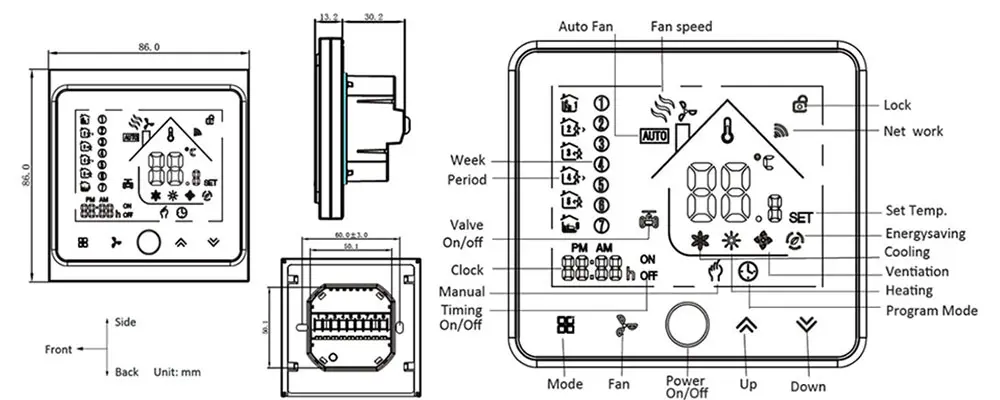
(This section shows the product’s dimensions and the interface layout.)
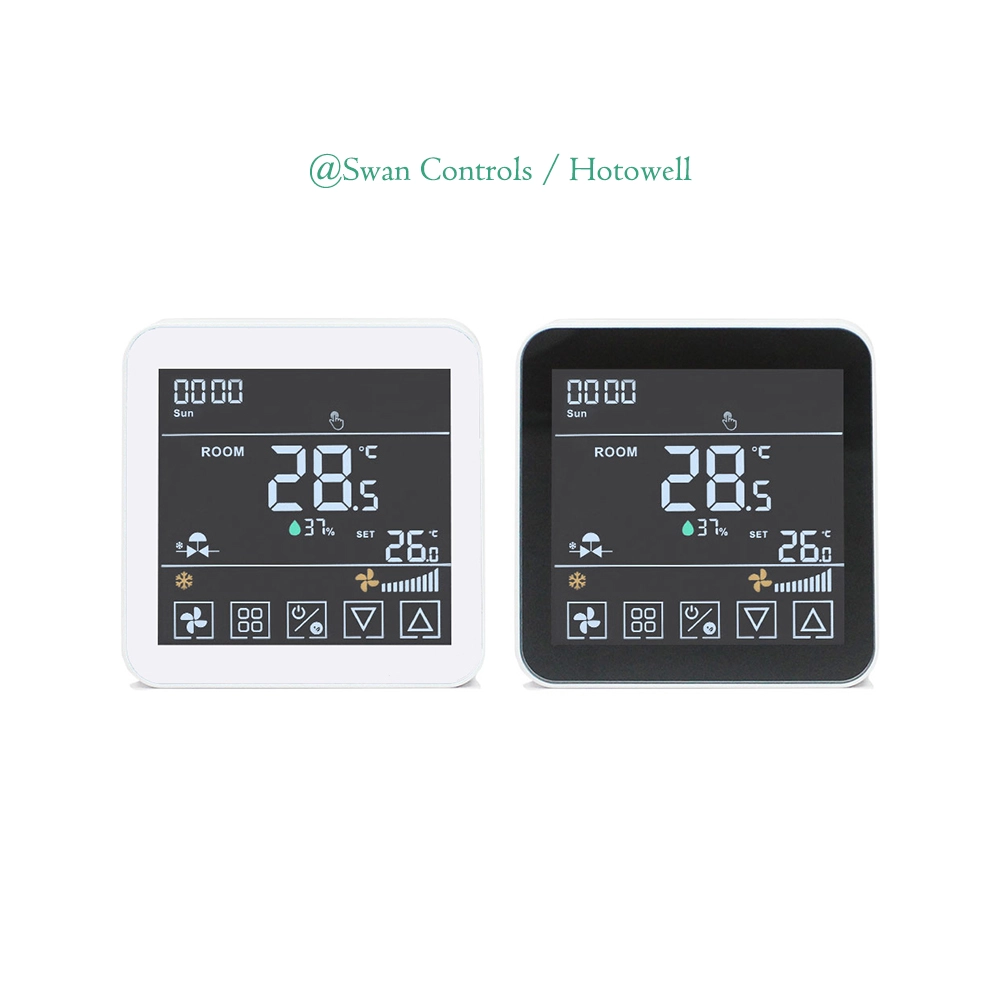
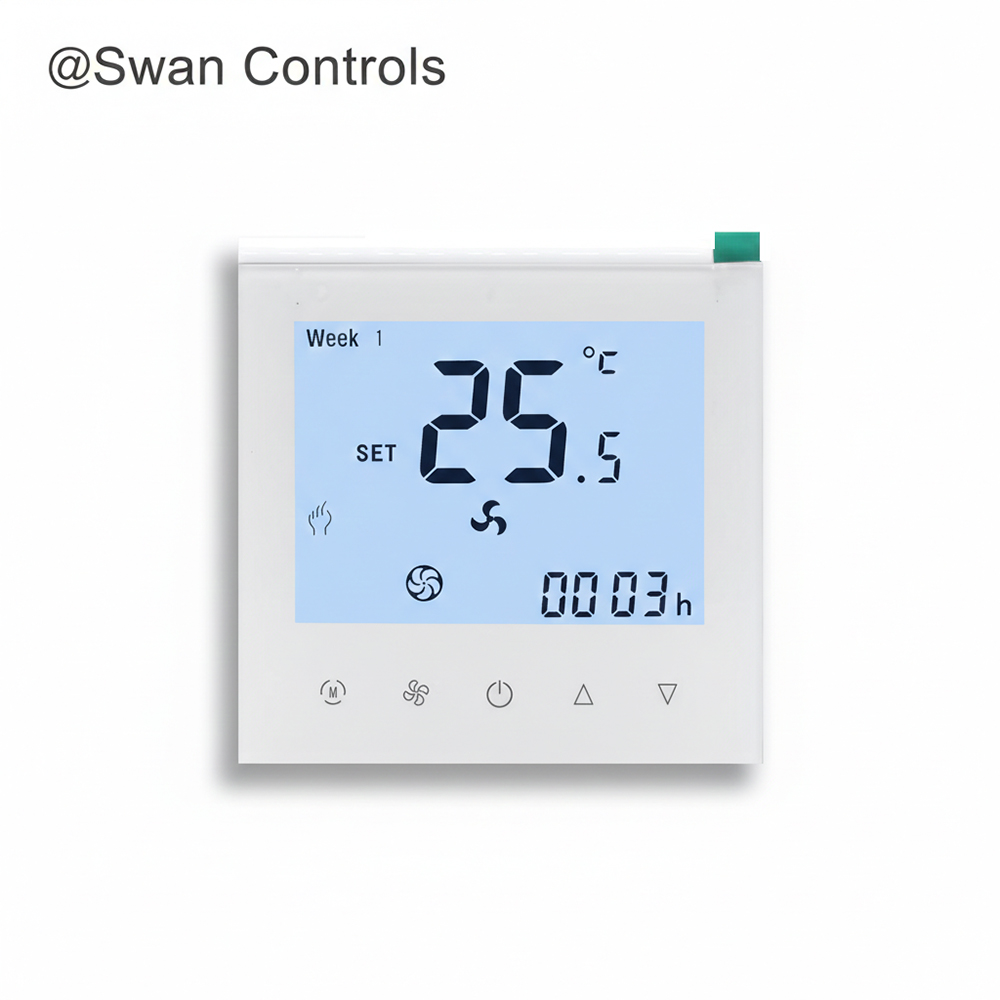
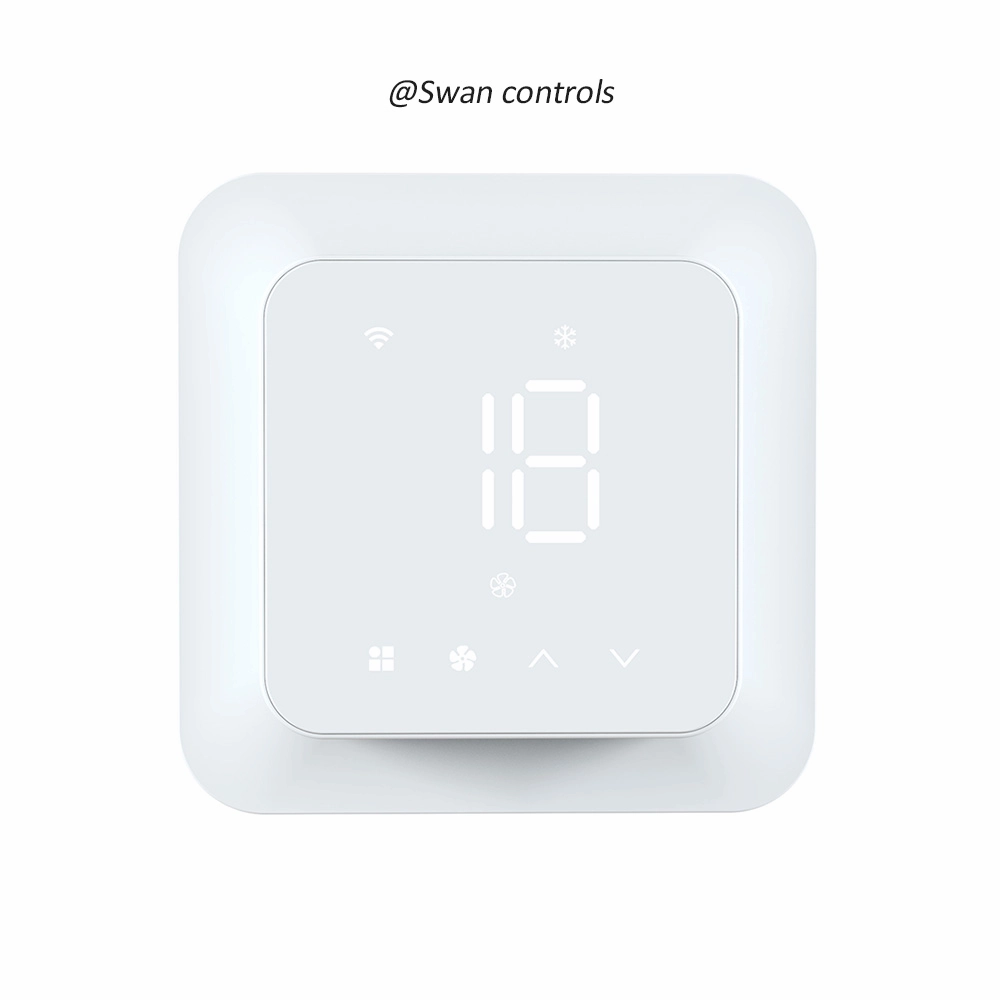
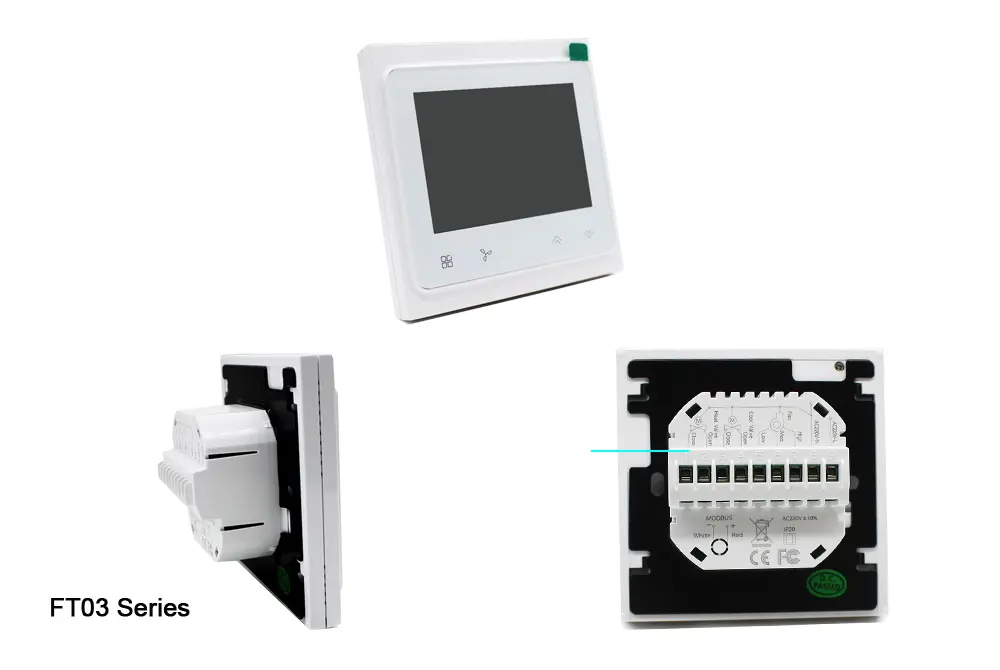
Product dimensions and screen layout illustrate the physical structure of the thermostat. The front panel displays the temperature reading, operation mode, and fan settings.
The design supports wall installation using standard EU or electrical wall boxes. Its interface is arranged for clear visibility and simple daily operation.
Real photos (front / side / back) combined into one rectangle
Dimensions and screen display
Specifications
(This section lists the key parameters for reference and project confirmation.)
| Parameter | Value |
|---|---|
| Power Supply | 100–250VAC |
| Frequency | 50/60Hz |
| Current Load | Fan relay 5A (3A inductive); Valve relay 3A (1A inductive) |
| Accuracy | ±0.5°C or ±1°F |
| Sensor | NTC3950, 10K |
| Setpoint Range | 5–35°C |
| Installation | EU or standard electric box housing |
| Protection Class | IP20 |
Wiring
(This section provides the wiring reference diagram for correct installation.)
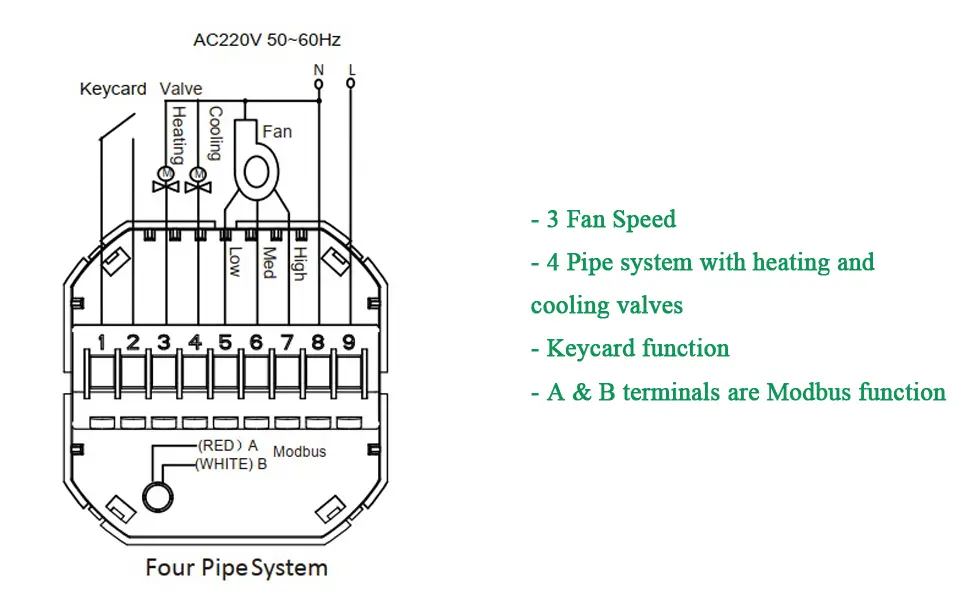
The wiring diagram shows the electrical connections for the fan coil unit and the thermostat. The Modbus Thermostat With Keycard connects to the fan motor terminals and two motorised valves for heating and cooling circuits.
Follow the diagram to confirm power input, fan speed lines, and valve wiring before powering the system. This helps stable operation and reliable Modbus communication.
Guide
(This section explains what configuration the model code refers to.)
| Fan coil series | xx stands for |
|---|---|
| EC | EC fan |
| 2/4 | 2 for 2-pipe on/off; 4 for 4-pipe on/off system |
| M | Modulating valve control |
| W | Wi-Fi |
| N/B | N for Modbus; B for BACnet |
| K/E | K for Keycard; E for External sensor |
Example HTW-FT03-xx: if xx = 4KN, it stands for a 4-pipe system with on/off valve control, keycard function, and Modbus communication. Most sub-models are ready-made. Kindly contact us to confirm availability.
Project Fit & Customization
(This section explains where the product can be used, its limits, and OEM/ODM options.)
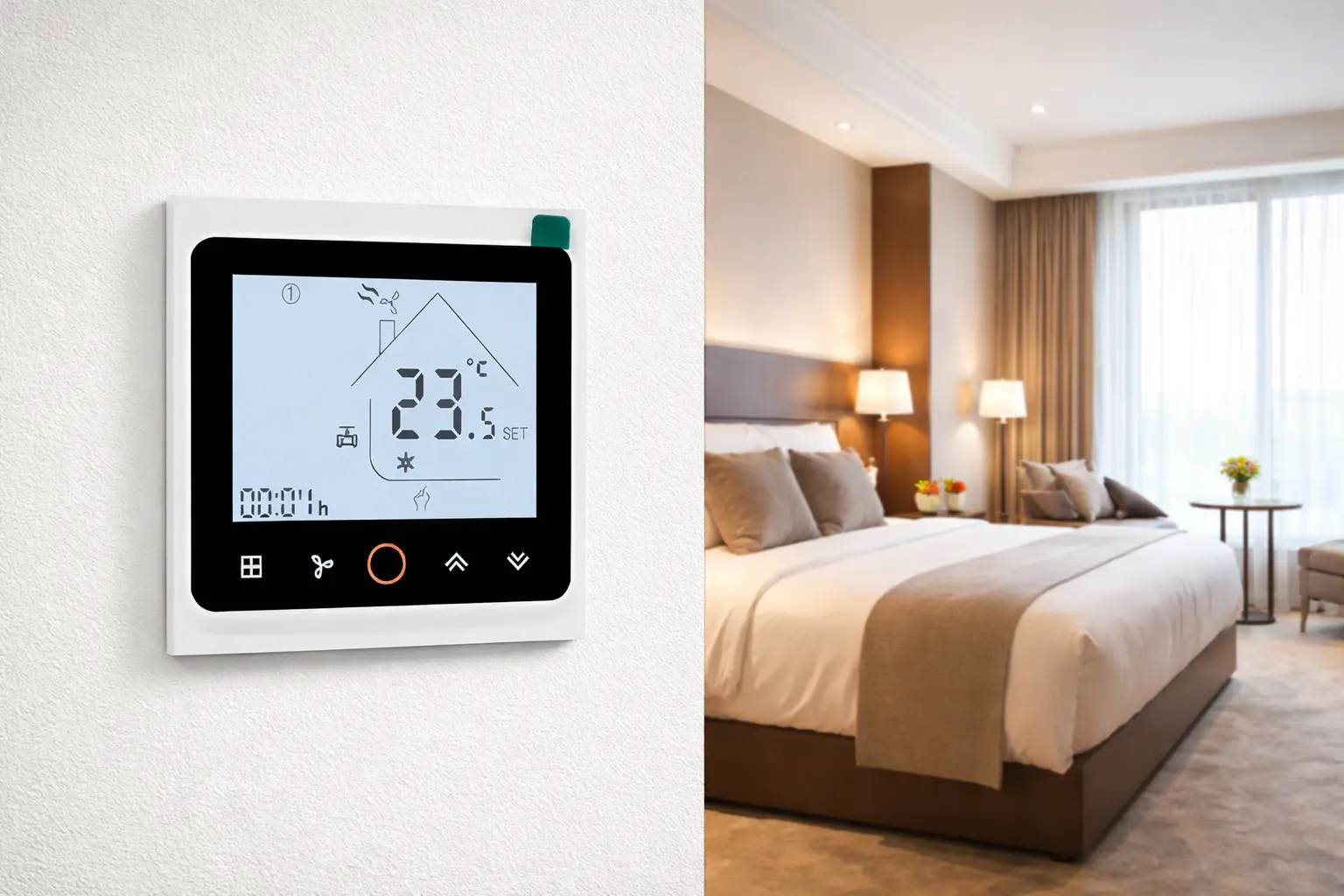
The Modbus Thermostat With Keycard is designed for fan coil unit control in buildings. It fits hotels, apartments, and commercial rooms using FCU systems. It is not intended for projects that need advanced variable airflow control or direct control for non-FCU systems. Confirm the fan type and valve wiring before selection.
Despite these limits mentioned above, ODM function discussion is possible. Communication type, interface behaviour, or selected control logic can be evaluated during technical confirmation. Changes depend on project scope and validation requirements.
OEM support is available, including logo printing, colour options such as white or black housing, and customised labels. These options help align the product with project branding and site identification needs.
Certifications

Exhibition Moments

Frequently Asked Questions
Q1. Is this thermostat suitable for a 4-pipe fan coil system?
Yes. The Modbus Thermostat With Keycard supports heating and cooling valves separately, making it suitable for 4-pipe fan coil systems.
Q2. Can the thermostat connect to a building management system?
Yes. The thermostat supports Modbus communication, allowing integration with BMS platforms for monitoring and control.
Q3. What is the purpose of the keycard function?
The keycard input allows room energy control. When the card is removed, the thermostat can stop or limit FCU operation.
Q4. What is the minimum order quantity and are samples available?
Thermostat samples are available. The usual minimum order quantity is about 300 units, though smaller quantities may be discussed.
Q5. How can I place an order?
Please contact us to confirm requirements. We will provide a proforma invoice. Payment methods include TT, PayPal and Visa, with EXW, FOB or DAP terms.
Q6. How are the products normally shipped?
Courier delivery is commonly recommended and takes about seven days. Air freight is similar, while sea shipping usually takes one month or more.
Need Project Support?
If you are evaluating a Modbus Thermostat With Keycard for a fan coil project, please contact us. We can help confirm compatibility and suitable configurations.