Quick Summary
T6861-2 digital thermostat is used in fan coil unit systems. It controls 3-speed fan motors and on/off water valves. It supports both 2-pipe and 4-pipe systems with cooling and heating modes. Remote setback input and remote sensor improve temperature control and operational flexibility.
This page explains control logic, function meaning, and engineering relevance in FCU systems. It also covers parameter confirmation, installation considerations, and typical application questions. Guidance is included for model selection and project-level configuration decisions.
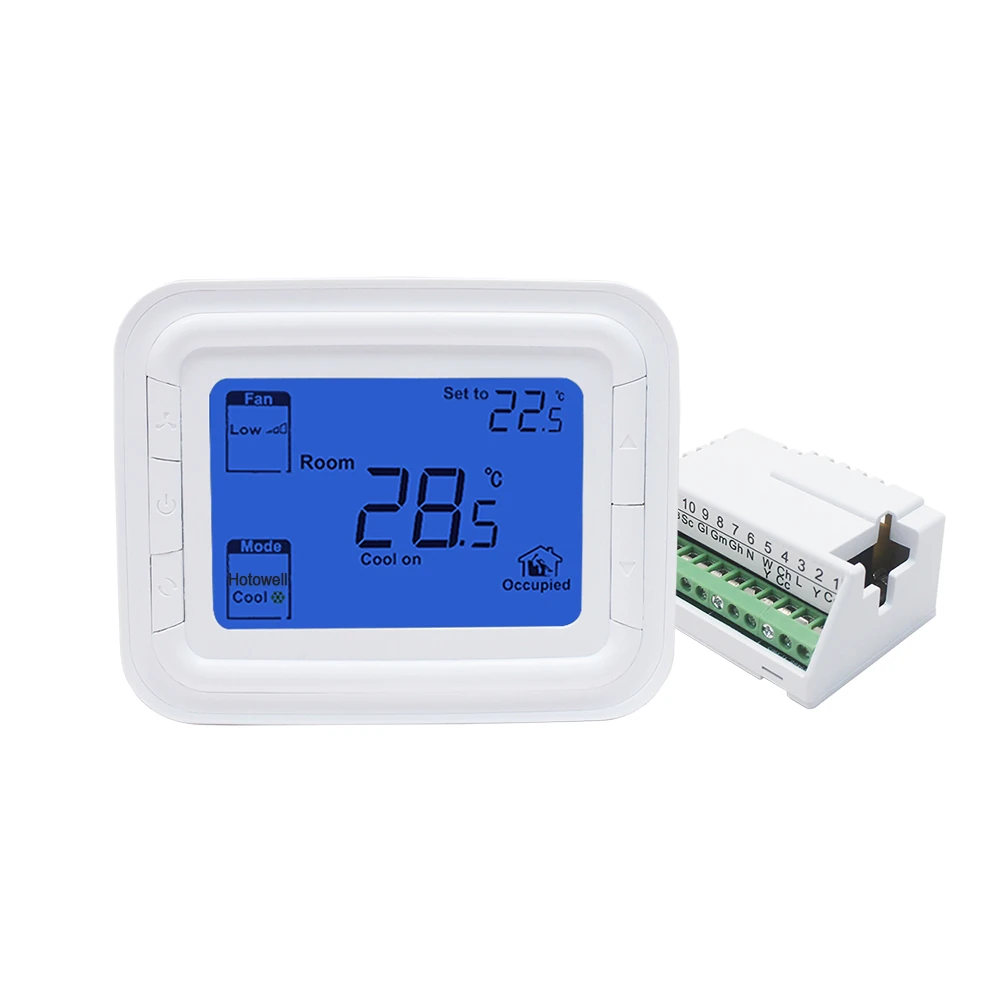
T6861 digital thermostat Functional Highlights
(This section introduces the main control functions and their engineering value in the specific HVAC system.)
(01) 3-speed fan control
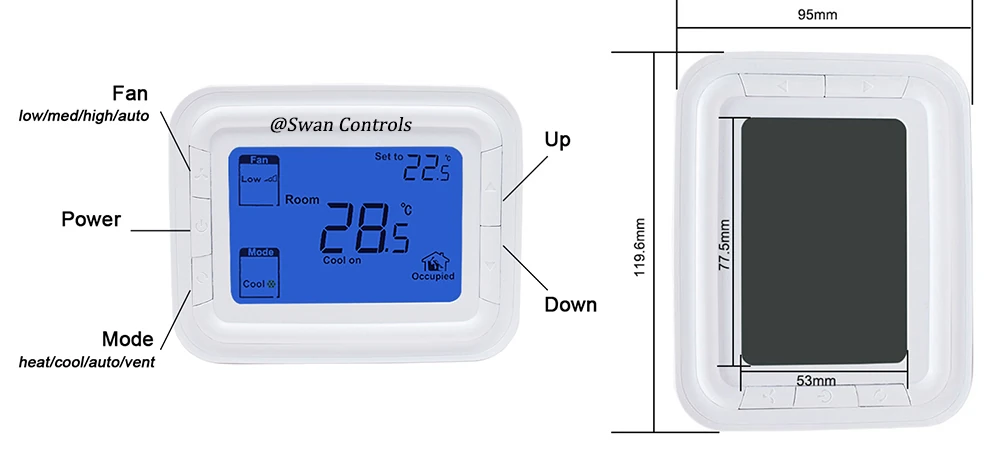
Supports low, medium, and high fan speeds for FCU systems. It helps adjust airflow more precisely, improves room comfort, and saves energy when full capacity is not needed.
(02) 2/4 pipe valve control
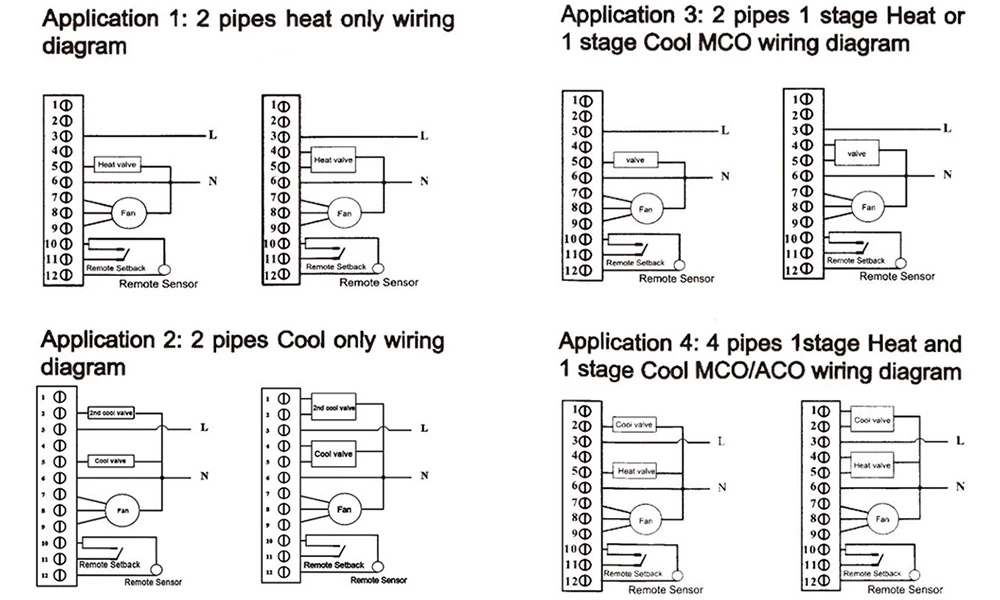
Works with both 2-pipe and 4-pipe systems using on/off valves. This makes it easy to use in different HVAC setups and reduces the need for multiple product versions.
If one is looking for another thermostat modulating valve control, this model may be referred to (click → T6865).
(03) Remote setback and sensor input
Supports keycard input and external temperature sensor connection. This allows us to reduce energy use when rooms are not occupied and also helps improve temperature accuracy in different room layouts and installation conditions.
(04) 2-stage cooling control
Two-stage cooling activates the second valve when cooling demand increases. This helps us achieve smoother temperature control, keeps the room more stable during changing loads, and avoids sudden cooling fluctuations in peak conditions.
(05) Timer on/off
Allows us to set automatic on and off schedules based on daily or weekly needs. It makes operation more convenient and helps manage energy use in a smarter and more efficient way, especially in hotel and residential applications.
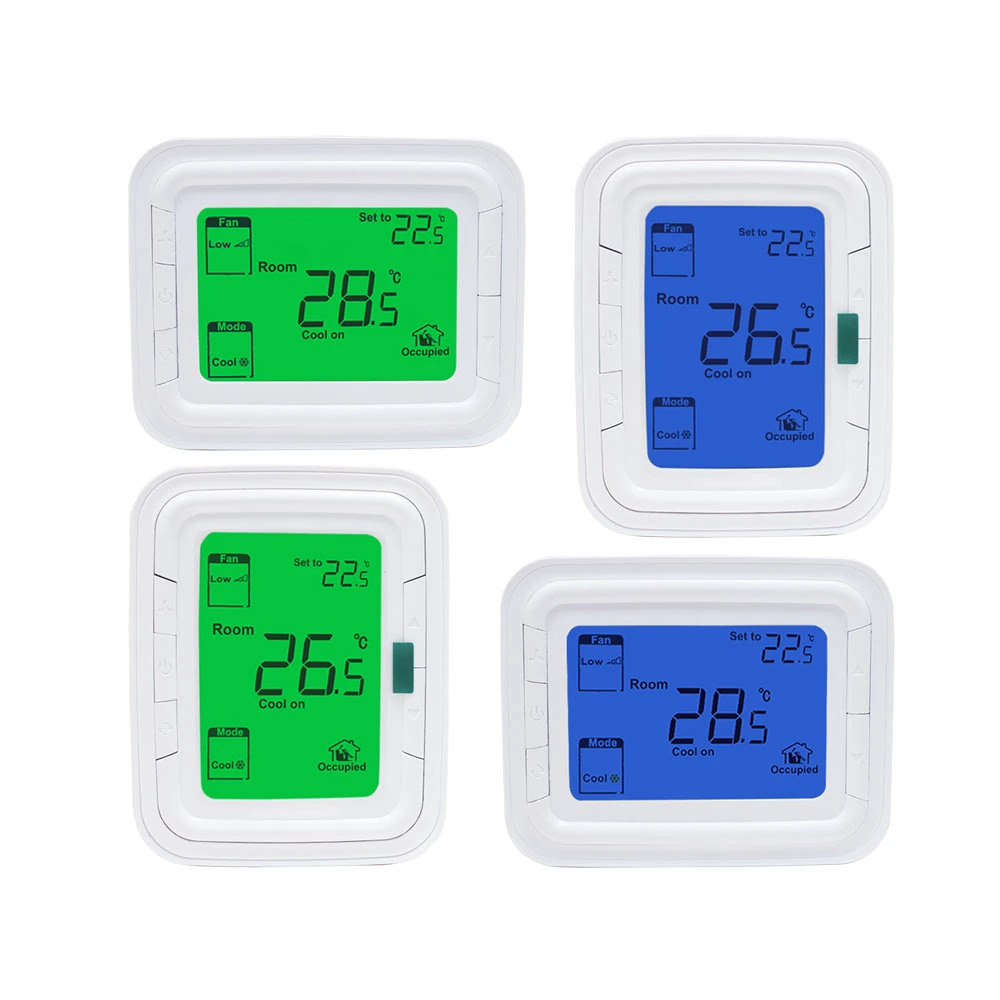
(06) Flexible installation and screen colour options
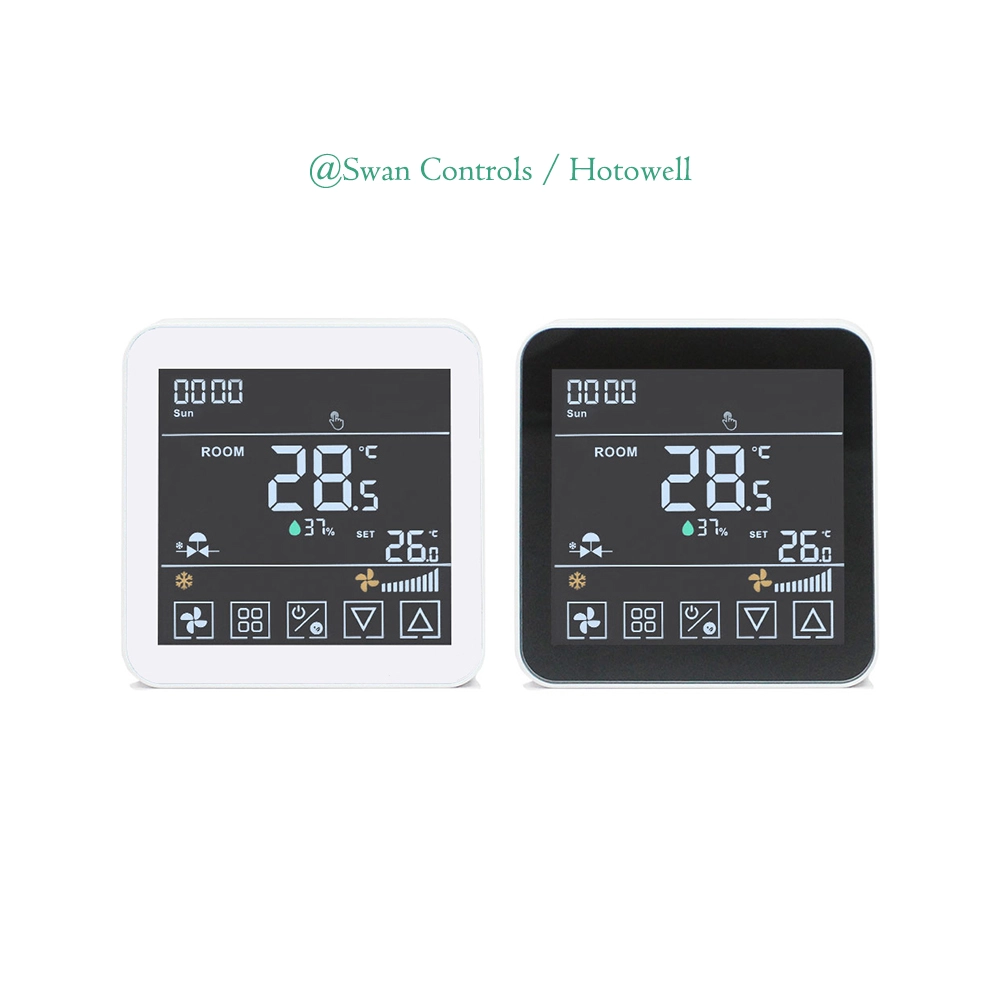
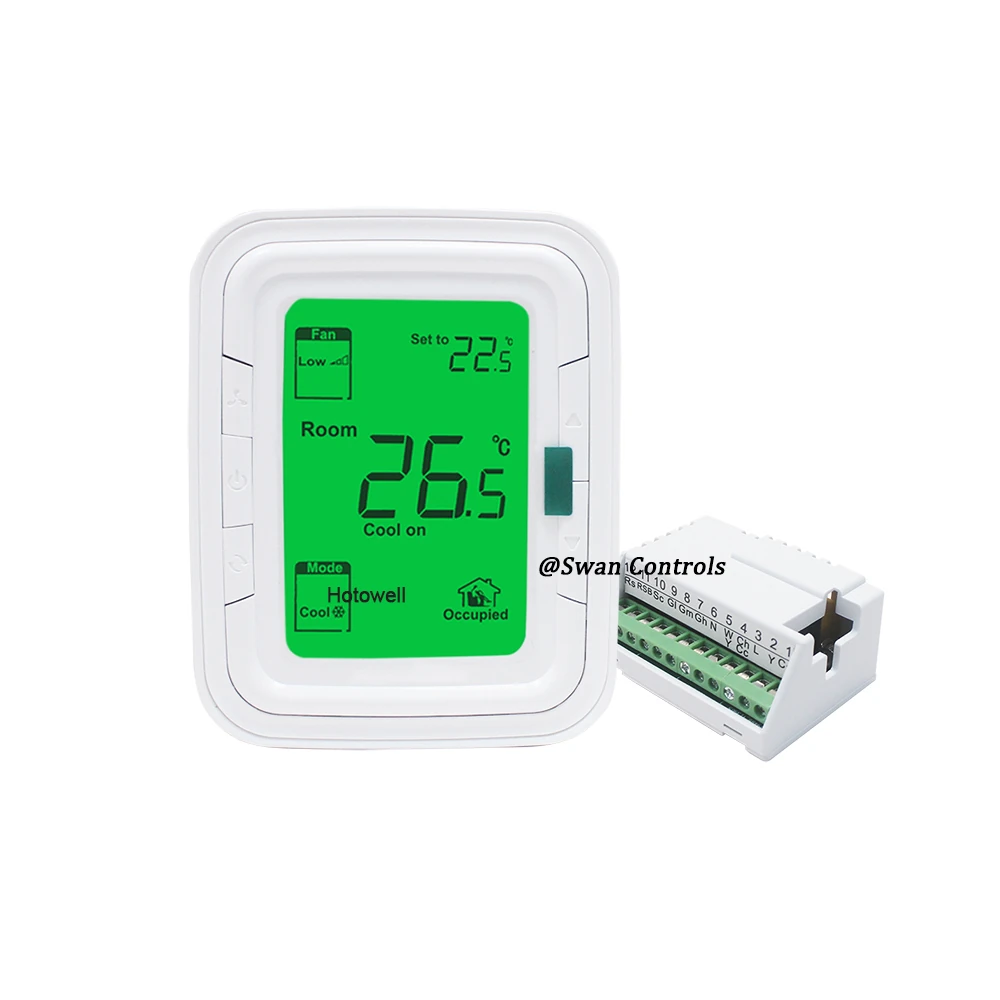
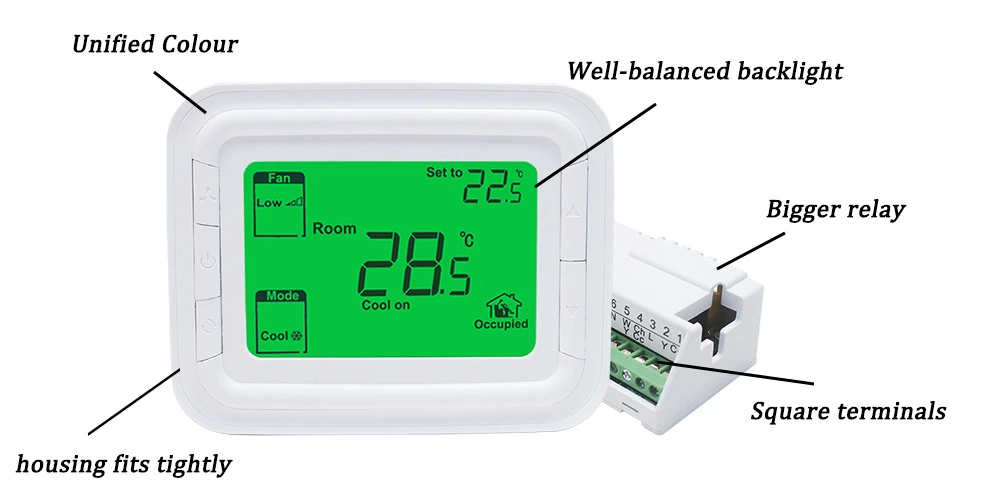
Available in vertical or horizontal versions with blue or green screen options. This allows better matching with project design and building style requirements.
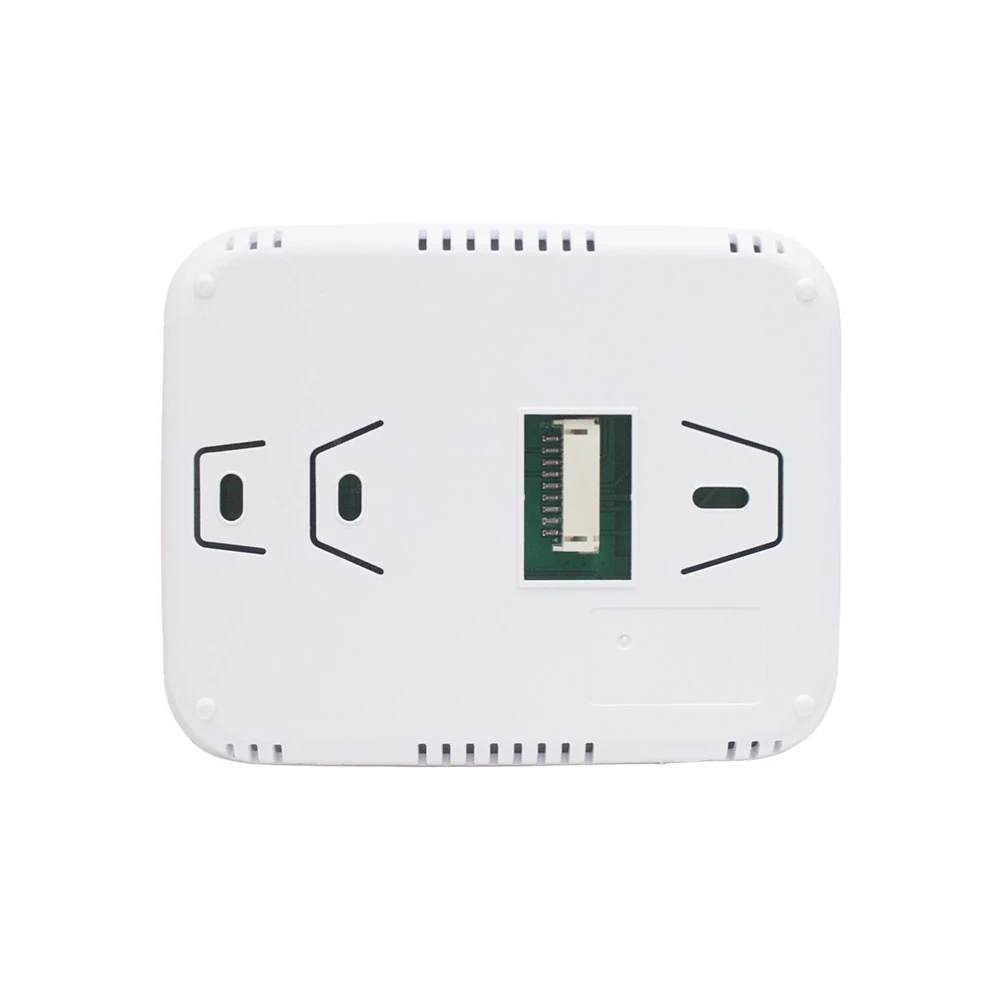
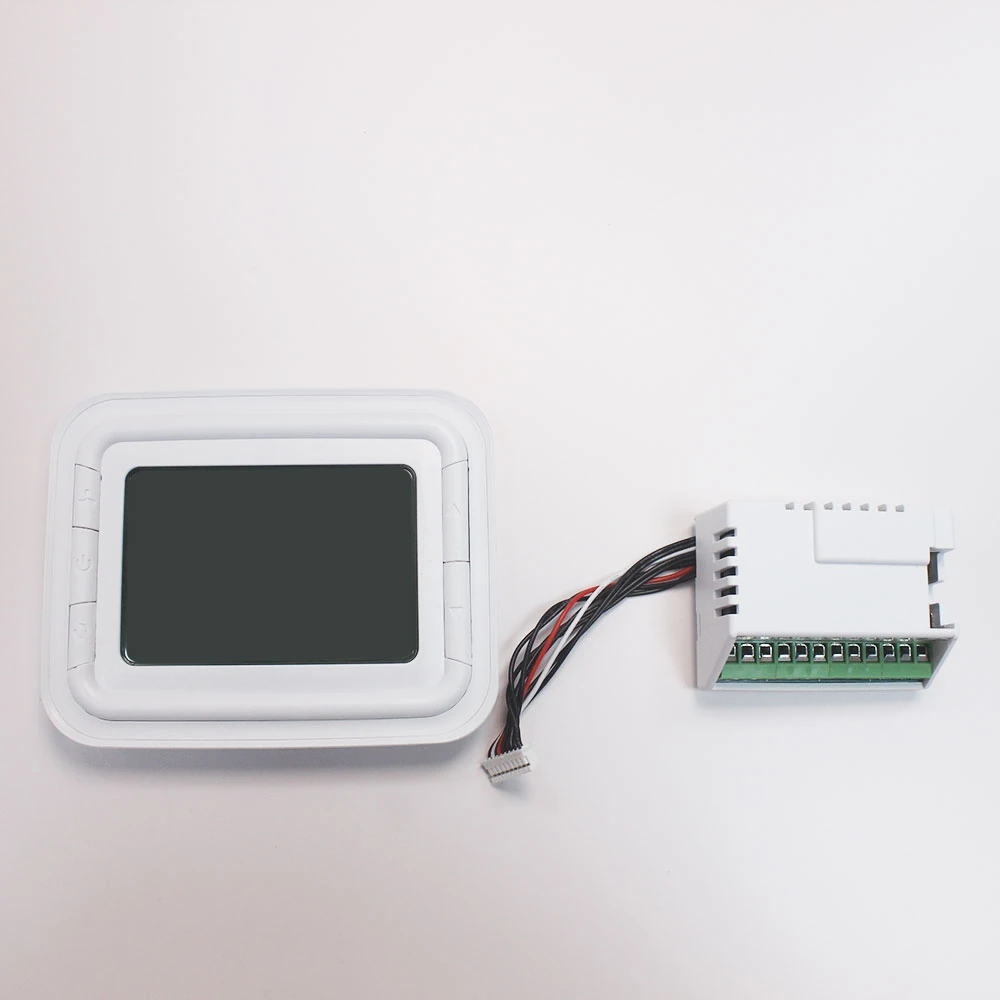
T6861 Display
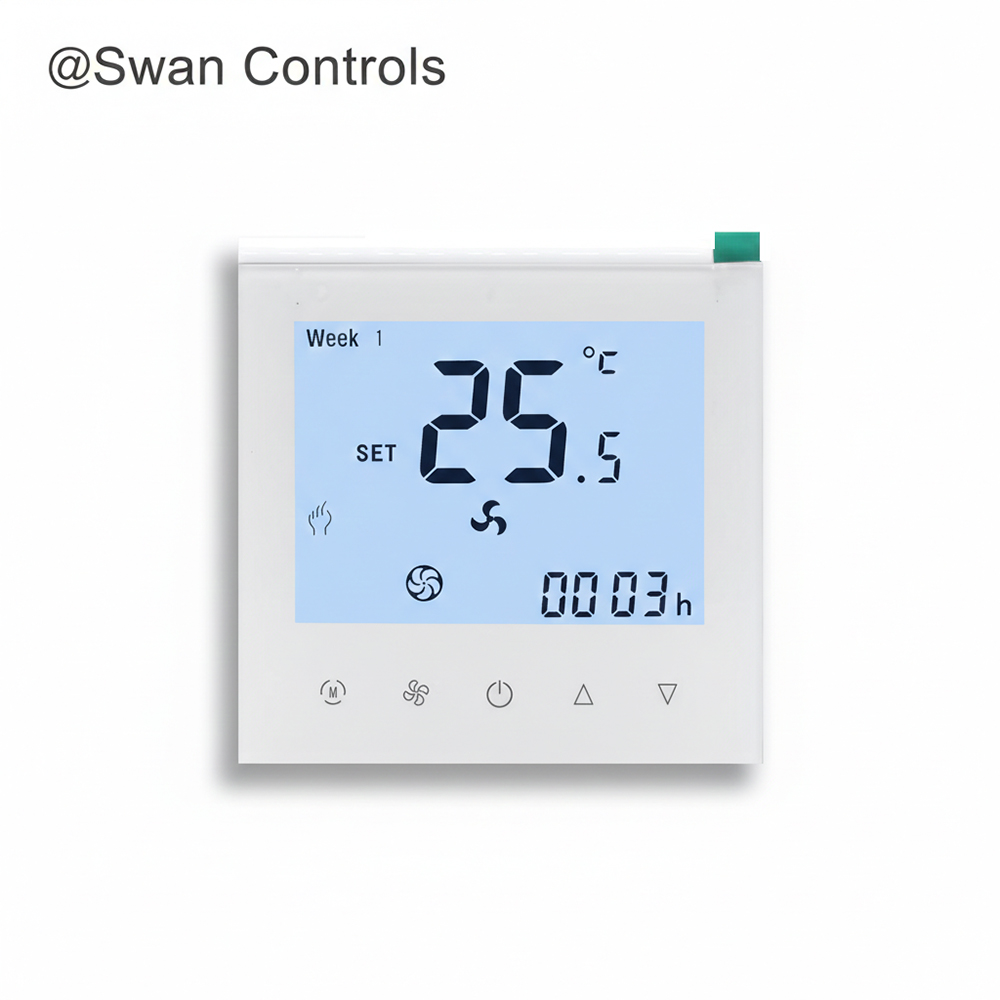
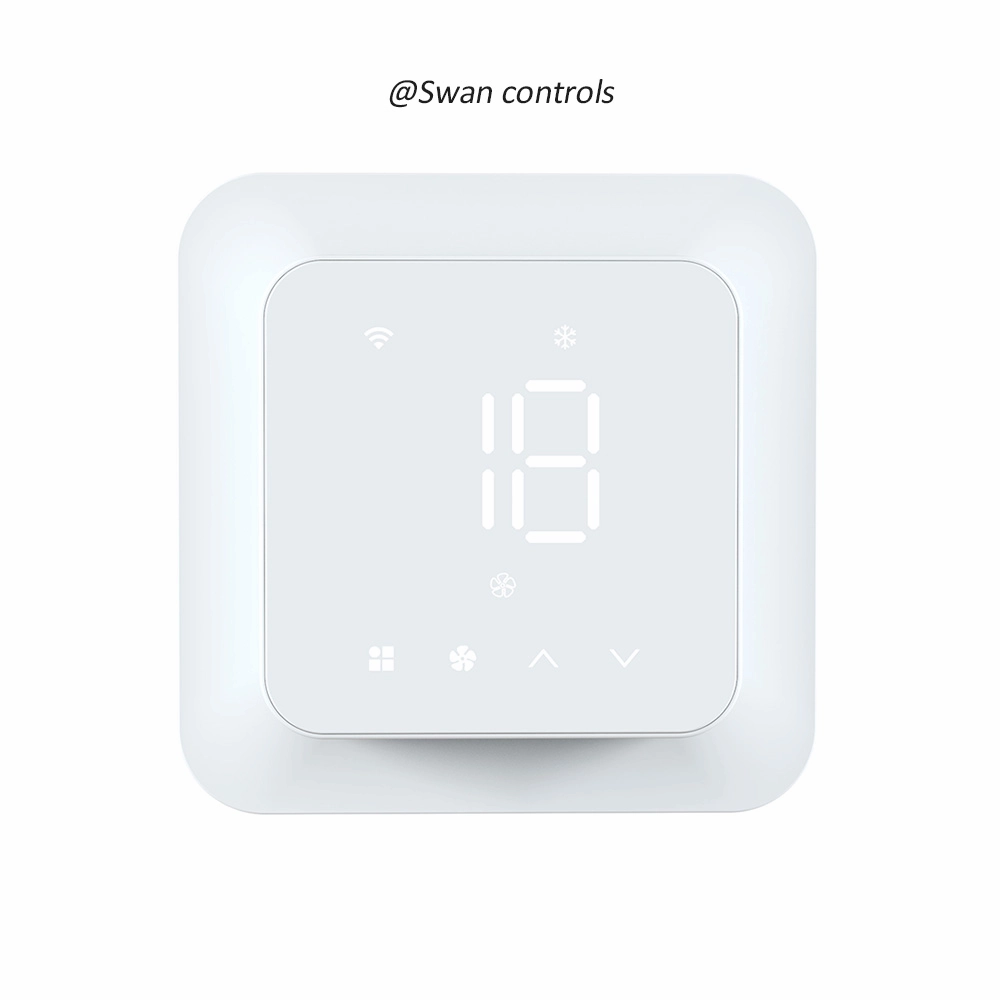
(This section shows the thermostat appearance, screen interface, or installation dimensions of this specific model.)
Specifications
(This section lists the key technical parameters relevant to this thermostat model.)
| Parameter | Value |
|---|---|
| Power Supply | 110 or 220Vac, 50/60Hz |
| Current Load | Fan relay 5A |
| Sensor Type | NTC3950, 10K |
| Temperature Accuracy | ±0.5°C |
| Setpoint Range | 10–32°C |
| Installation | 86×86 mm or US 2×4 box |
| Warranty | 2 years |
Wiring Diagram
(This section provides the wiring diagram for this thermostat in the relevant HVAC control system.)
Guide
(This section explains what configuration the model code refers to.)
| T6861xxxx series | xx stands for |
| V or H | V=Vertical, H=Horizontal |
| 1 or 2 | 1=110V, 2=220V |
| W | White housing |
| G or B | G=Green screen; B=Blue screen |
| Example T6861V2WG | Vertical type, 220V, green screen |
Project Fit & Customisation
(This section describes project suitability, system limitations, and available customisation options.)
This model is not suitable for systems requiring BMS communication, such as Modbus or BACnet. It does not support WiFi or app control. It is not designed for variable speed fan systems or analogue valve modulation control.
OEM support includes logo printing and label customisation for project branding. Housing colour and screen type can be adjusted. Software parameters can be modified based on project requirements and control logic.
Certifications
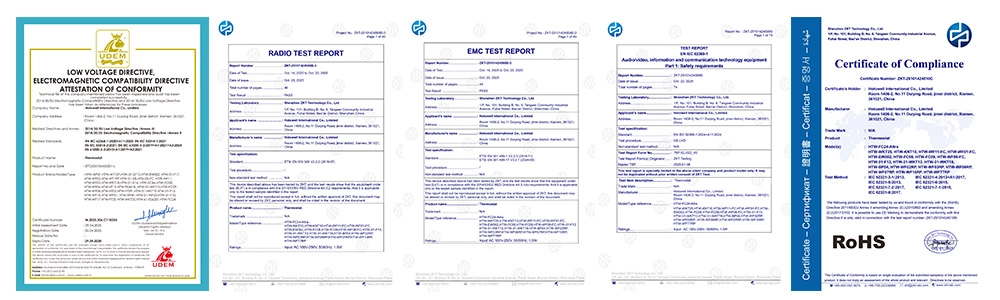
(This thermostat complies with European market requirements and is supported by certifications such as CE)
Exhibition Moments
(Our team regularly participates in international HVAC exhibitions such as Febrava in Brazil, The Big 5 in Dubai, and ISK-SODEX in Turkey, etc.)

Final Note: In FCU systems, stable room temperature and simple control are key requirements. The T6861 digital thermostat manages fan speed and valve operation within these systems. It helps maintain reliable operation and supports daily facility management with consistent performance.