
Quick Summary
HTW-WF11-FC-MEN is a PICV thermostat designed for fan coil systems with 3-speed fans. It controls fan speeds and a 0–10V PICV valve. It supports both cooling and heating modes. Modbus communication allows stable system integration and remote monitoring.
This page explains how the PICV thermostat works in real FCU projects. It covers control logic, wiring, and parameter checks. It also addresses common project questions and practical use. Customisation options for Modbus and sensors can be discussed.
Key Functional Highlights
(This section introduces the main control functions and their engineering value in the specific HVAC system.)
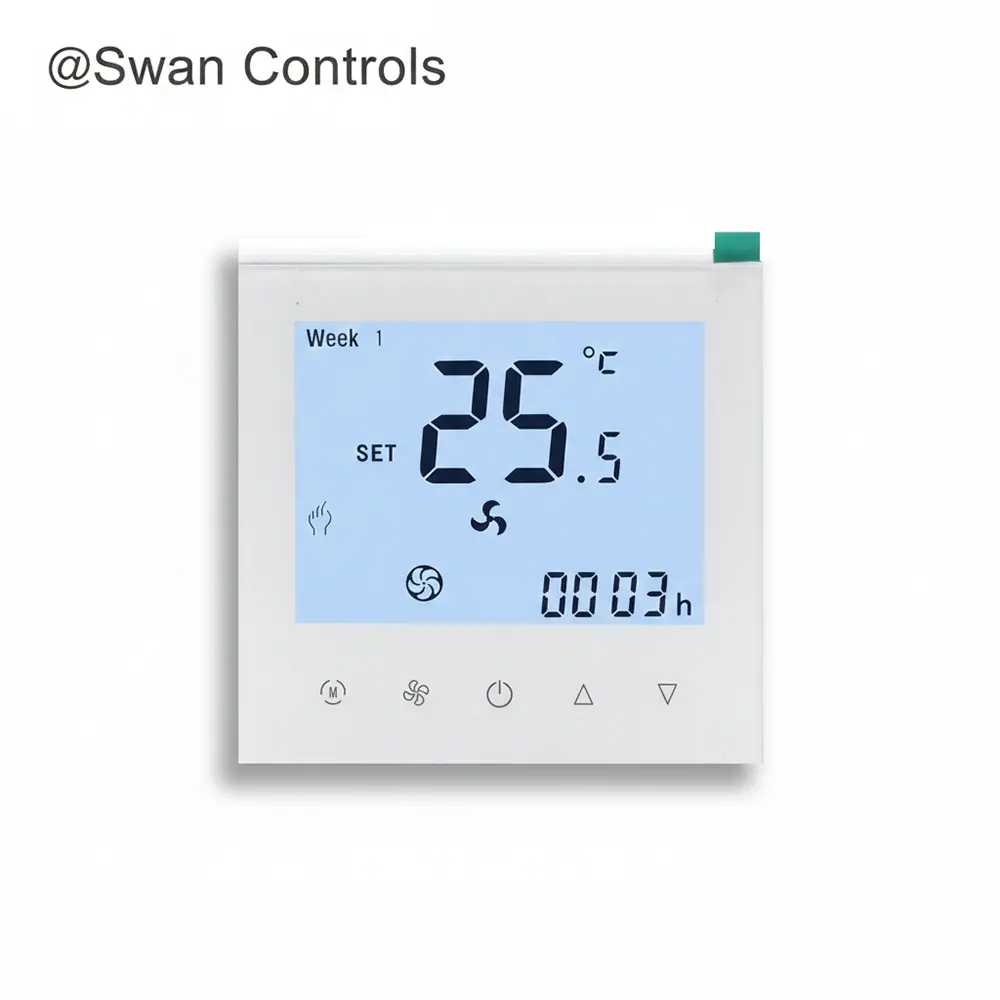
(01) 3-speed fan control
This PICV thermostat manages low, medium, and high fan speeds. It adjusts airflow based on room demand. This helps improve comfort while reducing unnecessary energy use. It also supports stable daily operation in hotel and office projects.
(02) 2-pipe system with 0–10V PICV control
The thermostat is designed for 2-pipe systems with modulating PICV valves. The 0–10V signal allows precise valve control. This improves water flow balancing and temperature stability. It is suitable for projects requiring accurate hydronic control.
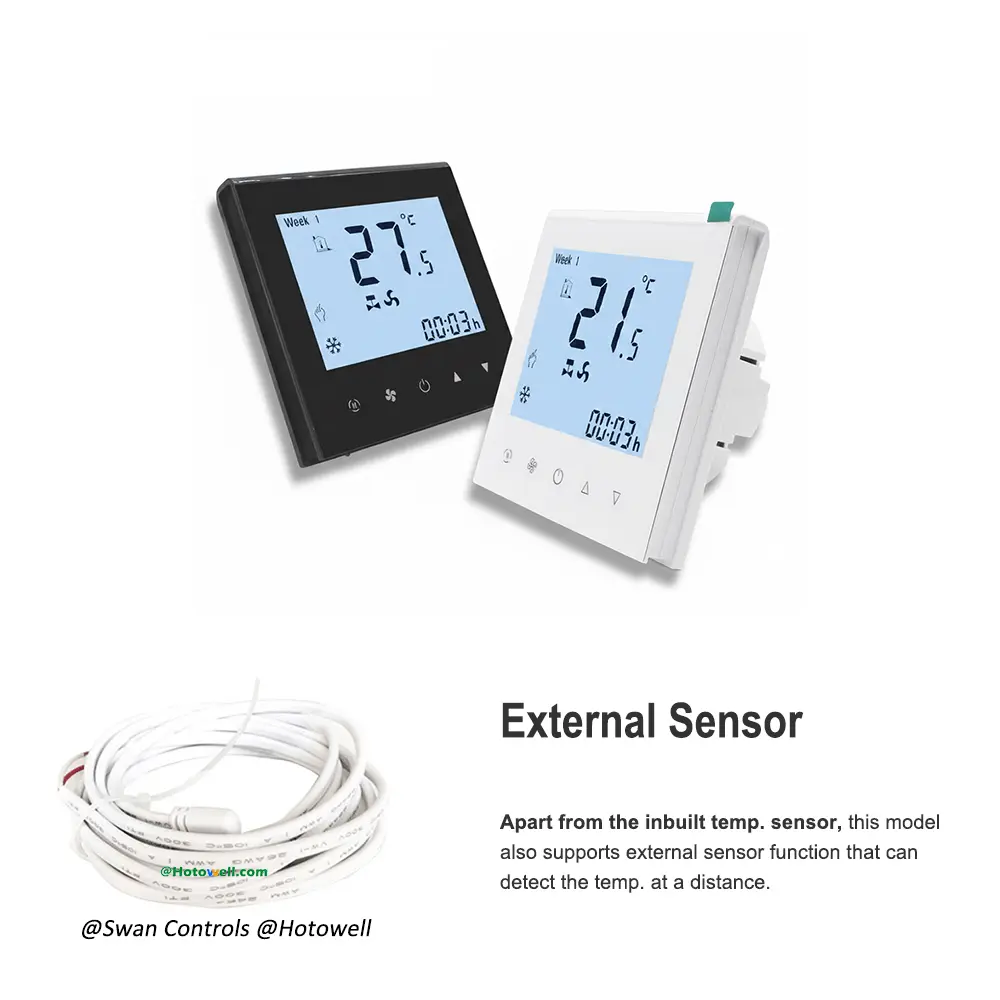
(03) Remote sensor support
An external sensor can be connected when the built-in sensor is not enough. It improves temperature sensing in large or uneven spaces. This helps avoid incorrect control due to poor sensor placement. It also supports more flexible installation layouts.
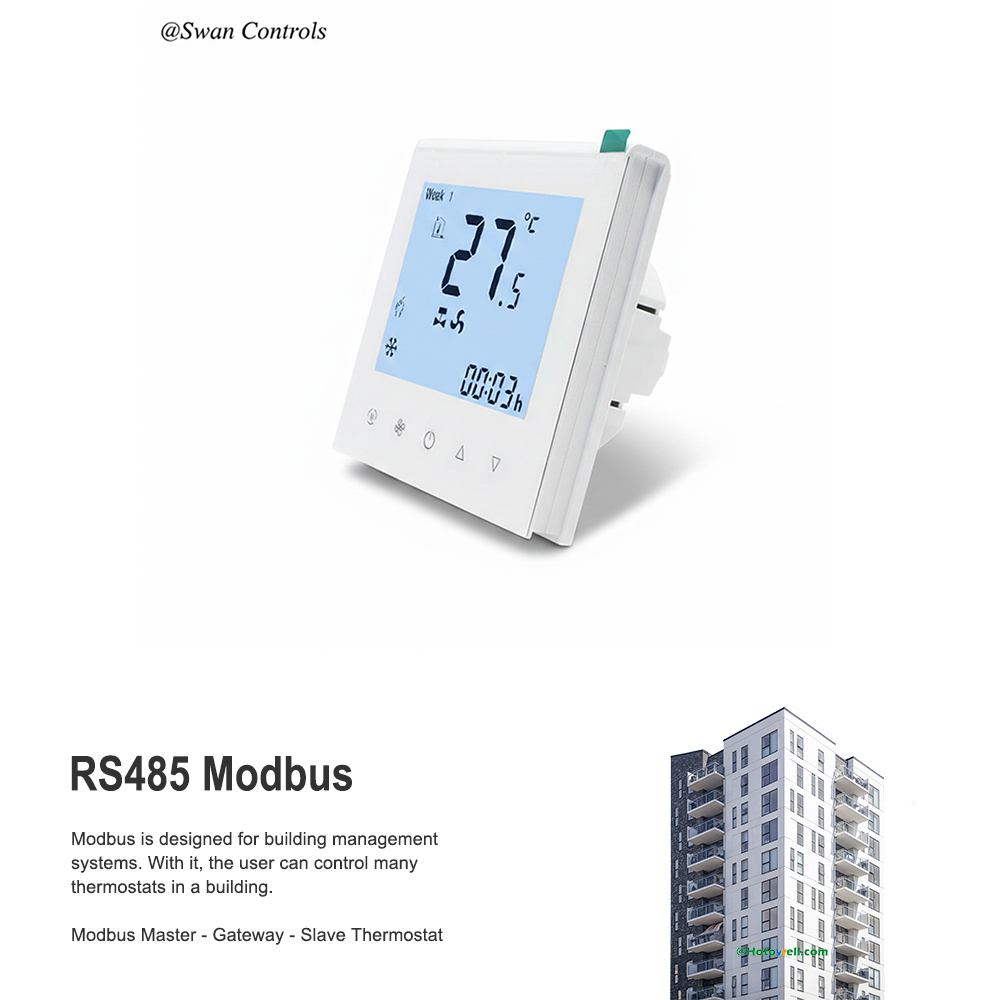
(04) RS485 Modbus communication
This PICV thermostat supports Modbus over RS485 for BMS integration. It allows central monitoring and control across multiple rooms. This reduces manual checks and improves system management. It is commonly used in hotels and commercial buildings.
If one prefers BACnet to Modbus, one may consider this model instead (please click → HTW-WF11-FC-MEB).
(05) Key lock function
The key lock prevents unauthorised changes to settings. It helps maintain stable operation in public or shared spaces. This reduces the risk of incorrect adjustments. It also lowers maintenance workload for facility teams.
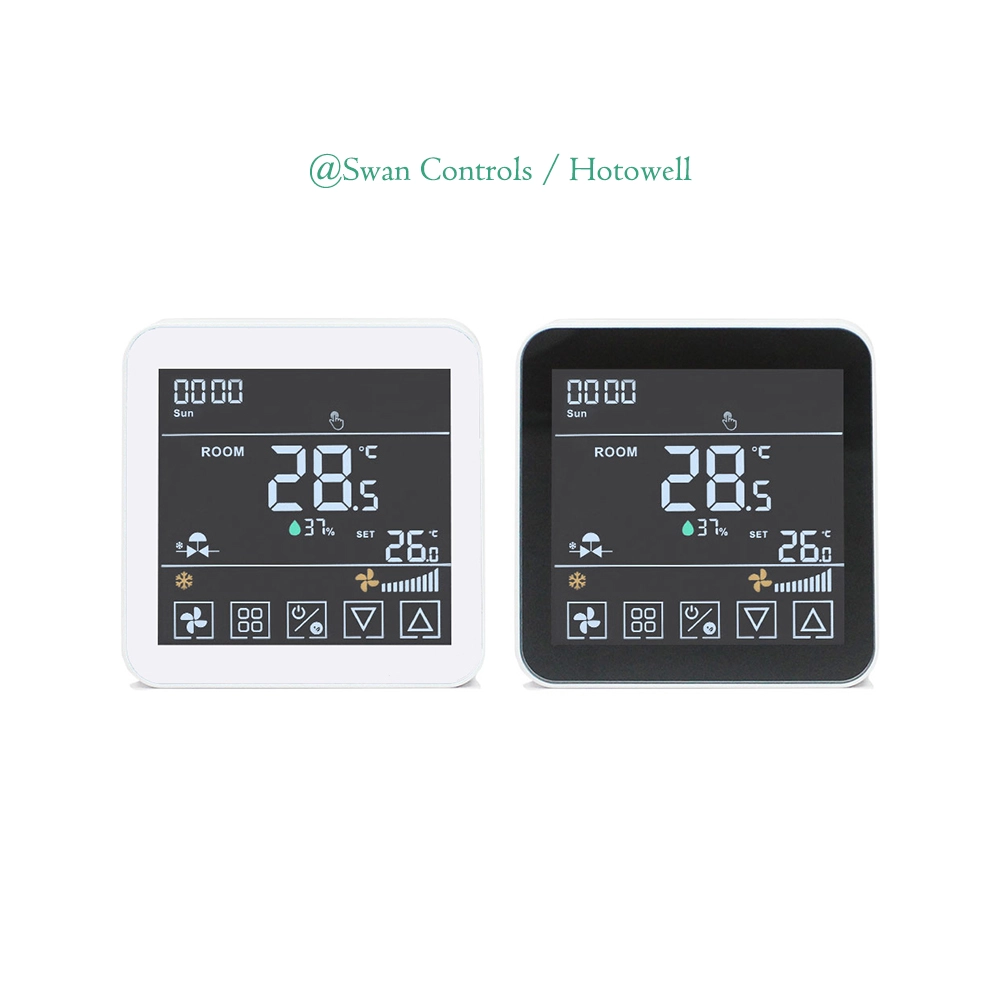
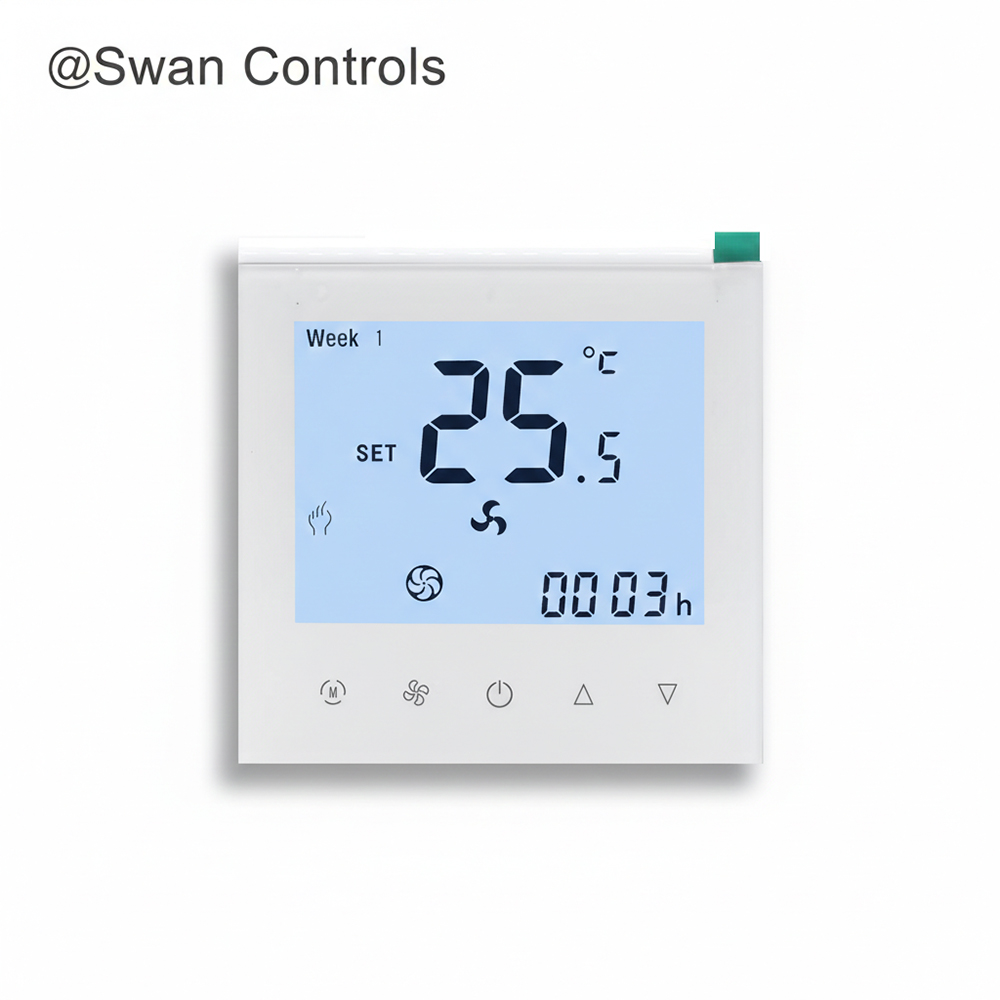
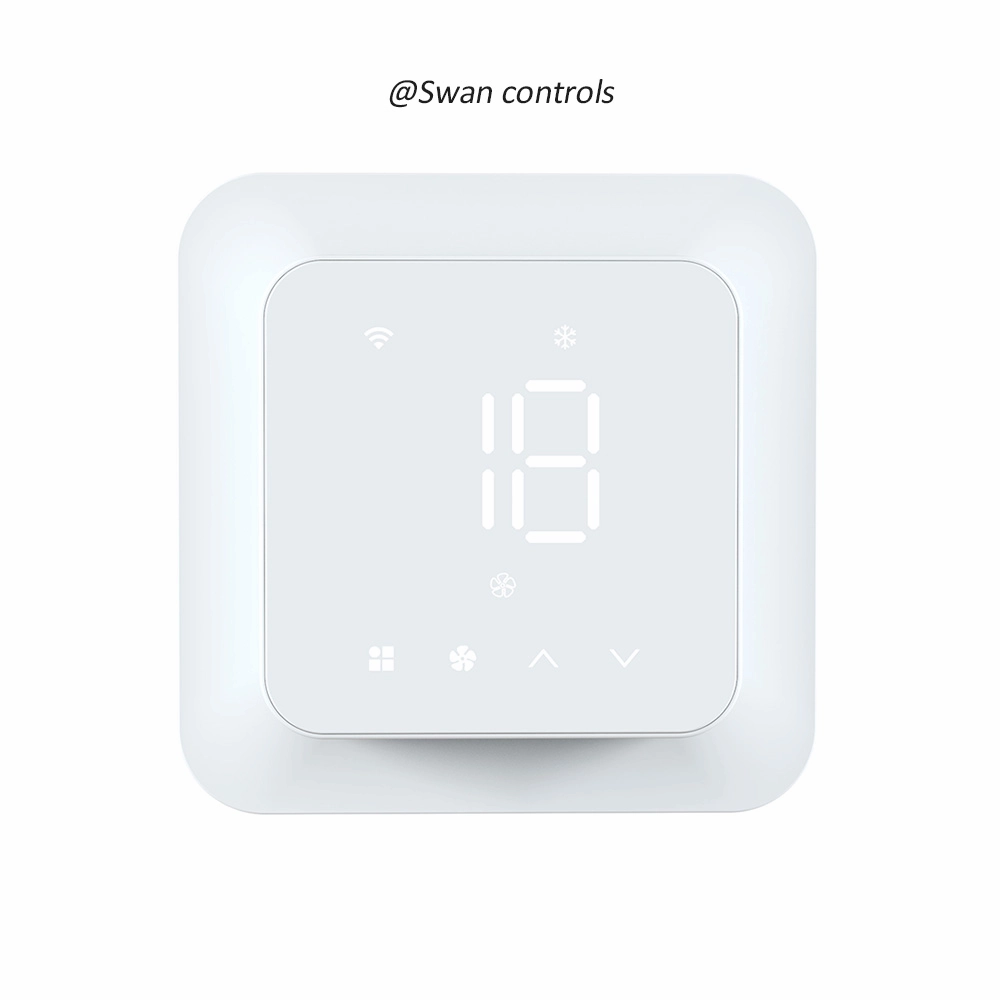
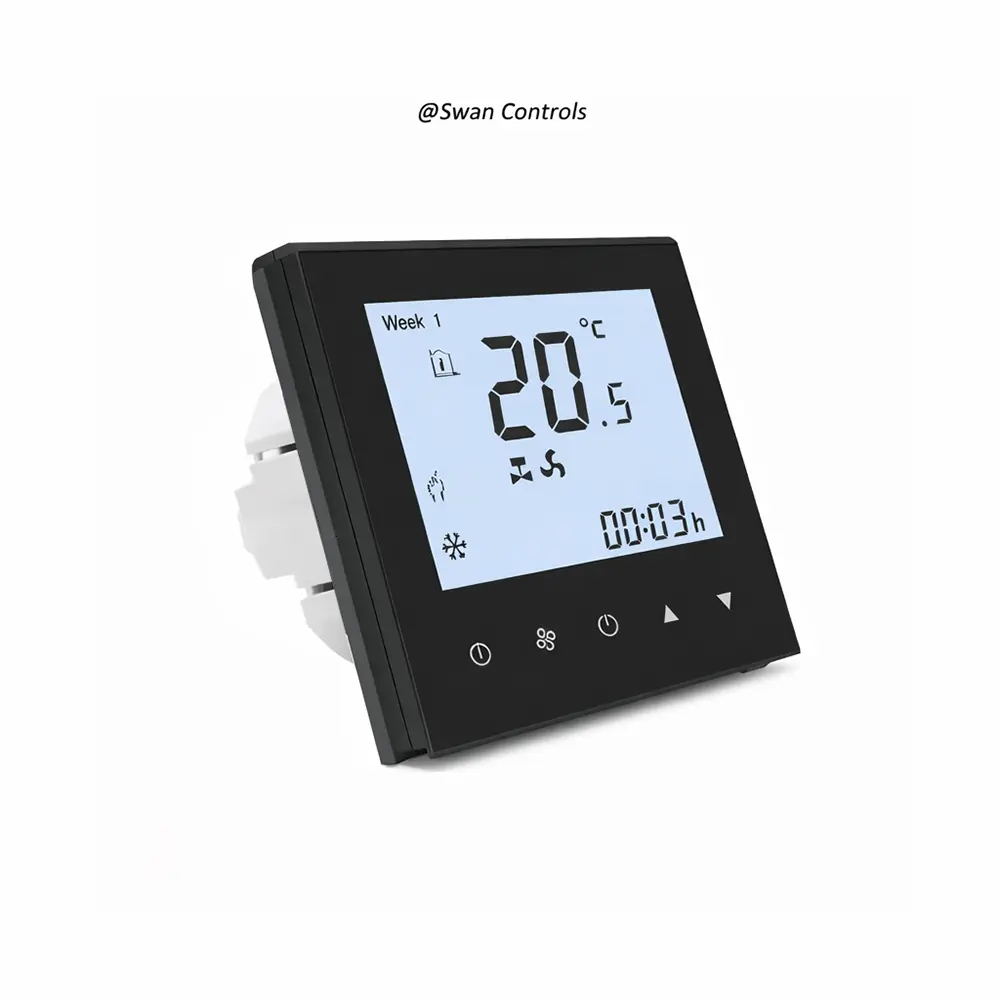
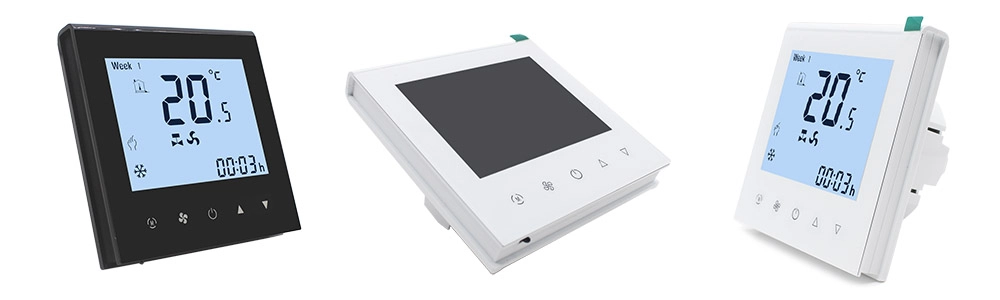
Product Design and Display
(This section shows the thermostat appearance, screen interface, or installation dimensions of this specific model.)
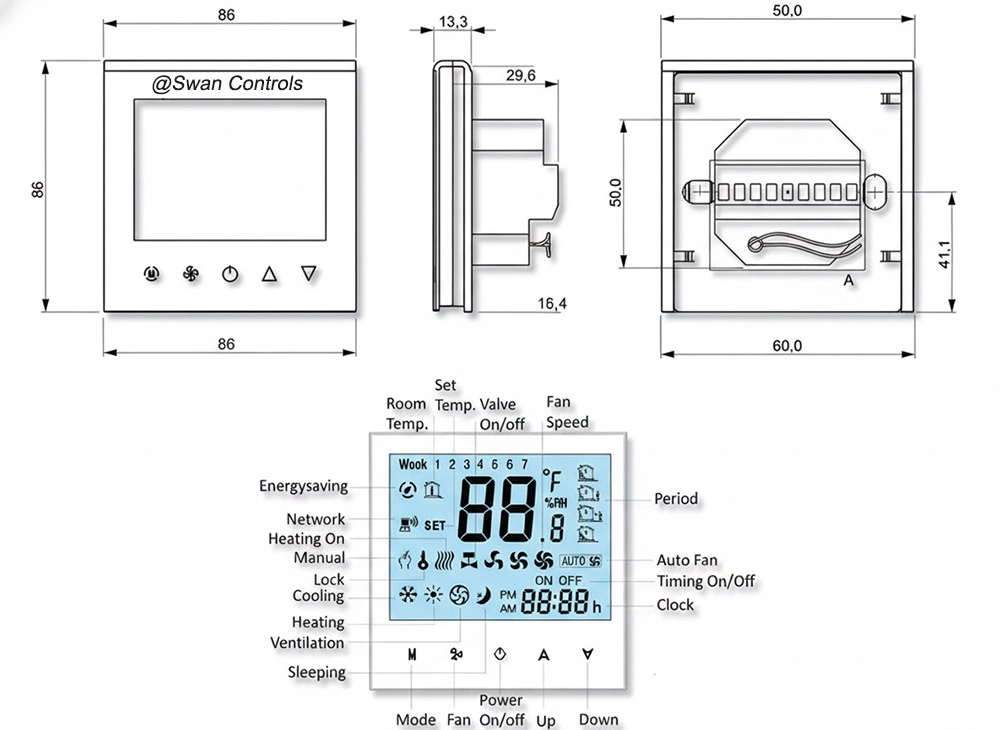
Technical Specifications
(This section lists the key technical parameters relevant to this thermostat model.)
| Parameter | Value |
|---|---|
| Power Supply | 100~240 Vac, 50/60Hz |
| Fan Load | 5A |
| Valve Output | 0–10V Modulating (PICV) |
| Built-in Sensor | NTC3950, 10K |
| Temperature Accuracy | ±0.5°C |
| Set-Point Range | 5~35°C |
| Installation | EU round box or 86x86mm box |
| Warranty | 2 Years |
Wiring Diagram
(This section provides the wiring diagram for this thermostat in the relevant HVAC control system.)
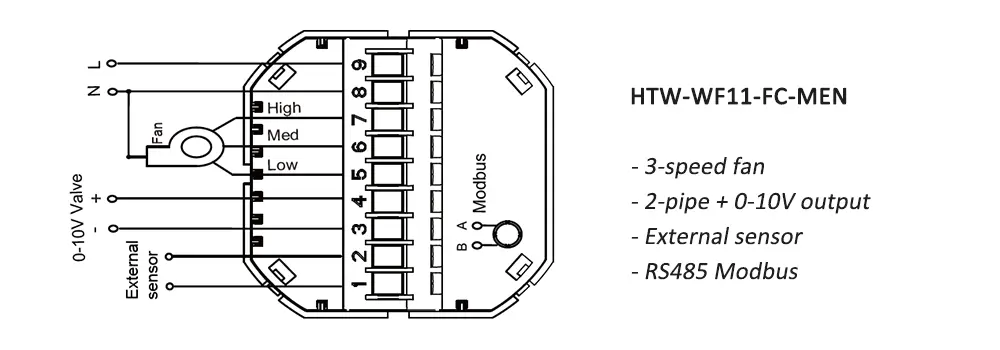
Model Code Guide
(This section explains what configuration the model code refers to.)
| Fan coil series | xx stands for |
|---|---|
| EC | EC fan |
| 2/4 | 2 for 2-pipe on/off; 4 for 4-pipe on/off system |
| M | Modulating valve control |
| W | Wi-Fi |
| N/B | N for Modbus; B for BACnet |
| K/E | K for Keycard; E for External sensor |
| 24 | Powered by 24V, or with 24V output for 0-10V valve |
| Example HTW-WF11-FC-xx: if xx = 2EN, it stands for a 3-speed fan, 2-pipe system with on/off valve control, external sensor function, and Modbus communication. Most sub-models are ready-made. Kindly contact us to confirm availability. | |
Project Fit & Customization
(This section describes project suitability, system limitations, and available customization options.)
This PICV thermostat is not suitable for 4-pipe systems or simple on/off valve control. It is not ideal for standalone use without system coordination. Projects without Modbus infrastructure may not use its full value. It also does not support wireless communication by default.
Despite these limitations mentioned above, ODM customisation can be discussed. Functions such as WiFi, BACnet, or logic changes may be evaluated. Additional control signals or sensor options can also be reviewed. Final feasibility depends on project requirements and volume.
OEM customisation is also supported for branding needs. Logo printing, colour changes, and label adjustments can be arranged. Packaging and manuals can also be customised. These options help match project or distributor requirements.
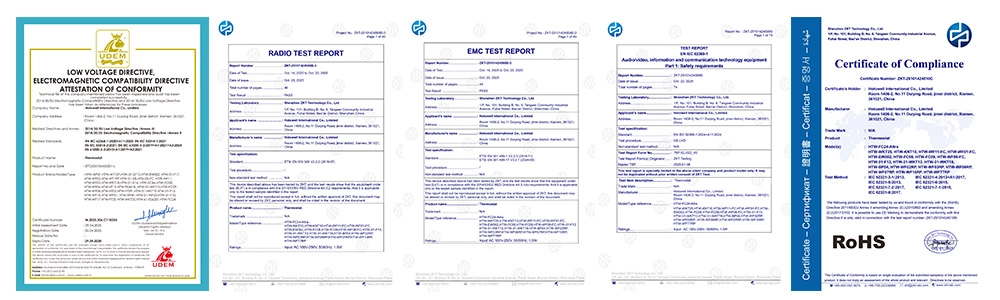
Certificates and Compliance
(This thermostat complies with European market requirements and is supported by certifications such as CE, RoHS, LVD test reports, EMC test reports, etc)
Exhibition Moments
(Our team regularly participates in international HVAC exhibitions such as Febrava in Brazil, The Big 5 in Dubai, and ISK-SODEX in Turkey, etc.)

Frequently Asked Questions
Q1: Can this PICV thermostat work with any 0–10V valve?
It is designed for standard 0–10V PICV valves. Compatibility depends on valve signal requirements. It is best to confirm valve specifications before selection.
Q2: Does it support both heating and cooling?
Yes, it works in 2-pipe systems with seasonal switching. The control logic adapts to heating or cooling demand. This ensures stable operation across different seasons.
Q3: Can it connect to a BMS system?
Yes, it supports Modbus over RS485. This allows integration into most BMS systems. It supports central monitoring and data access.
Q4: When should I use an external sensor?
It is useful in large rooms or poor sensor locations. It improves accuracy when airflow affects readings. It also helps in controlled zones like meeting rooms.
Q5: What is the MOQ and can we get samples?
We support samples for testing and evaluation. Standard MOQ is 300 units. Smaller trial orders, such as 100 units, can be discussed.
Q6: How do we place an order and arrange shipment?
Contact us to confirm requirements and receive a PI. Payment supports TT, PayPal, and Visa. Shipping terms include EXW, FOB, and DAP.
Q7: How long does production take?
Standard samples are ready within 7 days. Customisation usually takes 3 to 5 weeks. Bulk orders around 300 units take about one month.
Q8: What shipping options are available?
Courier delivery takes about 7 days to door. Air freight is similar depending on route. Sea freight usually takes around one month.
Need Help Choosing the Right Model?
If you are selecting a PICV thermostat or planning Modbus integration, contact us. We can review your system and suggest a suitable configuration.
Related Thermostat Models
For more details, please click here directly: Wi-Fi Thermostats | Modbus Thermostats | BACnet Thermostats
Final Note
In FCU projects, stable temperature control and balanced water flow are essential. This PICV thermostat manages fan speeds and modulating valve signals precisely. It helps improve system stability, supports central monitoring, and reduces long-term maintenance effort.