Best Price 3A Boiler Heating Wireless Thermostat Battery Use Heating Temperature Controller
Quick Summary
The HTW-WKT18-NV1 Wireless Thermostat is designed for boiler heating systems that require simple, stable, and non-voltage dry contact control. The wireless panel runs on 2 × AA batteries or USB power, while the receiver connects to 95~230V AC power and controls the boiler through a 3A dry contact output.
For B2B buyers, this model is best suited for residential heating, apartment renovation, retrofit boiler control, and distributors looking for a practical battery powered wireless thermostat without WiFi, app control, Modbus, BACnet, or BMS integration. If your project needs smart remote control, multi-zone management, or building automation communication, another thermostat model should be selected instead.

Product Overview: Wireless Boiler Thermostat for Simple Heating Control
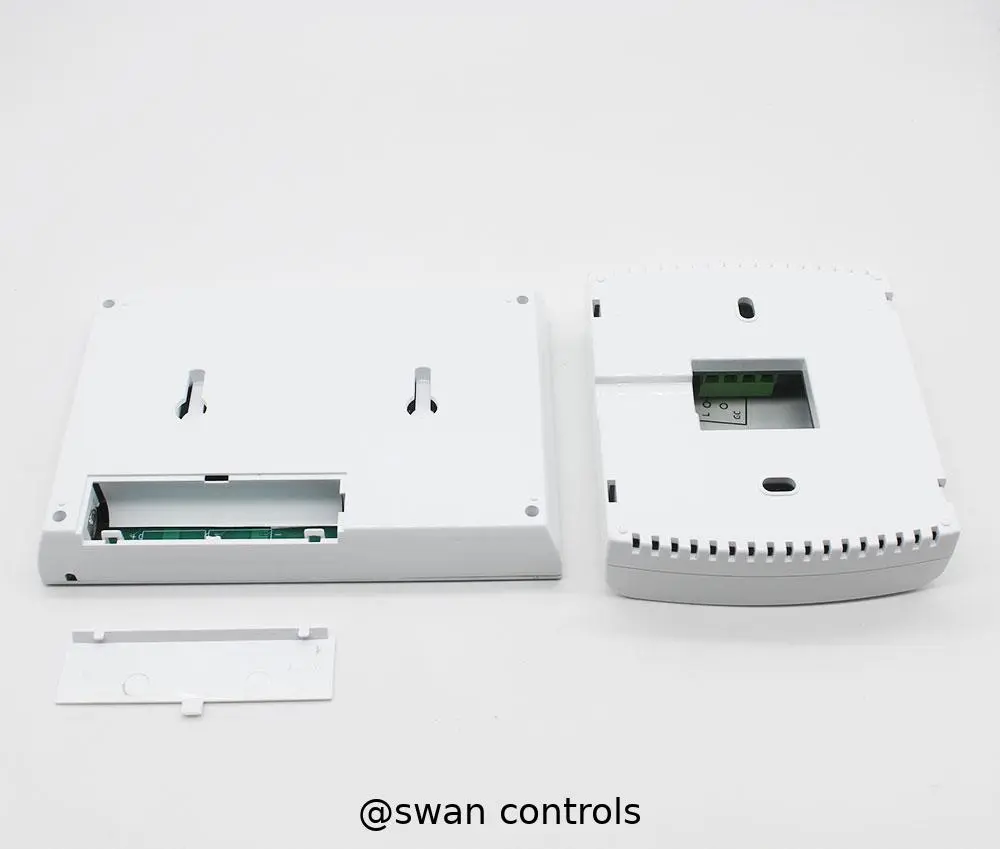
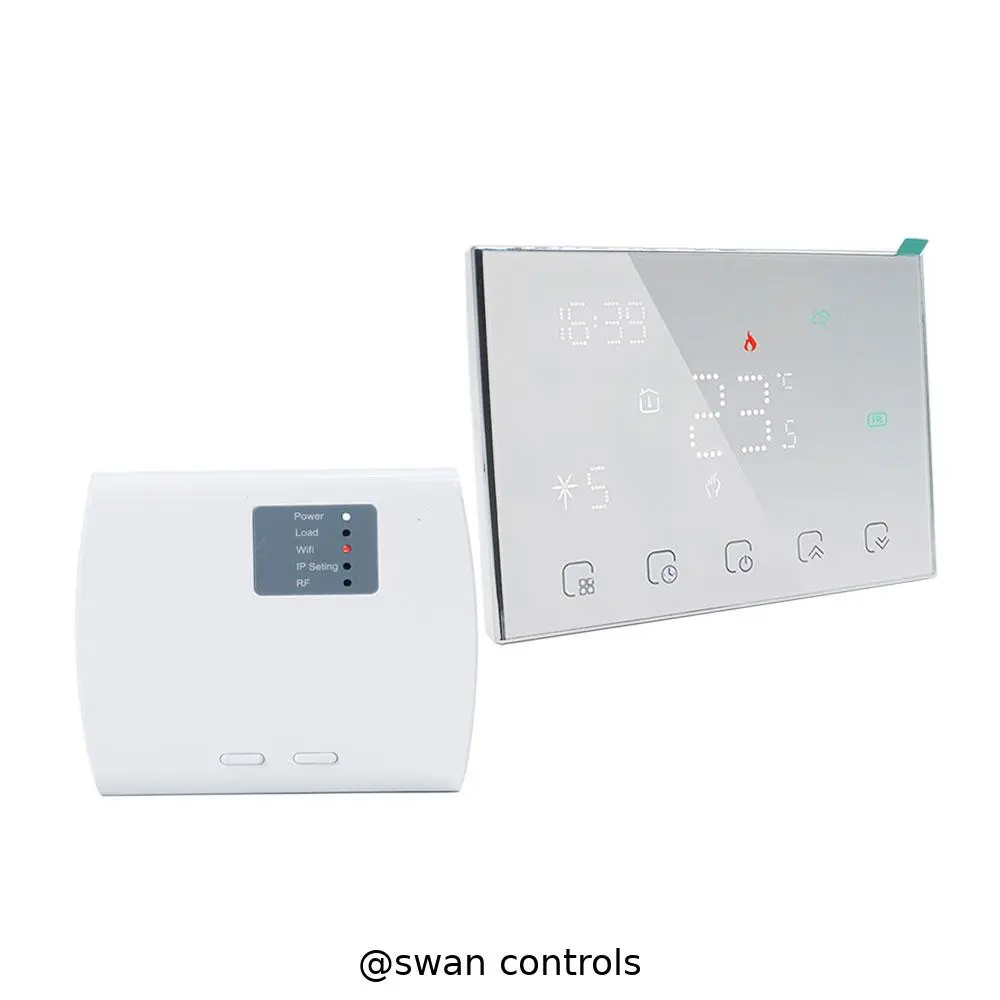
The HTW-WKT18-NV1 Wireless Thermostat is a battery powered heating temperature controller developed for boiler heating applications. It separates the room control panel from the wired receiver, allowing installers to position the thermostat panel freely while keeping the receiver connected to the boiler control terminals.
This structure is especially useful in retrofit projects, finished apartments, rental properties, villa heating systems, and residential boiler upgrades where running new signal cables through walls would increase installation time, labour cost, or decoration damage. In short, this model solves a very practical problem: stable boiler control without complicated wall wiring.
The product uses a dry contact output, also known as non-voltage contact control. This makes it suitable for many boiler systems that require an external thermostat signal rather than direct line-voltage output. For distributors, HVAC contractors, and heating system suppliers, this model offers a straightforward product option for standard boiler heating projects.
Product Summary
The HTW-WKT18-NV1 is a wireless boiler heating thermostat with a battery powered control panel, 95~230V AC powered receiver, internal NTC room sensor, 0.5°C temperature accuracy, and 3A dry contact output. It is suitable for boiler heating systems that require simple room temperature control, flexible installation, and OEM branding options, but it is not intended for WiFi control, BMS integration, Modbus, BACnet, or advanced multi-zone automation.
Core Buying Information
| Item | Details |
|---|---|
| Product Type | Wireless boiler heating thermostat with separate receiver and control panel |
| Best Application | Boiler heating systems, residential heating control, retrofit heating projects, apartment renovation, and standard room temperature control |
| Control Method | Non-voltage dry contact output, 3A |
| Panel Power | 2 × AA battery or USB power supply |
| Receiver Power | 95~230V AC, 50/60Hz |
| Not Suitable For | BMS integration, Modbus, BACnet, WiFi app control, advanced smart home automation, and complex multi-zone heating control |
Key Features and Practical Value
Dry Contact Output for Boiler Heating Systems
The HTW-WKT18-NV1 uses a 3A non-voltage dry contact output. This is one of the most important features for boiler heating projects because many boilers do not require direct power output from the thermostat. Instead, they require a clean switching signal to start or stop heating according to room temperature demand.
For buyers, this matters because choosing the wrong output type can cause wiring mismatch, installation failure, or even equipment damage. If your boiler requires dry contact input, this NV model is the correct direction. If your project requires line-voltage output for electric underfloor heating, a 16A model should be selected instead.
Wireless Panel and Receiver Structure
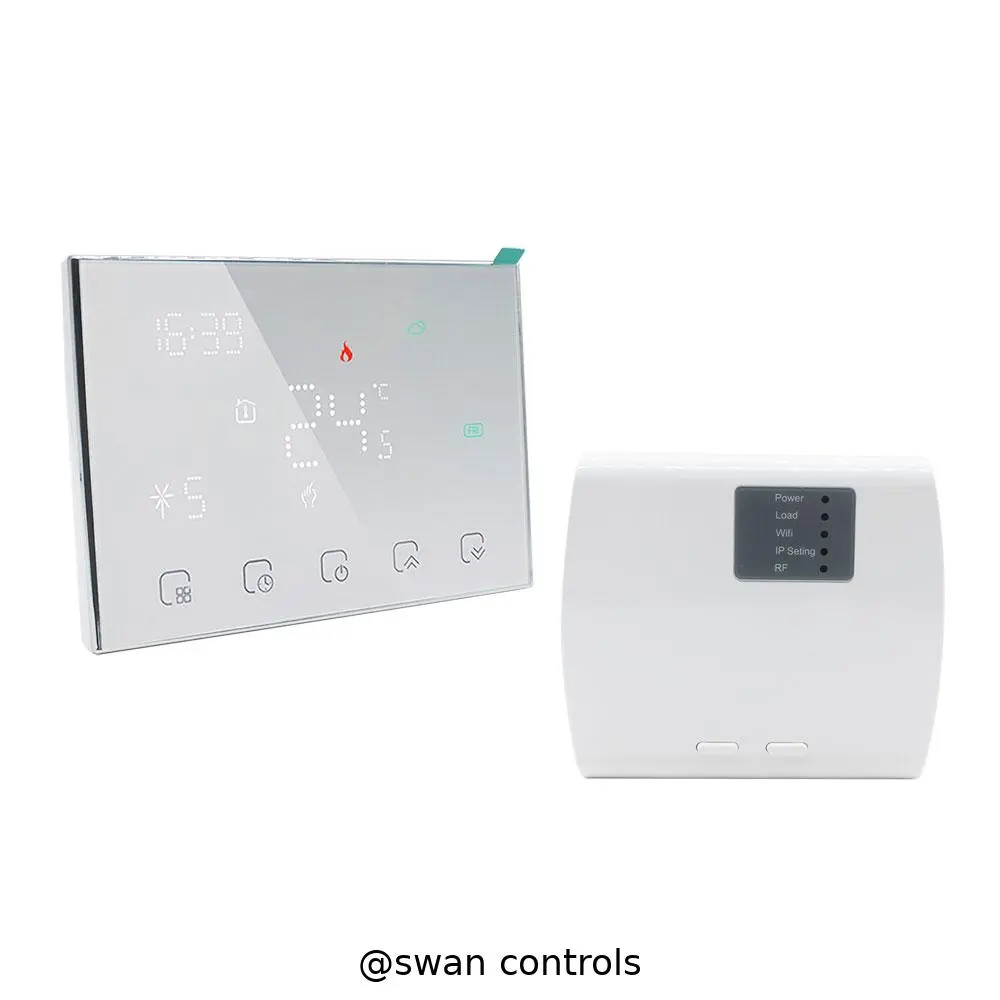
The thermostat panel communicates wirelessly with the receiver, so there is no need to run control wiring between the wall panel and the boiler receiver. This makes installation easier in finished houses, hotel rooms, apartments, office rooms, and retrofit projects where wall cutting or cable routing is inconvenient.
This structure also gives end users more freedom to place the thermostat in a practical location. Instead of being limited by existing wiring points, the panel can be placed where room temperature measurement is more representative and user operation is more convenient.
Battery Powered Control Panel
The control panel supports 2 × AA batteries or USB power supply. Battery operation reduces dependency on fixed power wiring and helps installers complete projects faster. For distributors and contractors, this can improve product flexibility across different installation environments.
However, buyers should also understand the practical limitation: battery powered panels require battery replacement after long-term use. For projects where maintenance access is difficult, the USB power option or a hardwired model may be more suitable.
Internal NTC Sensor for Room Temperature Control
The thermostat uses an internal NTC3950 10K sensor to detect room temperature. This is suitable for standard indoor boiler heating control where the main requirement is stable room temperature adjustment.
If your project requires floor temperature protection, external sensor control, or electric heating cable temperature monitoring, this model is not the best choice. A model with external sensor support should be selected instead.
Simple Operation for Standard Heating Projects
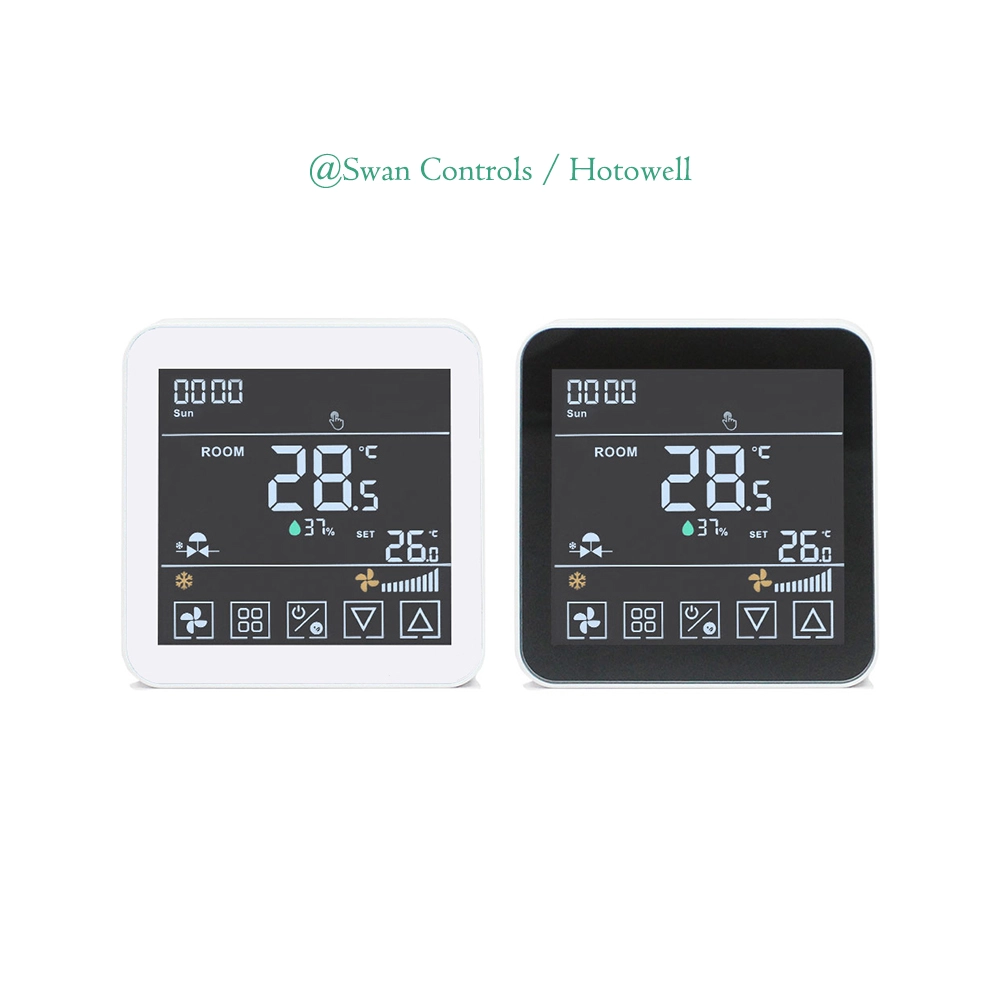
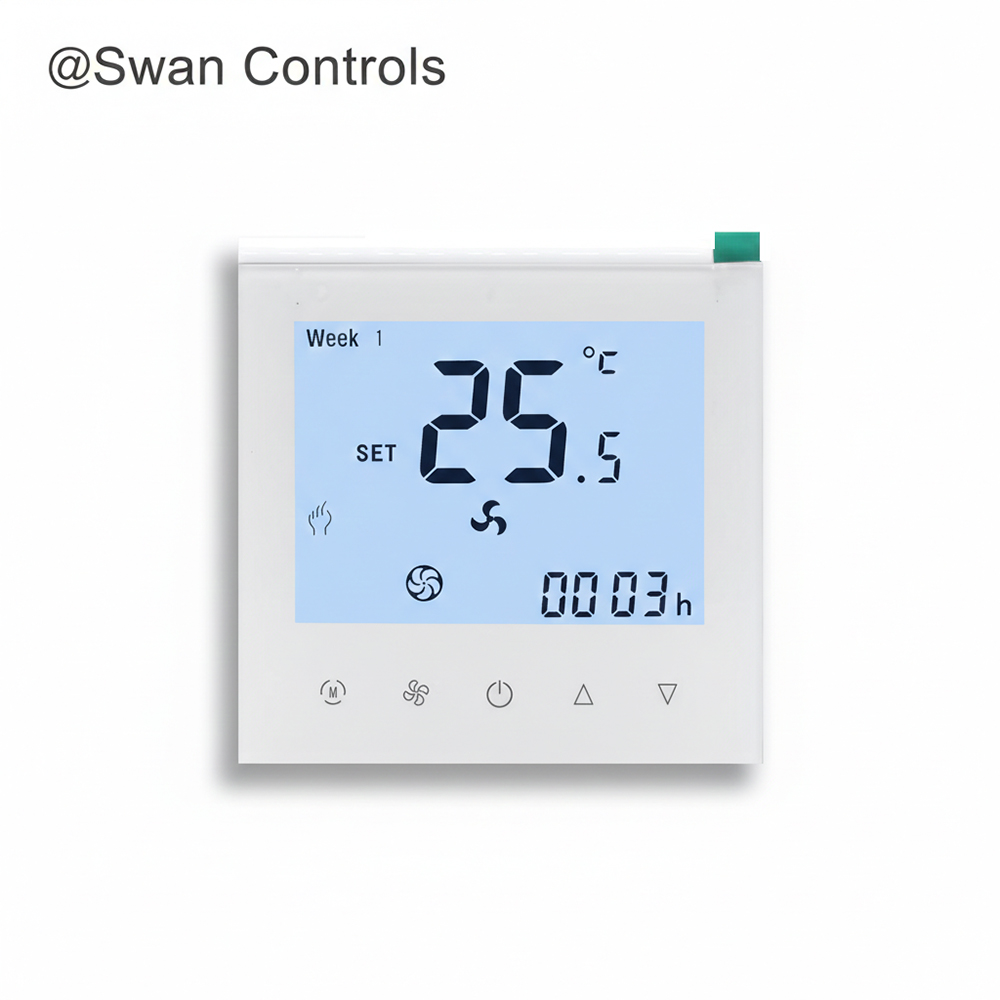
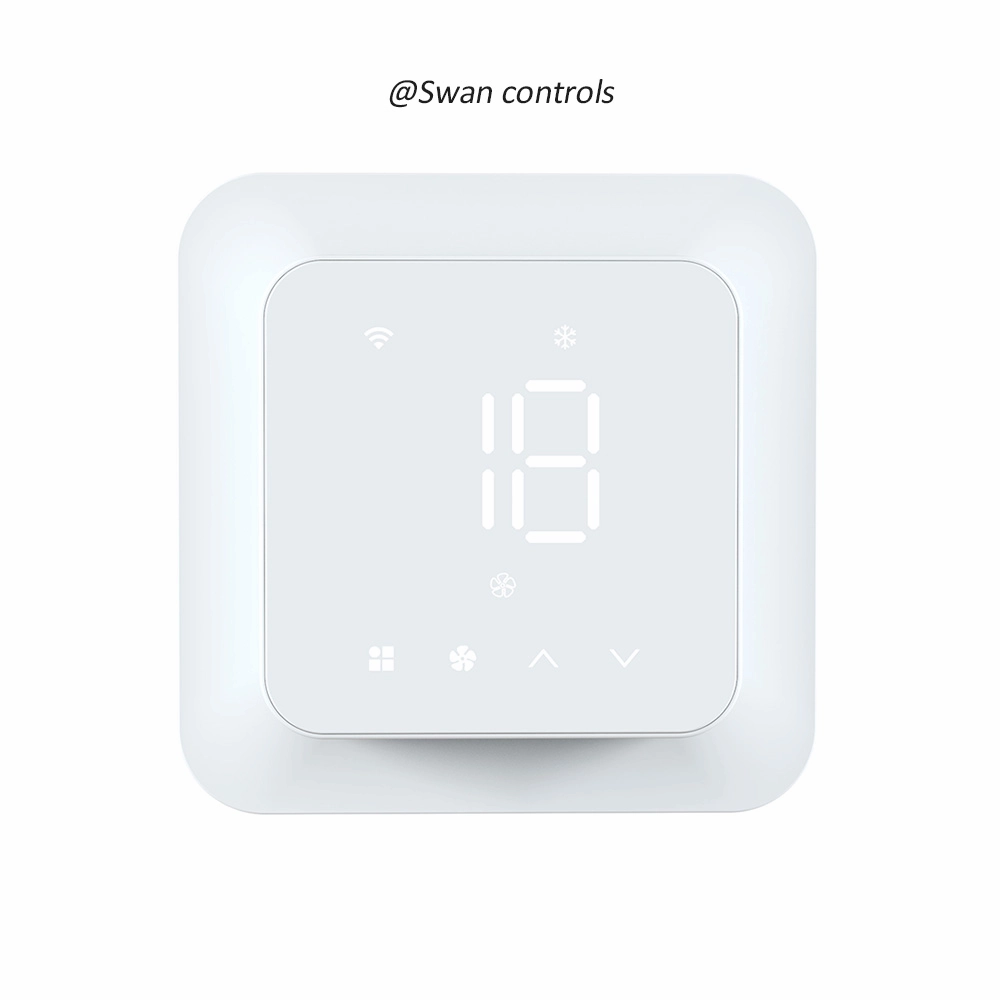
The LED screen displays temperature clearly, and the capacitive touch buttons support simple operation. For residential users, simplicity is not a small detail. A thermostat that is too complex often increases after-sales questions, incorrect settings, and user complaints. This model focuses on stable heating control rather than unnecessary smart functions.
Technical Specifications
| Parameter | Value | Buyer Note |
|---|---|---|
| Receiver Power Supply | 95~230V AC, 50/60Hz | Suitable for common mains-powered receiver installation |
| Panel Power Supply | 2 × AA Battery / USB | Flexible placement without fixed panel wiring |
| Control Output | Dry contact, 3A | Designed for boiler control terminals requiring non-voltage switching |
| Temperature Accuracy | 0.5°C | Suitable for normal indoor heating comfort control |
| Temperature Range | 5~35°C | Covers standard residential heating temperature settings |
| Sensor | NTC3950, 10K | Internal room temperature sensing |
| Ambient Condition | 0~45°C, 5~95% RH | For indoor use under normal operating conditions |
| Protection Class | IP20 | Indoor use only; avoid wet or dusty installation areas |
How This Wireless Thermostat Works
The HTW-WKT18-NV1 includes two main parts: a wireless room panel and a wired receiver. The room panel detects indoor temperature through its internal sensor. When the room temperature is lower than the set temperature, the panel sends a wireless signal to the receiver. The receiver then switches the dry contact output to activate the boiler heating signal.
When the room temperature reaches the target setting, the panel sends the stop signal, and the receiver opens or closes the dry contact according to the control logic. This simple signal switching structure makes the thermostat easy to understand, install, and maintain.
The key point for buyers is compatibility. This model does not directly power the boiler heating load. It only provides dry contact switching. That is exactly why it is suitable for many boiler control systems, but not suitable for direct electric heating load control.
Wiring and Installation Guidance
The receiver should be connected to the boiler control terminals according to the wiring diagram and boiler manual. The receiver itself requires 95~230V AC power. The dry contact terminals should be connected only to compatible boiler control terminals.
Before installation, the buyer or installer should confirm whether the boiler requires NC, NO, and COM dry contact wiring. Incorrect wiring may lead to failure to start heating, unstable control, or control signal errors. Electrical installation should be performed according to local safety standards and by qualified personnel where required.
| Installation Checkpoint | Why It Matters | Recommended Action |
|---|---|---|
| Boiler input type | Not all heating systems use dry contact input | Confirm boiler thermostat terminal type before ordering |
| Receiver power supply | The receiver requires 95~230V AC power | Check installation voltage and wiring position |
| Panel placement | Poor placement can affect temperature reading | Avoid direct sunlight, windows, radiators, and air outlets |
| Wireless signal distance | Walls and metal structures may affect communication | Test signal stability before final installation |
| Indoor environment | IP20 is not suitable for wet areas | Install in dry indoor spaces only |
Buyer Selection Logic: Which Thermostat Should You Choose?
Choosing a thermostat is not only about screen design or price. The real decision depends on heating type, output method, wiring condition, user control demand, and project integration requirements.
| Project Situation | Recommended Choice | Reason |
|---|---|---|
| You need to control a boiler with dry contact input | Choose HTW-WKT18-NV1 | It provides non-voltage dry contact switching for boiler control |
| You need WiFi or app remote control | Choose a WiFi wireless boiler thermostat model such as HTW-WKT18-NV3 | HTW-WKT18-NV1 is standalone and does not support app control |
| You need electric underfloor heating control | Choose a 16A electric heating thermostat | Electric heating requires line-voltage load output and often external sensor support |
| You need simple retrofit installation | Choose a wireless battery powered model | No control wiring is required between panel and receiver |
| You need BMS, Modbus, or BACnet integration | Choose an integration-ready thermostat model | This model does not support building automation communication |
Comparison: Wireless Boiler Thermostat vs Wired Thermostat vs WiFi Thermostat
Different thermostat types solve different problems. A wireless boiler thermostat is not always the most advanced option, but it can be the most practical option when installation flexibility and simple boiler control are the main priorities.
| Thermostat Type | Main Advantage | Main Limitation | Best For |
|---|---|---|---|
| Wireless Boiler Thermostat | Flexible panel placement and easier retrofit installation | Wireless signal should be tested before final installation | Boiler heating projects where wiring is difficult |
| Wired Boiler Thermostat | Stable direct wiring and no battery replacement | Requires control cable between thermostat and boiler | New construction or projects with prepared wiring |
| WiFi Smart Thermostat | Remote app control and smart scheduling options | Requires network setup and may increase after-sales support | Smart home projects and users needing remote operation |
| BMS-Compatible Thermostat | Supports building automation and centralized management | Higher system complexity and project confirmation needed | Commercial buildings, hotels, offices, and HVAC integration projects |
Common Buyer Mistakes Before Ordering
Mistake 1: Choosing a Boiler Thermostat Without Confirming Output Type
The most common mistake is assuming that all heating thermostats work with all heating systems. They do not. Boiler heating, water heating, and electric underfloor heating may require different output structures. If a buyer chooses a 16A electric heating thermostat for a dry contact boiler project, the product may not match the installation requirement.
Mistake 2: Treating Wireless as the Same as WiFi
Wireless communication between the panel and receiver does not mean app control. The HTW-WKT18-NV1 is wireless between panel and receiver, but it is not a WiFi smart thermostat. Buyers who need mobile app control should choose a WiFi version instead.
Mistake 3: Ignoring Battery Maintenance
Battery powered panels are convenient for installation, but batteries must be replaced after long-term use. For projects where maintenance access is difficult, buyers should evaluate whether USB power supply or another wired model is more suitable.
Mistake 4: Installing the Panel in the Wrong Location
If the panel is placed near a window, radiator, direct sunlight, kitchen heat source, or air outlet, the temperature reading may not represent actual room comfort. Poor placement can cause frequent heating start-stop cycles or user complaints.
Mistake 5: Requesting BMS Function from a Standalone Model
This model is not designed for BMS integration, Modbus, or BACnet communication. For commercial projects requiring centralized control, buyers should confirm integration needs before selecting the model.
Application Scenarios
Residential Boiler Heating
This wireless thermostat is suitable for residential boiler heating systems where users need simple indoor temperature control. The dry contact output makes it practical for many boiler control panels, while the battery powered panel reduces installation complexity.
Apartment Renovation Projects
In apartment renovation projects, running new wires may damage walls or increase installation cost. The wireless panel and receiver structure allows installers to upgrade thermostat control with less construction work.
Rental Property Heating Upgrades
For rental property owners, simple operation and flexible installation are valuable. This thermostat can help improve heating control without requiring a complicated smart control system.
HVAC Distributor Product Lines
For distributors, the HTW-WKT18-NV1 can serve as a practical boiler thermostat option for standard projects. OEM branding, colour changes, and label design can also support different market positioning requirements.
Model Code Guide
The model code helps buyers understand the heating application and output configuration. Confirming the correct code before ordering reduces project mismatch and improves installation efficiency.
| Heating Series / Code | Meaning | Typical Application |
|---|---|---|
| 3A | Water heating with NC + NO + COM output terminals | Water heating control |
| 16A | Electric underfloor heating with L + N line voltage output terminals and external sensor | Electric floor heating systems |
| NV | Boiler heating with non-voltage dry contact | Boiler control systems |
| 1 | Standalone model | Projects without WiFi or app control requirement |
| Example: HTW-WF11-xx. If xx = 16A3, it refers to an electric floor heating model with external sensor support and WiFi function. Most sub-models are ready-made, but availability should be confirmed before ordering. | ||
Project Fit and Customization Options
The HTW-WKT18-NV1 is a good fit for simple boiler heating projects where the buyer needs wireless installation, dry contact output, and straightforward room temperature control. It is not suitable for BMS integration, Modbus, BACnet, WiFi app control, or advanced multi-zone control systems.
For OEM and ODM projects, customization can be discussed based on actual requirements. Branding options may include logo printing, colour adjustment, label design, and packaging support. For deeper ODM customization, communication modules, control logic, hardware structure, or interface requirements may be evaluated depending on project feasibility.
| Customization Item | Available Option | Buyer Value |
|---|---|---|
| Logo Printing | Brand logo on panel or packaging | Supports distributor branding and private label sales |
| Colour Adjustment | Panel colour discussion based on MOQ and feasibility | Matches different market design preferences |
| Label Design | Product label, rating label, and market-specific information | Improves local market readiness |
| Packaging Support | Neutral packaging or customized packaging discussion | Helps distributors prepare retail or project delivery |
| ODM Evaluation | Control logic or hardware adjustment discussion | Useful for project-based product development |
Certificates and Compliance
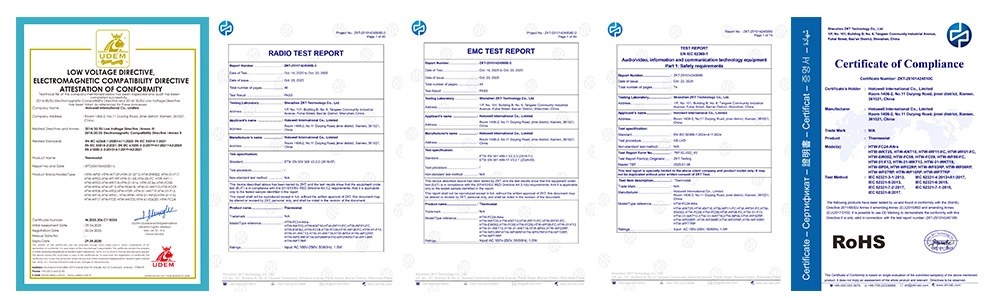
For B2B thermostat buyers, certificates and compliance documents are important for market access, distributor confidence, and project approval. Certification availability may depend on model, market, and project requirement, so buyers should confirm required documents before bulk ordering.

Ordering, MOQ, Payment, and Shipping
Sample orders are supported for testing and initial project evaluation. The standard MOQ is 300 units, while smaller quantities may be discussed depending on project stage and availability. For distributors, testing samples before bulk orders is recommended because it helps confirm boiler compatibility, wireless signal stability, appearance, packaging, and local user operation habits.
| Order Item | Information | Buyer Recommendation |
|---|---|---|
| Sample Order | Supported | Recommended before bulk purchasing |
| Standard MOQ | 300 units | Smaller quantities may be discussed for testing |
| Payment | TT, PayPal, Visa | Confirm payment terms before proforma invoice |
| Trade Terms | EXW, FOB, DAP | Select based on shipping responsibility and destination |
| Express Shipping | About 7 days | Suitable for samples and urgent small orders |
| Air Shipping | Similar timing to express in many cases | Suitable for faster project delivery |
| Sea Shipping | Usually over one month depending on destination | Suitable for larger bulk orders |
Related Thermostat Models
If your project requires other thermostat configurations, please review related thermostat categories or contact us for model selection advice. Choosing the correct output type is more important than choosing based only on appearance.
Electric Underfloor Heating Thermostat
Water Underfloor Heating Thermostat
HTW-WKT18-NV3 WiFi Wireless Boiler Heating Thermostat
Recommendation for B2B Buyers
If your project needs a simple, reliable, non-WiFi wireless thermostat for boiler heating, the HTW-WKT18-NV1 is a practical choice. It is especially suitable when the boiler supports dry contact input and the installation site does not allow easy control cable routing between the room panel and receiver.
If your customer needs app control, remote scheduling, smart home integration, or voice assistant compatibility, select a WiFi boiler thermostat instead. If your project involves electric underfloor heating, choose a 16A electric heating thermostat with external sensor support. If the project requires hotel, office, or building automation integration, request a BMS-compatible model rather than using this standalone thermostat.
For distributors and project buyers, the safest ordering path is simple: confirm boiler terminal type, test samples in the target market, verify packaging and branding requirements, then proceed with bulk production after technical confirmation. This avoids the classic “looks correct but wires wrong” problem — the thermostat world’s tiny little banana peel.
Frequently Asked Questions
Q1. Can this wireless thermostat be used with all boiler systems?
It supports most boiler systems using dry contact input. Please confirm your boiler control interface before use to ensure compatibility. If the boiler requires line-voltage output or a special communication protocol, this model may not be suitable.
Q2. Does this wireless thermostat require wiring between the panel and receiver?
No, the panel communicates wirelessly with the receiver. This reduces installation work and is suitable for retrofit or finished buildings where running new control cables would be difficult.
Q3. Can this thermostat be used for electric heating systems?
No, this model is designed for boiler heating only. For electric underfloor heating, a 16A output thermostat with appropriate load control and external sensor support is recommended.
Q4. Does this model support WiFi or mobile app control?
No, this model is a standalone wireless thermostat and does not support WiFi or mobile app control. If remote control is required, please choose a WiFi wireless boiler thermostat model instead.
Q5. Is this thermostat suitable for BMS, Modbus, or BACnet projects?
No, this model is not suitable for BMS integration, Modbus, or BACnet communication. For commercial buildings or centralized HVAC control projects, an integration-ready thermostat should be selected.
Q6. What is the MOQ and can we get samples?
Sample orders are supported for testing and project evaluation. The standard MOQ is 300 units, but smaller quantities can be discussed for initial testing or market validation.
Q7. How do we place an order?
Please contact us to confirm the required model, application, quantity, branding needs, and shipping destination. A proforma invoice can then be provided. Payment supports TT, PayPal, Visa, and trade terms such as EXW, FOB, and DAP.
Q8. How will the products be shipped?
Express delivery is recommended for samples and usually takes about 7 days. Air shipping offers similar timing in many cases. Sea shipping is more suitable for larger bulk orders and usually takes over one month depending on the destination.
Final Note / Practical Takeaway
The HTW-WKT18-NV1 Wireless Thermostat is a practical choice for boiler heating projects that need dry contact control, flexible panel placement, and simple room temperature management. Its biggest value is not “smart complexity,” but installation convenience and stable boiler switching.
For procurement teams, the key decision is compatibility. If your boiler uses dry contact input and your project does not require WiFi, BMS, Modbus, BACnet, or multi-zone automation, this model fits well. If your project requires app control or advanced integration, choose another heating thermostat model before ordering samples.