“The room is too cold in the morning, but too warm at night.”
“The fan is running, but the room does not feel comfortable.”
“The thermostat looks fine, but the control result is not stable.”
These are common comments in real HVAC projects. They are heard in homes, apartments, hotel rooms, offices, and small commercial spaces. In many cases, the fan coil unit is not the main problem. The issue starts at the control side. More exactly, it starts with the thermostat choice.
A thermostat is a small device, but it has a big effect on room comfort. It tells the system when to cool, when to heat, when to stop, and how fast the fan should run. If the thermostat is too simple, too weak, or not well matched to the application, users will notice. They may not know the technical reason, but they will feel the result. The room may feel uneven. The fan may be noisy. The temperature may drift. Complaints start from there.
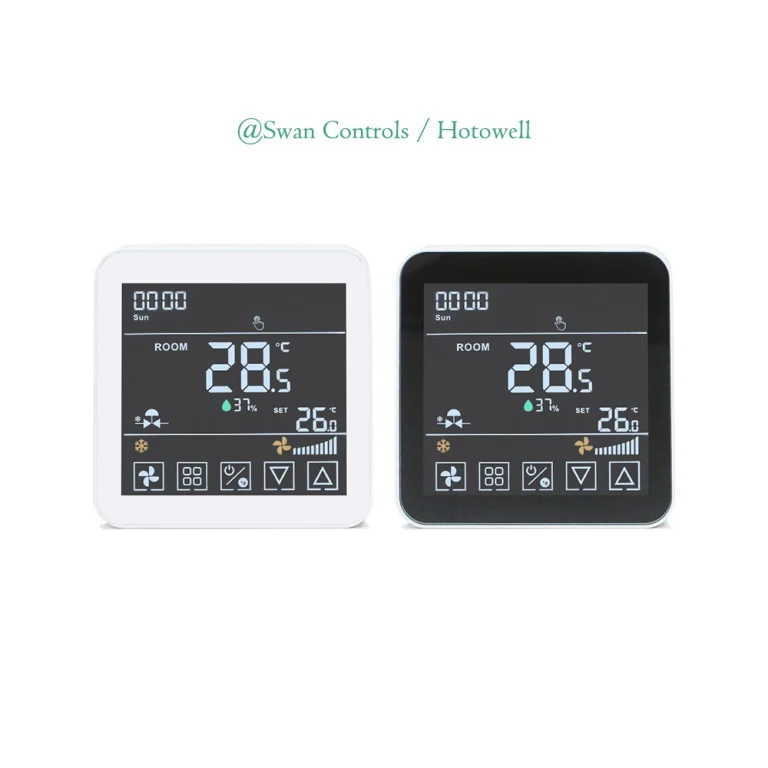
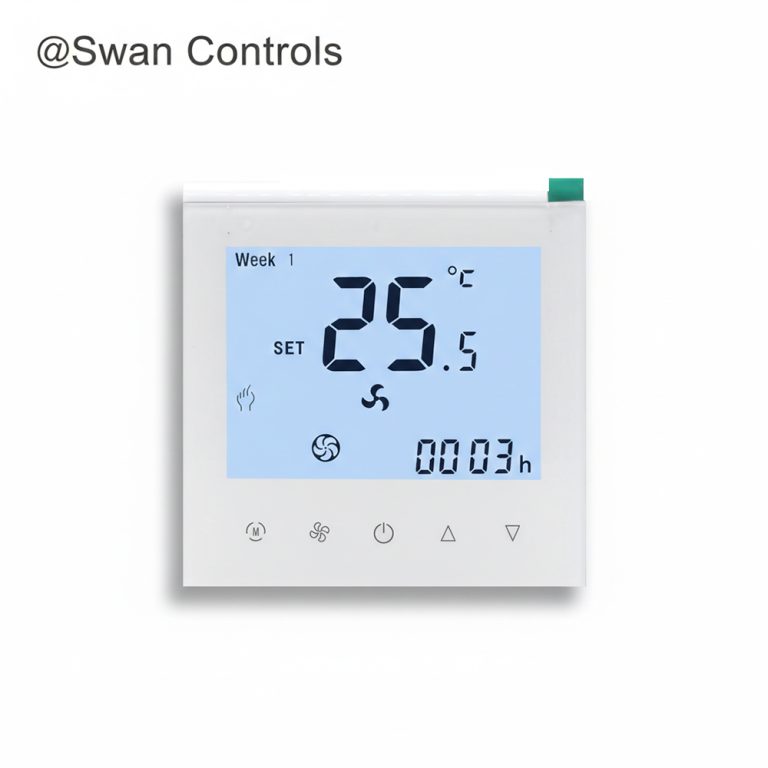
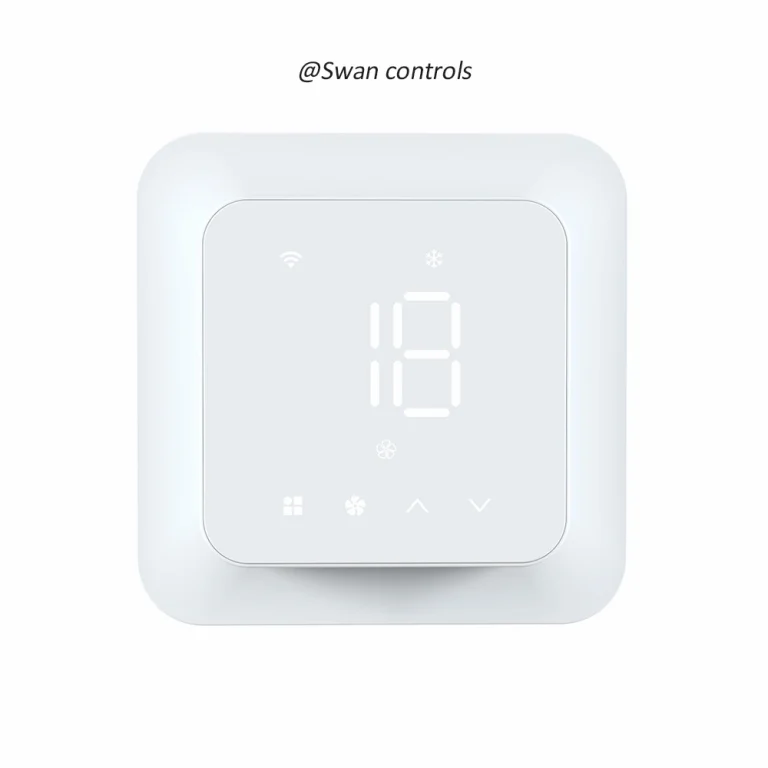
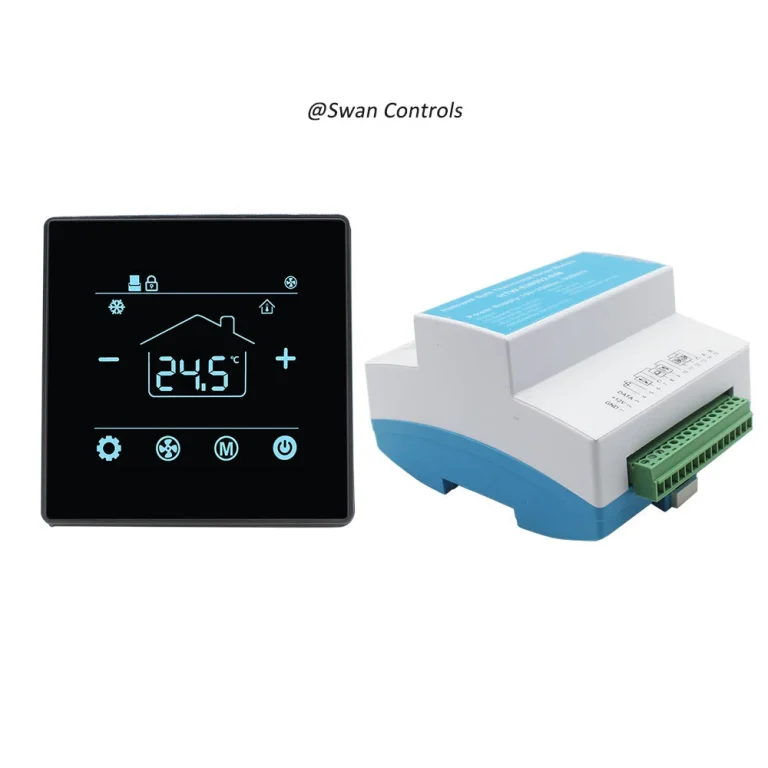
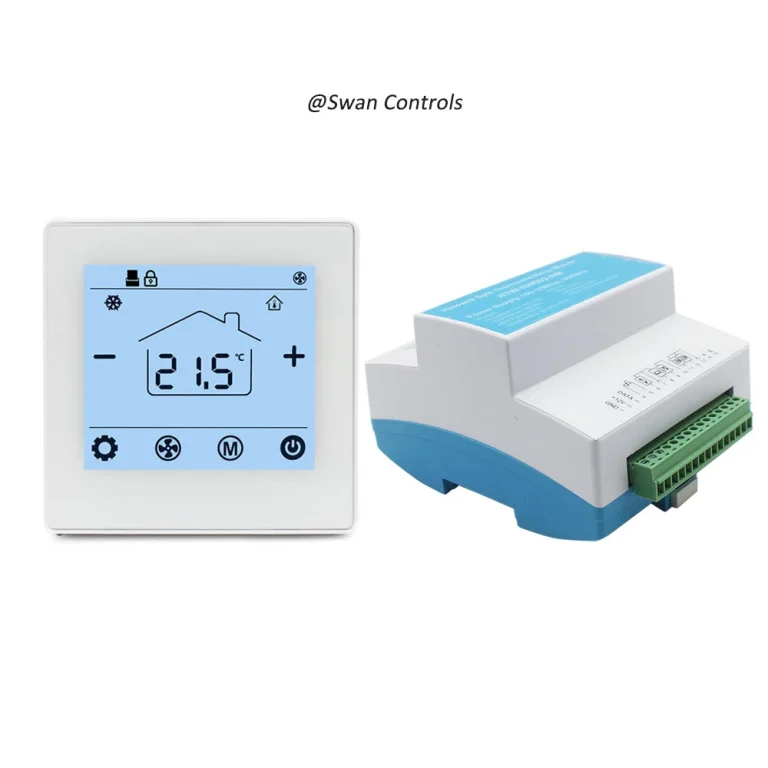
That is why a good thermostat is not just a display on the wall. Thermostat should read temperature correctly, switch the fan coil unit clearly, support stable fan control, and work well over time. For many FCU applications, a model with an external sensor, 3 fan speed control, and a 7A relay is a much better choice than a basic low-cost unit.
This article explains why. It also shows what buyers, contractors, and HVAC distributors should look for when choosing a fan coil thermostat or home thermostat for daily use. The goal is simple: better comfort, fewer complaints, and more reliable control.
Why a Better Thermostat Matters in Fan Coil Unit Control
Many buyers first compare price. That is normal. But in real operation, a thermostat is not judged by its price. It is judged by its control result. If the room feels stable and the fan responds well, users are satisfied. If the room feels wrong, the thermostat gets blamed first.
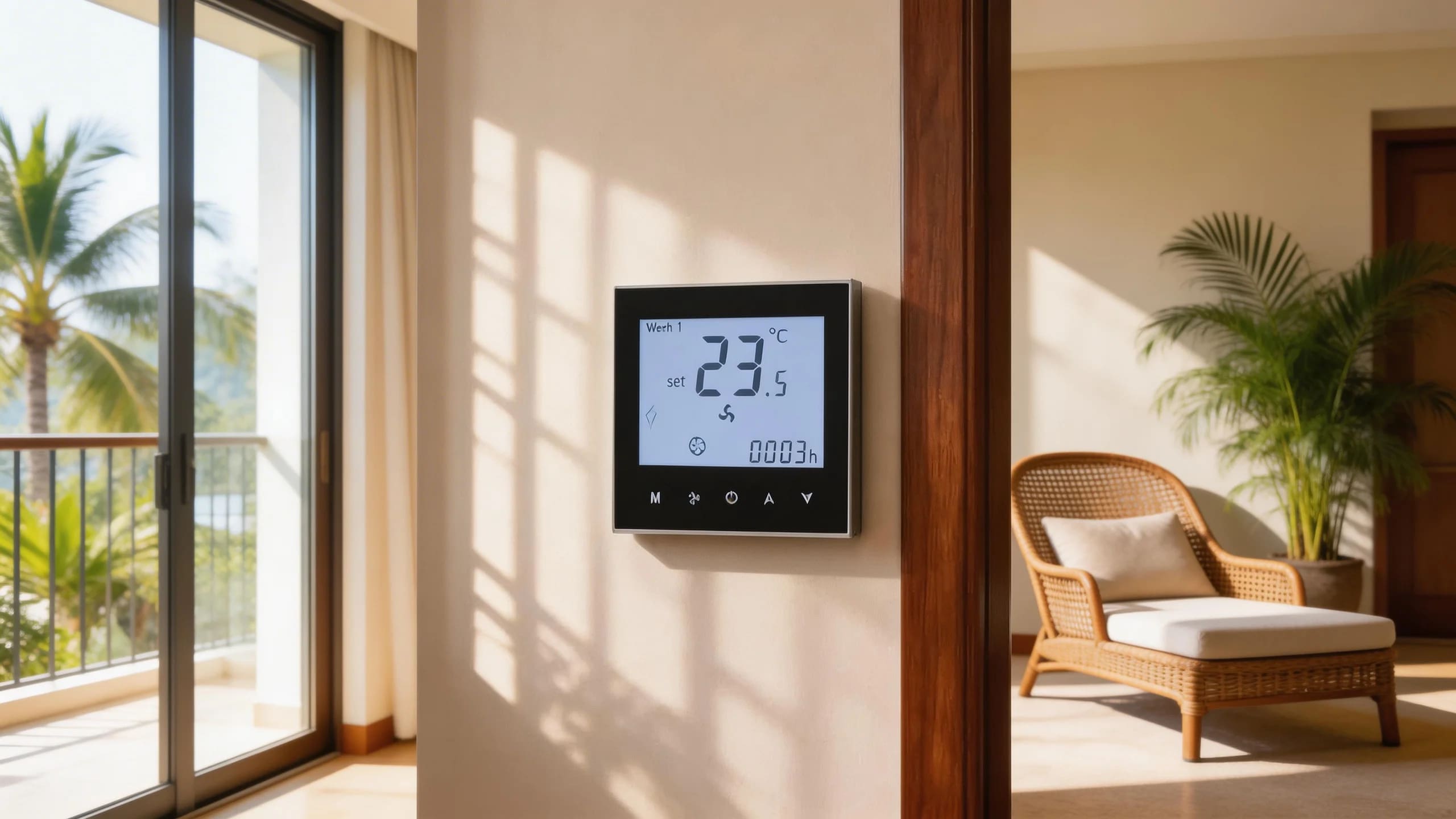
In a fan coil unit system, the thermostat does more than switch on and off. It needs to control the fan speed, react to room temperature change, and sometimes work with an external sensor. If any part of this control is weak, the whole room experience becomes weak too.
This is why a simple low-end thermostat often causes hidden problems:
- Poor temperature reading
- Slow or unstable fan response
- Weak relay performance
- More noise at the wrong time
- More user adjustment and more complaints
For a project buyer, this creates extra cost later. A cheaper product may save a little at purchase stage, but it may cost more in service, returns, and customer dissatisfaction. For many HVAC suppliers, that is where a higher-quality digital thermostat becomes the better business choice.
External Sensor: Why It Improves Temperature Accuracy
An external sensor is one of the most useful features in a modern room thermostat. It is not just a technical add-on. It solves a real problem.
A built-in sensor reads temperature at the thermostat body. That can work well in some rooms. But in many projects, the thermostat is affected by wall temperature, airflow, sunlight, nearby heat, or even people moving near it. When that happens, the thermostat may read a temperature that is not fully equal to the real room condition.
An external sensor helps reduce that risk. It gives the control system another point of temperature reading. This improves accuracy and gives more stable control logic.
Key benefits of an external sensor:
- Better room temperature feedback
- Lower risk of false reading
- More stable cooling or heating response
- Better comfort in larger rooms
- Useful when thermostat location is not ideal
This is especially valuable in projects where comfort expectations are high. In a hotel, guests often react quickly to poor room temperature. In a home, users want the room to feel right without touching the thermostat all day. In an office, stable temperature helps reduce daily complaints from staff.
For these reasons, an external sensor is often a strong advantage in a home thermostat used with FCU systems. It is also useful for HVAC distributors looking for a product that is easier to position as high quality, not just basic.
Fan Speed Control: More Than a Simple Feature
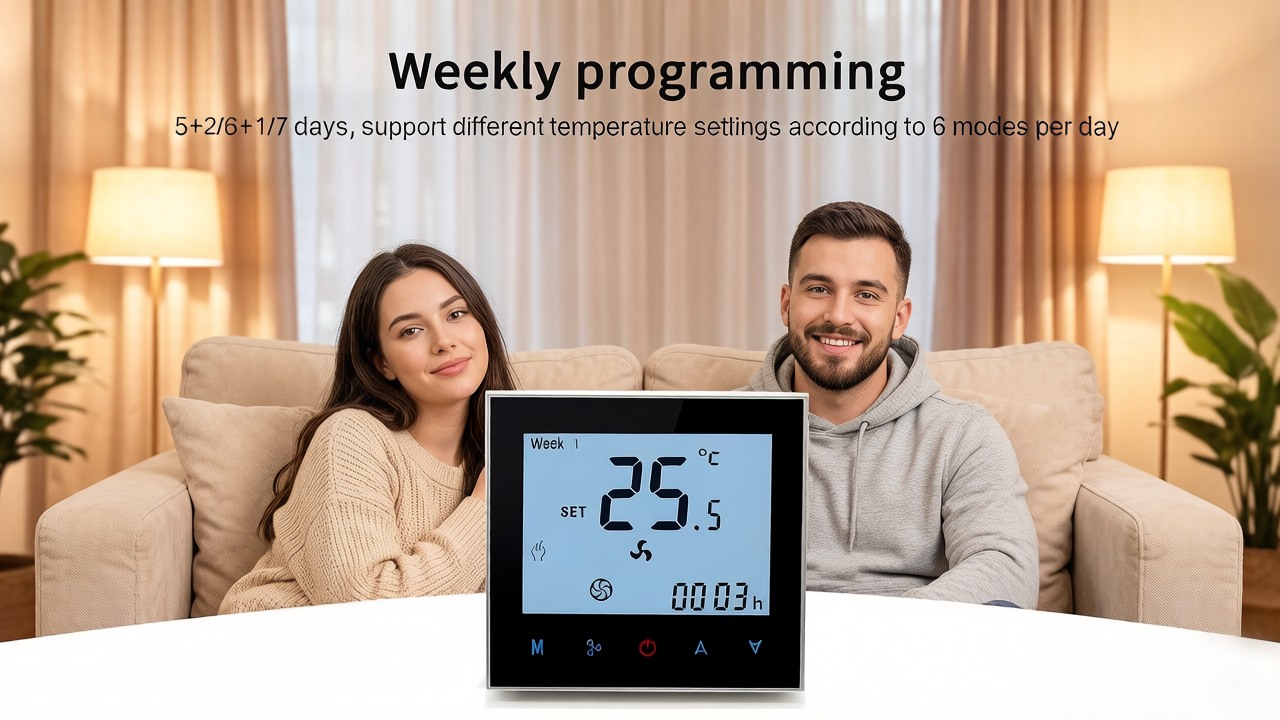
Many users think fan control is simple. It is not. Fan speed changes how fast the room cools or heats, how much air moves through the space, and how much noise people hear.
A thermostat with 3 fan speed control gives a better balance between response and comfort. This means the system is more flexible in real use.
Typical control logic works like this:
- Low speed for quiet and stable maintenance
- Medium speed for balanced daily control
- High speed for faster cooling or heating demand
This brings several practical benefits.
First, comfort improves. The room can reach setpoint more smoothly. Second, noise is better controlled. The fan does not always need to run at a strong level. Third, energy use can be more reasonable because the fan works according to demand, not only at one fixed state.
For many hotel and residential projects, this matters a lot. People feel fan noise at night. They also notice when air movement is too strong or too weak. A 3 speed fan coil thermostat gives the system a better chance to match real room needs.
For buyers comparing products, this means 3 fan speed control should not be treated as a decorative selling point. It is a core control value. When comfort is important, this feature should be high on the checklist.
7A Relay: Small Specification, Big Impact
The relay is not the first thing most customers ask about. But it is one of the most important parts inside the thermostat.
The relay is responsible for switching loads. If relay quality is weak, the thermostat may still look good on the wall, but internal switching reliability can become the weak point. Over time, this may affect fan control and long-term performance.
A 7A relay offers stronger switching support for fan coil unit applications. It gives more confidence in daily use, especially where the thermostat needs stable fan control over long periods.
Why this matters:
- Better switching reliability
- Lower risk of contact wear
- More stable operation under load
- Longer practical service life
Problems caused by weak relay design may include:
- Fan does not switch correctly
- Response becomes delayed
- Contacts wear too early
- Service or replacement is needed sooner
From a sales point of view, relay capacity helps support a “best quality” position. Buyers looking for a thermostat manufacturer or thermostat supplier often compare visible features first. But strong internal parts are what protect product reputation later.
Why This Type of Room Thermostat Fits Home, Hotel, and Office Projects
A good product is not only defined by its feature list. It is defined by where it fits and why it fits.
This type of room thermostat is well suited for fan coil unit systems in several common applications.
| Application | Why It Fits | Expected Benefit |
|---|---|---|
| Home | Stable comfort, easy adjustment, better temperature sensing | More comfortable daily use |
| Hotel | Better fan control and lower complaint risk | Improved guest experience |
| Office | Reliable switching and balanced airflow control | More stable room conditions |
In homes, people want simple operation and steady room temperature. They do not want to keep adjusting the setting. In hotels, managers want fewer guest complaints and quieter night operation. In offices, stable performance matters because many people share the same environment and comfort complaints spread quickly.
This is why an accurate digital thermostat with external sensor and multi-speed fan control often has broader market value than a simpler model.
What Buyers Should Check Before Choosing a Fan Coil Thermostat
If the product title includes strong words like “best quality,” the product should support that position clearly. Buyers will want practical reasons. The following points help them judge faster.
Check the application first:
- Is it really for fan coil unit control?
- Does it support 3 fan speed output?
- Is the external sensor included or supported?
- Is the relay capacity suitable for the application?
Then check the use case:
- For home use, simple operation is important
- For hotel use, stable comfort and lower noise matter more
- For office use, reliable daily operation matters most
Then check supplier value:
- Can the supplier explain the control logic clearly?
- Can the manufacturer provide wiring support?
- Is OEM or custom branding possible?
- Is the product presented as a real application solution, not only a generic thermostat?
This is where a professional thermostat supplier stands out. Good buyers do not only want a device. They want clear matching between product and project.
Related products reference:
Modbus Thermostat for BMS Systems
Common Problems This Thermostat Helps Reduce
In real projects, many user complaints sound simple, but they point to specific control weaknesses. A stronger room thermostat helps reduce several of them.
- Room feels too warm or too cold even when display looks normal
- Fan response feels too weak or too aggressive
- Temperature is not stable across the day
- Night-time fan noise is too noticeable
- Users keep changing settings because comfort feels inconsistent
A thermostat with external sensor and 3 fan speed control helps because it supports more accurate feedback and better airflow control. A 7A relay helps because switching stays more dependable over time.
This does not mean one thermostat can solve every HVAC issue. But it does mean the control side becomes stronger and more predictable. That alone can prevent many common complaints.
Expert Insights
Across the HVAC market, buyers are moving away from basic wall controllers that only meet minimum function. More projects now ask for stable control, easier use, and better comfort response. This is true in both residential and light commercial sectors.
Industry practice also shows a clear trend: buyers want products that are easier to explain to their own customers. A thermostat with visible value points such as external sensor, 3 fan speed control, and stronger relay support is easier to position as a better-quality solution.
For distributors and OEM buyers, this matters because the product story becomes clearer. Instead of only saying “this is a thermostat,” they can say:
- It reads room temperature more accurately
- It controls fan speed more flexibly
- It uses a stronger relay for stable switching
- It fits FCU comfort control better
That kind of message is more useful in sales and more convincing in project comparison.
Scientific Data
Authoritative HVAC and energy sources often show the same basic point: better temperature control improves both comfort and energy performance. The U.S. Department of Energy has long noted that correct thermostat control can help reduce HVAC energy use. Industry engineering references also show that poor sensing location and unstable control response can affect perceived comfort significantly.
In practical terms, better control helps the system avoid overcooling, overheating, and unnecessary fan operation. That means more stable indoor conditions and less wasted energy. While results vary by project, the direction is clear: control quality matters.
This supports the value of a better room thermostat, especially when used in spaces where comfort is checked every day by real people.
Practical Cases
Case 1: A home project had repeated complaints about temperature drift. The room felt cool in one period and warm in another. The system itself was normal. After changing from a simple thermostat to a model with external sensor, control became more stable and complaints reduced.
Case 2: A hotel project had guest comments about strong fan noise at night. The issue was not only the fan coil unit. The old controller gave poor fan management. After moving to a 3 fan speed thermostat, night-time comfort improved and user feedback became better.
Case 3: In an office project, the fan switching result became inconsistent after repeated operation. The weak point was internal switching reliability. A model with 7A relay provided better long-term stability and reduced service concerns.
These examples show a simple truth. A better thermostat does not only add features. It reduces avoidable problems. That is valuable for the user, the installer, and the supplier.
Why This Thermostat Design Works Better in Real Projects
In real HVAC projects, users do not judge a thermostat by its specifications. They judge it by how the room feels. If the temperature is stable, the fan is quiet, and the system responds correctly, the product is considered reliable.
This type of room thermostat is designed based on actual usage needs, not just basic control functions. Each key feature solves a common problem found in daily operation.
- External sensor → improves temperature accuracy and reduces fluctuation
- 3 fan speed control → balances comfort, airflow, and noise
- 7A relay → ensures stable switching and long-term reliability
For residential use, this means less need to adjust settings and more consistent comfort. For hotel projects, it helps reduce guest complaints related to noise and temperature instability. For office environments, it supports steady operation without frequent intervention.
Instead of choosing a basic thermostat and solving problems later, many buyers now prefer selecting a model that already addresses these issues. This approach reduces risk, improves user satisfaction, and avoids unnecessary maintenance costs.
For HVAC distributors, contractors, and OEM buyers, this type of product is also easier to position. It is not just a thermostat. It is a practical control solution designed for real-world applications.
FAQ
1. What is the benefit of an external sensor in a thermostat?
It improves temperature accuracy by reading room conditions more reliably and reducing false influence from wall heat, sunlight, or airflow.
2. Why is 3 fan speed control important?
It gives better airflow adjustment. This helps improve comfort, reduce noise, and support faster or smoother temperature response in a fan coil unit system.
3. Is a 7A relay necessary?
Yes, it is useful for stable switching and better long-term reliability, especially in fan coil applications where dependable fan control matters.
4. Can this thermostat be used for all HVAC systems?
No, it is mainly designed for fan coil unit control. Buyers should still confirm voltage, wiring, and application match before choosing.
5. What is the best room thermostat for home use?
A model with external sensor, clear interface, stable fan control, and reliable relay support is often the better choice for daily comfort.
A high-quality thermostat should do more than show temperature. It should help the room feel right. For fan coil unit projects, a thermostat with external sensor, 3 fan speed control, and 7A relay gives a stronger control base and a better user experience. For buyers who want fewer complaints and better long-term value, this is usually the safer direction.
References / Sources
- U.S. Department of Energy (DOE)
- ASHRAE Handbook — HVAC Systems and Equipment
- Honeywell Home Thermostat Application Guides
- Siemens Building Technologies HVAC Control Literature
- Schneider Electric Building Automation Resources
- Danfoss Heating and Hydronic Control Publications
- Carrier HVAC System Design References
- Trane Commercial HVAC Control Resources
- Johnson Controls Building Efficiency Materials
- Fan Coil Unit Application and Control Engineering Guides