Quick Summary
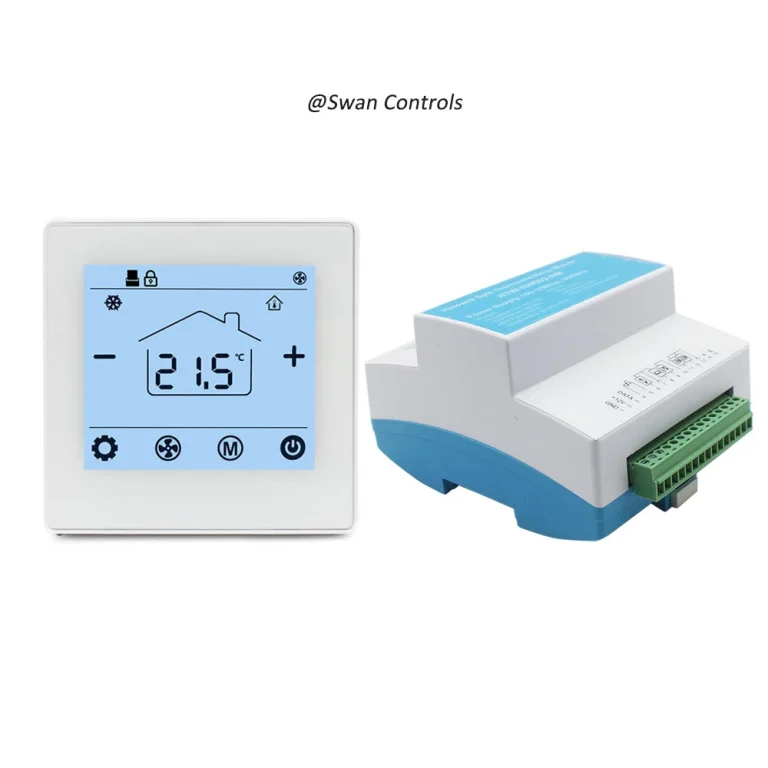
A BACnet thermostat should be understood in a practical way. In most HVAC projects, it is first a fan coil thermostat that controls local room temperature, fan speed, valve output and working mode. BACnet communication then allows the same device to connect with a BMS, so the project team can read and manage room-side data in a more central way.
This type of room thermostat is worth choosing when a hotel, office, apartment or commercial building needs central monitoring, room status visibility and easier maintenance. If the project only needs local control, or only needs app control for a small number of rooms, a standard fan coil thermostat or WiFi model may be more practical.
What Is a BACnet Thermostat?
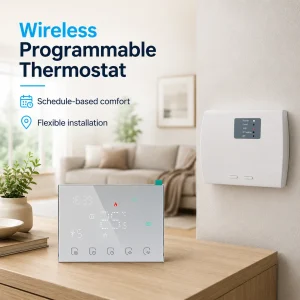
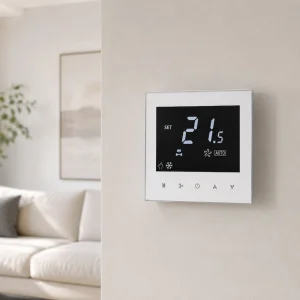
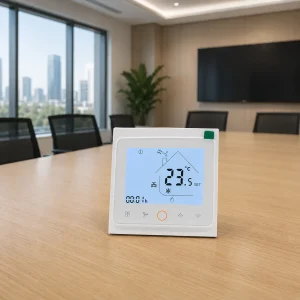
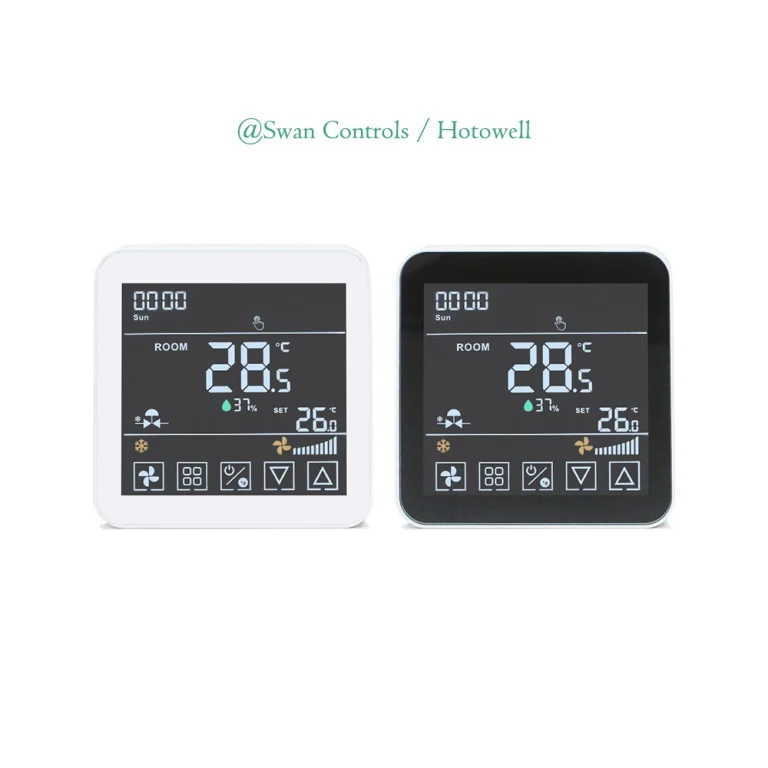
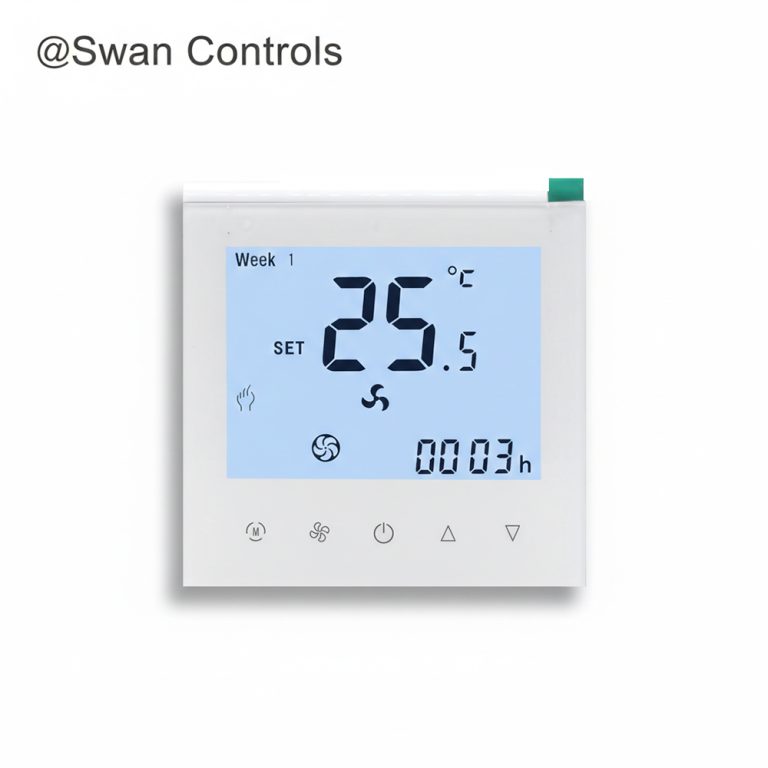
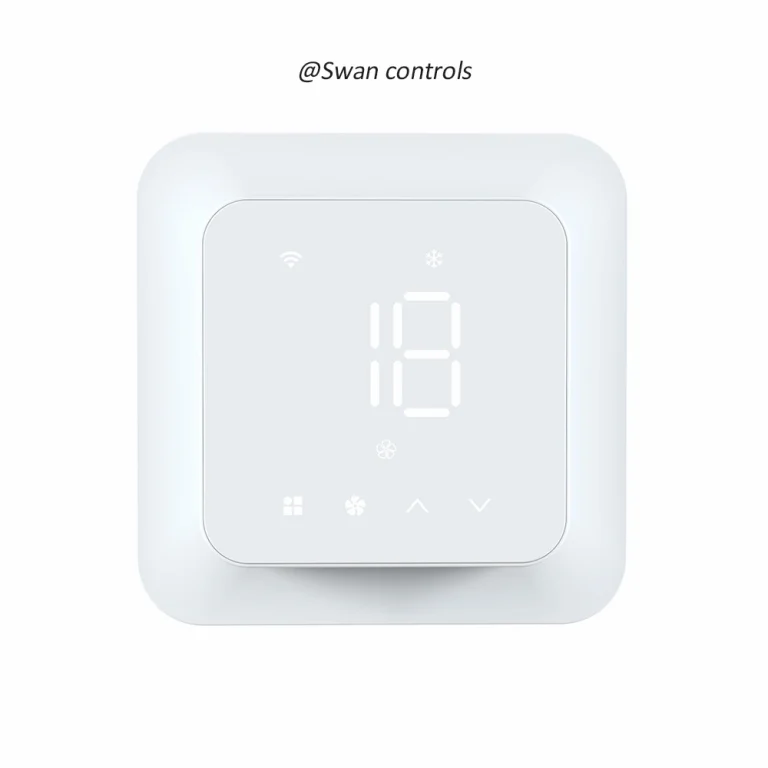
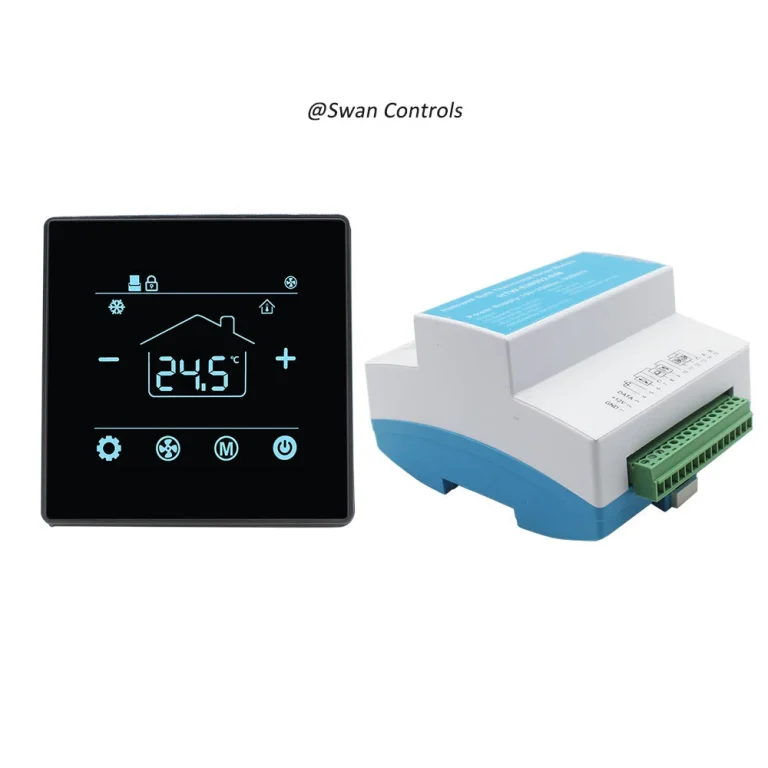
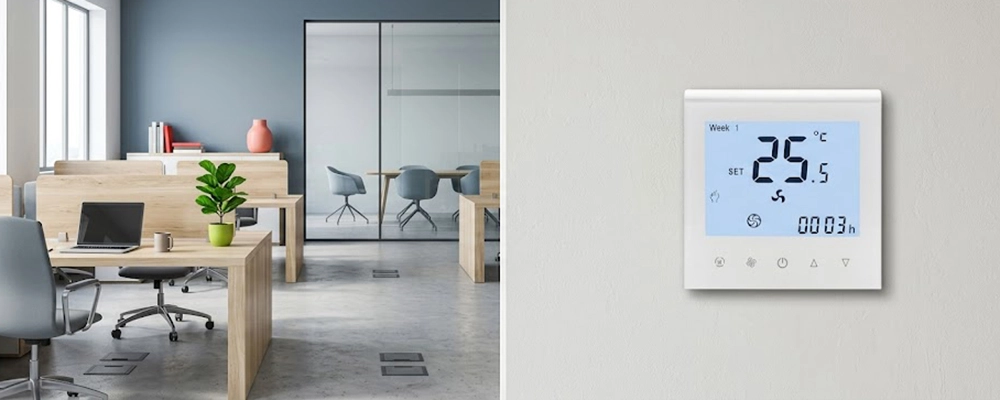
A BACnet thermostat is a wall-mounted HVAC controller that can communicate with a building management system. It is not only a protocol device. It still has to control the room condition locally, and it still has to match the actual fan coil unit.
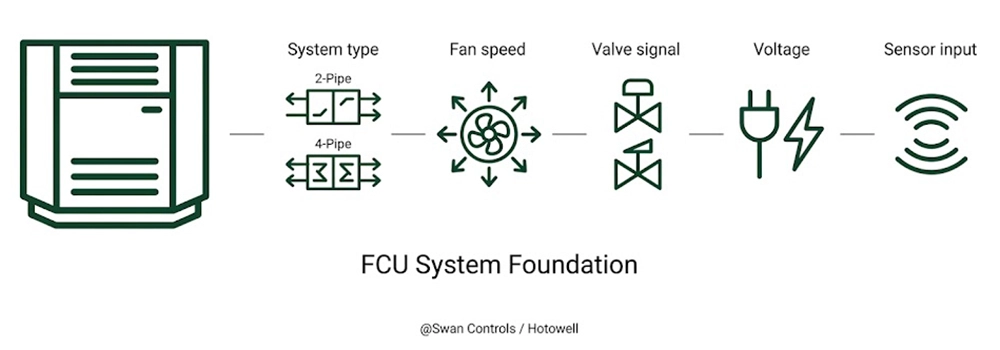
In our product range, the more accurate description is simple: a fan coil thermostat with BACnet communication. It may support a 2-pipe or 4-pipe system. It may support a 3-speed fan or another supported fan type. It may work with on/off valves or other supported valve outputs, depending on the model. These basic control details decide whether the product can run the site equipment correctly.
BACnet is the communication layer. It helps the BMS read values such as room temperature, set temperature, working mode, fan status and other available points. In some projects, the BMS may also send selected commands or limits to the controller. This is useful when many rooms need to be managed as part of one building system.
This is why the product should not be selected only by asking, “Does it support BACnet?” A better first question is, “What fan coil system does the room use?”
How It Works in an HVAC Project
The working logic can be understood in three layers. These three layers must work together seamlessly to ensure a successful integration.
- The room side: The controller reads the room temperature and receives local settings from the user. The user may adjust the temperature, select heating or cooling, change fan speed, or switch the device on and off. This part must be clear because installers and end users still interact with the device in the room.
- The HVAC side: The controller sends output signals to the fan and valve. For example, it may switch a 3-speed fan between low, medium and high. It may open or close a valve according to the temperature difference. It may also support other functions depending on the platform, such as external sensor input, parameter lock or temperature calibration.
- The BMS side: BACnet communication allows the building system to identify the controller, read its status and manage selected points. This helps the property team or system integrator see what happens in different rooms without checking every wall device manually.
If local control is unstable, BACnet will not solve the core problem. If the wiring is wrong, the BMS may not find the device. If the point list is unclear, the integrator may not know which values can be read or written. A good project needs more than the protocol name. It needs the right model, wiring diagram, point list and parameter setting.
Start With the FCU System
Since the HVAC side is the literal foundation of the device, we should never pick a thermostat based on the communication protocol alone. A wrong output cannot be corrected by BACnet communication.
If the room uses a 4-pipe system but the selected model only supports a 2-pipe system, the product will not control the site correctly. If the room needs EC fan control but the selected device only supports 3-speed fan relays, communication will not solve that mismatch. If the valve requires a different signal type, the BMS may still read the controller, but the HVAC equipment may not work as expected.
The selection should normally start with these questions:
| Item to confirm | Why it matters | Example decision |
|---|---|---|
| 2-pipe or 4-pipe | Decides heating and cooling control logic | 2-pipe for simple seasonal changeover; 4-pipe for separate heating and cooling valves |
| Fan type | Decides output method | 3-speed relay fan or supported EC fan platform |
| Valve type | Decides control output | On/off valve, modulating valve or other supported output |
| Power supply | Avoids installation mismatch | 24V or 110–240V according to project design |
| Sensor need | Affects comfort and accuracy | Built-in sensor only or external sensor support |
| Communication need | Decides protocol and documents | BACnet, Modbus, WiFi or no communication |
For projects that need a direct BACnet option without WiFi, our HTW-WF11-FC-EB 2/4 pipe BACnet FCU controller with external sensor support or another BACnet model HTW-F10-2B/48 (with full touch screen) can be used as reference models for early selection.
This does not mean every project should choose a multi-function model. It means the project should match the control platform to the real system. A BACnet thermostat should be chosen after this matching step, not before it.
Standard Control, WiFi Control and BACnet Control
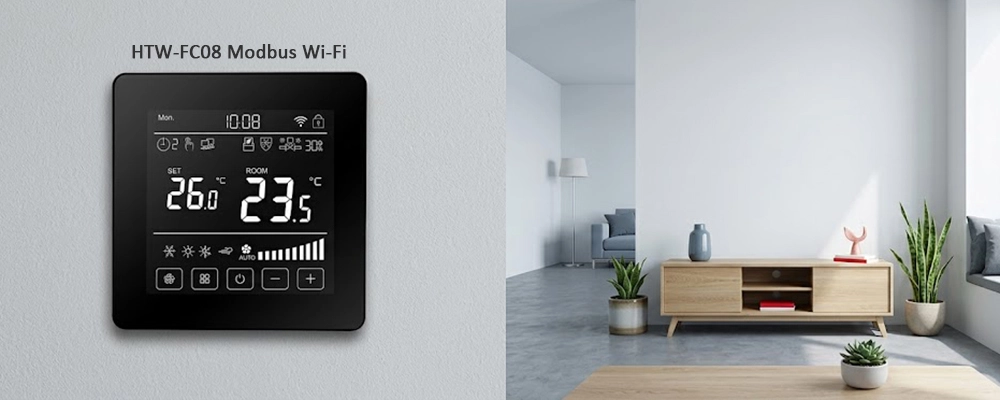
Once the hardware specifications are settled, we can evaluate the communication options. Different control types are not simply “basic” and “advanced”. They serve different needs. A standard local controller may be enough for many rooms. A WiFi model is useful when the end user wants app operation. A BMS thermostat like a BACnet thermostat is useful when the building side needs central monitoring.
| Control choice | Main purpose | Better for | Main risk if selected wrongly |
|---|---|---|---|
| Standard fan coil thermostat | Room-side temperature, fan and valve control | Small offices, apartments, simple FCU projects | No central monitoring if the project later needs BMS |
| WiFi room thermostat | App control and remote user operation | Apartments, small offices, light commercial rooms | App value may be low if the project really needs BMS integration |
| BACnet thermostat | BMS connection and central room status visibility | Hotels, offices, serviced apartments, commercial buildings | Higher cost and commissioning work if there is no real BMS need |
| Modbus room thermostat | RS485 communication for supported systems | Projects using Modbus-based integration | Protocol mismatch if the BMS side expects BACnet |
For a simple 3-speed fan and 2-pipe on/off valve project, a programmable local option such as HTW-WF11-FC-2 standalone 2-pipe FCU controller may already be enough.
For some projects, Modbus may be the better fit. For example, when the project does not need WiFi but needs RS485 communication and external sensor support, HTW-WF11-FC-2EN RS485 Modbus controller with external sensor can be reviewed as a practical alternative.
If the project requires more functions such as EC fan, WiFi, and Modbus in one platform, our model Swan Controls HTW-FC08-ECNW smart EC fan controller may be more suitable for that type of discussion.
The important point is not to choose the most complex option first. The better method is to match the project need. Local control, app control and BMS control are different value layers. For a buyer, the right room thermostat is the one that solves the real control problem without adding unused work.
When Is A BACnet thermostat Worth Choosing?
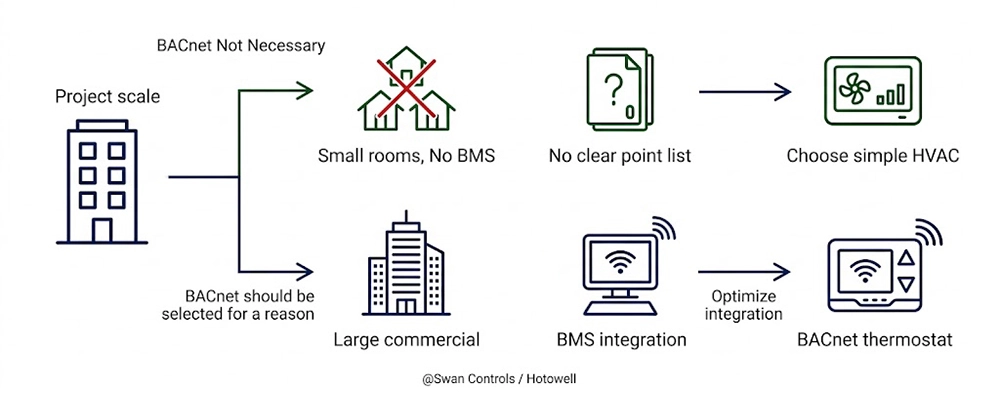
A BACnet thermostat is worth choosing when the project has a real central management need. This usually appears in buildings with many rooms or many zones. Hotels, office buildings, serviced apartments, schools, clinics and commercial spaces are common examples.
In a hotel, the management team may want to see room status more clearly. They may need to know whether rooms are operating within the right temperature range. They may also want better control guidance for energy saving and maintenance. In this case, local control alone may not be enough.
In an office building, the facility team may need to monitor many spaces from one system. Some rooms may be used only during certain hours. Some zones may have different cooling or heating needs. When room-side data is visible in the BMS, the team can respond more quickly to complaints or abnormal operation.
In a serviced apartment or long-stay building, the owner may want a balance between user comfort and property management. The end user still needs simple local control. At the same time, the property team may need better status visibility. This is where a BMS thermostat can make sense.
It is also useful when the project has a system integrator who can set addresses, check wiring, scan devices and map points. In simple terms, the product is worth choosing when the building needs more than local temperature adjustment. It becomes valuable when room data needs to become part of a wider building-management structure.
When Is A BACnet thermostat Not Necessary?
BACnet is not necessary for every project. This point should be clear because over-selection creates extra cost and extra communication work.
If the project has only a few rooms and no BMS, a standard fan coil thermostat may be easier to sell, install and maintain. If the end user mainly wants phone control, a WiFi room thermostat may be a better fit. If the installer only needs simple room control, adding BACnet may not improve the real user experience.
It is also not necessary when the project owner has no clear point list. Some buyers ask for BACnet because it sounds professional, but they do not know what data they want to read. This can create confusion during commissioning. The BMS team may later ask for points that the selected model does not support.
Another case is budget-sensitive wholesale supply. For distributors, the right product is not always the highest configuration. Clear wiring, stable operation and easy after-sales support may create better long-term value. BACnet should be selected for a reason. If none of these reasons exist, it may be better to choose a simpler HVAC thermostat.
What Data Can the BMS Usually Read?
The actual point list depends on the model and firmware. However, many projects care about similar items.
The BMS may need to read room temperature, set temperature, working mode, fan speed, device status and valve status. It may also need to know whether the device is online or whether there is any abnormal condition. Some projects may need limits, lock settings or schedule-related information, but these must be confirmed before ordering.
The point list is very important because “supports BACnet” is not enough for project work. The system integrator needs to know what can be read, what can be written and how the points are mapped. If this document is missing, commissioning can become slow and unclear.
From a supplier side, we suggest confirming the expected point list before sample testing. This helps both sides avoid wrong assumptions. It also helps the buyer explain the BACnet thermostat to consultants, installers and BMS engineers.
Common Misunderstandings
When managing centralized projects, buyers often run into a few common misconceptions regarding network choices:
- 1: Believing a BACnet thermostat can control any HVAC system. It cannot. The device must still match the actual fan, valve, pipe system and power design.
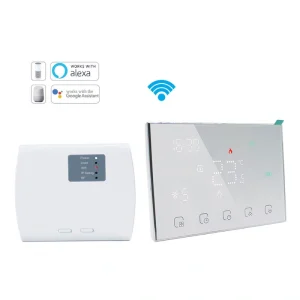
- 2: Assuming BACnet is the same as WiFi. WiFi is mainly for app-side operation. BACnet is mainly for building-side communication. A project may need one, both or neither, depending on the application.
- 3: Thinking that communication means simple installation. In fact, communication adds some checking work. The installer or integrator must confirm address setting, wiring polarity, baud rate, device scanning and point mapping.
- 4: Expecting that more functions always mean better value. This is not true for wholesale and project supply. More functions may increase cost, increase explanation work and create more after-sales questions.
What Should Buyers Confirm Before Ordering Samples?
Before ordering samples, buyers should prepare a short technical brief. It does not need to be complicated, but it should be clear.
The brief should include the FCU type, pipe system, fan type, valve type, power supply, installation box, sensor need and communication requirement. If the project has a BMS, the buyer should also provide the expected protocol, point list request and any consultant specification.
For OEM or wholesale orders, the buyer should also confirm logo needs, front panel marking, manual language, label content, packaging, model code and product photos. These details decide whether the product is easy to sell, install and reorder.
Sample testing should not only check the screen and buttons. The buyer should test the local output first. Then the communication should be tested with the BMS or integration tool. This order is important. If local control is wrong, communication testing is not enough.
Swan Controls can support this early check with model selection, wiring review, basic document support and OEM discussion. The goal is to prevent avoidable sample mistakes and help customers choose the right HVAC thermostat platform.
Practical Recommendation from Swan Controls
For most projects, we suggest using a simple selection path to guarantee successful deployment.
- Confirm the HVAC system: This includes pipe type, fan type, valve type and voltage.
- Confirm the user-side need: This may be simple local operation, app operation or hotel-style local control.
- Confirm the building-side need: This is where BACnet, Modbus or other communication requirements should be discussed.
- Confirm the necessary documents: Gather everything required for installation, commissioning and market sales.
This path helps buyers avoid a common mistake: choosing by feature name before confirming the control system. It also helps distributors build a cleaner product range. Not every customer needs the same model. Some need a simple local controller. Some need WiFi. Some need BMS connection. Some need OEM branding more than advanced functions.
As a BACnet thermostat manufacturer and supplier, Swan Controls can support project discussion, sample selection, OEM details and documentation. The best result comes when the model, wiring, point list and documents are confirmed together.
FAQ
What is a BACnet thermostat?
It is a room controller that can connect with a building management system through BACnet communication. In FCU projects, it still needs to control the fan, valve and room temperature locally.
Is BACnet the same as WiFi control?
No. WiFi is mainly for app control and remote user operation. BACnet is mainly for BMS integration, central monitoring and building-side management.
When should we choose this type of controller?
It is suitable when the project has many rooms, a BMS, a system integrator or a clear need for central room status monitoring. Hotels, offices, serviced apartments and commercial buildings are common examples.
Can BACnet solve a wrong FCU model selection?
No. Communication cannot fix wrong hardware output. The controller must first match the pipe system, fan type, valve output and voltage.
What should we confirm before sample testing?
Confirm the FCU system, wiring requirement, power supply, communication protocol, point list and installation condition. For OEM orders, also confirm logo, label, manual, packaging and model code.
Is this product suitable for small residential projects?
Usually not, unless the residence has a real BMS requirement. For normal homes or small rooms, a standard local model or WiFi model is often more practical.
Can Swan Controls support OEM orders?
Yes. We can discuss logo, label, packaging, manual, model code, default settings and related documents according to the project and order quantity.
Final Note / Practical TakeawayA BACnet thermostat should be chosen for system integration, not only for the protocol name. We suggest confirming the FCU system first, then checking the BMS communication, point list and installation documents. For OEM, wholesale or project orders, early technical confirmation can reduce sample mistakes and commissioning problems.
References / Sources
BACnet International | Building Automation and Control Network | BACnet is described as a global data communication standard for building automation and control networks.
ASHRAE | ANSI/ASHRAE Standard 135, BACnet | A Data Communication Protocol for Building Automation and Control Networks.
BACnet Website | About the BACnet Standard | BACnet is maintained by ASHRAE SSPC 135 and is also recognised as ISO 16484-5 and EN ISO 16484-5.
ASHRAE Technical FAQ | What is BACnet? | BACnet is designed to help integrate building control products from different manufacturers, including HVAC&R control products.
© This article is created by Swan Controls, an affiliate of Hotowell, for HVAC project selection and product education. The content may be used for Swan Controls website publishing, product communication and partner support. Reuse by other parties should keep the original brand source and should not change the technical meaning.