Quick Summary
BACnet projects often fail for simple reasons. The device may use the right protocol, but the HVAC system, wiring, address, baud rate, point list, or control priority may not be confirmed early enough, leading to incompatibility. The safer method is to check the local HVAC control first, then check the building communication.
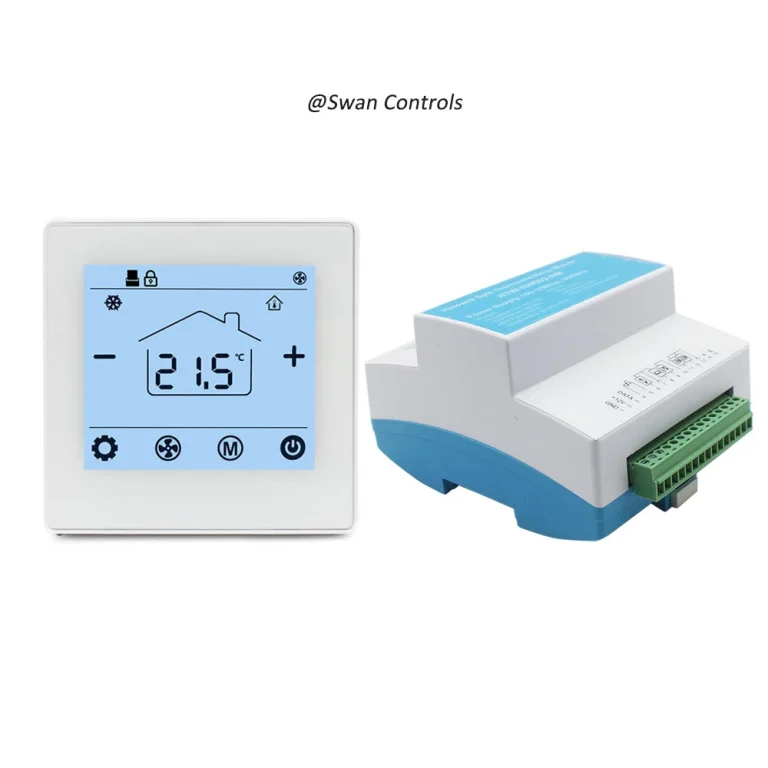
HVAC systems are broad, covering boilers, heat pumps, VRF units, underfloor heating, AHU systems, fan coil units, etc. This article mainly discusses fan coil system projects. Here, a BACnet thermostat means a fan coil thermostat with BACnet communication, not a universal controller. The logic discussed here, however, may be used in other HVAC applications.
Why Compatibility Problems Happen in BACnet Projects
Many compatibility problems start before installation. A buyer may ask whether the product supports BACnet. A supplier may answer yes. Both sides may then move quickly to price, lead time, logo, packaging, and sample order. The real technical questions are sometimes left until the installer or BMS engineer starts commissioning the site.
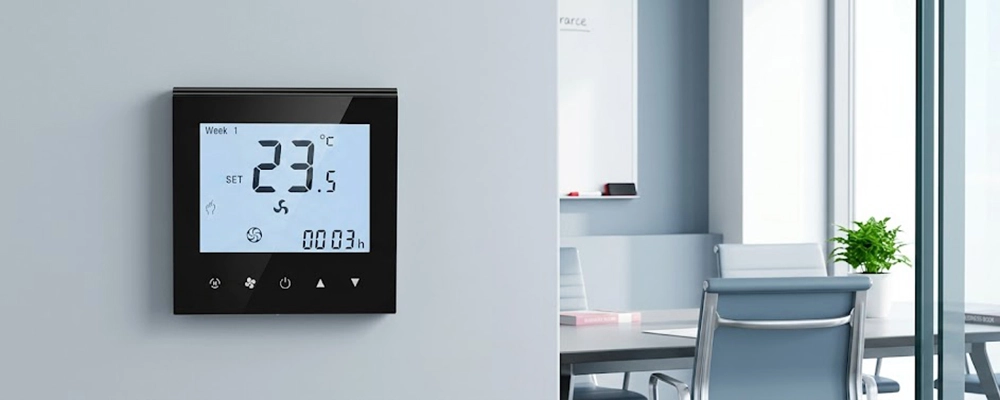
This is risky because BACnet is only one part of the project. A BACnet thermostat still has to work as a practical HVAC thermostat on the wall. The fan coil thermostat still needs to control the room equipment. It must match the fan type, valve type, pipe system, voltage, terminal layout, and installation method. It also needs clear communication settings for the BMS contractor. If these points are not aligned, the device may power on correctly but still fail the project test.
BACnet is widely used for building automation and control communication. The official BACnet Committee explains that the standard is developed and maintained under ASHRAE SSPC 135. ASHRAE Standard 135 defines data communication services and protocols for computer equipment used for monitoring and control of HVAC&R and other building systems. For project selection, this means the protocol can support building-side data exchange, but it does not replace correct field wiring, output matching, or commissioning.
For Swan Controls, we normally suggest separating compatibility into two layers.
The first layer is local HVAC control. The second layer is BACnet communication. Local control decides whether the room temperature, fan speed, valve output, and working mode can operate correctly. Communication decides whether the BMS can read and write the required data.
Common BACnet Thermostat Compatibility Issues
Issue 1: The Fan Coil System Does Not Match the Thermostat
The first compatibility issue is not always about BACnet. It is often about the fan coil unit itself. A fan coil thermostat may support communication, but it still needs the correct control output.
For example, a 2-pipe system and a 4-pipe system do not use the same heating and cooling logic. A 3-speed fan and an EC fan do not use the same output method. An on/off valve and a 0–10V modulating valve also need different control signals. If the wrong platform is selected, BACnet cannot repair the mismatch.
A standard fan coil thermostat may be enough when the project only needs local control. A communication model is useful when the room device must be linked to a BMS. A WiFi model may fit apartments or small commercial rooms where user app control matters more than building integration. These choices are different, and choosing the most expensive option does not always reduce risk.
| Compatibility item | What to confirm | Why it matters |
|---|---|---|
| Pipe system | 2-pipe or 4-pipe | Heating and cooling logic must match the actual FCU |
| Fan output | 3-speed relay fan or EC fan | The thermostat output must match the motor control type |
| Valve output | On/off valve or 0–10V valve | The valve signal decides whether the valve can open and close correctly |
| Power supply | 24V or 110–240V | Wrong voltage can damage the device or stop installation |
| Sensor requirement | Built-in sensor or external sensor | Some rooms need remote sensing for better temperature reading |
| Local functions | Keycard, parameter lock, temperature limit | These functions must be supported by the selected platform |
This table shows why a room thermostat with the wrong hardware output is a poor choice, even if the product name looks suitable. The BMS may detect the device, but the FCU may still behave incorrectly.
Issue 2: BACnet MS/TP Communication Is Not Confirmed Early
After the local control side is confirmed, the next issue is communication. This is where a BACnet thermostat becomes different from a standard room thermostat. Many wall-mounted project thermostats use BACnet MS/TP over RS485. This is common in building automation projects, but it still needs careful setup.
The most common problems are simple. The A/B wiring may be reversed. The device address may conflict with another device. The baud rate may not match the BMS setting. The RS485 network may have too many branches. The termination resistor may be missing, installed in the wrong place, or used when it is not needed. The cable may be too long or not suitable for the site.
For this reason, the sample test should not stop at powering on the device. The installer or system integrator should connect the thermostat to the intended BMS environment, scan the device, check the device instance, test read/write points, and verify stable communication.
A BACnet thermostat should come with the basic information needed for this process. This normally includes wiring guidance, parameter setting guidance, communication setting guidance, and a point list. If the project uses many rooms, these details should be checked before bulk order.
Issue 3: The BMS Point List Does Not Match the Project Needs
Another common issue is the point list. For a BMS thermostat, this list is not optional project decoration. A buyer may say that the project needs BACnet. But the BMS contractor may need more detailed information. Which points should be readable? Which points should be writable? Which values are only status values? Which settings can be changed by the building system?
Typical points may include room temperature, setpoint, working mode, fan speed, valve status, occupancy or keycard status, error status, and online status. But not every model supports the same points. Not every project needs the same level of control.
Before placing a larger order, the buyer should share the required point list with the supplier. The supplier should then confirm what is supported, what is not supported, and what may require a different product platform. This saves time for both the installer and the final project owner.
Issue 4: Local Control and BMS Control Logic Are Not Clearly Defined
A room thermostat is used by people in the room. A BMS is used by a building operator or facility team. Both sides may want control. If the control priority is not clear, the project may face complaints.
For example, a guest in a hotel room may adjust the setpoint on the wall device. At the same time, the BMS may send a setpoint limit or mode command. An office facility manager may want to keep cooling within a defined range. The room user may want faster cooling or heating. If these rules are not defined, the device may appear unstable even when it is working as designed.
Useful questions include: Can the user change the mode locally? Can the BMS override the setpoint? Is the fan speed controlled locally or centrally? Are temperature limits fixed before shipment? Is there a parameter lock? What happens after power failure? What default settings are restored?
For hotel, office, and apartment projects, we suggest confirming the user side and management side separately. The local user should have simple operation. The management side should have the points and limits needed for operation. The two sides should not fight each other.
Issue 5: Installation Documents Are Not Clear Enough
For a BACnet thermostat, clear documentation is part of compatibility. Important documents include the wiring diagram, installation manual, parameter list, BACnet point list, model code explanation, and product label information. For OEM or wholesale orders, datasheet format, box label, user manual language, and installation screenshots may also matter.
A good room thermostat document does not need to be complicated. It should make the basic decisions clear. Which terminal connects to power? Which terminal connects to fan speed? Which terminals connect to the valve? Where is RS485 A/B? How should the address be set? How should the baud rate be checked? What is the default setting?
For a project buyer, these details are not small details. They decide whether the installer can understand the product quickly. They also decide whether the BMS engineer can finish commissioning without repeated questions.
Issue 6: The Buyer Selects a Model Before Defining the Project Type
Some projects need only simple local control with a standard fan coil thermostat. Some need WiFi app operation. Some need Modbus. Some need BACnet. Some need more than one function, but not always on the same model. When the model is chosen before the project type is clear, the buyer may pay for unused features or miss a required function.
For example, a small apartment project may care more about clear display and easy operation. A hotel project may care more about keycard logic, parameter limits, and simple guest use. An office project may care more about BMS monitoring and stable communication. A light commercial project may need a balance between cost, local control, and maintenance.
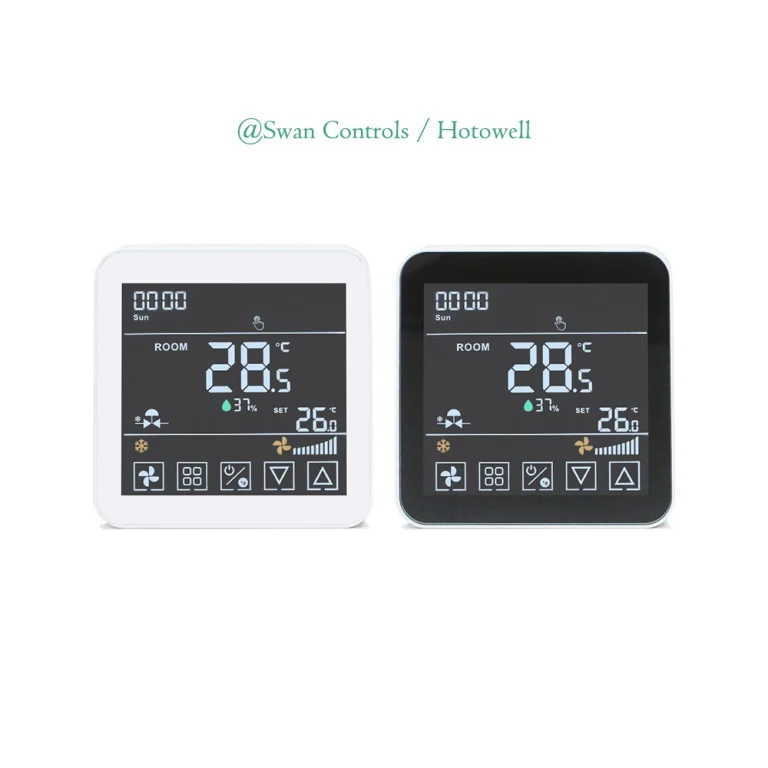
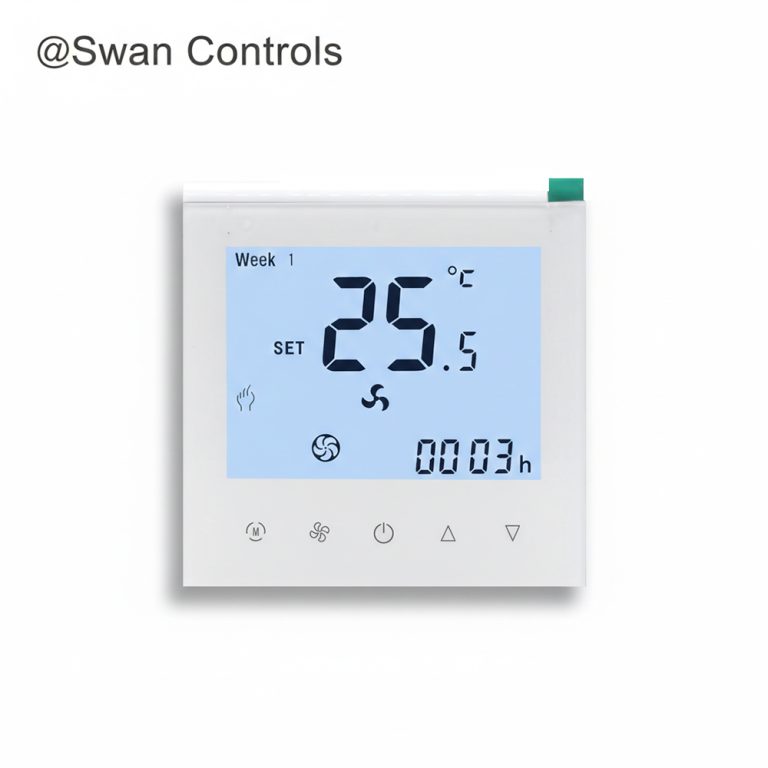
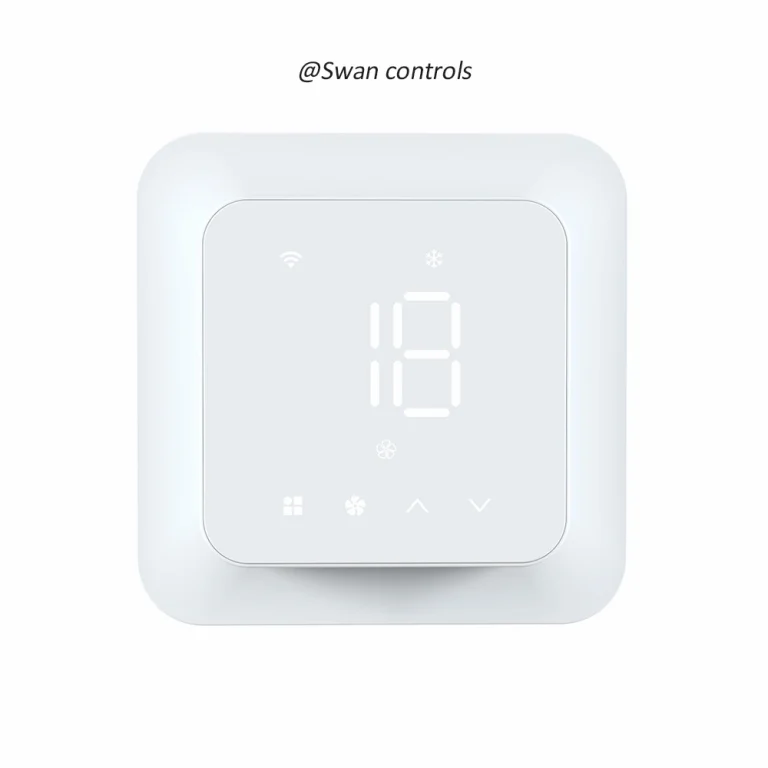
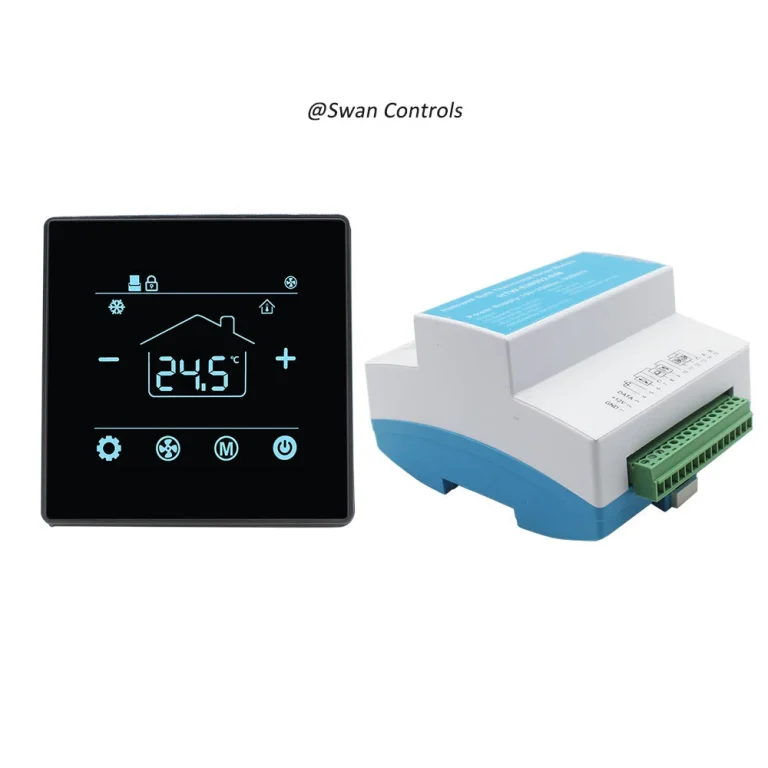
The following model view can help keep the choice practical. It is not a full product catalogue. It shows how different platforms serve different control needs, with related model pages included for easier review.
| Model | Main control scope | Better fit |
|---|---|---|
| HTW-WF11-FC-2 | 3-speed fan, 2-pipe on/off valve control, programmable local operation | Projects that need a simple standalone FCU controller |
| HTW-WF01-FC-2W | 3-speed fan, 2-pipe on/off valve control, WiFi support | Apartments or rooms needing app-based convenience instead of BMS integration |
| HTW-WF11-FC-4ENS1W | 3-speed fan, 2/4-pipe on/off valve control, Modbus, WiFi, remote sensor support | Projects needing flexible FCU control with communication options |
| HTW-FC08-ECNW | EC fan, WiFi, Modbus, keycard, external sensor, 2/4-pipe on/off valve control | Projects needing EC fan support and richer room-side functions |
| HTW-WF11-FC-2EN | RS485 Modbus stable control with external sensor, without WiFi | Projects needing wired communication without app control |
| HTW-WF11-FC-EB | BACnet 2/4-pipe FCU control with external sensor | BMS projects needing BACnet communication for fan coil rooms |
How to Avoid Compatibility Problems Before Ordering
Now that we know the common problems, let’s look at how to fix them. Solving compatibility issues at the project site is expensive, but stopping them before the order is easy. We recommend a simple, five-step check to keep the project safe.
First, confirm the fan coil system. The project should clearly state whether it is 2-pipe or 4-pipe, what fan type it uses, what valve type it uses, and what voltage is available. Photos of the existing thermostat, wiring, and FCU terminal board can help if the project is a replacement.
Second, confirm the communication requirement. The buyer should state whether the project needs BACnet MS/TP, Modbus, WiFi, or no communication. If a BMS contractor is involved, the contractor should confirm the expected communication setting and point list before sample testing.
Third, confirm the point list. This is especially important for a BACnet thermostat project. The buyer should not only ask whether BACnet is supported. They should ask which points can be read, which points can be written, and which functions are controlled locally.
Fourth, test samples with the real project logic. A sample test should include local FCU control, fan output, valve output, sensor reading, user operation, RS485 communication, BMS scanning, and point read/write testing. If the sample is only tested on a desk without the real control logic, hidden problems may remain.
Fifth, lock the default settings before bulk order. This includes temperature range, display unit, fan logic, valve logic, address method, baud rate, parameter lock, and other project settings. For OEM orders, the manual, label, box, and datasheet should match the confirmed configuration.
What We Recommend for OEM, Wholesale, and Project Buyers
For OEM and wholesale customers, compatibility is not only a technical issue. It affects repeat orders, installer confidence, and after-sales cost. If the model is difficult to explain, the distributor may receive more support questions. If the point list is unclear, the BMS contractor may delay commissioning. If the manual does not match the final configuration, the installer may connect the wrong terminals.
This is why we suggest choosing a fan coil thermostat platform based on the real project, not on the longest feature list. A BMS thermostat is useful when the project truly needs building-side integration. A WiFi option is useful when the room user needs app access. A simple programmable model is often enough when the project only needs stable local control.
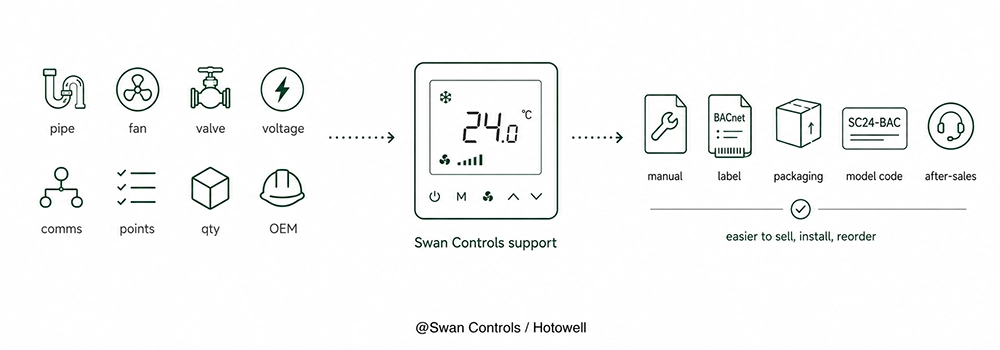
As a BACnet thermostat supplier, We at Swan Controls can support project discussion from the control logic side. In many cases, the most useful information is not a long specification file at the first step. It is a clear summary of the site: pipe type, fan type, valve type, voltage, communication request, point list, order quantity, and OEM scope.
This is also useful for custom and wholesale projects. When the product platform is confirmed early, the buyer can prepare better manuals, labels, packaging, model codes, and after-sales guidance. The final product becomes easier to sell, install, and reorder.
Frequently Asked Questions
What is the most common compatibility problem in a BACnet thermostat project?
The most common problem is selecting by protocol name only. The product may support BACnet, but the fan coil output, voltage, wiring, or BMS point list may not match the project. Both local control and communication should be checked.
Can BACnet solve a wrong fan coil output?
No. BACnet can help the thermostat communicate with BMS, but it cannot change the physical output type. A 3-speed fan, EC fan, on/off valve, and 0–10V valve need the right hardware and control logic.
Is a BACnet thermostat the same as a WiFi thermostat?
No. A WiFi thermostat is usually used for app control by the room user or property user. A BACnet model is usually used for BMS integration. Some platforms may support more than one communication type, but the project should not assume they are the same.
Do we always need a point list?
For BMS thermostat projects, yes. The point list helps the integrator know what can be read and what can be written. It also reduces misunderstanding between the buyer, supplier, installer, and BMS contractor.
Should we test samples before bulk order?
Yes. A sample test should include local FCU control and BMS communication. Testing only the display or only the RS485 connection is not enough for a project order.
Can Swan Controls support OEM documents for project buyers?
Yes. Depending on the order and project scope, we can discuss logo, label, manual, model code, datasheet, default parameters, and other OEM documents. The final scope should match the selected platform.
When should we avoid choosing BACnet?
Avoid it when the project has no BMS, no point list, no integration requirement, and only needs local room control. In that case, a standard HVAC thermostat, room thermostat, or WiFi model may be simpler and more cost-effective.
Final Note / Practical Takeaway:
A BACnet thermostat project should not be judged only by the word BACnet. The safer process is to confirm the fan coil system, communication settings, point list, and control priority before ordering. For OEM, wholesale, or project use, early confirmation helps reduce sample mistakes, installation delays, and commissioning complaints.
References / Sources
ASHRAE Standard 135, BACnet – A Data Communication Protocol for Building Automation and Control Networks. Source: BACnet Committee / ASHRAE SSPC 135.
BACnet Committee, ASHRAE SSPC 135, About the BACnet Standard. Source: BACnet.org.
ASHRAE Standard 135 Resource Files, data communication services and protocols for monitoring and control of HVAC&R and other building systems. Source: ASHRAE BACnet Resource Files.