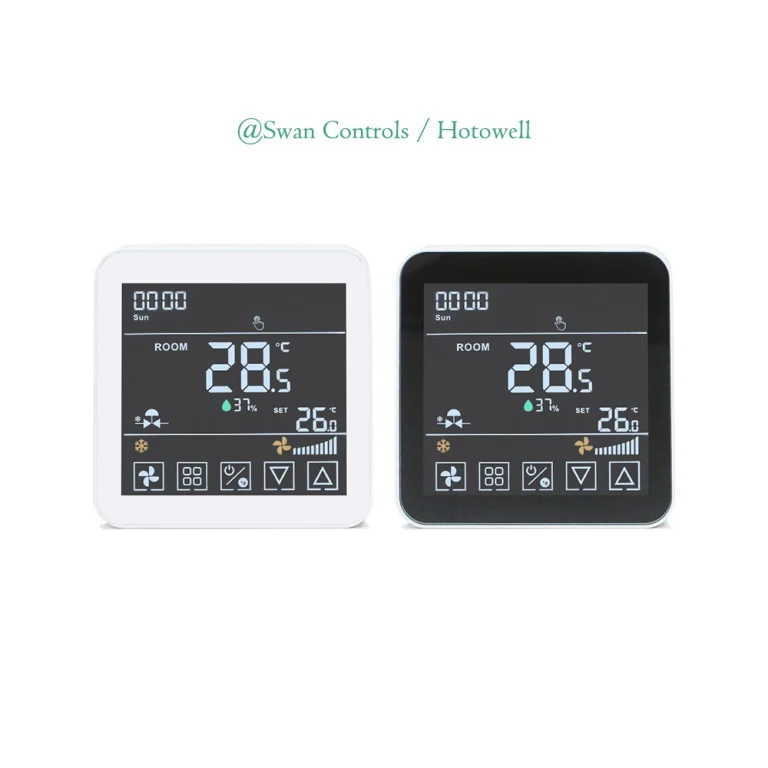
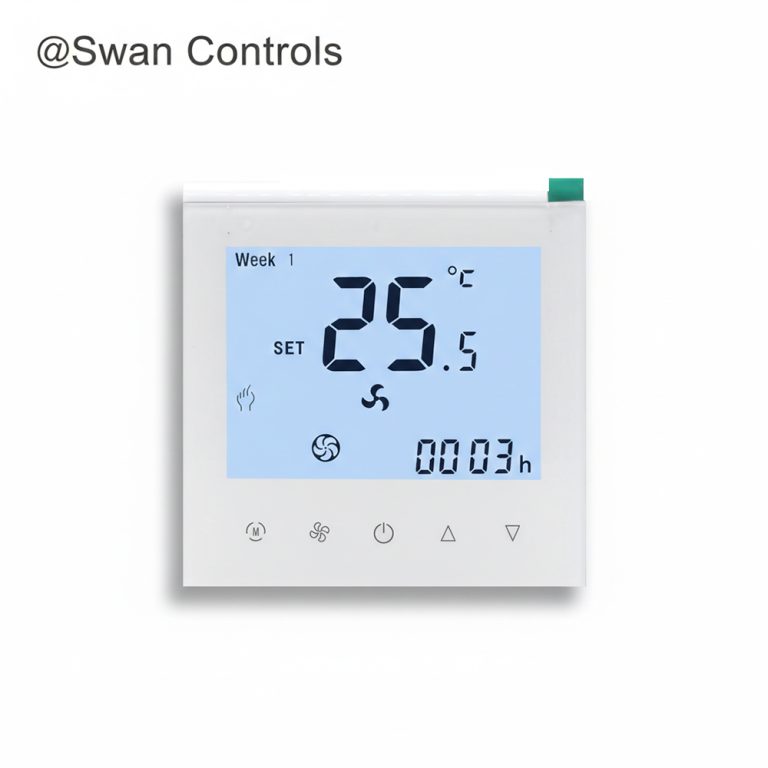
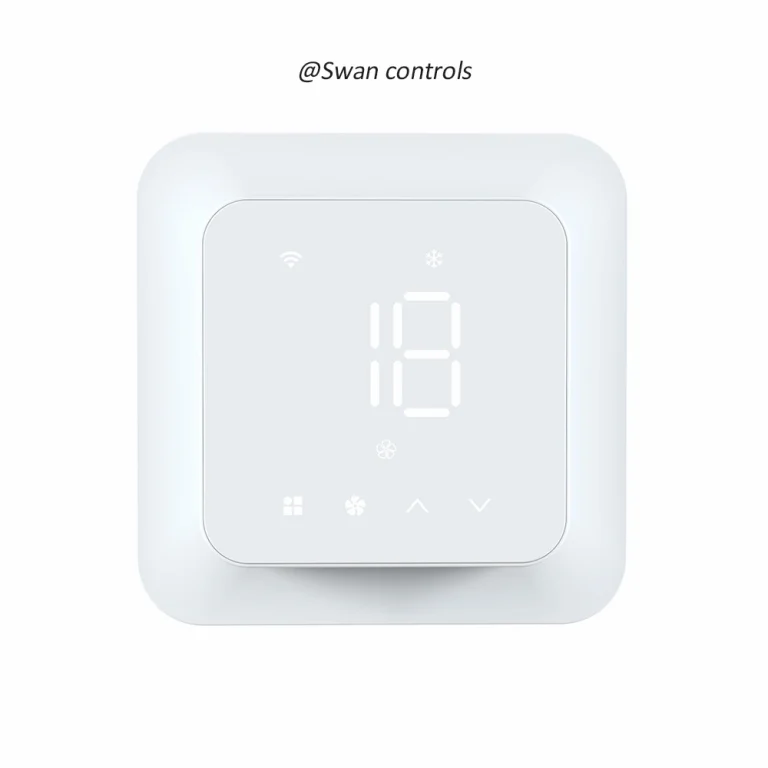
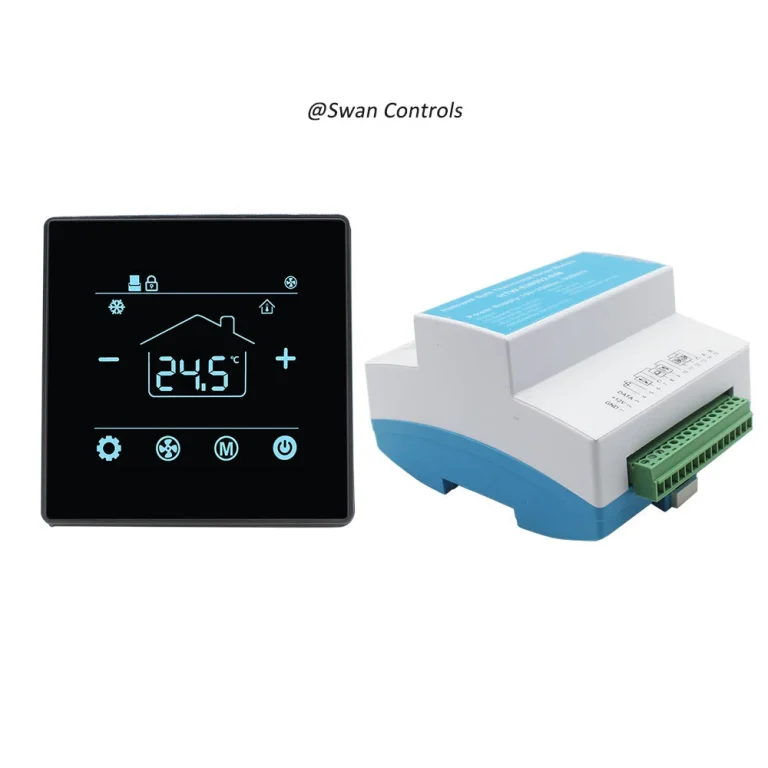
Quick Summary
For OEM projects, a digital thermostat should not be judged by price alone. Overseas buyers also need to check whether the supplier can support stable production, logo branding, packaging, documentation, default settings, certification files, repeat-order control, and after-sales communication.
A good digital room thermostat supplier should help buyers reduce project risk before shipment. The right partner is not the one that promises every customization request, but the one that explains what can be safely customized, what needs engineering review, and what should remain within a proven product platform.
Why Price Alone Is a Risky Starting Point for OEM Thermostat Projects
Price matters. Importers, distributors, wholesalers, hotel project contractors, and private-label brands all need margin. A competitive quotation is important, especially when the target market is price sensitive.
But the lowest price can become expensive if the supplier cannot support stable production and clear project control. A cheaper digital thermostat may look acceptable during sample testing, but hidden costs may appear later. These costs may come from inconsistent packaging, unclear labels, missing wiring guides, unconfirmed default settings, unstable firmware versions, or slow technical response after delivery.
For OEM business, the real cost is not only the unit price. It also includes sample testing time, artwork confirmation, installation support, distributor training, warranty handling, and repeat-order management. If one batch creates complaints, the saving from a low quotation may disappear quickly.
A digital room thermostat may look simple from the outside, but it still involves sensor reading, relay or 0–10V output, fan logic, control mode, communication parameters, display behaviour, and installation settings. If these details are not agreed before mass production, the project may face unnecessary risk.
The better question is not “Which supplier is cheapest?” The better question is “Which supplier can support our OEM product steadily from sample to repeat order?”
Common OEM Mistakes Buyers Should Avoid
Many OEM problems do not come from one big mistake. They come from several small points that were not confirmed early.
A common mistake is choosing the lowest quotation before confirming the OEM scope. Price comparison is useful only when the buyer compares the same model, same packaging, same documentation, same settings, and same support level.
Another mistake is treating OEM as only logo printing. For a digital thermostat project, OEM work may include logo position, label content, packaging artwork, manual layout, parameter settings, model code, carton mark, and project record control.
Some buyers approve samples without checking the packaging, wiring guide, default parameters, and certification documents. The sample may work, but the product may not yet be ready for a real sales channel or project installation.
A further mistake is asking for deep hardware changes too early. New screen design, new housing, new PCB, new relay load, or deep firmware changes can increase MOQ, cost, testing time, and failure risk. For the first OEM order, a mature platform with controlled commercial customization is often safer.
Buyers should also avoid ignoring repeat-order control. If the first batch and second batch are not consistent, distributors may receive complaints from customers who expect the same product.
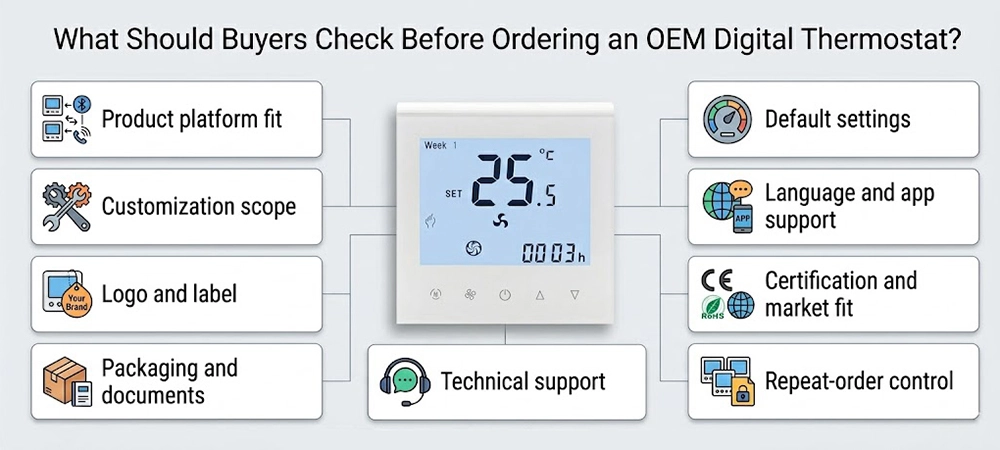
What Should Buyers Check Before Ordering an OEM Digital Thermostat?
Before placing an OEM order, buyers should review the project by checkpoints, not only by price.
| Check Point | Why It Matters | What Buyers Should Confirm |
|---|---|---|
| Product platform fit | Prevents wrong model selection | Application, voltage, fan type, valve output, communication |
| Customization scope | Controls cost and risk | What can be customized safely and what needs review |
| Logo and label | Protects brand presentation | Logo position, model code, rating label, carton mark |
| Packaging and documents | Supports sales and installation | Box design, manual, wiring guide, parameter guide |
| Default settings | Reduces site adjustment | Temperature unit, mode, setpoint range, key card logic |
| Language and app support | Improves user experience | Manual language, app platform, display limits |
| Certification and market fit | Reduces import and project risk | CE, RoHS, local requirement, channel requirement |
| Repeat-order control | Protects long-term sales | Firmware, BOM, label, packaging, project file records |
| Technical support | Reduces after-sales pressure | Wiring help, setting explanation, troubleshooting response |
This table should be used before sample approval. It helps the buyer and supplier discuss the project in a practical way.
Check Point 1: Product Platform Fit
The first question is not logo. The first question is whether the thermostat platform matches the project.
A hotel FCU project may need 2-pipe or 4-pipe control, fan speed control, key card input, Modbus, and stable room operation. A residential heating project may need floor sensor support or dry contact output. A smart HVAC project may need Wi-Fi, app control, or BMS communication.
Choosing the wrong digital thermostat platform creates problems that logo customization cannot solve. If the model does not match the system, later changes may require new samples, new testing, or even a different product family.
For OEM buyers, platform fit should be confirmed before artwork, packaging, or branding work starts.
Check Point 2: Customization Scope and Boundaries
Customization should improve the buyer’s brand position without creating unnecessary engineering risk.
Usually practical customization includes logo, product label, packaging, manual, model code, default parameters, carton mark, and some function selection within the existing product platform.
A digital room thermostat can often be prepared for different market needs by adjusting default settings, communication parameters, display preferences, or packaging documents. These are practical OEM changes because they do not usually require a new hardware platform.
Higher-risk customization includes new housing, new screen layout, new PCB, new relay design, deep firmware changes, or new certification testing. These requests may be possible, but they need more time, higher MOQ, and engineering review.
For most first OEM projects, the better strategy is simple: start from a proven thermostat platform, then customize the brand layer and project settings.
Check Point 3: Logo, Label, and Brand Presentation
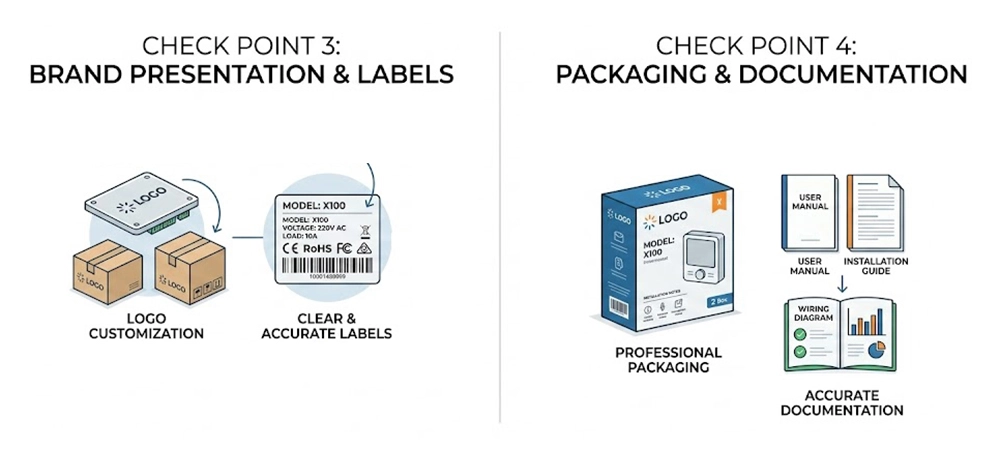
Logo customization is usually the first visible OEM request. It may appear on the product faceplate, rating label, manual, packaging box, carton, or shipping mark.
For a digital thermostat project, logo work should be repeatable. The supplier should confirm logo size, print position, colour, file format, and printing method before production. If the buyer needs a private-label product for distributors, the packaging and label should also follow the same brand direction.
Product labels are especially important. They may include model number, voltage, load rating, wiring reference, certification marks, barcode, serial number, or buyer brand information. If the label is unclear, installers and distributors may face unnecessary confusion. A clean logo, consistent label, and professional packaging help the product look like a real branded item instead of a generic thermostat with a sticker.
Check Point 4: Packaging and Documentation
Packaging is not only decoration. It protects the product, supports the brand, and helps the sales channel understand the model.
For wholesale and project orders, the box may need clear model identification, quantity information, carton marks, and installation notes. For retail channels, the box may need stronger visual design and clearer user benefits.
Documentation should match the exact OEM model. A manual should not show functions that the product does not support. It should not miss important wiring notes, parameter settings, or troubleshooting guidance.
Useful documents may include user manual, installation guide, wiring diagram, parameter setting guide, packaging specification, product photo set, certification files, and communication documents for Modbus or BACnet models.
A well-prepared digital room thermostat package reduces after-sales pressure because distributors and installers can answer more questions without waiting for the factory.
Check Point 5: Default Settings Before Shipment
Default settings are one of the most important OEM details, especially for hotels, apartments, offices, and project installations.
A digital thermostat may support many adjustable parameters, such as temperature unit, setpoint range, fan mode, heating and cooling mode, sensor selection, key card logic, Modbus address, baud rate, display mode, and keypad lock.
If these settings are not prepared before shipment, installers may need to adjust each unit on-site. This increases installation time and creates the risk of inconsistent room operation.
For OEM buyers, default settings should be treated as part of production quality. The supplier should confirm which settings can be prepared before shipment and which settings must be adjusted during installation.
Good default setting control can reduce commissioning time, avoid user confusion, and make every room or project area work with the same logic.
Check Point 6: Manual, and App Support
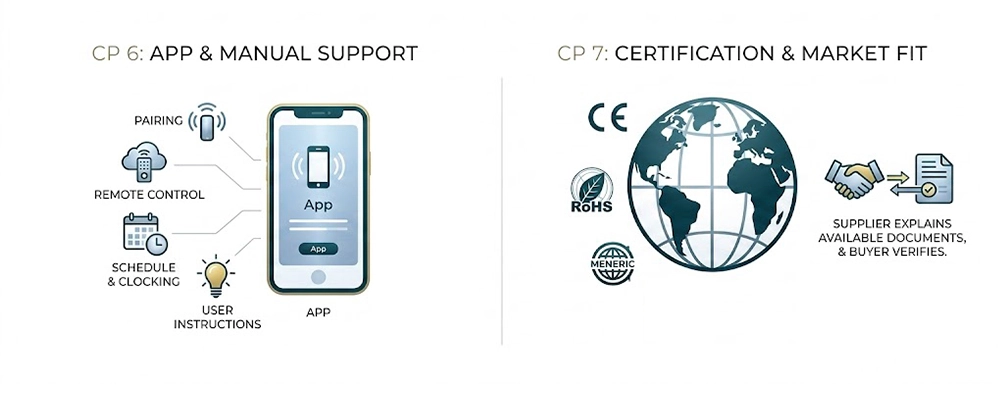
For Wi-Fi models, app support should also be confirmed before bulk order. The buyer should test pairing, remote control, scheduling, and user instructions. If the app experience is important for sales, it should not be checked only after mass production.
A digital room thermostat used in different markets may need different manual languages, app instructions, or parameter explanations. However, buyers should not assume that every screen interface can be freely changed. Screen changes may require new design work, firmware adjustment, higher MOQ, and longer testing.
In many OEM projects, it is safer to keep the proven display interface and customize the manual, label, packaging, and default settings instead.
Check Point 7: Certification and Market Fit
Certification should be checked before sample approval. It should not be treated as a document to find after production.
For European-oriented projects, buyers often ask for CE and RoHS files. For other markets, the buyer may need to check local import rules, distributor requirements, retail platform rules, or project tender documents.
A model may be suitable for one market but require additional review for another market. Voltage, wiring standard, relay load, communication function, and product marking can all affect market fit.
Buyers should also be careful with certification marks on packaging or labels. Do not print marks unless the related document and model scope are properly confirmed.
A reliable supplier should explain what documents are available and remind buyers to verify local requirements before ordering.
Check Point 8: Stable Supply and Repeat-Order Control
OEM buyers usually want long-term sales, not a one-time purchase. Stable supply is therefore a key part of supplier value.
For a digital thermostat product line, repeat-order control means the supplier can keep the same appearance, function, packaging, label, firmware, default settings, and documentation unless both sides approve a change.
The supplier should keep clear project records. These may include logo file, packaging artwork, label version, model code, firmware version, default parameters, certification files, and testing requirements.
If the supplier changes a key component, screen, relay, firmware, or packaging detail without notice, the buyer may face complaints from distributors or project customers.
Repeat-order control helps buyers protect brand consistency and build a product line that can be sold again and again.
Check Point 9: Technical Response and After-Sales Support
Technical support is part of OEM value. It is especially important when the product is sold under the buyer’s brand.
A thermostat supplier should be able to answer practical questions about wiring, parameters, sensors, voltage, communication, app pairing, key card function, fan control, and troubleshooting.
For a digital room thermostat distributor, fast and accurate technical response can reduce pressure from installers and end users. If the factory response is slow or unclear, the buyer may lose confidence from the sales channel.
Good after-sales support does not mean the factory must solve every local installation issue. It means the supplier should provide clear documents, practical guidance, and reasonable fault-checking support.
For OEM cooperation, technical communication should start before mass production, not after complaints appear.
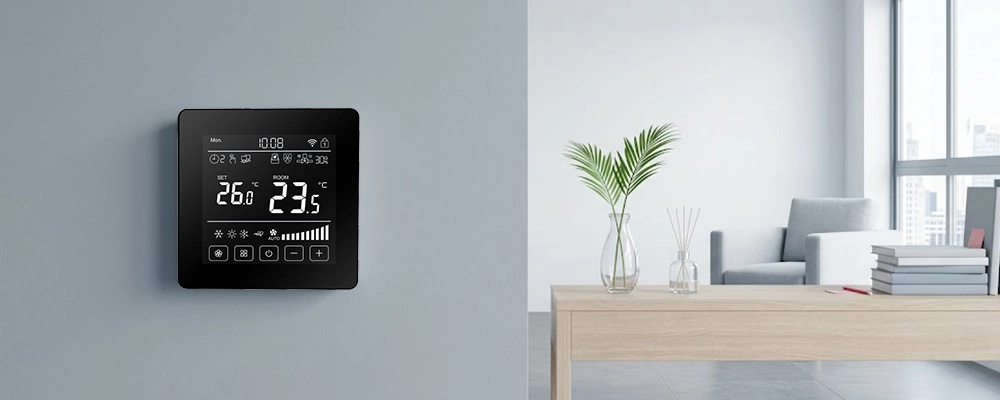
Practical Case: HTW-FC08-ECNW for a Hotel FCU OEM Project
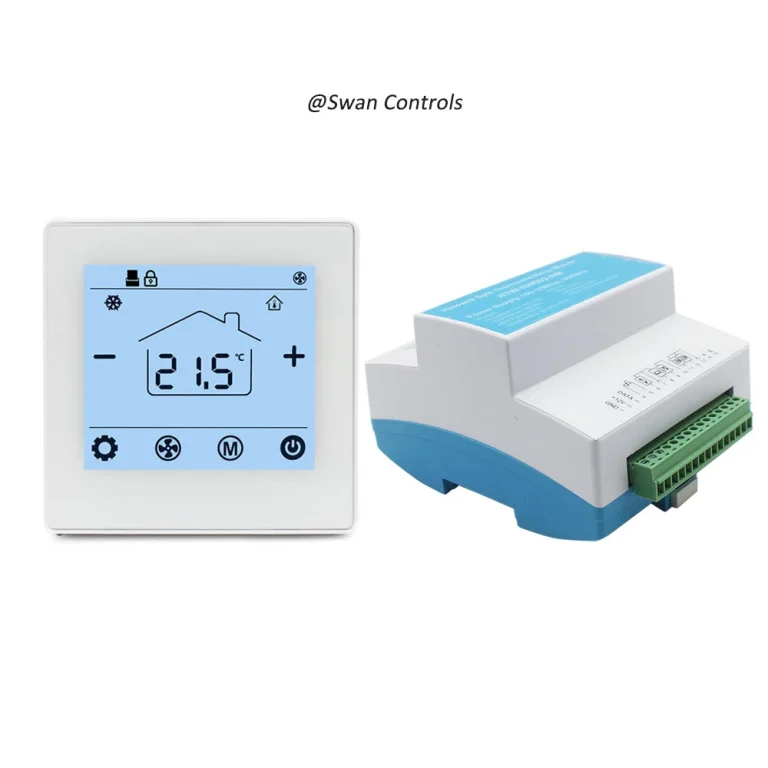
In one hotel FCU project, the buyer wanted a branded thermostat with their own hotel logo, 4-pipe fan coil control, EC fan 0–10V output, key card function, Modbus, and Wi-Fi communication. For this type of hotel room control need, our model Swan Controls HTW-FC08-ECNW can be used as a suitable OEM reference model.
The OEM value was not only the product function. We helped confirm the hotel logo direction, product label information, packaging direction, and CE/RoHS document support before bulk order. This helped the buyer keep the digital thermostat consistent with the hotel brand and project compliance needs.
For the default setting, the hotel wanted the room control logic prepared before shipment. They needed 4-pipe operation, manual mode switching, and energy-saving operation when the room key card was removed. Based on these needs, the following settings were confirmed:
| Hotel Requirement | Related Parameter | Setting |
|---|---|---|
| 4-pipe FCU system | Parameter 10: 2/4 pipe system | Set to 4 = 4-pipe system |
| Manual mode switching | Parameter 4: Heating/Cooling Changeover Possibility | Set to 2 = Manual Heating / Cooling / Ventilation mode |
| Key card removed, enter energy saving | Parameter 9: System status when Key-card removed | Set to 0 = Energy Saving mode |
With these settings, the digital room thermostat can match the hotel’s real operation rule before delivery. Installers spend less time adjusting each room, and the hotel gets more consistent room control from the first batch.
FAQ
1- Can we print our logo on the thermostat?
Yes. Logo customization can usually be discussed for the product faceplate, label, packaging, manual, and carton mark. The final option depends on the model, order quantity, logo size, and production method.
2- Is OEM only about logo printing?
No. OEM work may also include label content, packaging artwork, manual design, model code, default settings, certification file support, and repeat-order record control. For a digital thermostat project, these details are often more important than logo printing alone.
3- Can default settings be prepared before shipment?
In many cases, yes. Common settings may include temperature unit, setpoint range, mode selection, fan logic, sensor selection, key card function, communication address, baud rate, display mode, or keypad lock. The exact options depend on the selected model.
4- Can we change the screen layout or housing design?
This needs engineering review. Screen layout, housing structure, PCB, relay load, and deep firmware changes may require higher MOQ, longer lead time, new testing, and extra cost. For a first OEM order, using a mature platform is usually safer.
5- What documents should we confirm before ordering?
Buyers should confirm the manual, wiring diagram, parameter guide, product specification, packaging artwork, label file, certification files, and communication document if the model supports Modbus, BACnet, or another protocol.
6- How can we avoid differences between sample and mass production?
The buyer and supplier should confirm the approved sample, logo file, label version, packaging artwork, default settings, firmware version, and production model code before mass production. These files should also be kept for repeat orders.
7- Is a mature platform better than full customization?
For most first OEM orders, yes. A mature platform reduces development risk, shortens sample time, supports more stable production, and makes certification matching easier. Full customization is better only when the buyer has clear volume, budget, and technical requirements.
8- Can Swan Controls support hotel thermostat OEM projects?
Yes. Swan Controls can support suitable model selection, OEM logo discussion, packaging direction, default setting confirmation, project documentation, and communication parameter review for hotel FCU thermostat projects. Buyers can share their system type, market, quantity, and branding needs for model confirmation.
Final Note / Practical Takeaway
For OEM thermostat projects, price is only one part of the decision. A lower quotation may look attractive at the beginning, but it may create hidden cost if the supplier cannot support stable quality, clear documents, default settings, certification files, and repeat-order consistency.
A good digital thermostat OEM strategy should start from a proven product platform, then customize the commercial layer: logo, label, packaging, manual, model code, default parameters, and project support documents.
For overseas buyers, the goal is simple: protect the brand, reduce installer confusion, lower after-sales pressure, and build a product line that can be reordered with confidence. If you are preparing an OEM thermostat project, please feel free to get in touch with us to confirm the suitable model, customization scope, and project documents.
References / Sources
1- U.S. Department of Energy, “Programmable Thermostats.”
2- ENERGY STAR, “Smart Thermostats.”
3- ASHRAE, “BACnet™, the ASHRAE Building Automation and Control Networking Protocol.”
4- BACnet International, “About the BACnet Standard.”
5- Modbus Organization, “Modbus Organization.”
6- European Commission, “CE Marking.”
7- European Commission, “RoHS Directive.”
8- International Energy Agency, “Space Cooling.”
9- U.S. Energy Information Administration, “Use of Energy Explained: Energy Use in Homes.”
10- International Energy Agency, “Energy Efficiency 2023.”
Copyright © Swan Controls / Hotowell. All rights reserved. This article is written and published by Swan Controls, an affiliate of Hotowell. The content may not be copied, rewritten, or reused for commercial purposes without permission. For product selection or project support, please feel free to contact us directly.