“Do we need the most advanced Modbus thermostat for this FCU project?”
“Not always. The right choice depends first on the FCU system, then on the control output, and only after that on whether extra communication or advanced functions are truly useful.”
That is where many buyers either save money wisely or waste it quietly. In fan coil unit projects, a Modbus thermostat can be a very practical tool. It can help with room temperature control, system communication, central visibility, and long-term maintenance. But it can also be overspecified. Some buyers pay for 4-pipe logic in a 2-pipe job. Some pay for 0–10V or modulating functions in projects that only use simple on/off outputs. Some buy “smart” or BMS-oriented features that will never be connected after installation. Modbus itself is a communication protocol at the application layer, often carried over serial media such as RS485, so its value is mainly in communication and integration rather than in making the wall unit look more advanced. :contentReference[oaicite:0]{index=0}
Quick Summary: The 4 Checks That Prevent Overpaying for a Modbus Thermostat
Most overspending can be avoided by checking four things in order. First, confirm the FCU system type: 2-pipe, 4-pipe, or modulating control. Second, confirm the output type the project really needs: standard on/off, 24VDC/PICV-related logic, or 0–10V modulation. Third, confirm whether communication is genuinely useful after handover, not just attractive during quotation. Fourth, confirm the project scenario: hotel, office, apartment, or broader BMS-managed building. When these four points are clear, the buyer usually stops paying for features that sound impressive but create no real project value.
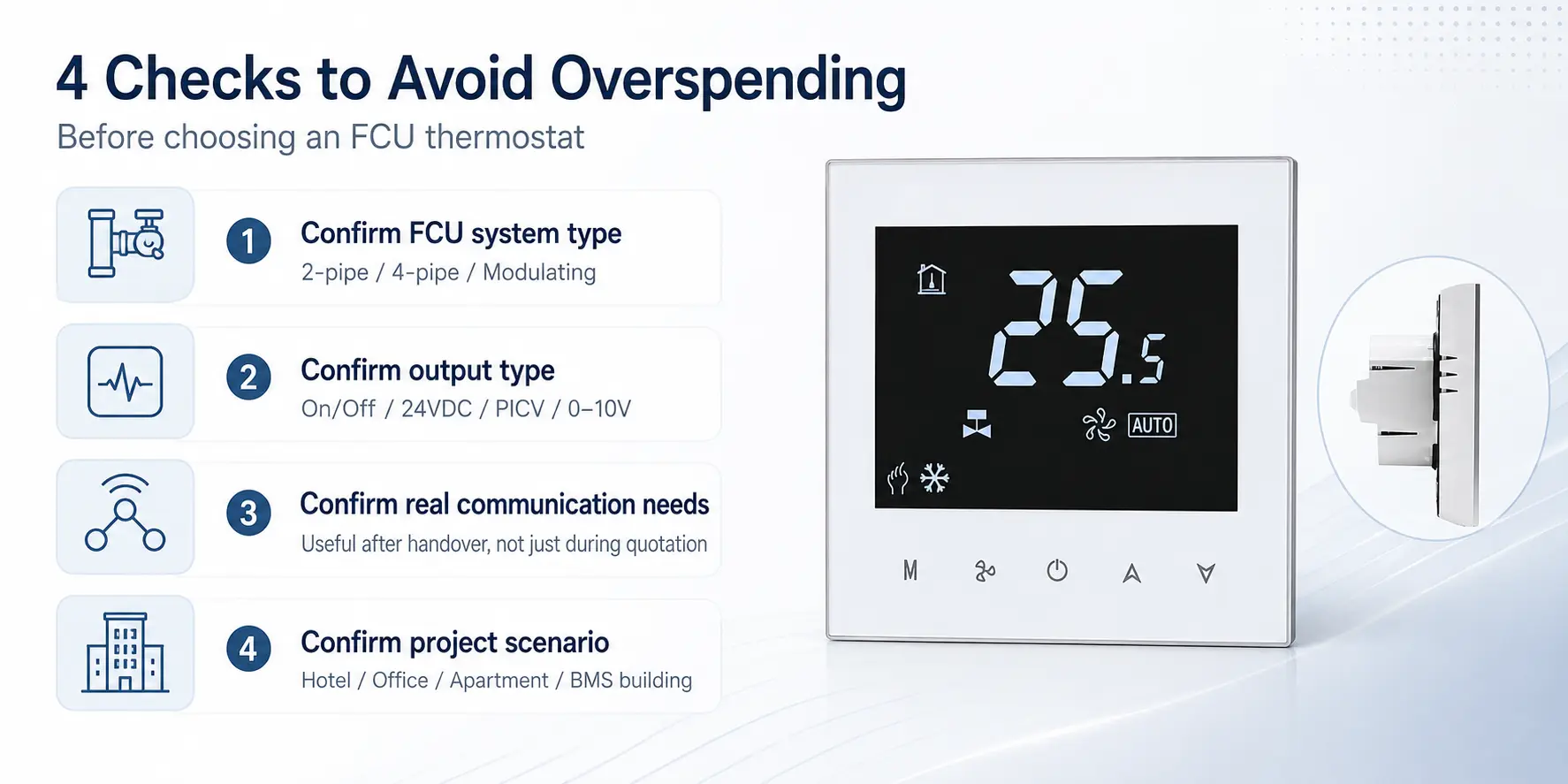
Start with the FCU System, Not the Feature List
This is the most important step, and it is where many budget mistakes begin. Buyers often start by comparing the longest function list. That is the wrong starting point for an FCU project. The first question should be much simpler: what kind of FCU system is this thermostat actually controlling?
In practical terms, most FCU thermostat choices fall into three common categories. The first is a standard 2-pipe FCU system. The second is a 4-pipe FCU system with separate heating and cooling logic. The third is a more advanced project using 0–10V modulation, EC fan related control, or modulating valve / PICV-related output logic. These are not small differences. They change what the thermostat must actually do. That is why a buyer can easily overpay by comparing features before confirming the control type.
For example, if the project is only a straightforward 2-pipe fan coil application, a 4-pipe or 0–10V-focused product may add cost without adding value. On the other hand, if the project truly uses modulating valve control or EC fan logic, a simpler on/off thermostat may save money at purchase time but create limitations later.
What a Modbus Thermostat Really Adds in an FCU Project
A Modbus thermostat adds communication value first. The Modbus Application Protocol Specification defines Modbus as an application layer messaging protocol for client/server communication between devices on different types of buses or networks. In serial environments, the Modbus over Serial Line guide identifies RS485 two-wire as the most common physical interface. In simpler words, a Modbus thermostat is not only a room thermostat. It is also a communication node.
That communication value matters when the thermostat must exchange data with a wider system. The project may want room-by-room visibility, remote reading of setpoints, easier commissioning, or central supervision through a BMS or gateway. The Modbus Messaging Guide for TCP/IP also explains gateway-based communication between different bus or network types, which is exactly why Modbus remains practical in HVAC projects that go beyond one isolated room.
But this also explains when Modbus is not the main buying priority. If the FCU thermostat is only going to be used as a local room thermostat, with no central integration and no long-term system visibility requirement, then Modbus may not be the first feature worth paying extra for.
2-Pipe vs 4-Pipe vs 0–10V Modulating: Where Buyers Most Often Overpay
Most overpaying happens here, not in the communication module alone. Buyers often overspend because they choose a control structure they will never use.
| FCU Control Type | What the Thermostat Must Handle | When Extra Cost Is Worth It |
|---|---|---|
| 2-pipe FCU | Basic fan + valve control | When the project also needs communication or central monitoring |
| 4-pipe FCU | Separate heating and cooling logic | When the actual FCU system truly uses 4-pipe changeover logic |
| 0–10V / modulating | Advanced fan or valve modulation | When EC fan, modulating valve, or PICV is part of the design |
This is why product matching matters more than headline feature count. If the system only needs standard on/off fan and valve logic, then paying for modulating outputs will not make the project “better.” It will only make the quotation higher. By contrast, if the FCU project is genuinely using 0–10V control or PICV-related logic, that extra cost can be justified because the function will actually be used.
When Modbus Is Worth Paying For
When the building needs BMS visibility
A Modbus thermostat is usually worth choosing when the project operator wants visibility beyond the wall unit. The Modbus protocol is structured for standardized request/reply communication, which means a wider management system can read and write defined data points. In practice, this often means easier room status monitoring, setpoint access, and maintenance clarity.
When many rooms must be managed together
In multi-room FCU projects, local-only control can become harder to manage over time. A communication-capable thermostat helps create a more coherent system. That is especially relevant in office projects, hotels, and larger managed buildings where room-level devices are expected to fit into a broader control strategy.
When commissioning and maintenance matter
Modbus is often worth paying for when the project team thinks beyond installation day. If the thermostat must be read, checked, or coordinated later through a standard communication path, Modbus becomes a maintenance advantage rather than only a technical label. The Modbus messaging documentation specifically discusses interoperability across gateways and network structures, which is one reason it remains useful in long-life HVAC environments.
When the FCU project is part of a wider managed system
If the thermostat is expected to fit into an integrated HVAC or BMS structure, Modbus often becomes the more practical choice. In that situation, the thermostat is not only a room thermostat. It is part of the building communication architecture.
When Modbus Is Not the Main Buying Priority
A Modbus thermostat is not automatically the first thing to pay for in every FCU project. If the building only needs straightforward local room control, and there is no real plan for central monitoring, no BMS access, and no system-level commissioning need, then communication may not be the strongest value point.
In that case, it may be wiser to focus first on the right FCU control type, correct fan logic, clear interface, and stable local control. A thermostat can be “advanced” on paper and still be poor value if the project never uses its communication capability after installation.
This is why buyers should separate “possible future use” from “real project need.” If there is no realistic plan to use Modbus, its value becomes more theoretical than practical.
FCU Project Scenarios: Hotel, Office, Apartment, and Commercial Room Control
The value of a Modbus thermostat changes with project type. This is why the same thermostat can be a good fit in one project and unnecessary in another.
Hotels
In hotel-style FCU control, central visibility and easier room-by-room supervision often matter. A communication-capable thermostat can support a more manageable room-control structure, especially when many rooms are involved.
Office buildings
In offices, consistency and long-term maintenance are often more important than purely local user adjustment. Schneider Electric’s commercial thermostat documentation identifies applications such as office buildings, hotels, and residential terminal HVAC control, which reflects exactly the kind of FCU environments where communication-capable thermostats can become more relevant. :contentReference[oaicite:5]{index=5}
Apartments and simpler room-control projects
In smaller apartment or simple room-control projects, the buyer may not need the most feature-rich Modbus thermostat if there is no broader system integration plan. In these cases, the strongest value may come from correct local control rather than from a longer communications feature list.
Commercial room-control projects
Commercial room-control projects often sit between these extremes. They may not need every advanced function, but they often benefit from clearer central access and easier structured management. That is where the buyer should judge whether communication is truly part of the operating logic, not just the product label.
Real Product Paths for Different FCU Needs
This is where your current product range becomes helpful for real buyer decisions.
For standard 2-pipe FCU projects
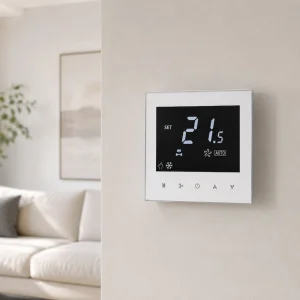
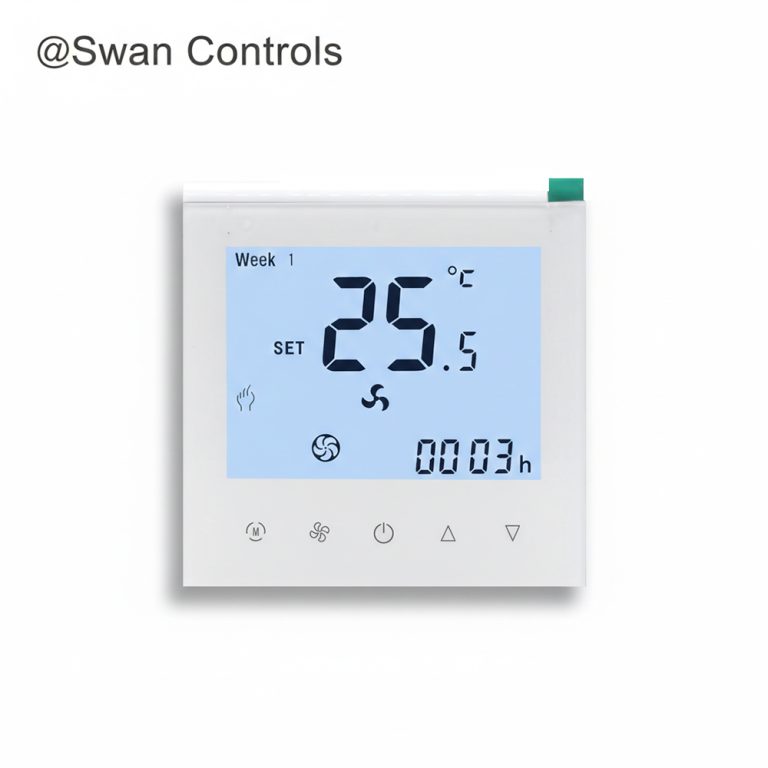
A model such as the indoor Modbus thermostat for 2-pipe fan coil unit system or the RS485 Modbus thermostat for 2-pipe system room temperature control is a better match when the job is genuinely 2-pipe and does not require more advanced output structures.
For 4-pipe FCU projects
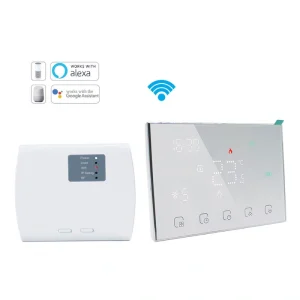
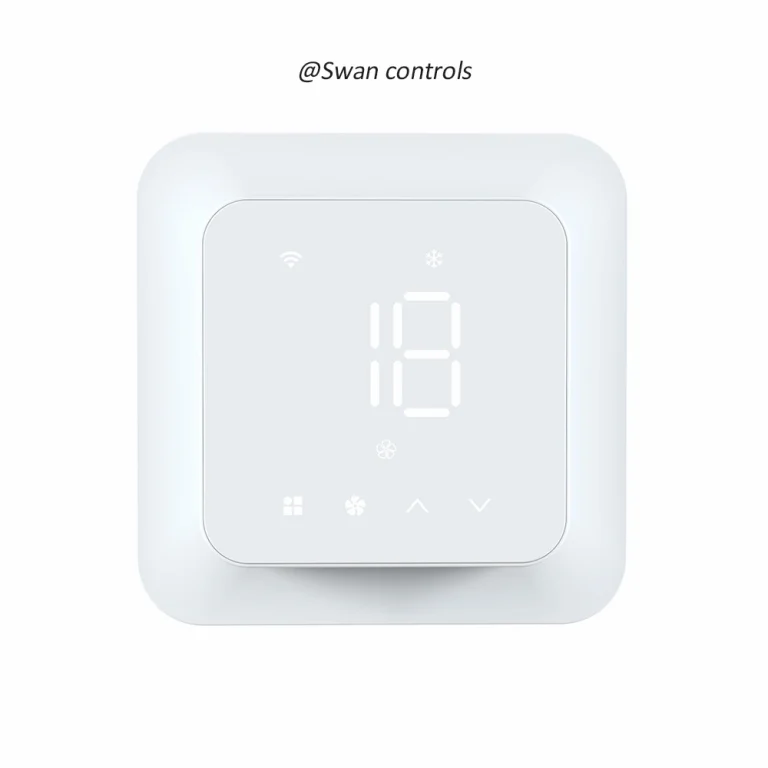
If the system is really 4-pipe, then the popular Modbus thermostat for 4-pipe fan coil unit systems or the durable indoor BMS smart Modbus thermostat for 4-pipe FCU system becomes easier to justify because the added logic matches the system design.
For 0–10V or modulating needs
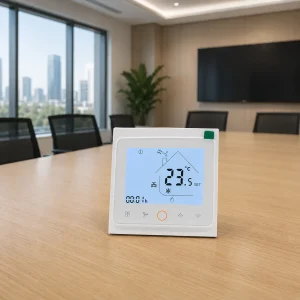
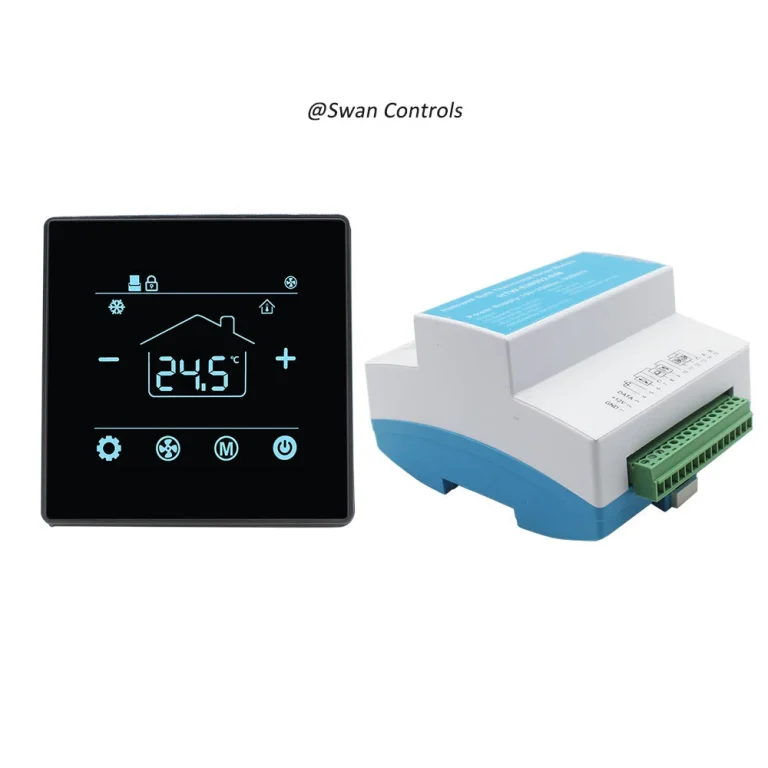
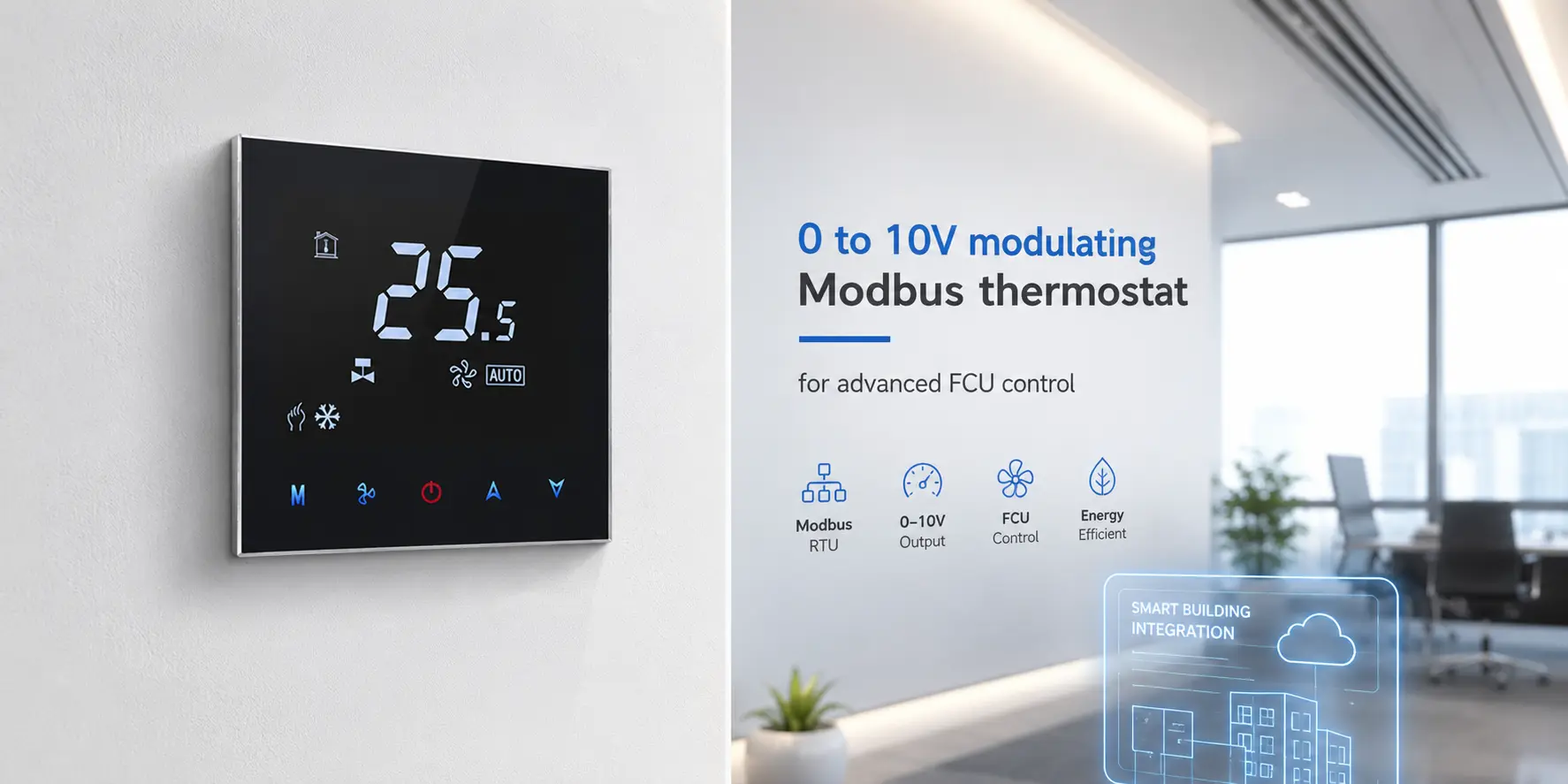
Where the FCU design uses EC fan, modulating valve, or 0–10V-related control logic, the FCU 3 fan speed 0–10V modulating thermostat with Modbus is the kind of product that becomes worth the extra cost because the output capability will actually be used.
For PICV-related or more advanced control structure
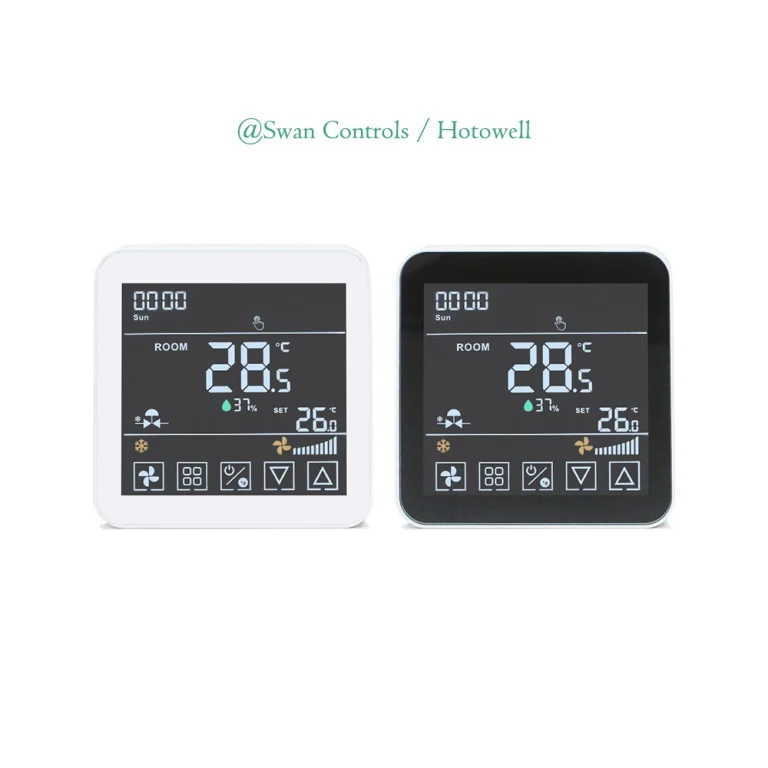
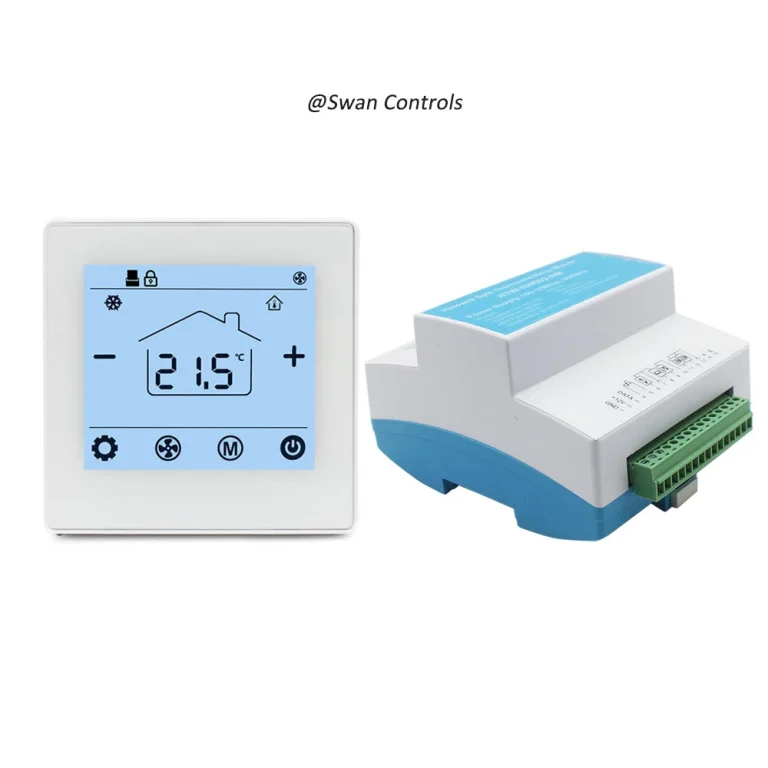
Projects that really use PICV-related logic or 24VDC output can justify a product such as the 24VDC output PICV thermostat with Modbus keycard energy saving. But if the project does not use those functions, paying for them only increases cost without improving performance.
Expert Commentary: The Most Expensive Feature Is the One You Never Use
That is the main lesson of this article. Buyers usually do not overpay because Modbus itself is expensive. They overpay because they buy unused control capability. The most common overspend is not “buying communication.” It is buying communication plus advanced output structure plus project functions that the system never actually uses.
A good FCU thermostat decision therefore starts with discipline. First define the FCU type. Then define the output type. Then confirm whether communication will really be used after handover. Only then compare price. In real projects, that sequence saves more money than negotiating one more small percentage from the quoted unit price.
Industry Trend: Why Modbus Still Matters in FCU and Building Control
Modbus remains relevant because it continues to solve a real communication problem in building automation and managed HVAC systems. The Modbus Organization still maintains protocol specifications, serial line guidance, TCP/IP implementation guidance, and Modbus Security specifications, which shows that the ecosystem remains active.
For FCU projects, that matters because many buyers still need open, familiar, and standardised communication paths. Modbus is not always the right answer for a simple room thermostat, but it continues to be a practical answer where building-level integration is part of the project logic.
Scientific Data and What It Means
Several technical points help buyers make better decisions. Modbus is defined as an application layer protocol at OSI level 7. RS485 two-wire is identified in the serial line specification as the most common physical interface for Modbus over serial line. The Messaging Implementation Guide also explains how Modbus communication can be extended through gateway and TCP/IP structures. These facts matter because they show why Modbus is not just a marketing term. It is a structured communication framework that becomes valuable when a thermostat must operate as part of a larger controlled system.
Real Cases and Buyer Feedback
Case 1: A 2-pipe project that did not need modulating output
A buyer first compared several FCU thermostats and was drawn toward a more advanced model because it looked more complete on paper. Later, the project review showed the FCU application was a standard 2-pipe setup with no real need for modulating outputs. Once that was clear, the simpler Modbus thermostat became the more rational choice.
Case 2: A 4-pipe office project where Modbus really helped
In an office project, the issue was not only local comfort but central access. The building team wanted more consistent room management and easier supervision. In that context, a Modbus 4-pipe thermostat offered real value because communication would actually be used after installation.
Case 3: A PICV / modulating project where advanced output was worth the cost
Another project involved more advanced control logic and could genuinely use the extra output capability. In that case, the higher-cost thermostat was not overspecified. It was properly specified. The difference was not feature count. It was feature relevance.
User feedback pattern: Buyers rarely regret choosing the simpler thermostat when the simpler model already matches the real FCU project. They usually regret paying for a more complex model and then discovering the “extra” functions never get used.

Frequently Asked Questions
1. How do I choose the right Modbus thermostat for an FCU system?
You should first confirm the FCU type, then the required output logic, then whether communication will actually be used for central visibility or management. After that, you can compare products by price and interface.
2. Do I need a 4-pipe Modbus thermostat for every FCU project?
No. A 4-pipe Modbus thermostat is only worth choosing when the actual fan coil system uses 4-pipe heating and cooling logic. Otherwise, it may add cost without adding value.
3. When is a 0–10V Modbus thermostat worth the extra cost?
It is usually worth the extra cost when the project truly uses EC fan control, modulating valve logic, or other 0–10V-related outputs. If the project only needs standard on/off FCU control, that extra cost may not be justified.
4. Is a Modbus thermostat always better than a normal fan coil thermostat?
No. It is better when the FCU project needs communication, central access, or easier system-level management. For simple standalone local control, a non-Modbus thermostat may be more practical.
5. What causes buyers to overpay for a Modbus thermostat?
The most common reason is buying unused control capability, such as 4-pipe logic, 0–10V outputs, or advanced project functions that the FCU system does not actually use after installation.
References / Sources
- Modbus Organization, Modbus Application Protocol Specification V1.1b3
- Modbus Organization, Modbus over Serial Line Specification and Implementation Guide V1.02
- Modbus Organization, Modbus Messaging on TCP/IP Implementation Guide V1.0b
- Modbus Organization, Specifications and Implementation Guides
- Modbus Organization, Introduction to Modbus
- Modbus Organization, About Us
- Schneider Electric, TH900 Series Thermostat Installation Instructions
- Modbus Organization, Modbus Security Protocol
- Wikipedia, Modbus
- Wikipedia, RS-485