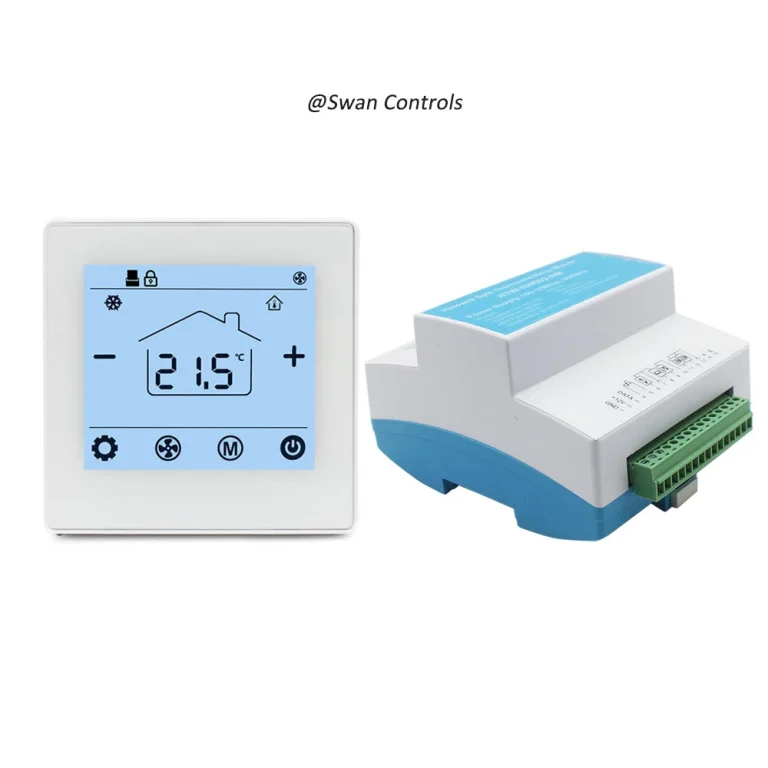
“Can we make this Modbus thermostat more competitive by adding every possible feature?”
“Not always. In OEM projects, the better question is which functions should stay standard for most orders, and which should remain optional so the product line stays clear, stable, and cost-effective.”
That is where many OEM thermostat projects become more complicated than they need to be. A buyer starts with a promising FCU thermostat platform. The communication side looks good. The housing is acceptable. The screen is fine. Then more requests begin to appear. Add 4-pipe. Add 0–10V. Add PICV-related logic. Add stronger BMS visibility. Add smart room behavior. Add special control combinations just in case a future customer may ask for them. After enough additions, the product no longer feels like a clear platform. It becomes a mixed specification that is harder to explain, harder to test, and sometimes harder to sell.
This is why a real OEM guide should not only ask what the thermostat can do. It should ask which functions should be standard because they support most projects, and which should stay optional because they only make sense in certain FCU applications, building types, or integration structures. In Modbus thermostat projects, this matters even more because communication adds another decision layer. The thermostat is not only a room thermostat. It may also be a data point in a wider building-management system. That means the best OEM decision is not the one with the longest feature list. It is the one that creates the clearest, most reusable, and most commercially practical product structure.
Quick Summary: The 4 OEM Questions That Decide What Should Stay Standard
Most OEM confusion can be reduced by answering four questions early. First, what is the main FCU control family: 2-pipe, 4-pipe, 3-speed fan, EC fan, 2-point valve, 0–10V, or PICV-related logic? Second, how often will the project really use Modbus communication beyond basic room control? Third, is the thermostat mainly aimed at hotel, office, apartment, or broader commercial FCU applications? Fourth, which features are needed in most orders and which only appear in a minority of projects? Once these four questions are answered, it becomes much easier to separate standard features from optional ones.
Why OEM Projects Need a Standard vs Optional Function Strategy
Many OEM thermostat projects become inefficient because the product platform is not structured clearly enough. Every buyer wants flexibility, but uncontrolled flexibility creates hidden cost. It increases engineering review time. It creates more documentation variants. It makes testing more complicated. It weakens model positioning. It can also make sales communication harder because the customer no longer knows what the “base product” really is.
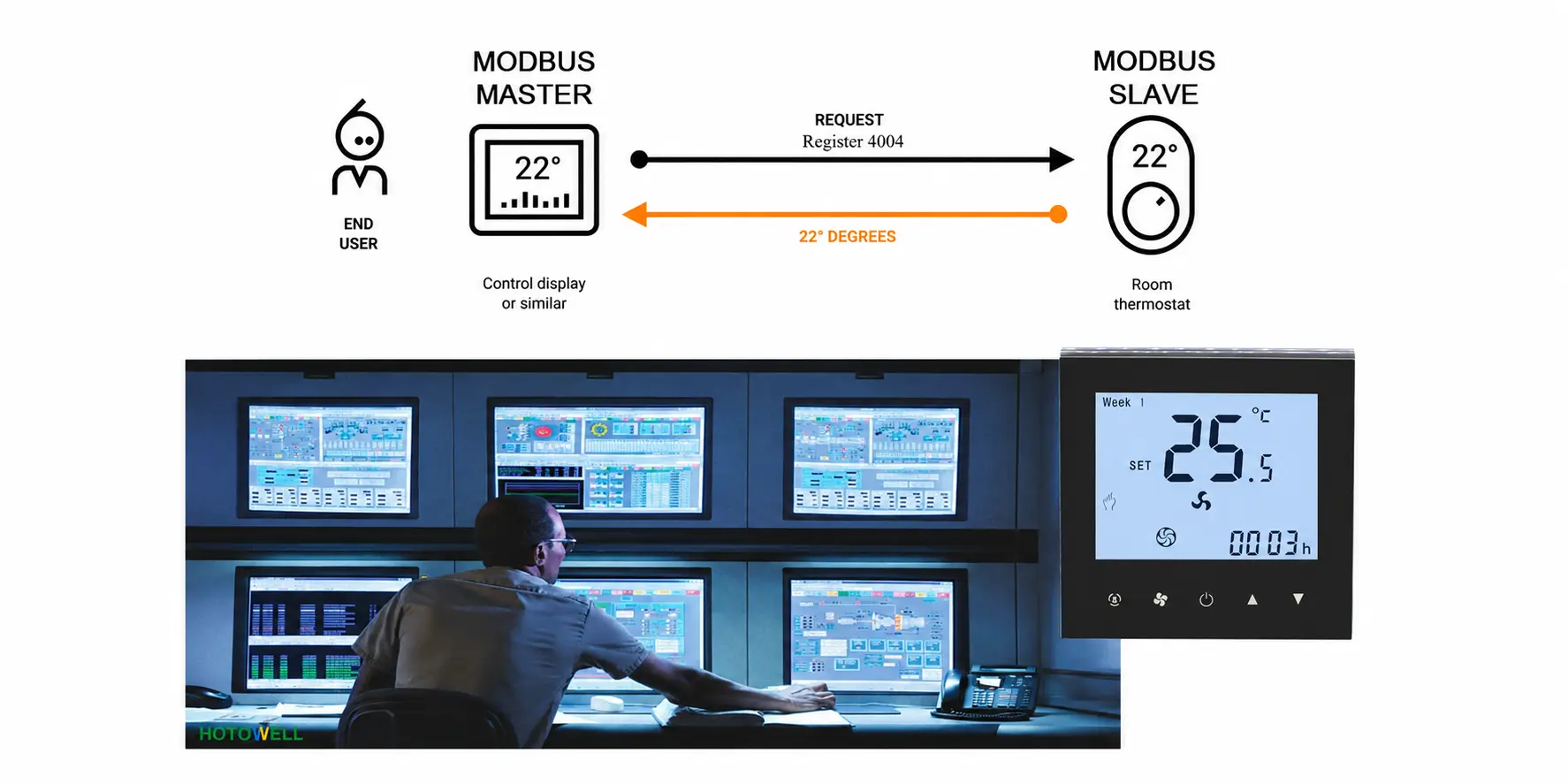
This is especially true in Modbus thermostat projects. The presence of Modbus already tells the market that the thermostat is designed for more than simple standalone room control. The product may be part of a building system, an FCU network, or a gateway-linked BMS environment. That means the product line needs discipline, not only possibility. A good OEM platform should allow customization, but it should not let every order redefine the product from the beginning.
So the real OEM challenge is balance. A thermostat platform should be flexible enough to support different FCU project needs, but not so open that every quotation becomes a new development discussion. That is why separating standard functions from optional functions is not only a technical exercise. It is a product-line strategy.
Start with the FCU System, Not the OEM Wishlist
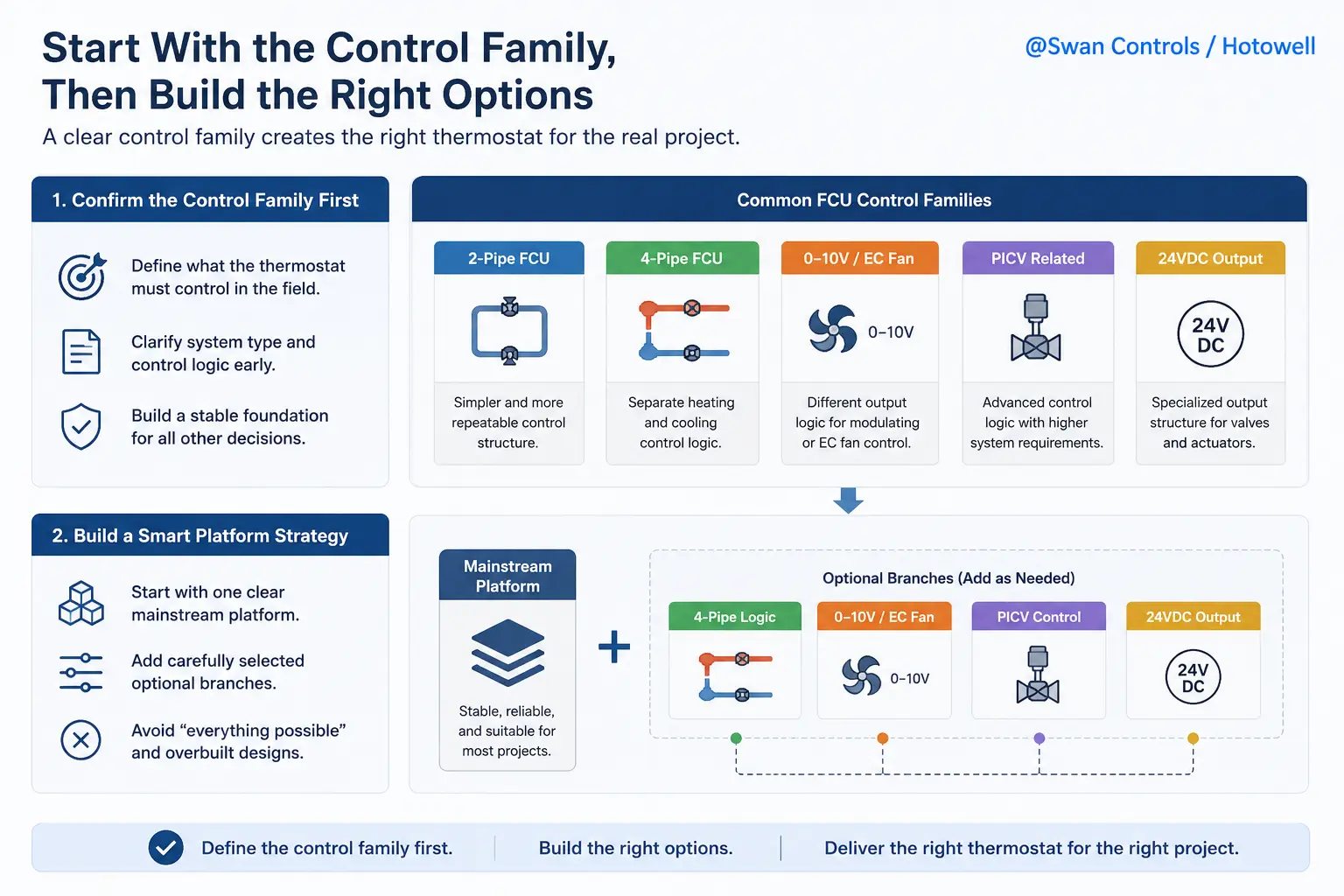
The first step should always be the control family. Before discussing labels, manuals, branding, app wording, or housing style, the OEM team should confirm what the thermostat must actually control in the field. In FCU projects, this usually begins with 2-pipe, 4-pipe, or more advanced modulating logic. If this point is unclear, the rest of the OEM discussion becomes unstable.
A 2-pipe FCU project often needs a simpler and more repeatable thermostat structure. A 4-pipe project needs separate heating and cooling logic. A 0–10V or EC-fan-related project needs a different output logic again. PICV-related or 24VDC-output projects create another layer of specialization. These are not small feature differences. They define the real control family of the thermostat.
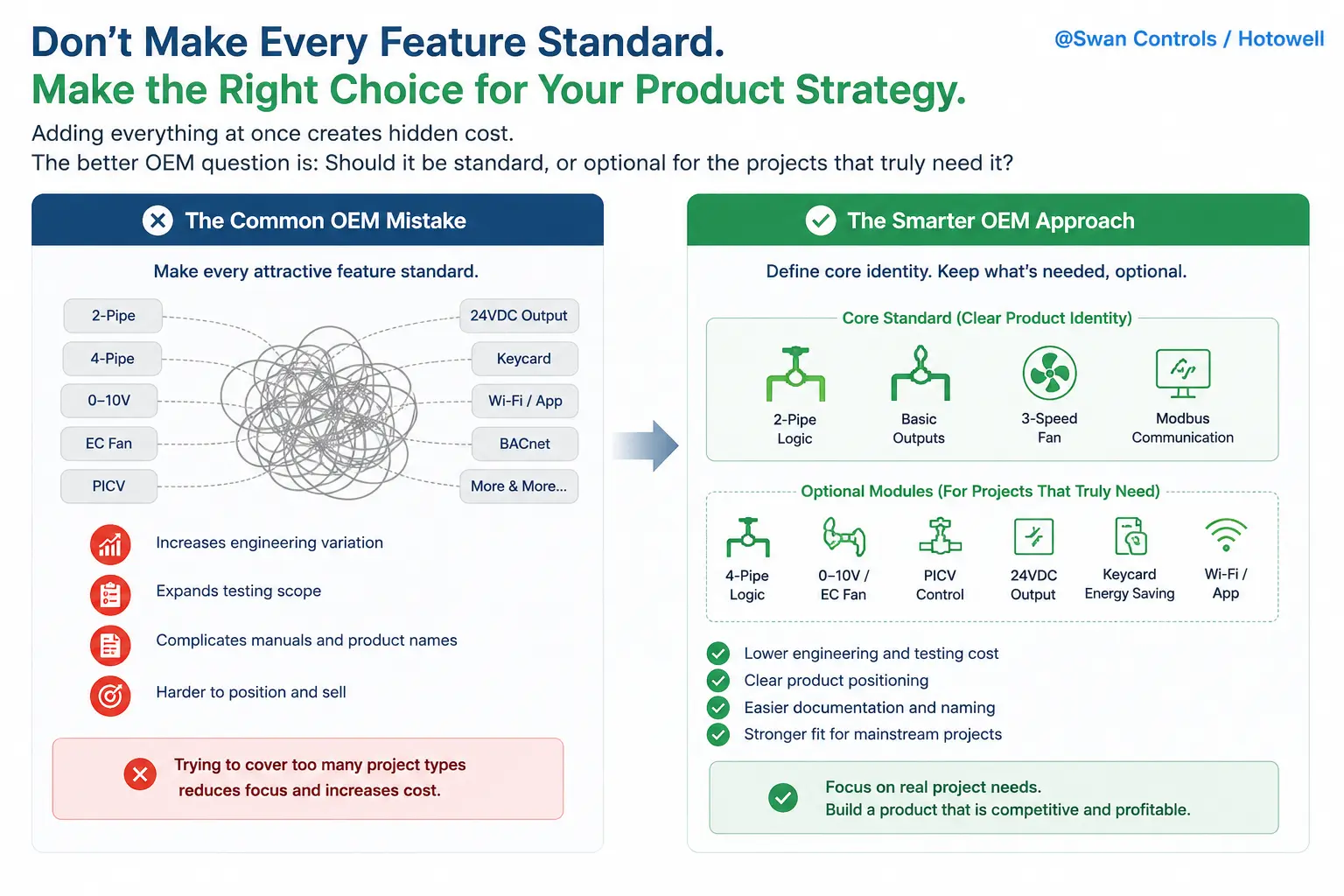
This is why the smartest OEM strategy often starts with one clear mainstream platform and then adds carefully selected optional branches. If the OEM team starts with “everything should be possible,” the thermostat can quickly become overbuilt for its main market.
| Function Area | Better as Standard | Better as Optional |
|---|---|---|
| FCU control family | One clear mainstream logic | Specialized 4-pipe / modulating / PICV branches |
| Communication | Stable Modbus RTU over RS485 | Special mapping or unusual integration requests |
| Interface and branding | Core OEM branding scope | Deep UI or workflow changes |
| Project-specific functions | Only if widely reusable | Hotel, PICV, or rare site logic |
What Should Usually Stay Standard in a Modbus Thermostat OEM Platform
Not every function should be optional. A strong OEM thermostat still needs a clear standard structure. Standard functions are the ones that support most target projects, reduce misunderstanding, and create a stable baseline for production, documents, and after-sales support.
Standard function 1: Stable Modbus RTU communication over RS485
If the product is sold as a Modbus thermostat, then stable Modbus communication should not be treated as an optional upgrade. It should be part of the base definition. Modbus is the communication protocol, and RS485 is the common serial path in many FCU projects. If a buyer is selecting a Modbus thermostat platform, reliable communication should be part of the standard product logic, not a later special version.
Standard function 2: One clear mainstream FCU control family
The base model should usually focus on the FCU logic that covers the largest project volume in the intended market. In many OEM situations, that may be a 2-pipe or a common 4-pipe FCU family, depending on region and buyer type. The key is not which one is globally best. The key is that the standard model should represent the product line’s main commercial path.
Standard function 3: Core room thermostat behavior
The thermostat should have dependable local temperature control, practical room-facing UI, and stable basic parameter behavior as part of the standard configuration. These are not “extra” functions. They are the core product identity.
Standard function 4: Core OEM branding scope
For OEM projects, some branding elements usually belong in the standard OEM offer. That often includes logo, front panel marking, product label, carton, manual branding, and model code adaptation within a controlled structure. These are the kinds of OEM needs that regularly recur and usually justify standard process design.
Standard function 5: Clear documentation baseline
A Modbus thermostat should not rely on verbal explanation after sale. A standard OEM platform should have a stable baseline of datasheet clarity, wiring note, communication note, and installation logic. This is especially important in FCU projects, where room-control behavior and communication expectations need to be explained consistently across teams.
Which Functions Should Usually Stay Optional
Optional functions are not bad functions. They are simply functions that make sense only in some projects, not most projects. The problem begins when optional functions are pushed into the standard product without enough commercial reason. That is how a thermostat platform becomes overbuilt.
Optional function 1: 4-pipe logic when the main market is 2-pipe
If most orders are for 2-pipe FCU systems, 4-pipe control should often remain optional. It is valuable in the right projects, but forcing it into every version can complicate model positioning and customer communication unnecessarily.
Optional function 2: 0–10V or advanced modulating output
This is one of the clearest optional categories. If the actual market frequently uses EC fan, modulating valve, or related advanced output logic, then a dedicated platform can be justified. But if those projects are occasional, it is usually wiser to keep them as optional branches rather than folding them into the standard thermostat model.
Optional function 3: PICV or 24VDC-related special output logic
PICV-oriented or 24VDC output projects can be commercially important, but they are rarely the universal default. These functions should normally stay optional unless the target market specifically revolves around that control family.
Optional function 4: hotel-specific room-management behavior
Some hotel projects need more specialized control behavior, such as stronger operator-side management logic or room-oriented energy-saving structures. These can be valuable, but they should usually remain optional unless the whole OEM line is specifically built for hotel FCU applications.
Optional function 5: special integration mapping or unusual communication behavior
Not every buyer uses the same gateway, BMS, or register expectation. Standard communication should stay stable. Customer-specific mapping or unusual integration logic should usually remain optional, controlled, and clearly documented.
How Use Case Changes the Standard Function Decision
Whether a function should stay standard or optional also depends on the use case. Hotels, offices, and apartments may all use Modbus thermostat communication, but they do not always reward the same standard platform.
In office projects, central visibility and structured management often matter more, so stronger communication clarity may deserve to stay standard. In hotel projects, room supervision may matter, but highly specific room-management logic may still be better treated as optional if it only suits a subset of projects. In apartment-oriented projects, local room comfort may matter more than advanced project-specific behavior, so overbuilding the thermostat can reduce commercial efficiency.
This means the phrase “standard function” should never be decided in isolation. It should be decided in relation to the buyer’s main project type and target market.
Where the Product Path Changes in Real OEM Choices
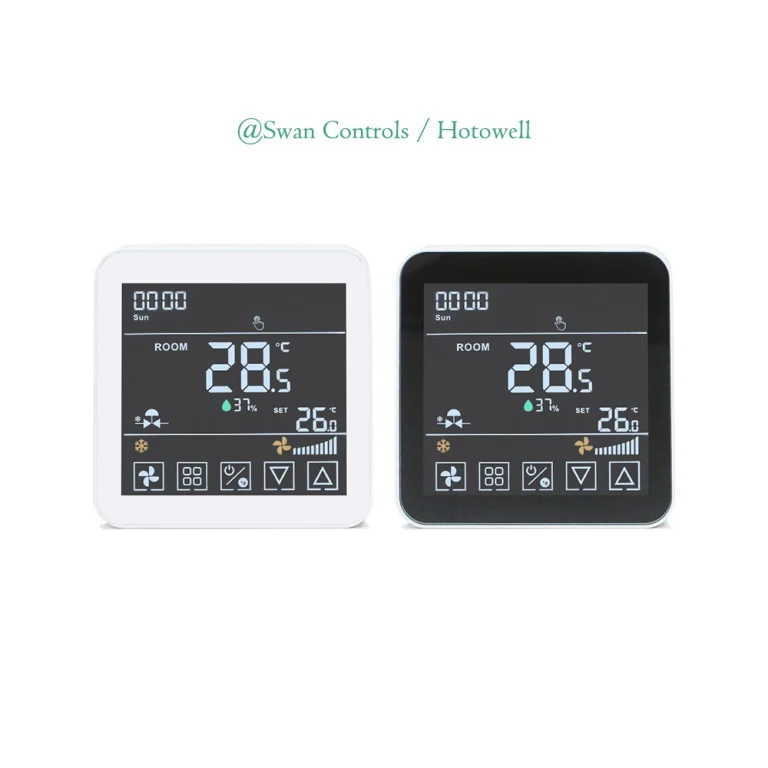
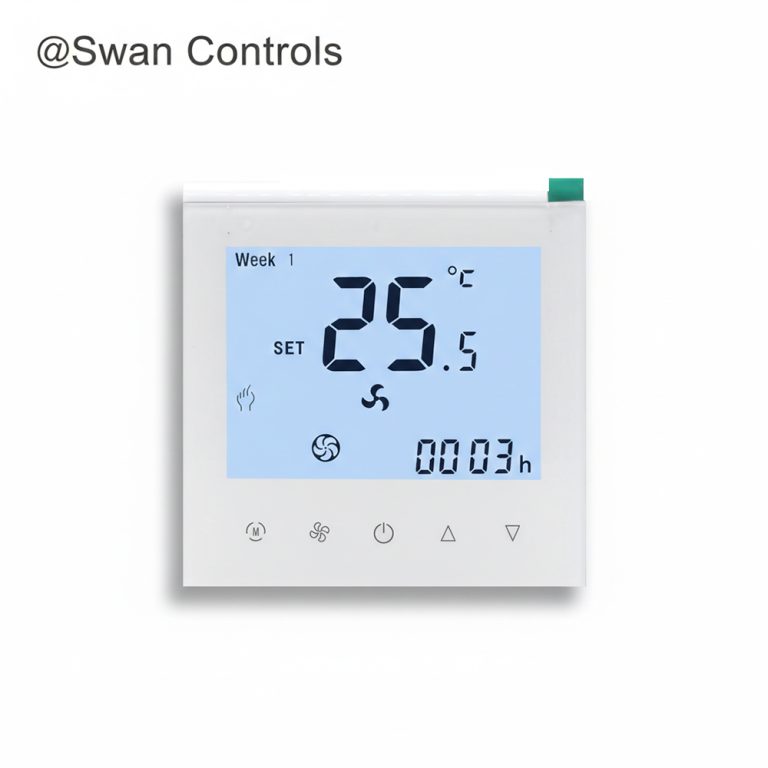
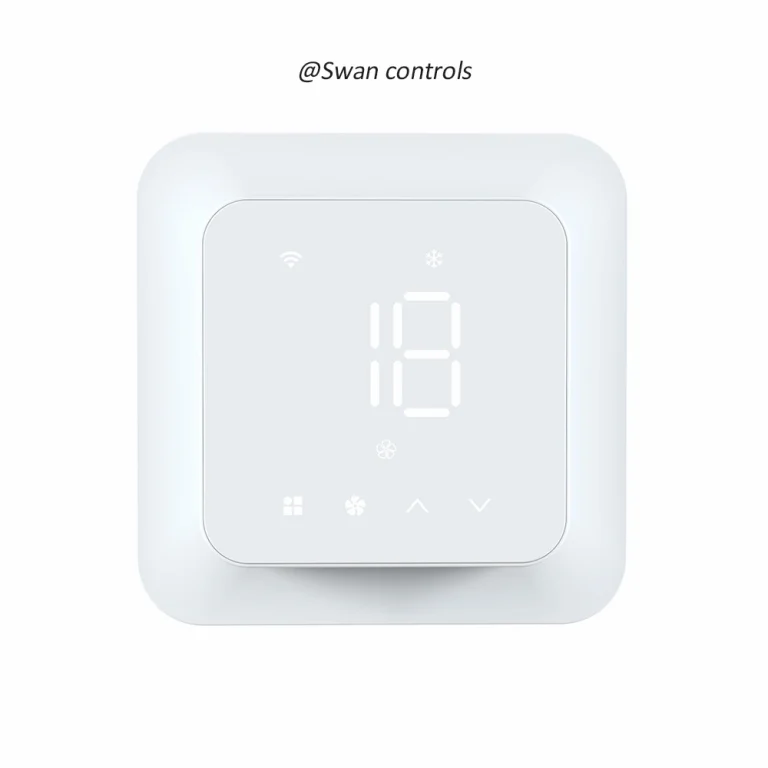
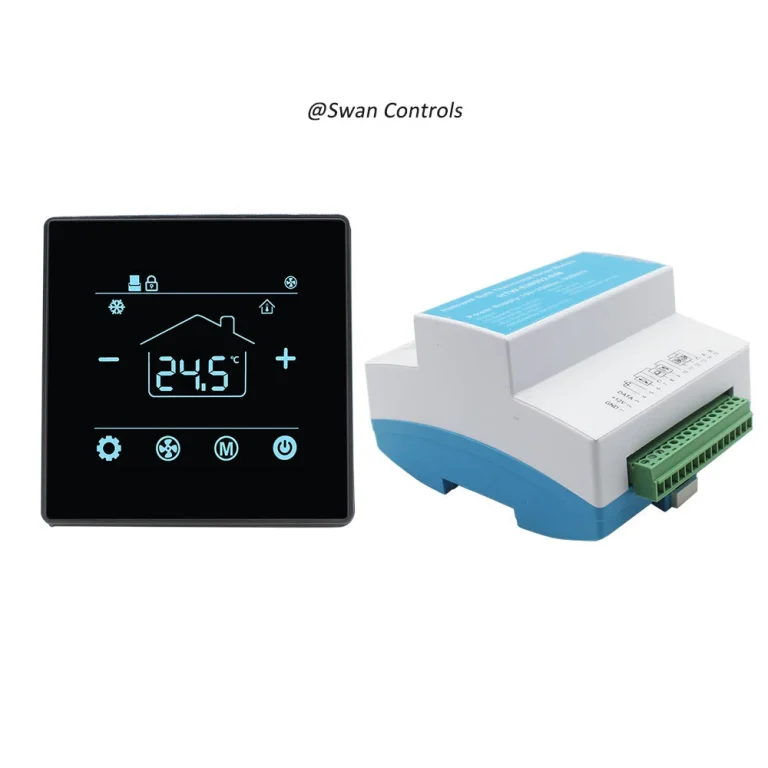
Your current product references show clearly why the OEM decision should begin with the real control family. A 2-pipe indoor Modbus thermostat may represent the most practical standard platform when the market mostly uses simpler FCU logic. A 4-pipe Modbus thermostat becomes more appropriate when the project family genuinely depends on that structure. A 0–10V modulating thermostat with Modbus makes sense when the market truly needs advanced output. A 24VDC PICV-oriented thermostat should usually remain more specialized unless that control family is central to the whole OEM line. And a 4-pipe BMS smart Modbus thermostat becomes relevant when deeper integration and more complex control behavior are part of the intended product strategy.
These examples show the main OEM lesson clearly. The platform becomes stronger when each branch has a reason. The platform becomes weaker when everything is pushed into one “universal” thermostat.
What Buyers Often Get Wrong in OEM Requests
The most common OEM mistake is asking for every attractive feature to become standard at the same time. Buyers usually do this for understandable reasons. They want flexibility. They want to be ready for more projects. They want to avoid saying no to a future customer. But too much standardization at the wrong level creates hidden cost.
It increases engineering variation. It expands testing scope. It complicates manuals and product names. It also creates a strange sales problem: the thermostat becomes harder to position because it is trying to represent too many project types at once.
The better OEM question is not “Can we add this?” The better question is “Should this be part of the standard product identity, or should it stay optional for the projects that truly need it?” That one question often improves the whole product strategy.
Expert Commentary: The Strongest OEM Platform Usually Feels Simpler Than It Really Is
The best Modbus thermostat OEM platforms are rarely the ones with the most visible complexity. They are usually the ones where complexity is controlled behind a clear standard structure. To the market, the platform feels stable, understandable, and well organized. Behind the scenes, it may still support meaningful optional branches. That is a much better product strategy than letting every buyer reshape the platform from the ground up.
For this reason, standard functions should usually be selected not by engineering curiosity, but by commercial frequency. If most projects need it, standardize it. If only some projects need it, keep it optional and controlled. That principle protects both the supplier and the buyer.
Industry Trend: Why Clear Platforms Matter More in Building Automation
As buildings become more managed and communication-based control becomes more common, Modbus thermostat platforms are expected to fit more systems than before. The Modbus Organization continues to maintain protocol, serial-line, and messaging guidance, which shows that structured interoperability remains relevant in automation environments. That makes clear product architecture even more important, not less.
The trend is therefore not simply “add more features.” The better trend is “build clearer platforms that integrate well.” Buyers increasingly need thermostats that communicate properly, match FCU logic properly, and can still be offered through organized OEM structures without turning every order into a custom engineering event.
Scientific Data and What It Means
Several technical facts support this OEM logic. Modbus is defined as an application-layer messaging protocol, which means communication should be treated as a core structured function rather than a decorative extra. The serial implementation guidance identifies RS485 two-wire as a common path in Modbus serial systems, which reinforces why stable communication should normally stay standard in a Modbus thermostat platform. The messaging guide for Modbus over TCP/IP also shows how gateways extend the communication chain into broader building systems, which is one reason why special integration behavior should usually stay optional unless it is broadly reusable. The practical lesson is simple: stable core communication belongs in the standard platform, while project-specific integration differences should usually stay controlled and optional.
Real Cases and User Feedback
Case 1: A buyer wanted a “universal” thermostat, then simplified the platform
One OEM buyer first asked for 2-pipe, 4-pipe, modulating output, hotel-style behavior, and multiple specialized control patterns in one main version. Later, after reviewing the actual order mix, the project team realized that most expected orders were much simpler. Once the platform was restructured into one standard product plus a smaller optional branch strategy, the OEM logic became more practical and easier to sell.
Case 2: A 4-pipe office-oriented line justified stronger standard communication
In another project, the target market focused on managed office FCU systems where central visibility mattered in most cases. There, stronger communication clarity and a more structured 4-pipe direction made sense as standard because they matched the dominant commercial path rather than a rare request.
Case 3: A specialized PICV-related request stayed optional and saved confusion
A buyer considered putting a more specialized PICV-related output structure into the main product. After review, the team decided to keep it optional. That choice preserved a cleaner main thermostat identity while still supporting projects that really needed the advanced function.
User feedback pattern: Buyers rarely regret keeping specialized functions optional when those functions were not part of the main order flow. They more often regret letting too many unusual project requirements redefine the standard model too early.

Frequently Asked Questions
1. Which functions should usually stay standard in a Modbus thermostat OEM project?
Stable Modbus RTU communication, one clear mainstream FCU control family, dependable room thermostat behavior, core OEM branding scope, and a solid documentation baseline should usually stay standard.
2. Which Modbus thermostat functions are better kept optional?
Functions such as 4-pipe logic in mainly 2-pipe markets, 0–10V modulating outputs, PICV-related control, hotel-specific project behavior, and special integration mapping are often better kept optional unless they are common in most orders.
3. Why should optional functions not all become standard?
Because too many standard functions can make the thermostat platform harder to position, harder to test, harder to document, and more expensive to maintain in OEM production.
4. How do I decide whether a function should be standard or optional?
You should judge it by commercial frequency, project reuse, and whether it supports the main FCU control path in the target market. If most projects need it, it may deserve to stay standard. If only some projects need it, it should usually stay optional.
5. Is the best OEM Modbus thermostat the one with the most functions?
No. The best OEM Modbus thermostat is usually the one with the clearest standard platform and the most controlled optional functions, so the product line stays practical, stable, and commercially understandable.
References / Sources
- Modbus Organization, Modbus Application Protocol Specification V1.1b3
- Modbus Organization, Modbus over Serial Line Specification and Implementation Guide V1.02
- Modbus Organization, Modbus Messaging on TCP/IP Implementation Guide V1.0b
- Modbus Organization, Specifications and Implementation Guides
- Modbus Organization, Introduction to Modbus
- Modbus Organization, About Us
- Schneider Electric, SpaceLogic Thermostat – TH900 Series Thermostat – Installation Instructions
- Schneider Electric, Thermostats and Sensors
- Wikipedia, Modbus
- Wikipedia, RS-485