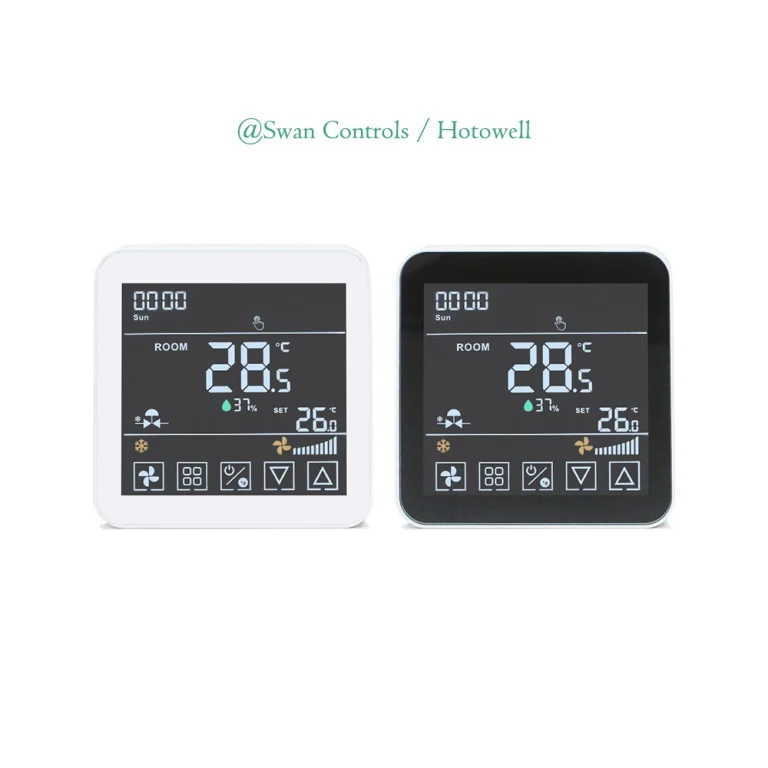
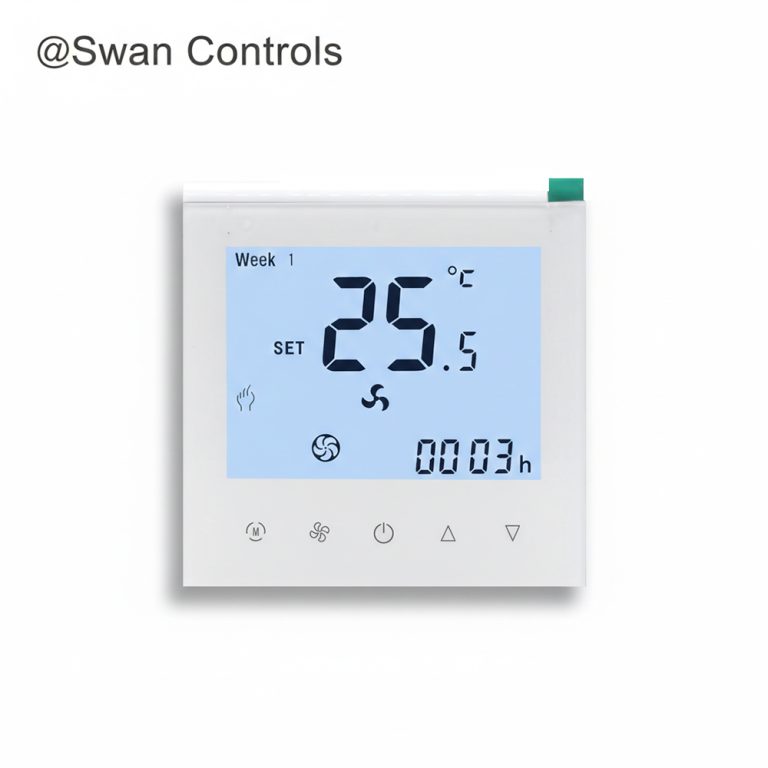
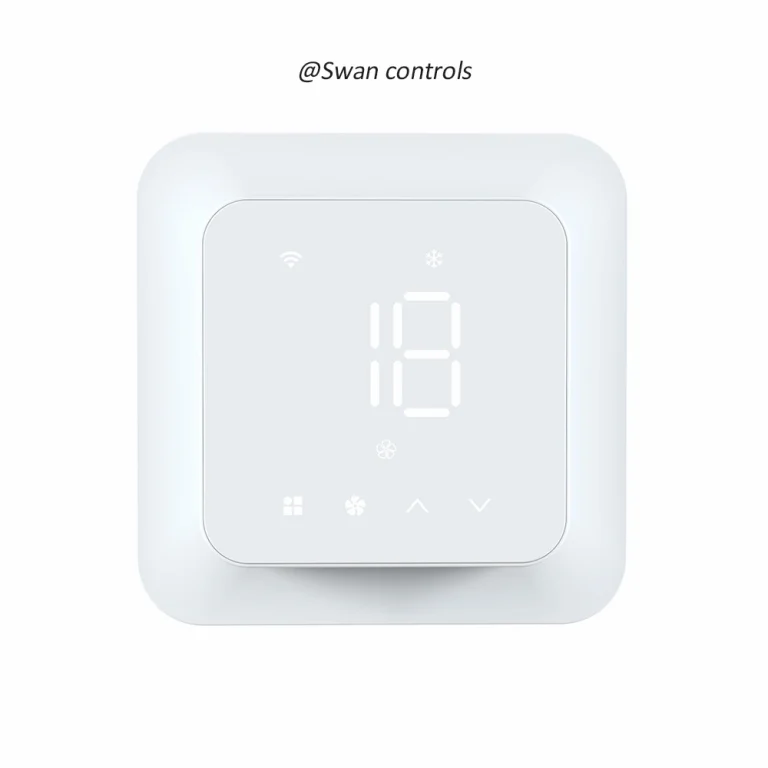
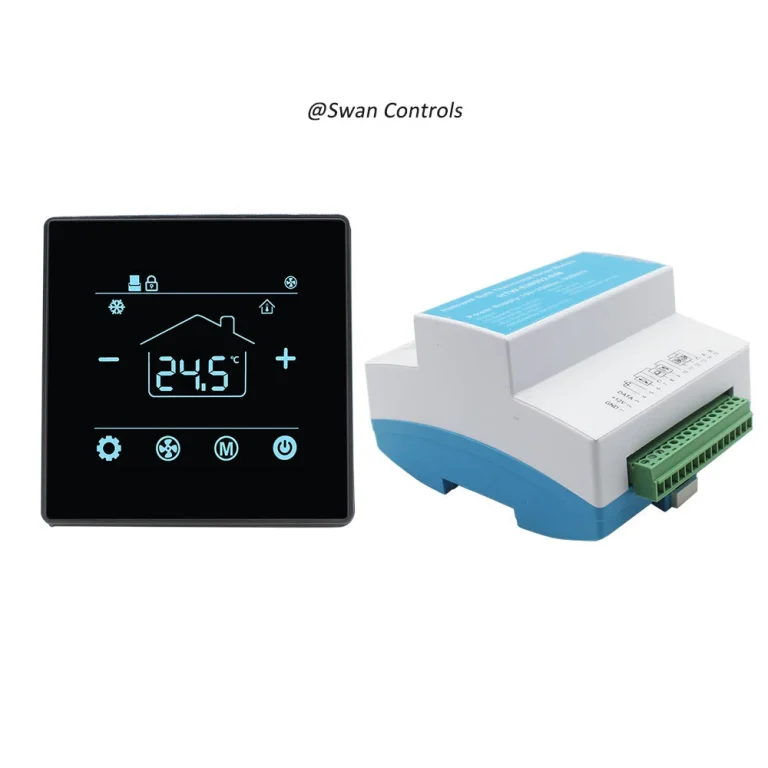
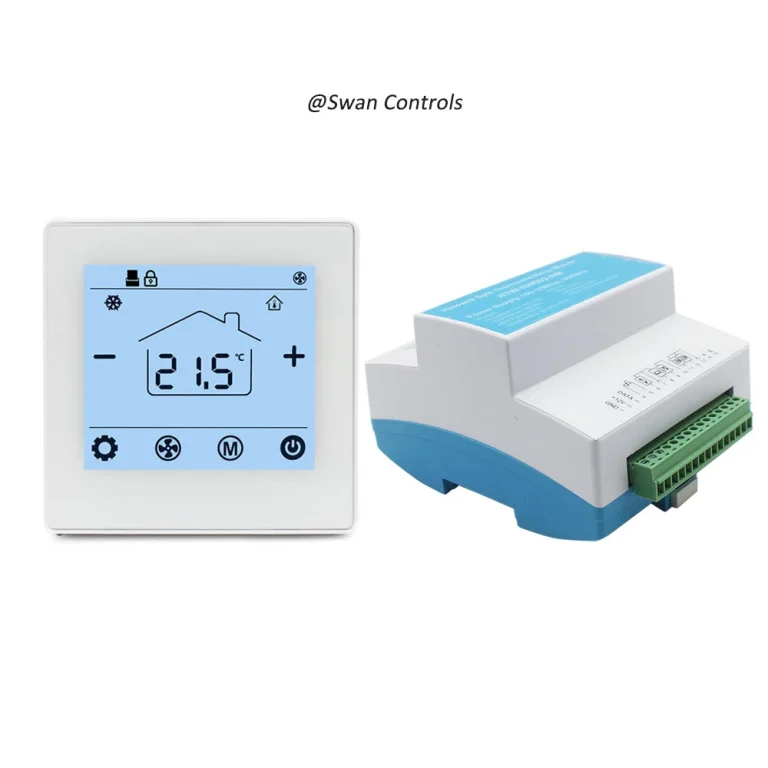
Thermostat for OEM Projects: Features That Matter More Than Price Alone
Quick Summary
For OEM thermostat projects, price is only one layer of the decision. Compatibility, protocol support, certification readiness, software stability, customization depth, documentation, and delivery consistency usually have a bigger impact on long-term cost and customer satisfaction. A low-price thermostat that fails in integration or field use is often more expensive than a slightly higher-priced model that fits the project from the beginning.
Quick Summary: The OEM Features That Usually Matter More Than Unit Price
In most OEM thermostat projects, five areas deserve more attention than the initial quotation: application compatibility, communication and protocol support, compliance and certification, customization depth, and supply reliability. These points shape whether the project launches smoothly, scales cleanly, and supports the buyer’s own brand in the long term. They also affect whether the thermostat remains a simple hardware purchase or becomes a repeat source of rework and support cost.
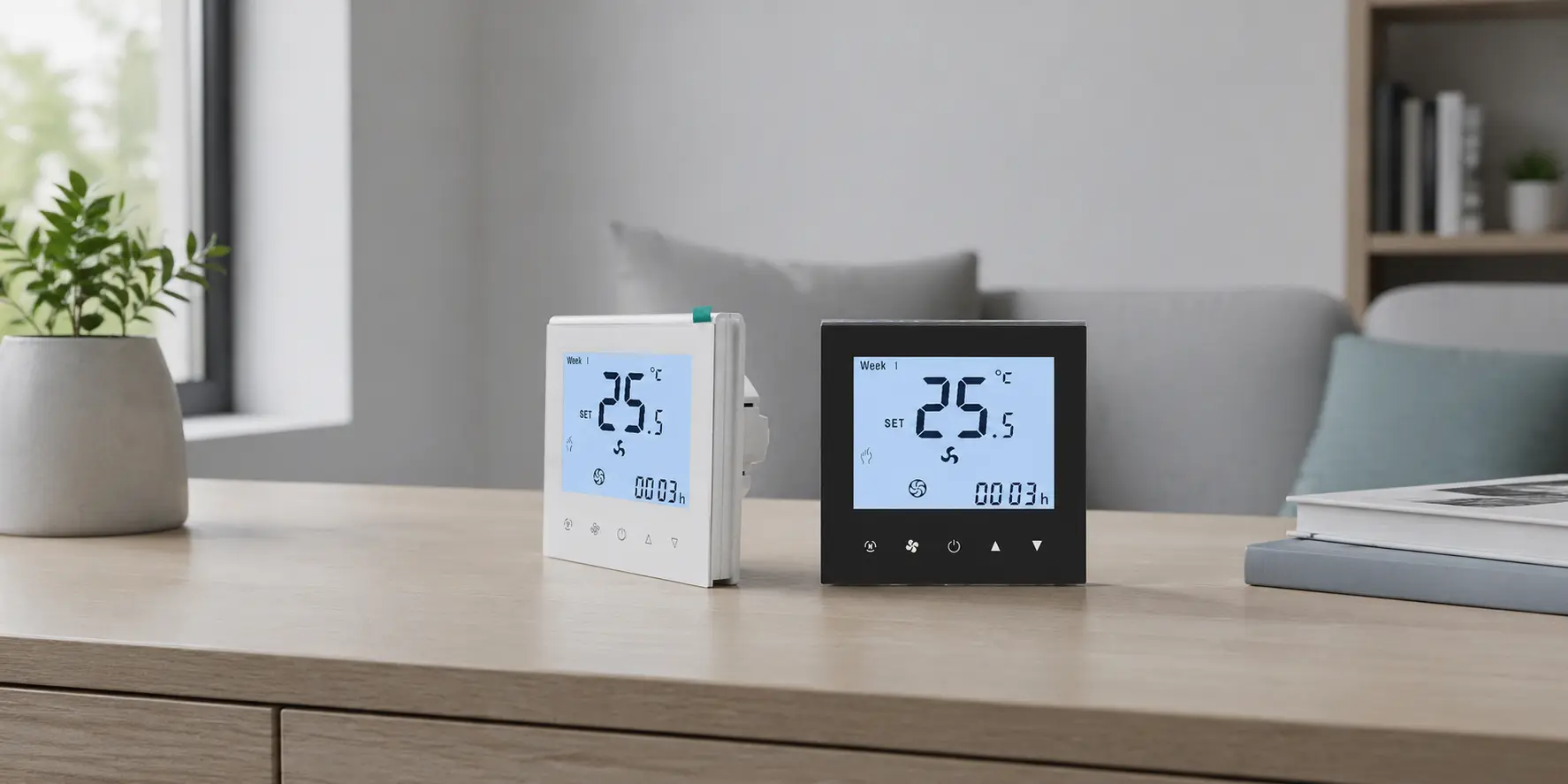
Why Low Unit Price Can Become a High Project Cost
Many OEM buyers compare thermostat quotations line by line and focus first on unit price. That is understandable, but it is incomplete. A thermostat that looks cheaper on the spreadsheet can become more expensive after testing, software changes, wiring revisions, customer complaints, and delayed approvals are included. In other words, the real OEM cost is not the price per piece. It is the total cost of selection, integration, launch, delivery, and support.
This problem appears in several common ways. First, the thermostat may not match the actual HVAC system logic. Second, communication features may be too limited for the project. Third, the product may not be ready for the target market’s certification path. Fourth, the supplier may support sampling well but struggle with batch consistency or documentation during mass production. Those are not small details. They are often the real reasons why a thermostat OEM project becomes slow or expensive.
| Check Point | Low Price Focus Only | Balanced OEM Buying Logic |
|---|---|---|
| Unit cost | Looks attractive | May be slightly higher |
| Compatibility risk | Often under-checked | Confirmed early |
| Protocol and software | May be limited or unstable | Evaluated as part of project scope |
| Certification readiness | Sometimes unclear | Checked before rollout |
| Total project cost | Can rise later | More predictable |
That is why this title matters. For OEM thermostat projects, the question is not whether price matters. Of course it does. The question is whether price should come before fit, function, and launch reliability. In most professional projects, it should not.
Compatibility Comes Before Price
The first thing an OEM buyer should confirm is not logo position or screen style. It is application compatibility. A thermostat is not a universal wall product. It is a control device tied to a specific HVAC logic. If the control logic is wrong, the product is wrong, even if the enclosure looks perfect and the quote is competitive.
Boiler thermostat compatibility
Boiler projects often need stable heating demand logic, clean switching behaviour, and sometimes communication support. A thermostat chosen only by appearance may still be unsuitable if the output or power logic does not fit the boiler application. In those cases, a product such as a 220V boiler thermostat with Modbus or a house thermostat for water heating and boiler heating is usually easier to evaluate because the intended application is already clear.
Water heating thermostat compatibility
Water heating systems often need stable daily control rather than aggressive response. A thermostat OEM project for this kind of system should confirm voltage, output rating, schedule logic, and installation context before price comparison. A dedicated 3A water heating thermostat will usually deliver better project fit than a generic room thermostat chosen only because it appears low-cost.
PICV and 24VDC output control
Commercial room control projects often fail when a buyer assumes all room thermostats can handle all valve-control logic. They cannot. If the project uses 24VDC output for PICV control, that requirement must be treated as a core selection condition. A generic thermostat with the wrong output logic may still mount correctly on the wall and still fail commercially. For those projects, a 24VDC output PICV thermostat with Modbus is a much more realistic OEM reference point.
Hotel room thermostat with keycard logic
Hospitality projects are another good example. A normal room thermostat may be fine for temperature display and local control. But a hotel project often needs keycard setback, occupancy-linked logic, and stable guest-room behaviour. Those requirements should be defined before quotation, not added after sampling. A keycard HVAC thermostat for 2-pipe and 4-pipe use is more useful in such projects than a simple low-cost controller with no real hotel logic behind it.
The practical rule is simple. If the thermostat is not compatible with the system, it is not cheaper. It is just a future problem sold at a low price.

Protocol Support Is Now a Buying Feature, Not a Luxury
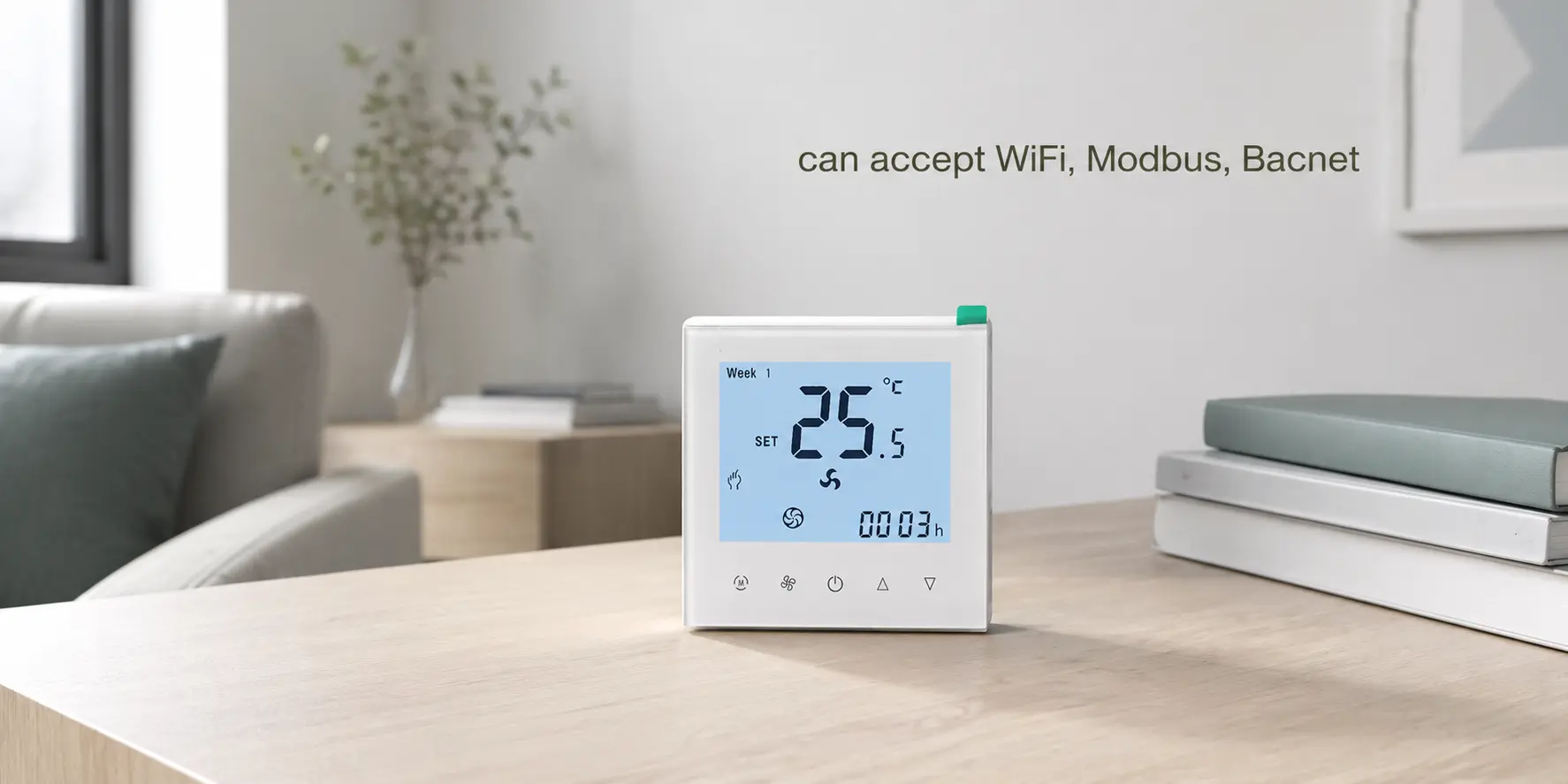
Many OEM buyers still ask about protocol late in the process. That is risky. Today, communication support is often central to whether the thermostat fits the project at all. WiFi, Modbus, private app control, BMS connection, hotel integration, and Matter do not solve the same problem. They serve different project goals.
Not every OEM thermostat project needs the same protocol. Some need Modbus because the thermostat must work inside a building management logic. Some need simple WiFi app control for residential use. Some hotel projects need keycard logic first and remote features second. This is why protocol support should be discussed as an application feature, not a marketing slogan.
A supplier that can explain the difference between local thermostat control, app-based control, and supervisory communication is already more useful than a supplier that only says “WiFi optional” or “Modbus available.” In OEM work, clarity saves time.
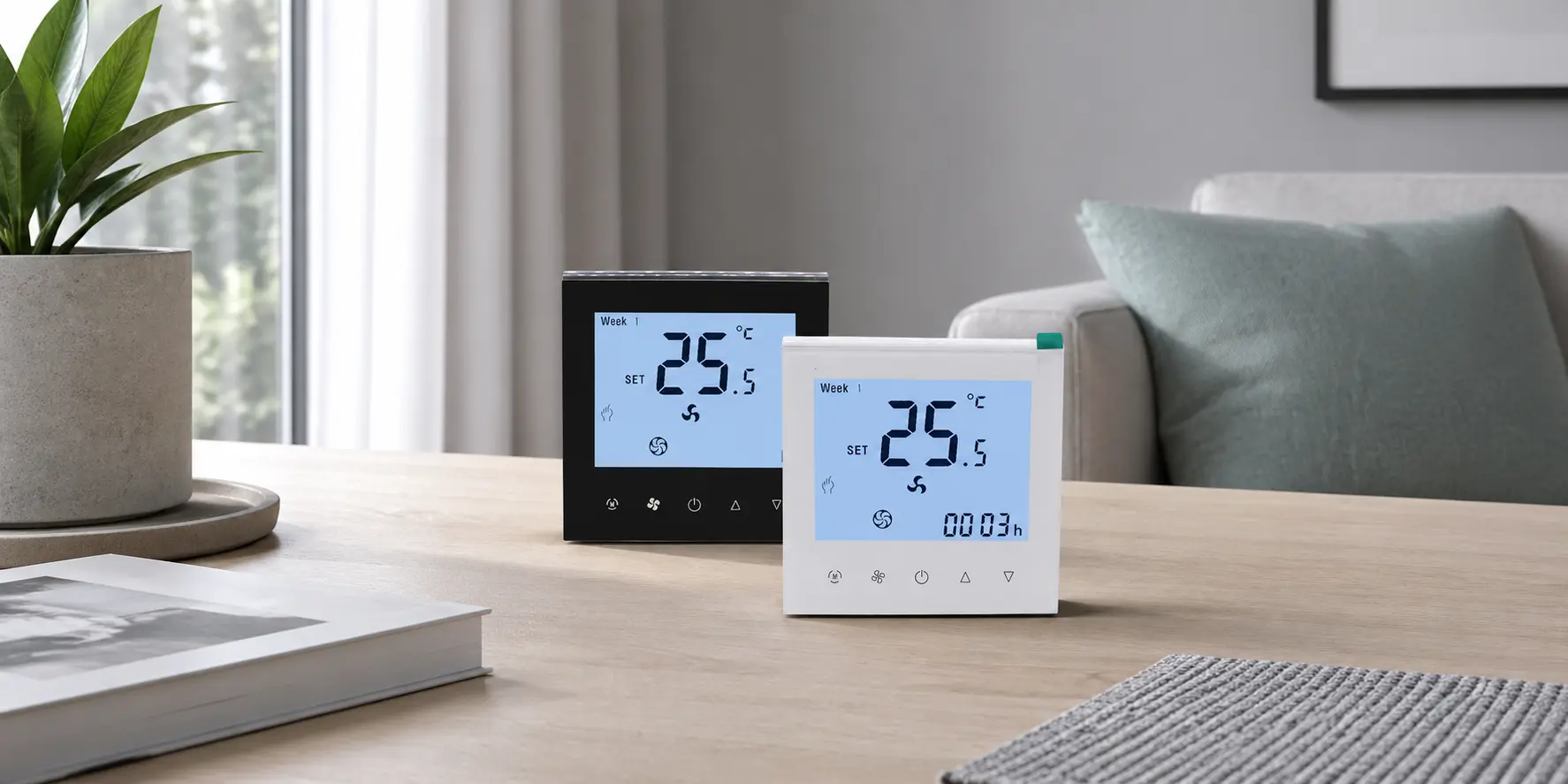
Certification and Compliance Can Delay or Protect the Whole Project
Many thermostat OEM projects underestimate certification and compliance. This is a mistake because certification does not only affect legal market access. It also affects project timing, channel confidence, distributor acceptance, and the buyer’s own brand reputation.
If the project is aimed at Europe, the buyer will usually care about CE-related compliance, EMC, safety, and documentation consistency. If the project touches connected thermostat programmes or energy-related claims, additional evidence may matter. If the paperwork is weak, the project can slow down even when the product hardware looks ready.
For an OEM buyer, the lesson is clear. If the project wants to make performance claims, enter programmes, or target institutional buyers, evidence and compliance quality matter. The lower quote is less impressive when it comes with weak paperwork, unclear testing status, or inconsistent product claims.
OEM Customization Means More Than Logo Printing
One of the most important buying questions in OEM thermostat work is this: what kind of customization is really available? Many suppliers say “OEM supported,” but the buyer should still ask what that means in practice.
Cosmetic OEM
This is the basic level. It may include logo printing, carton updates, label design, and minor packaging changes. This is useful, but it is not enough for many serious thermostat OEM projects.
Interface OEM
This goes further. It may include display language, icon layout, surface colour, front-panel styling, or branded UI elements. For a room thermostat manufacturer working with distributors or private labels, this level is often more valuable than basic logo printing because the product starts to look like part of the buyer’s own range.
Functional OEM
This is where real project value usually begins. Functional OEM can include wiring logic changes, protocol configuration, keycard logic, app branding, output adjustments, or project-specific control behaviour. For example, a hospitality buyer may care more about setback logic than about the logo. A commercial buyer may care more about 24VDC output and Modbus than about retail packaging. A boiler project may care more about relay logic and power supply options than about screen colour.
That is why OEM thermostat buyers should ask not only “Can you print our logo?” but also “What can you change in the product logic, interface, and documentation without damaging mass-production stability?”
Software Stability and Documentation Matter More Than Many Buyers Expect
Hardware cost is visible. Software and documentation cost is often hidden until the project becomes difficult. Yet these are two of the biggest reasons why OEM thermostat projects succeed or struggle.
Software stability matters because thermostat performance depends on more than relay switching. Schedule logic, communication behaviour, occupancy transitions, display feedback, and recovery behaviour all affect the end-user experience. For connected products, weak firmware can create repeated complaints even when the hardware looks fine.
Documentation matters for a different reason. Installers, integrators, and after-sales teams depend on correct wiring diagrams, user manuals, register maps, troubleshooting notes, and test procedures. If these are incomplete, the buyer’s service burden rises. A thermostat manufacturer that provides strong technical documentation is not just being helpful. It is reducing project cost for the buyer.
For OEM buyers, this is especially important because the end customer often sees the buyer’s brand, not the original factory. Poor documentation from the supplier becomes a visible weakness in the buyer’s own product line.
Lead Time, Sample Quality, and Mass Production Consistency
OEM buyers know that a good sample does not guarantee a good project. Sampling is important, but it is only one stage. What matters more is whether the supplier can maintain consistency through packaging, firmware, testing, and assembly at batch level.
OEM thermostat buyers should therefore ask practical questions early. Can the supplier manage firmware version control? Can it keep accessory and packaging consistency? Can it hold stable lead times? Can it explain how sample approval transfers into mass production? These questions protect the project more effectively than another small round of price negotiation.
Expert Commentary & Analysis
The common failure pattern in thermostat OEM buying is not mysterious. The cheapest option often underperforms because it is evaluated as a piece price instead of as a control platform. That is increasingly dangerous in a market where interoperability, support, connected features, and branded experience matter more than before.
For overseas buyers, that means a supplier conversation should go beyond price very early. It should include the real application, the target channel, the certification path, the support expectation, and the intended level of customization. That is the real meaning of professional thermostat OEM sourcing today.
Scientific Data: What the Numbers Suggest for OEM Buyers
Several widely used sources support the idea that thermostat projects should be evaluated by outcome, not just by hardware price. Daily temperature setback can reduce annual heating and cooling use, and certified smart thermostats have also shown average savings in field studies. These numbers do not prove that every thermostat OEM project will perform identically, but they do prove that thermostat logic and product quality have real value when properly applied.
That matters for OEM buyers because many downstream customers now expect not only temperature control, but meaningful energy-saving behaviour and stable performance. If the thermostat is sold into hotel, residential, or smart-control channels, field performance claims may become part of the commercial conversation. A supplier who supports those claims with stronger integration, documentation, and quality control is often the safer long-term partner.
Real-World Cases and Buyer Feedback
Case 1: Boiler OEM project focused first on price
A buyer wanted a low-cost thermostat for a boiler-related OEM line. The initial focus was unit price and front appearance. Later, the project needed different power logic and cleaner communication support. At that point, the first “cheaper” option created delay because it did not fit the real control requirement. In similar projects, buyers are usually better served by starting from an application-defined product such as a 220V boiler thermostat with Modbus or a house thermostat for boiler and water heating.
Case 2: Hotel project ignored keycard logic early
A hospitality buyer selected a thermostat mainly by price and display style. Later, the project team confirmed that keycard setback and room-status logic were required. The thermostat needed re-evaluation because the original product was not built for hotel control behaviour. For hotel OEM projects, a product such as a keycard HVAC thermostat is often a more efficient starting point than a generic room thermostat.
Case 3: Commercial room control needed 24VDC output and Modbus
A commercial buyer initially assumed any thermostat with a similar screen could be adapted to the project. After deeper review, the project needed 24VDC output for valve logic and communication support for integration. The “cheap” option was no longer useful. In those projects, a 24VDC output PICV thermostat with Modbus is usually the more realistic OEM base.
User feedback pattern: In many thermostat OEM discussions, buyers do not regret paying a reasonable price for the right product. They regret spending time on a product that looked cheap early and became difficult later.

A Practical OEM Thermostat Checklist Before You Compare Prices
- Confirm the HVAC application. Boiler, water heating, hotel, PICV, or another room-control use.
- Confirm voltage and output logic. Do not assume all room thermostats are interchangeable.
- Confirm protocol needs. WiFi, Modbus, app control, or local-only?
- Confirm compliance path. Target market rules and documentation requirements should be clear.
- Confirm customization depth. Logo only, or UI, firmware, wiring logic, and packaging too?
- Confirm software stability. Especially for smart thermostat OEM or hotel logic projects.
- Confirm documentation package. Manual, wiring diagram, register map, and test procedure.
- Confirm sample-to-mass consistency. A good sample should transfer cleanly into production.
- Confirm lead time and MOQ. Not only for samples, but for scale-up orders too.
- Confirm after-sales support. Technical support quality affects long-term cost.
This checklist is simple, but it reflects how experienced thermostat buyers usually work. They compare price after they understand fit, not before.
Frequently Asked Questions
1. What should OEM buyers check before choosing a thermostat manufacturer?
OEM buyers should check application compatibility, output logic, communication protocol, certification readiness, customization depth, documentation quality, sample-to-mass consistency, lead time, and long-term support before selecting a thermostat manufacturer.
2. Is the cheapest thermostat always the best choice for OEM projects?
No. The cheapest thermostat is not always the best choice for OEM projects because a lower unit price can still lead to higher total cost if the product creates compatibility issues, software instability, certification delay, or after-sales problems.
3. Which thermostat features matter most in hotel or commercial OEM projects?
In hotel or commercial OEM projects, the most important thermostat features usually include system compatibility, keycard or occupancy logic, Modbus or other communication support, stable control behaviour, and documentation that helps installation and integration.
4. How important are Modbus, WiFi, or Matter for OEM thermostat projects?
Modbus, WiFi, or Matter can be very important in OEM thermostat projects when the thermostat must connect to apps, platforms, or building systems. The right choice depends on whether the project needs local control, smart-home connectivity, or supervisory integration.
5. What level of customization should an OEM thermostat supplier provide?
A good OEM thermostat supplier should normally provide more than logo printing. Useful customization may include packaging, labels, UI changes, protocol options, wiring logic, output adjustments, and project-specific control functions, depending on the application.
For OEM thermostat projects, the best product is rarely the cheapest one on paper. The better choice is usually the thermostat that fits the real HVAC application, supports the right protocol, reduces certification and support risk, and can be customized and delivered with stable quality. In other words, price matters, but project fit matters more.
References / Sources
- U.S. Department of Energy, Programmable Thermostats
- ENERGY STAR, Smart Thermostats FAQ
- ENERGY STAR, Technical Bulletin: ENERGY STAR Certified Smart Thermostats
- ENERGY STAR, Smart Thermostat Best Practices Guide
- Build with Matter, Smart Home Device Solution
- Universal Electronics Inc., Form 10-K 2024
- U.S. Department of Energy, Fall and Winter Energy-Saving Tips
- ENERGY STAR, Low- to No-Cost Tips for Saving Energy at Home
- ENERGY STAR, Smart Thermostats Webinar Slides
- U.S. Department of Energy, Home Upgrades