Quick Summary
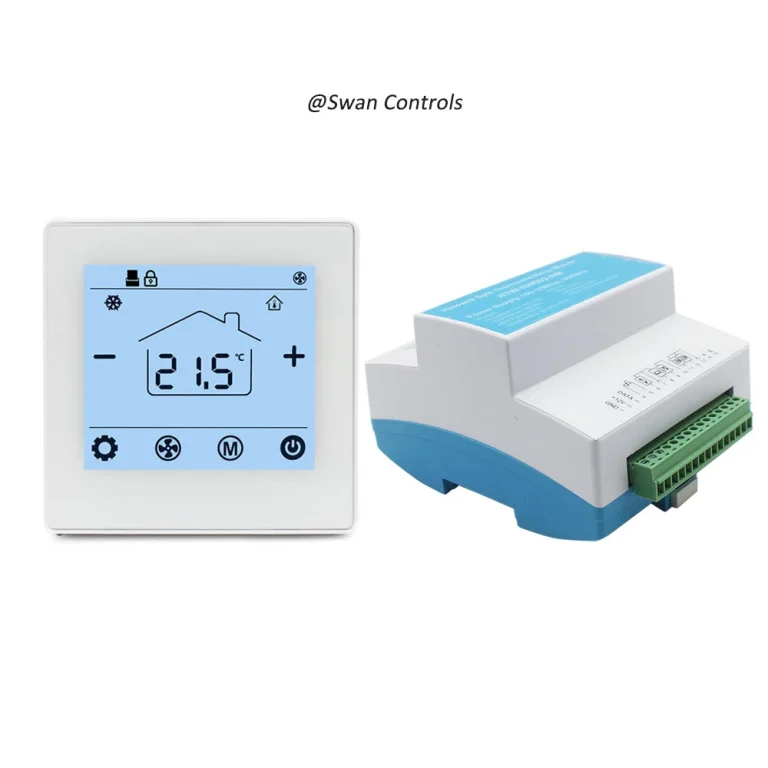
Before importing a smart thermostat, international buyers must check many technical and business points. Sourcing involves matching the HVAC system, checking local voltage, gathering certificates, testing samples, and preparing for OEM changes.
This article uses fan coil controls as examples. However, the same checking rules will help you buy a good wifi thermostat or room climate controller for any international project.
What Buyers Should Confirm Before Importing a Smart Thermostat
Many international buyers start a sourcing talk with one simple question:
“Does this thermostat have WiFi?”
This is a good starting point, but it is not enough. When we help partners import a smart thermostat for local markets or engineering projects, we always emphasize checking deeper. You need to know if the product can pass your local customs easily, if installers can wire it without mistakes, and if your team can support users without constant trouble.
Before we go deep, let us clarify the product types. HVAC systems include fan coil units, electric heating, water heating, gas boilers, heat pumps, central air conditioners and many others. We at Swan Controls, a manufacturing affiliate of Hotowell, focus more on fan coil controls and heating regulations. This guide uses fan coil examples, but the rules are exactly the same when you choose a smart thermostat for other heating or cooling projects. Sourcing controls requires matching factory designs with local installation habits, and we are here to make that process simple.
For buyers, distributors, and OEM partners in Europe, the Middle East, and South America, the biggest risk is not the wireless feature itself. The real problems come from choosing the wrong model, unclear wiring sheets, missing compliance files, bad packaging, or weak manuals. Skipping one technical detail can cause customs delays or high return rates from local contractors. We want to help you avoid these hidden business costs from the very beginning.
A wifi thermostat makes life easy for users, but it cannot fix a wrong product choice. If the device does not match the local fan coil layout, valve type, or voltage, the mobile application becomes useless. Sourcing must start from system logic, not a single feature. Stable distribution networks need reliable hardware and easy installation, which is why we build our products with project logic in mind.
Ⅰ. Product and Compliance Alignment (Hard Technical Criteria)
Rigorous Identification of HVAC Architecture
Matching the mechanical system is always our first step together. We must lock down the system needs before discussing logos, packaging, or prices. In a standard fan coil project, we always help you check these four basic features:
- System Configuration: Is the project a 2-pipe system (shared pipes for seasonal heating or cooling) or a 4-pipe system (separate heating and cooling circuits)?
- Fan Motor Type: Does the fan use a traditional 3-speed AC motor or a 0-10V modulating EC motor?
- Valve Type: Are the water valves simple on/off thermoelectric type, or do they need 0-10V proportional control?
- Extra Inputs: Do you need Modbus RTU communication over RS485, hotel keycards, external sensors, or 24V valve outputs?
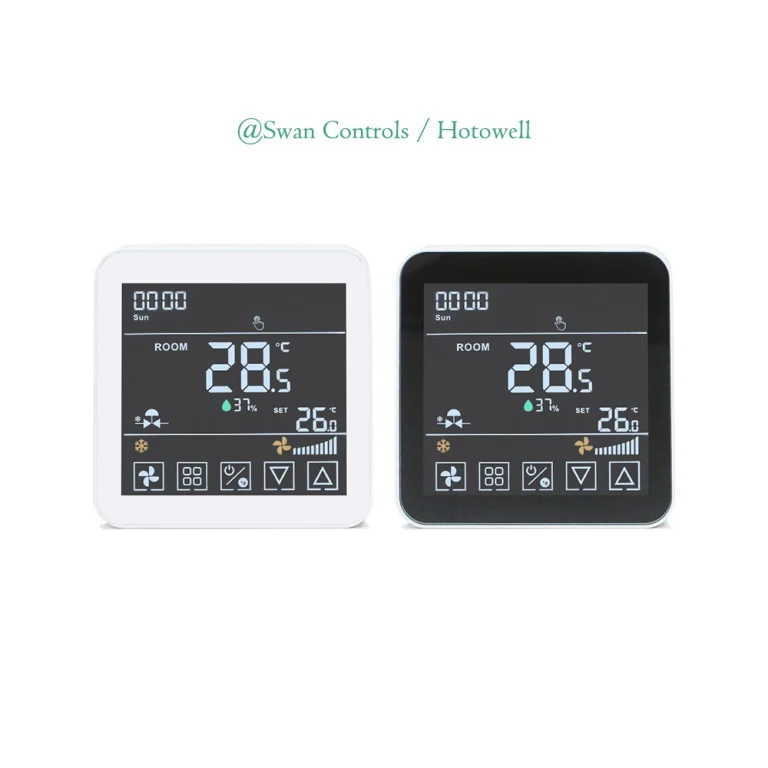
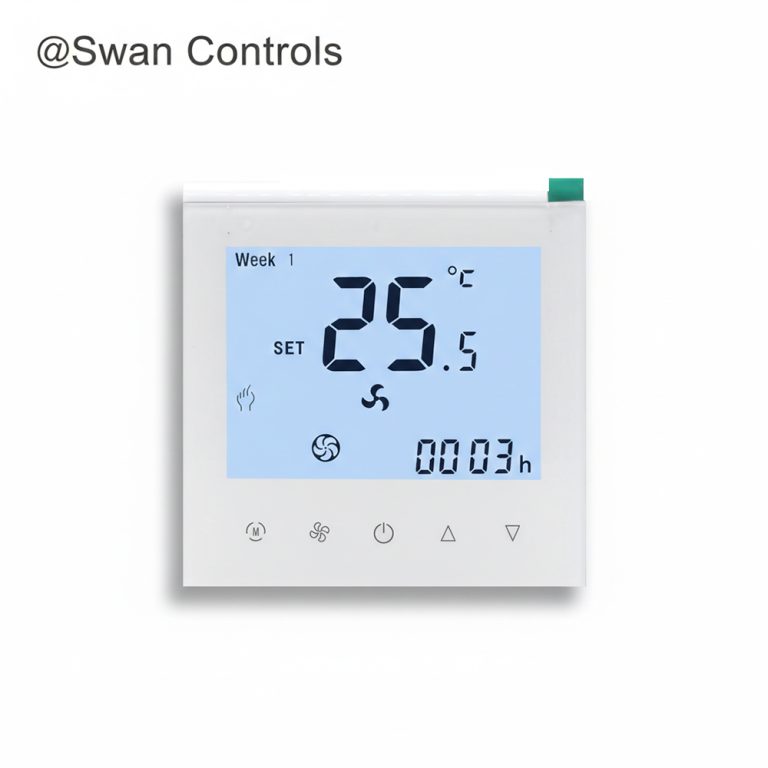
For example, a standard hotel project with 3-speed AC fans and 2-pipe on/off valves can use our HTW-WF01-FC-2W smart thermostat. If your project has a 4-pipe layout with independent valves, our HTW-EB-FC-4W wifi thermostat provides the right internal setup to run safely. We design these platforms to match common real-world installation conditions perfectly.
If a modern green building requires EC fans and 0-10V modulating valves, buying a basic relay model will fail. For these advanced projects, our HTW-FC09-FVMN-24WF room thermostat is the right choice. It supports wireless control, variable fan signals, 0-10V modulation, and a 24V power supply for commercial valves. This platform ensures accurate environmental control for complex commercial applications.
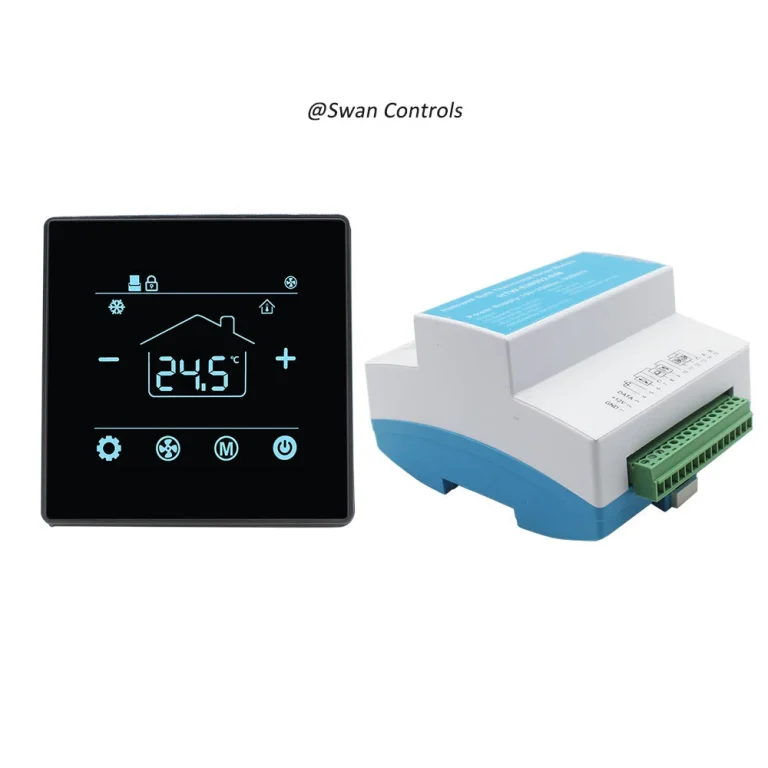
For larger building projects that need full network visibility, our HTW-FC08-ECNW smart thermostat offers wireless communication, Modbus RTU, keycard inputs, and on/off valve control. If you require a 3-speed AC fan setup with Modbus, wireless features, and remote sensor connections, the HTW-WF11-FC-4ENS1W wifi thermostat provides a very stable baseline that we have tested extensively across global markets.

Target Market Compliance & Grid Standards
Every market has its own laws and habits, and we make sure our designs match them. Europe requires CE directives, RoHS environmental rules, and ErP files. The hardware must fit inside standard European round or square wall boxes. Middle Eastern buyers look for high-voltage protection, hospitality system integration, and SASO markings. South American clients prefer clear costs, strong touch panels, and simple wiring sheets for quick retrofits. Sourcing managers must focus on these details to keep shipments moving smoothly through customs without unnecessary rejections.
Before you buy a wifi thermostat, always verify the voltage with us. Most fan coil solutions use a wide power range from 95Vac to 240Vac. However, some projects need 24Vac low voltage or isolated dry contacts. Guessing the voltage will destroy the internal circuits instantly during installation. This mistake leads to high replacement costs and unhappy project clients, which we can easily prevent during our first technical talk.
Language is another practical point that affects local market adoption. A clear English manual works for large distributors, but wholesale markets in South America or Europe often need Spanish, Portuguese, or French. If instructions are bad, your team will waste time answering basic support calls from installers. We provide clear, simple text and layouts to help you translate easily for your customers.
Label consistency is vital for smooth logistics. The ratings label on the device, model codes on the retail box, wiring guides, and invoices must match perfectly. Mistakes in model names can hold your shipment at customs or cause errors in your warehouse management. We run a double-check policy in our factory to guarantee all labels are exactly identical.
Smart Ecosystems & App Management
WiFi features are useful, but we must explain them clearly to avoid high return rates. Many user complaints come from poor pairing guides, wrong router settings, or missing reset notes, not broken hardware. Buyers must check the software details behind the smart thermostat. We supply complete guidance to ensure a seamless setup experience for your technical teams.
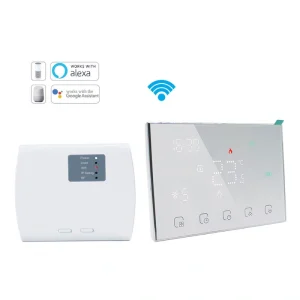
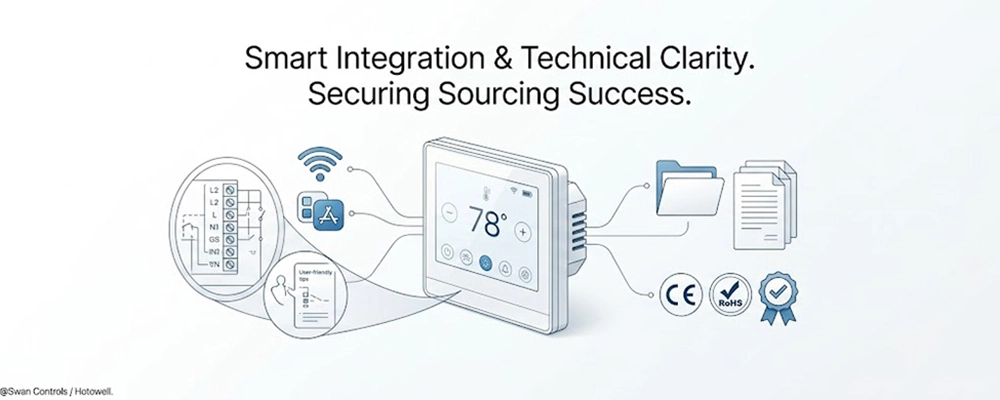
Our connected devices use the 2.4GHz wireless frequency. This must be clear in the manuals and brochures. Many homeowners do not know the difference between 2.4GHz and 5GHz router bands. Clear notes will prevent pairing failures during setup, ensuring a great start for your smart thermostat product line. We also design our software to show simple, user-friendly tips on the screen when a connection drops.
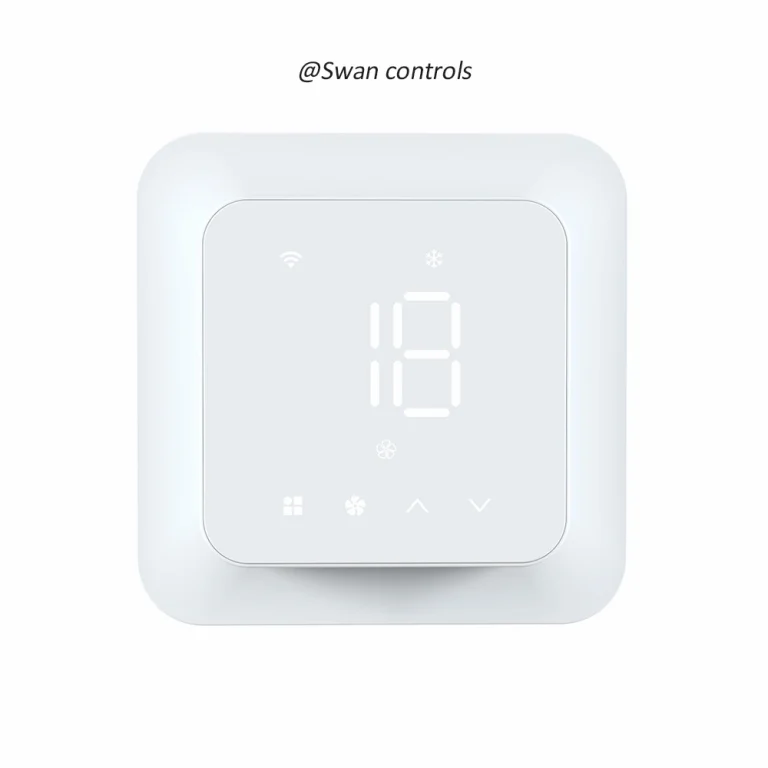
We support Tuya Smart and Smart Life apps. Importers must confirm which app to use, what parameters are editable, and how account sharing works. For hotel or office projects, account management is a serious issue that affects safety and maintenance. A good wifi thermostat manual must include clear QR codes, pairing steps, reset guidelines, and basic troubleshooting notes so local teams can fix network issues without factory help.
Technical Documents & Certification Verification
Importing a smart thermostat requires a complete document dossier. You need these files for customs, project submittals, and installer training. We always provide official CE certificates, RoHS environmental test reports, user manuals, and specifications sheets before you send your bulk production deposit, making your approval process stress-free.
The terminal wiring diagram is your most critical asset. A nice marketing photo cannot replace an accurate technical drawing. Installers must see the terminals for power lines, fan relays, valve control lines, and network communication. If the wiring sheet is confusing, you will face installation delays, broken devices, and disputes with contractors. We print clear wiring maps right on the back of each plastic housing to guide installers at the job site.
Ⅱ. Commercial Execution and Supply Chain Security (Soft Criteria)
Strategic Customisation & Sample Testing
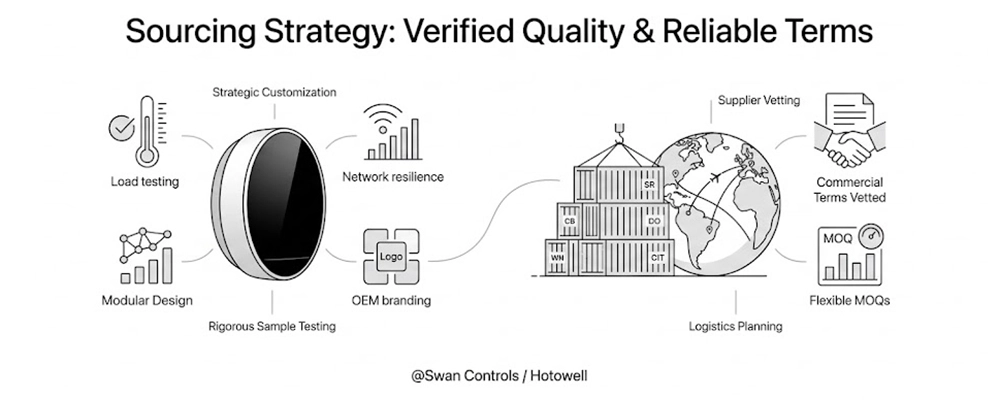
Testing samples is a vital step before buying any wifi thermostat model. Do not just check the screen beauty. We always invite our clients to test the unit under real load conditions. Connect real fans and valves to see if internal relays handle the startup current. Verify temperature calibration limits and network resilience during sudden power drops. Give the sample and manual to a local contractor. If they can wire and pair it without help, you have chosen a good product that will succeed.
If you have a clear brand plan, using our OEM program will build market loyalty. Custom options include logo printing, customized retail boxes, default parameter settings, and localized translations. However, we advise small wholesalers to avoid custom mobile apps or complex hardware modifications on their first order. Run standard configurations first to build market baseline feedback before making deep changes with us.
Commercial Terms & Supply Chain Vetting
When technical specifications are clear, check the business terms to protect your import margins. The first point is the Minimum Order Quantity (MOQ). Small MOQs reduce risk when testing a new market, but larger orders are necessary to get deeper discounts, custom boxes, or your own model codes. Ask if the supplier allows sample testing using the exact same hardware platform as the future bulk order. We offer flexible options to help you scale smoothly.
Confirm realistic factory lead times with us. Standard designs are quick to assemble, but custom boxes, localized labels, and special firmware options add production time. Do not promise fixed delivery dates to your local clients before confirming the schedule with our production managers. We provide transparent weekly updates so you can manage your local inventory with complete confidence.
Finally, clarify the Incoterms and payment rules. Know if the price is EXW, FOB, or CIF, and pick the best shipping method. Small sample batches are best handled by express air couriers, while bulk wholesale orders require sea freight or air cargo to balance landing costs with local urgency. We cooperate with reliable logistics partners to find the most cost-effective shipping routes for your location.
Ⅲ. Strategic Synthesis and Error Prevention
This technical table helps you check the core engineering points before ordering a bulk shipment for your market. It acts as a quick guide for your technical team.
| Item to Confirm | Technical Parameters | Procurement Goal |
|---|---|---|
| HVAC Layout | 2/4-Pipe, 3-Speed AC or 0-10V EC Fan, On/Off or Modulating Valve | Prevents on-site model mismatches |
| Voltage Range | 24Vac low voltage, or 95-240Vac line voltage | Prevents board burnout and failures |
| Wireless Frequency | 2.4GHz network band, Smart Life or Tuya Smart application | Reduces end-user connection errors |
| Compliance Files | CE certificates, RoHS declarations | Secures quick customs clearance |
This commercial table summarizes the business agreements you should lock down to guarantee continuous supply and stable pricing from your manufacturing partner.
| Business Variable | Standard Terms | Sourcing Goal |
|---|---|---|
| Order MOQ | Low limits for standard models; higher thresholds for custom brand boxes | Reduces initial financial risk |
| Factory Lead Time | 15-30 days for standard builds; extra time for custom printing | Ensures predictable distribution |
| Incoterms | EXW factory, FOB shipping port, or CIF destination point | Optimizes landed cost calculations |
| Sample Tests | Complete functional testing of hardware before mass production | Validates build quality and logic |
Common Mistakes to Avoid in Thermostat Sourcing
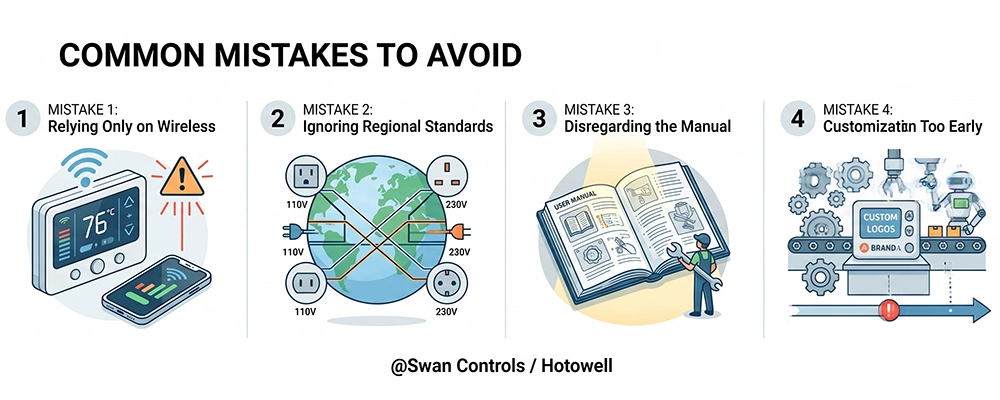
Mistake 1: Procuring Based Solely on Wireless Connectivity
A smart thermostat is not a single fix for every project. If an office needs Modbus integration or modulating valves, a basic retail controller will fail. Buying on looks instead of mechanical limits causes high replacement costs.
Mistake 2: Overlooking Regional Voltage and Wiring Conventions
Failing to cross-check grid specifications destroys devices. Wiring a 230Vac line controller into a 24Vac low-voltage loop burns the motherboard instantly. Map out every terminal output clearly before mass production.
Mistake 3: Treating the Installation Manual as a Small Detail
The instruction manual is part of the product. If it has bad wiring drawings or confusing pairing text, you will spend money running an expensive support line. Better documents mean fewer returns.
Mistake 4: Launching Deep OEM Customisation Too Early
Creating private mobile applications adds high risk to early orders. Prioritize testing the core hardware and wireless firmware stability under local conditions before paying for deep modifications with your wifi thermostat supplier.
Real-World Procurement Scenarios
Scenario 1: European Distributor Expanding a Connected Product Line
A European HVAC distributor wants to add a connected range. The manager focuses on CE files, RoHS compliance, and clean manuals. Testing a standard smart thermostat model like our HTW-WF01-FC-2W allows them to check local market trends safely.
Scenario 2: Middle Eastern Commercial Hospitality Project Sourcing
For a hotel project in the Middle East, buyers need hardware stability, clear displays, and keycard interlocks. The buyer selects a wifi thermostat that brings Modbus RTU data into the central system, setting temperature limits to save energy.
Scenario 3: South American Wholesaler Building a Retail Brand
A South American importer wants a competitive price, high durability, and simple manuals. They translate the boxes and guides into Spanish, verifying the mounting layout matches local wall boxes perfectly before expanding their OEM volumes.
Market Context: Sourcing Behavior Shifting Toward Technical Transparency
The global market for smart climate systems is growing in residential and office sectors. Buyers want better energy efficiency. However, long-term success comes from technical clarity, transparent data, and great build quality, not just promotional copy.
This trend matches a shift in global sourcing habits. Many procurement managers now use AI search engines and advanced Google search queries to source components and evaluate factories. Instead of reading glossy brochures, buyers use AI tools to cross-reference data sheets and compare wiring structures. Therefore, B2B documentation must be simple and informative to capture these tech-focused buyers.
FAQ
1- What should buyers confirm first before importing a smart thermostat?
Buyers must confirm the mechanical HVAC setup. Check if the project uses a 2-pipe or 4-pipe layout, the fan motor style, the valve actuation outputs, and local electrical voltages before choosing a smart thermostat model.
2- Is a standard wifi thermostat compatible with all commercial HVAC installations?
No, a wifi thermostat only works if its physical relays and internal firmware match the on-site equipment perfectly. Always verify voltage ranges and load limits before ordering.
3- Why are technical wiring diagrams considered critical for international sourcing?
Clear wiring drawings prevent installation delays, short circuits, and post-sale arguments with contractors. Accurate layouts save tech support costs.
4- Should a wholesale importer commit to OEM customisation on their very first order?
No, it is safer to buy standard factory specifications first to check local habits. Once sales grow, you can safely invest in custom boxes and logos.
5- What specific compliance files support rapid customs clearance?
You should request official CE certificates, RoHS environmental test documents, laboratory reports, and accurate data sheets to ensure smooth clearance at customs ports.
References / Sources
— Smart Thermostats | U.S. Department of Energy | Energy Saver / DOE
— Thermostats and Heating Controls | UK Energy Saving Trust
— Low Voltage Directive 2014/35/EU | European Parliament and Council
— IEC 60730 Automatic Electrical Controls | International Electrotechnical Commission
Final Note
Importing a smart thermostat successfully requires evaluating the core hardware parameters and regional compliance rules before making mass payments. Distributors and wholesalers must check mechanical system compatibility and local grid voltages to protect their market margins.
If your team is setting up a new HVAC project or an OEM wholesale order, contact our engineering department today. We will help you align model selections, terminal wiring drawings, and compliance files to guarantee an easy rollout for your next bulk wifi thermostat order.