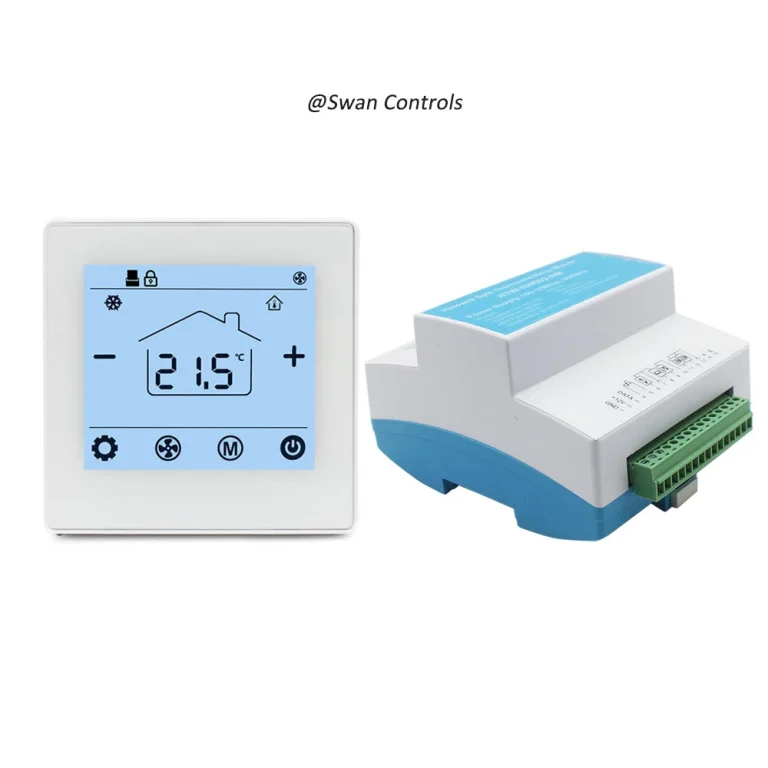
“Is a temperature controller just another name for a thermostat?”
“Not exactly. A thermostat is often one type of temperature controller, but temperature controllers can also be used in boilers, water heating systems, hotel rooms, commercial HVAC loops, and more advanced control applications.”
That short exchange explains why this topic matters. Many buyers, contractors, and project managers use the words thermostat and temperature controller as if they mean exactly the same thing. In everyday room control, that is often close enough. But in technical and project language, a temperature controller is a broader control device. It reads temperature from a sensor, compares that value with a target setpoint, and then drives an output such as a relay, SSR, valve signal, or other control path to keep the system near the desired condition. In some cases, it works with simple on/off logic. In other cases, it uses more advanced control methods such as PID. This is why the same product category can appear in room thermostat applications, boiler heating, water heating, hotel HVAC, and commercial valve control. The basic goal is always similar: read temperature, make a control decision, and send the right output to the system.
Quick Summary
A temperature controller is a device that measures temperature, compares it with a setpoint, and adjusts an output to keep the target condition stable. In room and HVAC applications, it often appears in the form of a room thermostat. In broader industrial or process settings, it may use more advanced control logic, sensor inputs, and output types than a basic wall thermostat.
Quick Summary: The 3 Parts of a Temperature Controller
Almost every temperature controller can be understood through three basic parts: a sensor, a control decision, and an output. The sensor reads temperature. The controller compares that reading with the desired target. The output then activates or adjusts the controlled device, such as a heater, relay, fan, valve, or another power control element. Once readers understand these three parts, the working principle of most temperature controller products becomes much easier to follow.
What Is a Temperature Controller?
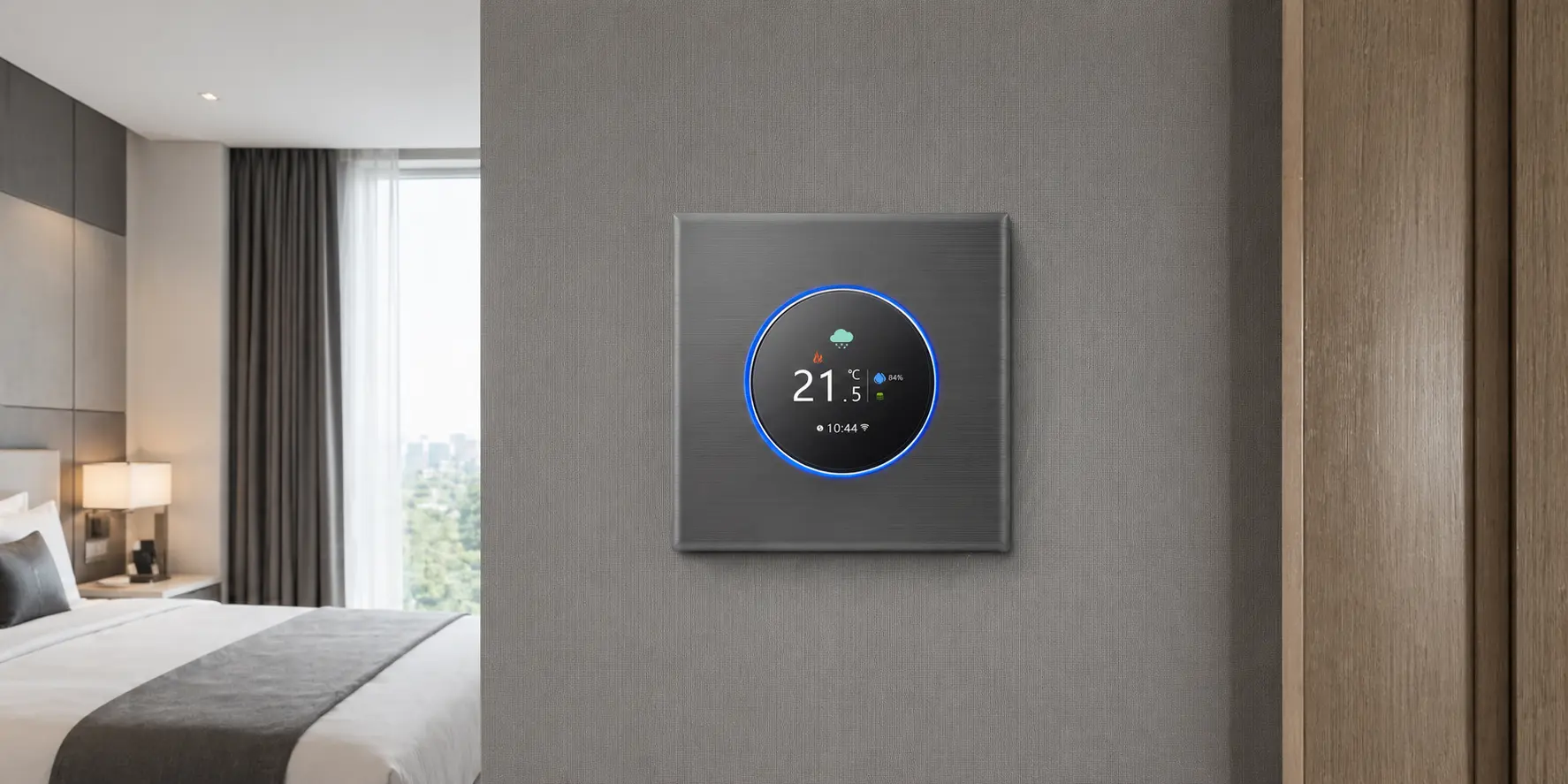
A temperature controller is a device used to regulate temperature by measuring the actual temperature, comparing it with a target value, and then adjusting the system output so the temperature moves toward or stays near that target. This is the core idea whether the product is used in a simple room thermostat, a water heating project, a boiler system, or a more advanced industrial temperature loop.
In practical terms, a temperature controller is the decision-making part of a temperature control loop. It does not only display a number. It receives information from a sensor, applies a control rule, and then drives an output. That output may switch a heater on and off, activate a relay, control a fan, or send a signal to a valve or another device. The controller is therefore the point where sensing becomes action.
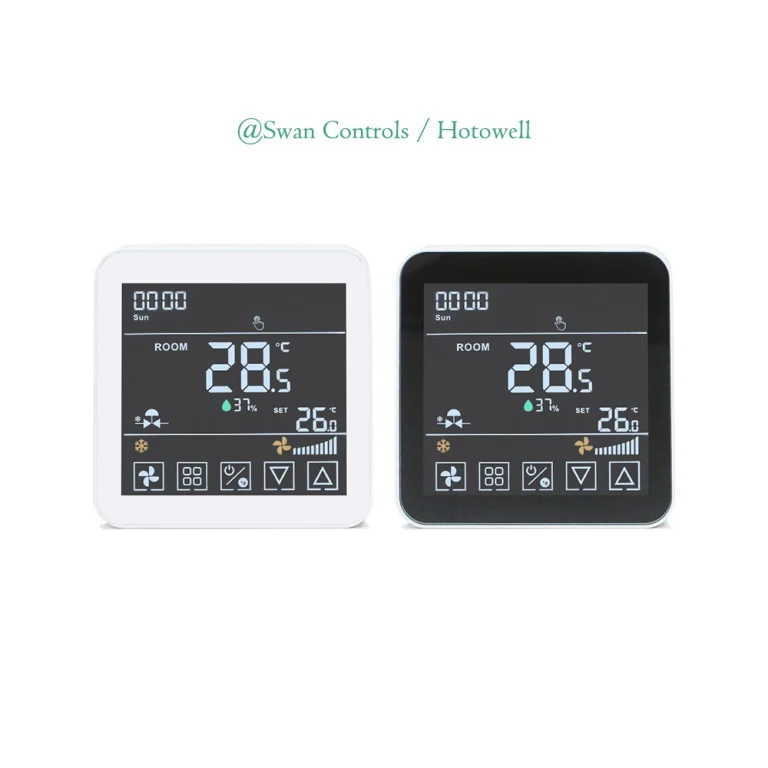
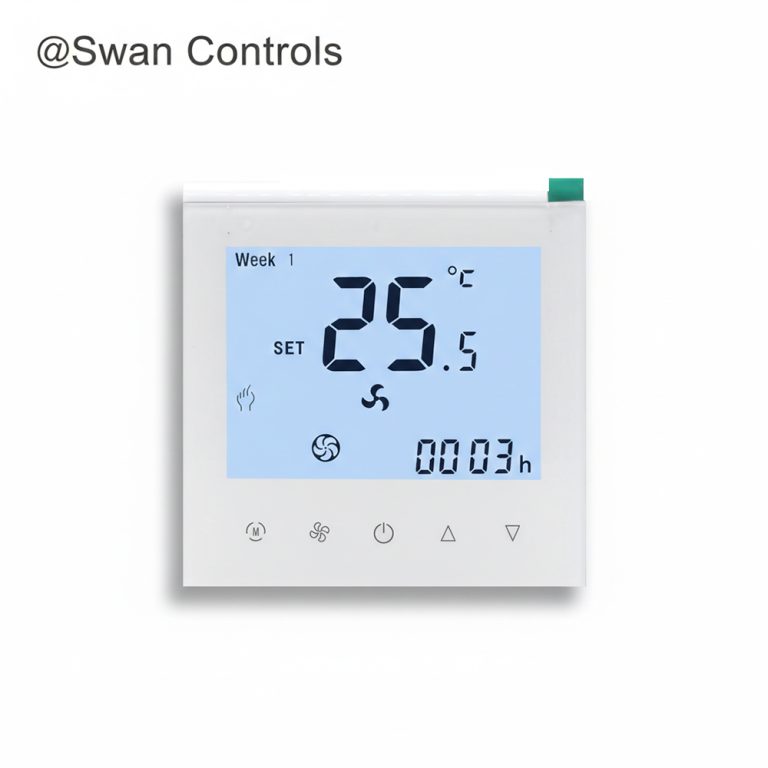
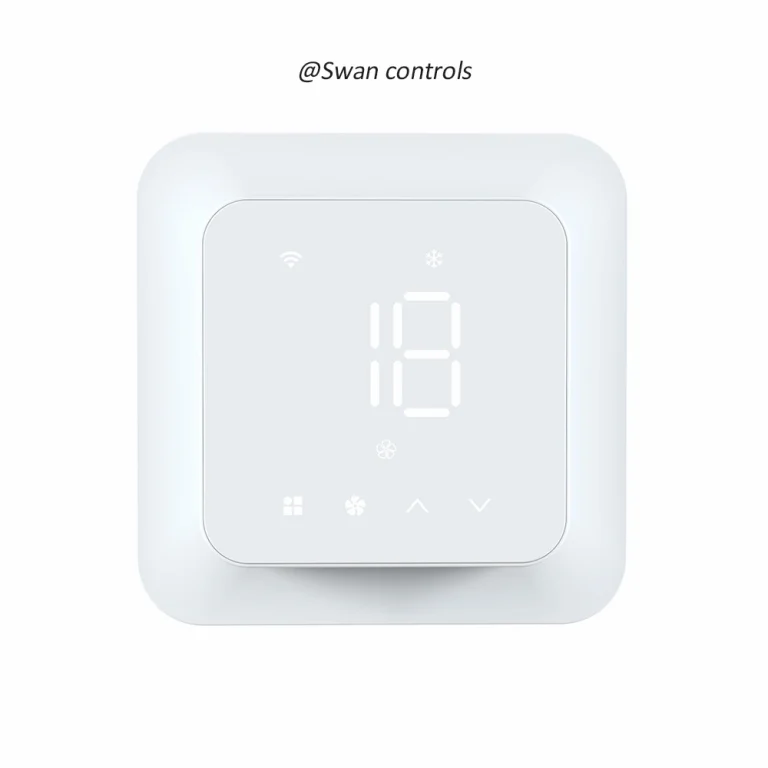
In HVAC and building projects, many people use the word thermostat more often than temperature controller. That is normal. A room thermostat is one of the most common forms of temperature controller used in buildings. But the broader term temperature controller is useful because it also covers digital controllers, PID controllers, process controllers, and other devices that do more than standard room control.
How Does a Temperature Controller Work?
The working principle of a temperature controller is easier to understand when it is broken into simple steps. First, a temperature sensor detects the actual temperature. Second, the controller compares that reading with the target setpoint chosen by the user or system. Third, the controller decides whether the output should stay as it is, switch on, switch off, or change proportionally. Fourth, the output acts on the system, such as a relay for heating demand, an SSR for electric heating, or another control signal for the connected device.
This basic sequence is the same in many projects. In a room thermostat, the temperature sensor reads room air. In a boiler thermostat, the controller may call for heat when the room is colder than the target. In a water heating application, the output may switch a heating circuit through a relay. In a commercial valve-control application, the thermostat may need a more specific output arrangement. The product format changes, but the underlying control loop remains familiar.
| Part | What It Does | Example |
|---|---|---|
| Sensor | Reads actual temperature | Room sensor, probe, pipe sensor |
| Controller | Compares reading with setpoint and decides action | Digital temperature controller, room thermostat |
| Output | Acts on the system | Relay, SSR, valve output, fan output |
Common Control Methods: On/Off vs PID
Not every temperature controller works in the same way once it decides to act. The two most common control approaches are on/off control and PID control. Understanding this difference helps buyers see why some products are fine for simple room applications while others are better for tighter process control.
On/Off control
On/off control is the simpler method. The controller turns the output fully on when the temperature is below the target and turns it off when the target is reached or passed. This method is easy to understand and widely used in room thermostat, boiler thermostat, and basic heating control applications. It is often enough where control accuracy does not need to be extremely tight.
The advantage of on/off control is simplicity and low cost. The limitation is that the temperature may rise and fall around the setpoint more visibly than in a more advanced control method.
PID control
PID control is more advanced. Instead of only switching fully on or fully off, a PID temperature controller calculates how strongly and how quickly the system should respond based on the difference between actual temperature and target temperature, plus the change trend over time. This usually gives more stable and precise control when the process requires it.
PID control is common in more technical heating processes or in environments where temperature stability matters more than simple switching. In many room and building projects, a basic thermostat may be enough. In industrial or precision heating projects, PID may be the better fit.
| Control Type | How It Works | Best For |
|---|---|---|
| On/Off control | Output is fully on or fully off | Basic room thermostat and simple heating control |
| PID control | Output adjusts according to control algorithm | More precise and stable temperature control |
Main Components of a Temperature Controller
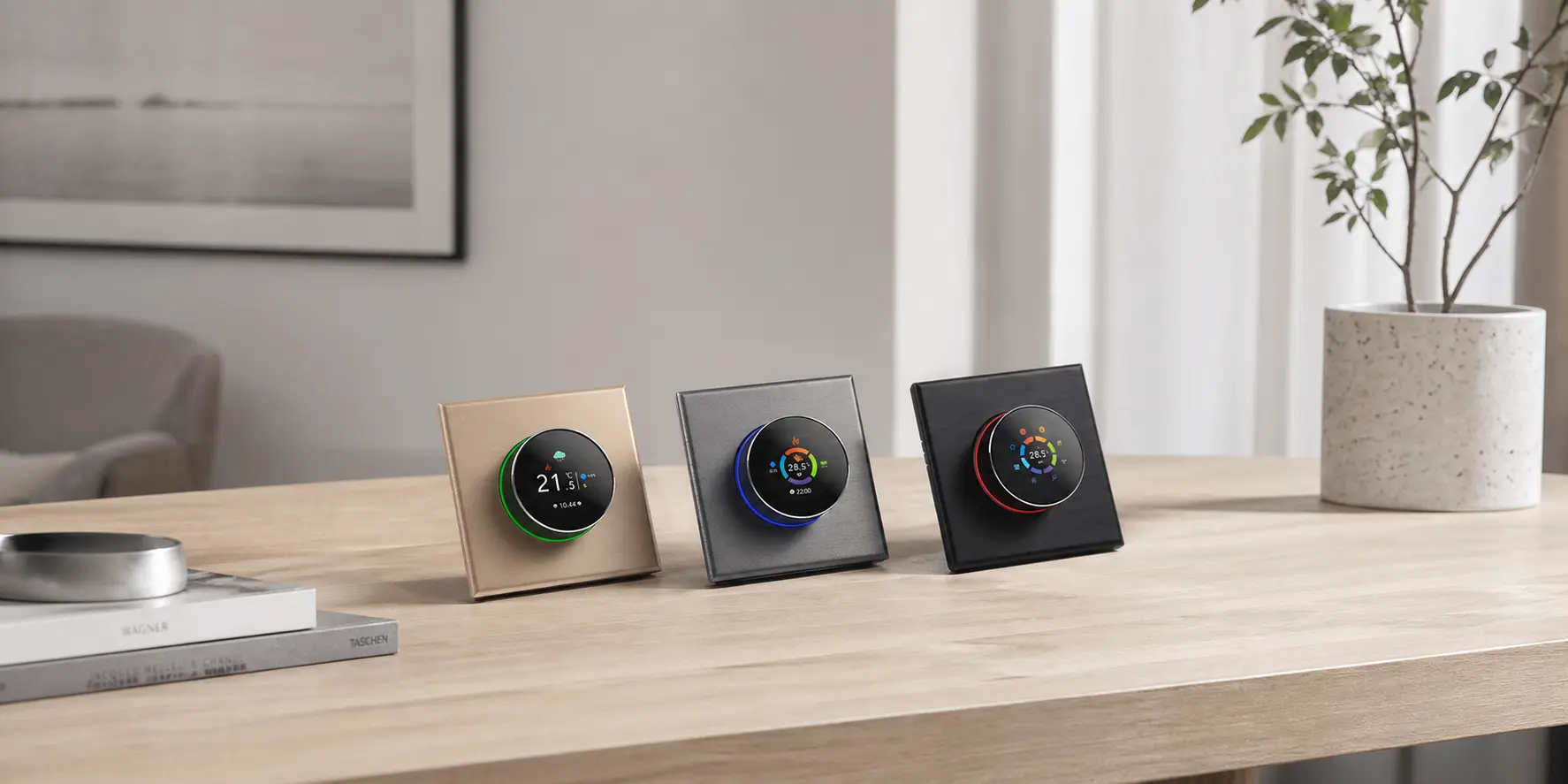
Most temperature controller products can also be understood by looking at their main parts in more detail.
Sensor
The sensor is the input side of the control loop. It measures temperature and sends that information back to the controller. Depending on the application, this may be a built-in room sensor, a remote probe, a pipe sensor, or another special sensor.
Setpoint and display
The setpoint is the target temperature the system tries to maintain. In a room thermostat, this is the temperature selected by the user. The display gives users a way to see the current temperature, target setting, mode, or status. In more advanced controllers, the setpoint logic may include schedules, limits, or parameter settings.
Relay or power output
The output is what turns a control decision into physical action. Some temperature controllers use a simple relay. Others use SSR, dc pulse, or analogue-style outputs. In HVAC and room control, outputs may drive heating demand, fan logic, valve action, or related field devices. This is why output type matters just as much as the display or voltage rating.
Feedback loop
Once the output acts on the system, the sensor reads the new temperature condition again. This creates the feedback loop. Without this loop, the controller would not know whether its action moved the temperature closer to the setpoint or not.
Temperature Controller vs Thermostat: What Is the Difference?
In everyday HVAC language, many people use thermostat and temperature controller almost interchangeably. That is understandable because a thermostat is one of the most common temperature controller forms used in buildings. But there is still a useful difference in meaning.
Temperature controller is the wider term. It can describe room thermostats, digital temperature controllers, process controllers, PID controllers, and other devices that regulate temperature using sensor input and output control. Thermostat is more commonly used for building and room temperature control, especially in heating and cooling applications.
For buyers, the practical takeaway is simple. If the project is about room comfort, heating demand, or fan coil control, the product may be described as a thermostat. If the discussion is broader, or if it includes control strategy, output method, or industrial precision, the term temperature controller is often more accurate.
Where Temperature Controllers Are Used
Temperature controllers appear in more places than many readers expect. They are not limited to industrial control panels. They are also widely used in building, room, water heating, and commercial HVAC control.
Boiler heating and water heating
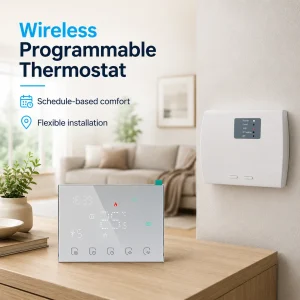
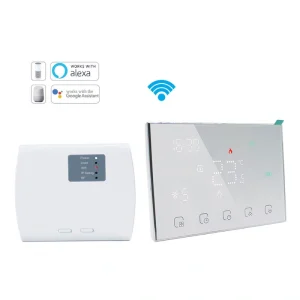
In boiler and water heating applications, the temperature controller often appears as a room thermostat that switches heating demand according to room temperature. Products such as a 220V boiler thermostat with Modbus, a house thermostat for water heating and boiler heating, or a 3A water heating thermostat all belong to this practical control category.
Hotel room HVAC and keycard control
In hospitality projects, the temperature controller may do more than keep a room comfortable. It may also work with occupancy or keycard-related logic so that energy use is reduced when the room is unoccupied. A keycard HVAC thermostat is a good example of how temperature control becomes part of a wider room-management function.
PICV and commercial room control
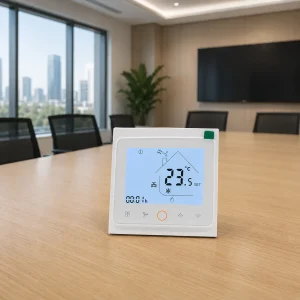
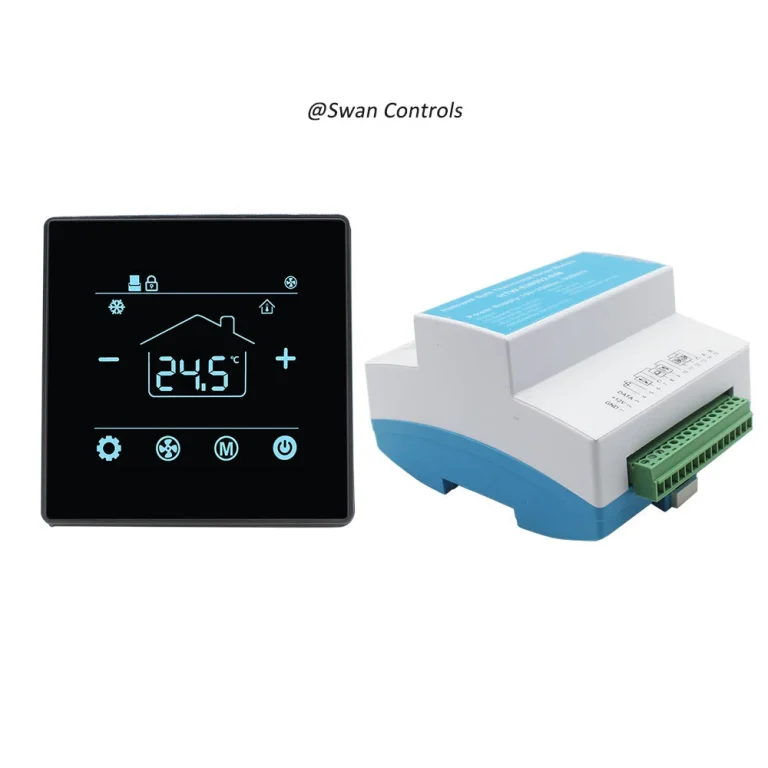
In commercial projects, the controller may be linked to more specific output logic such as valve control. In that case, the temperature controller is not only reading room temperature. It is also part of a broader control arrangement. A 24VDC output PICV thermostat with Modbus is a good example of how room temperature control can connect with more technical field requirements.
General room thermostat applications
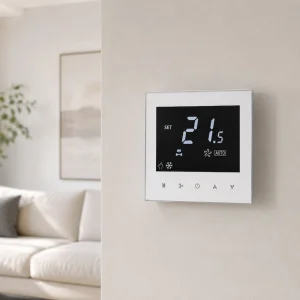
The most familiar use is still the room thermostat. In homes, offices, apartments, and many light commercial spaces, the room thermostat is the temperature controller people see directly. It is often the interface users interact with, even though the full control process includes sensing, switching, and system response behind the wall.
Why the Right Output Type Matters
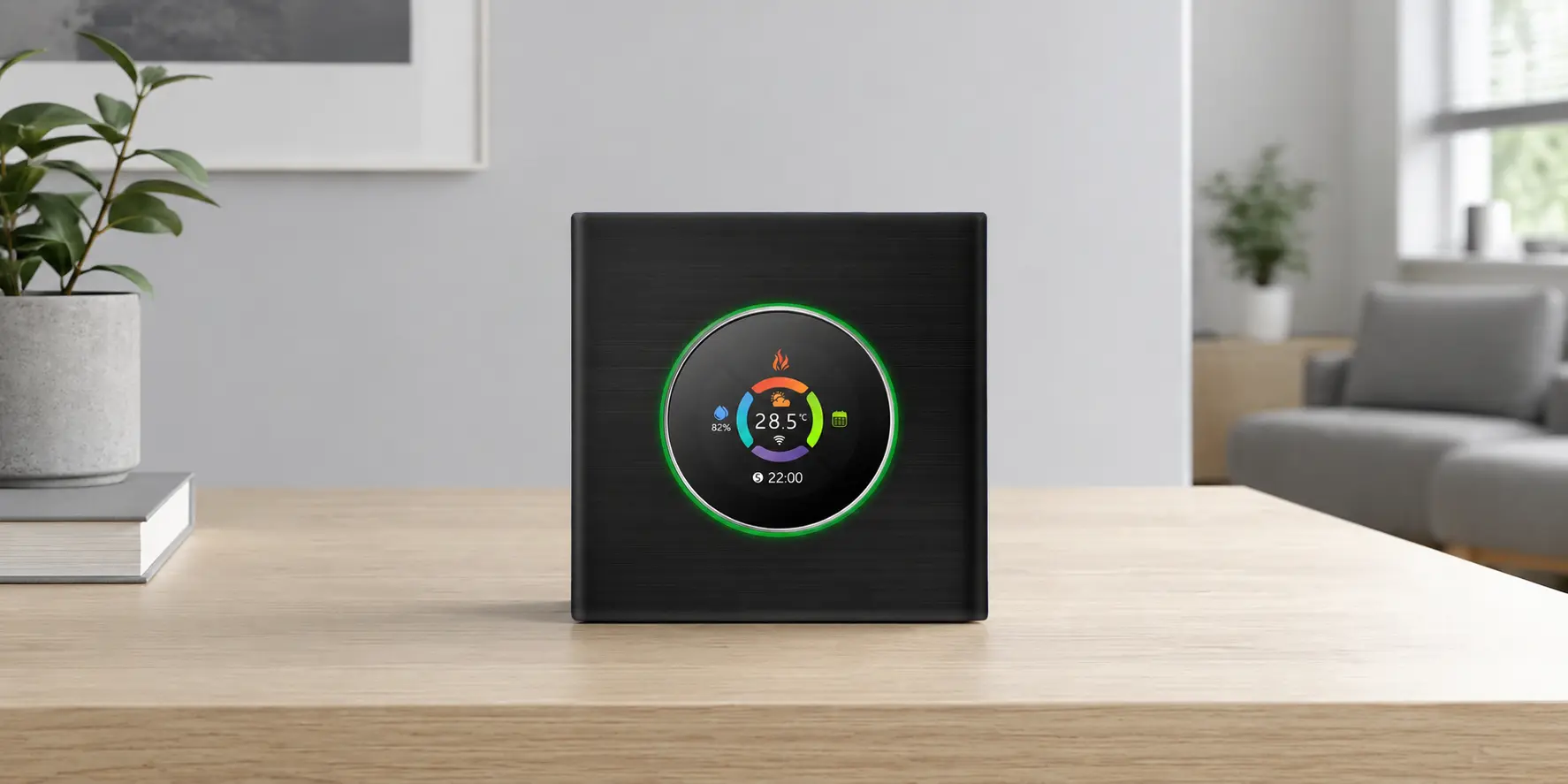
A temperature controller does not only read temperature. It must also act on the system. This is why output type matters so much in real projects. Some controllers use simple relay output. Others use SSR or analogue-style control. Some are designed for specific use cases such as 24VDC valve logic or communication-linked control.
For buyers, this means a controller should not be selected only by appearance, voltage, or screen style. The output must match the target device and the application logic. A boiler thermostat may need simple switching logic. A commercial valve-control project may need a more specific output arrangement. A hotel thermostat may need room logic as well as temperature control. If the output type does not match the application, the controller may still look correct and still perform poorly in the field.
Expert Commentary: Why Temperature Controllers Matter More Today
Temperature controllers are becoming more important because the control role is becoming broader. In many modern building systems, a thermostat is no longer only a wall-mounted temperature switch. It can also be part of energy strategy, occupancy logic, diagnostics, or integration with larger systems.
That direction is visible in technical and building guidance. More advanced replacement thermostat packages in HVAC projects may include additional sensing and diagnostics, not only simple setpoint control. This means buyers are increasingly selecting temperature controllers not only for temperature display, but for the overall control result they want from the room or process.
We see this clearly in real projects. We work with room thermostat, boiler, water heating, hotel HVAC, and PICV control applications where the temperature controller is selected not only by appearance, but by control logic, output type, and project environment. Buyers who understand this usually make better product decisions earlier.
Scientific Data and What It Means
The temperature controller category is moving toward broader sensing and smarter control. Advanced rooftop unit replacement guidance has shown that thermostat packages can include additional sensing functions and diagnostics. Smart thermostat studies have also used zone-level temperature and occupancy data to analyse indoor conditions and energy use. These examples are useful because they show that temperature control is no longer being treated as a simple switch-only function.
For readers and buyers, the practical meaning is clear. Better sensing, clearer control logic, and the right output type all matter more as projects become more connected and performance-focused. A temperature controller is still simple in principle, but its practical value now depends more on how well it matches the application.
Real-World Cases and User Feedback
Case 1: Boiler and water heating room control
In many basic heating projects, users do not ask for an advanced control theory. They ask for steady room comfort and reliable switching. In those cases, a practical room thermostat acting as a temperature controller is often exactly the right solution. The key is matching the control method to the heating system clearly.
Case 2: Hotel room energy-saving control
In hotel guest rooms, the temperature controller often needs to do more than hold one setpoint. It may need to work with keycard or occupancy logic so that comfort and energy-saving behaviour stay balanced. This shows how the same temperature controller concept can become part of a wider operating strategy.
Case 3: Commercial valve-control project
In a commercial room with valve control, the visible product may still look like a standard thermostat, but the actual project requirement is more technical. The controller may need a specific output type, such as 24VDC valve control, and that output becomes more important than the appearance of the screen.
User feedback pattern: In real applications, people rarely say, “I need a better control algorithm.” They usually say, “The room should feel stable,” “The heater should respond correctly,” or “The thermostat should work with our room logic.” Those simple requests still point back to the same thing: the temperature controller must be correctly matched to the application.
Frequently Asked Questions
1. What does a temperature controller do?
A temperature controller reads temperature from a sensor, compares it with a target setpoint, and then adjusts an output to keep the process or room near the desired temperature.
2. Is a temperature controller the same as a thermostat?
Not exactly. A thermostat is often one practical type of temperature controller used in room and HVAC applications, while the wider term temperature controller can also include PID and process control devices.
3. How does a temperature controller work in HVAC systems?
In HVAC systems, a temperature controller usually reads room or system temperature, compares it with the target setting, and then drives an output such as heating demand, fan logic, or valve control to keep conditions stable.
4. What is the difference between on/off and PID temperature control?
On/off control switches the output fully on or fully off based on temperature. PID control adjusts the output more precisely using control calculations, which usually gives more stable temperature control in demanding applications.
5. Where are temperature controllers commonly used?
Temperature controllers are commonly used in room thermostat applications, boiler heating, water heating, hotel HVAC, commercial valve control, and industrial or process temperature control systems.
A temperature controller is a device that reads temperature, compares it with a setpoint, and adjusts an output to keep conditions stable. In room and HVAC projects, it often appears as a thermostat. In more demanding systems, it may use more advanced sensing and control logic. So the direct answer to the title is simple: a temperature controller works by measuring temperature, comparing it with a target, and controlling an output to maintain the desired condition.
References / Sources
- Omega Engineering, An Introduction to PID Temperature Controllers
- Omega Engineering, CN7500 Series Temperature / Process Controller Manual
- Watlow, Setting Up a Control Loop
- Watlow, Essential Guide to Power Controllers
- Wikipedia, Thermostat
- Wikipedia, Temperature Control
- Wikipedia, Bang–bang Control
- University of California, Berkeley, HVAC Controls and Room Temperature Sensing Notes
- DOE / Energy Codes, HVAC Controls Webinar Presentation Slides
- ASHRAE-related control workshop material, Smart Thermostat and Indoor Environmental Conditions