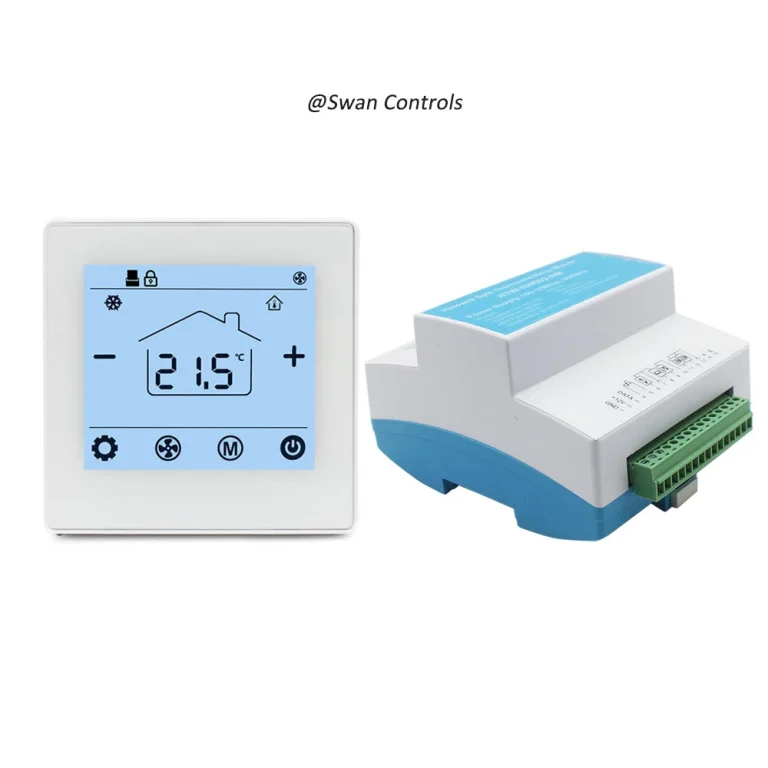
“Is an underfloor heating thermostat just another room thermostat?”
Understanding that distinction matters because underfloor heating projects are usually chosen for comfort, clean room design, and steady radiant heat. If the thermostat logic is not understood properly, the system may still heat, but the control result may feel wrong. The room may warm too slowly, the floor may feel too hot, or the user may not understand why a floor sensor is needed at all. So the best starting point is simple: an underfloor heating thermostat is not only a temperature dial. It is the control point that decides how the floor-heating system responds in real life.
Quick Summary: The 3 Parts of an Underfloor Heating Thermostat
Most underfloor heating thermostats can be understood through three basic parts. First, a sensor reads temperature from the room, the floor, or both. Second, the thermostat compares that reading with the target setpoint chosen by the user or installer. Third, the thermostat controls the heating output by turning the electric underfloor heating system on and off or by controlling the water-based floor-heating zone logic. Once these three parts are clear, it becomes much easier to understand how underfloor heating thermostats differ from ordinary room thermostats.
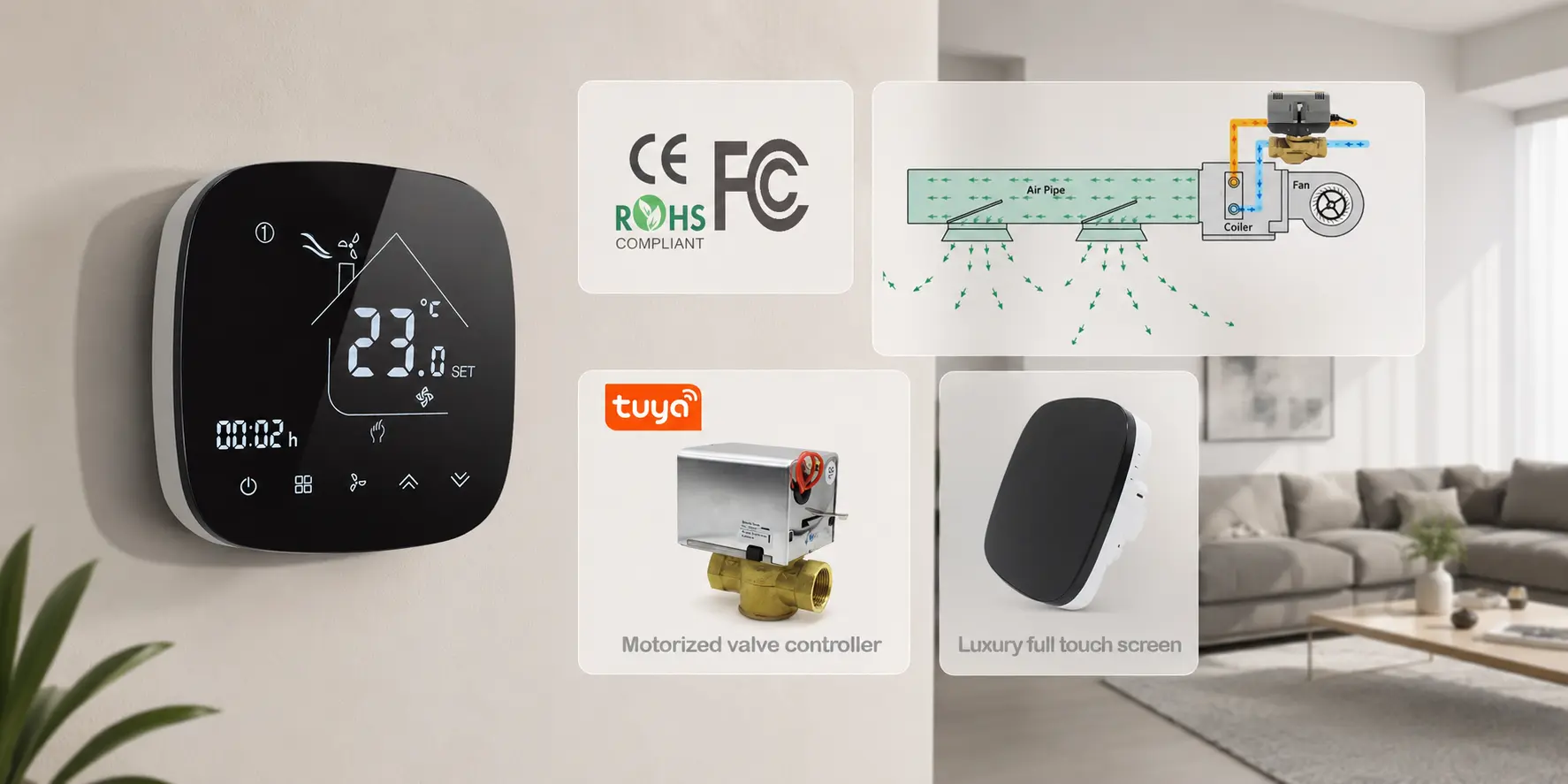
What Is an Underfloor Heating Thermostat?
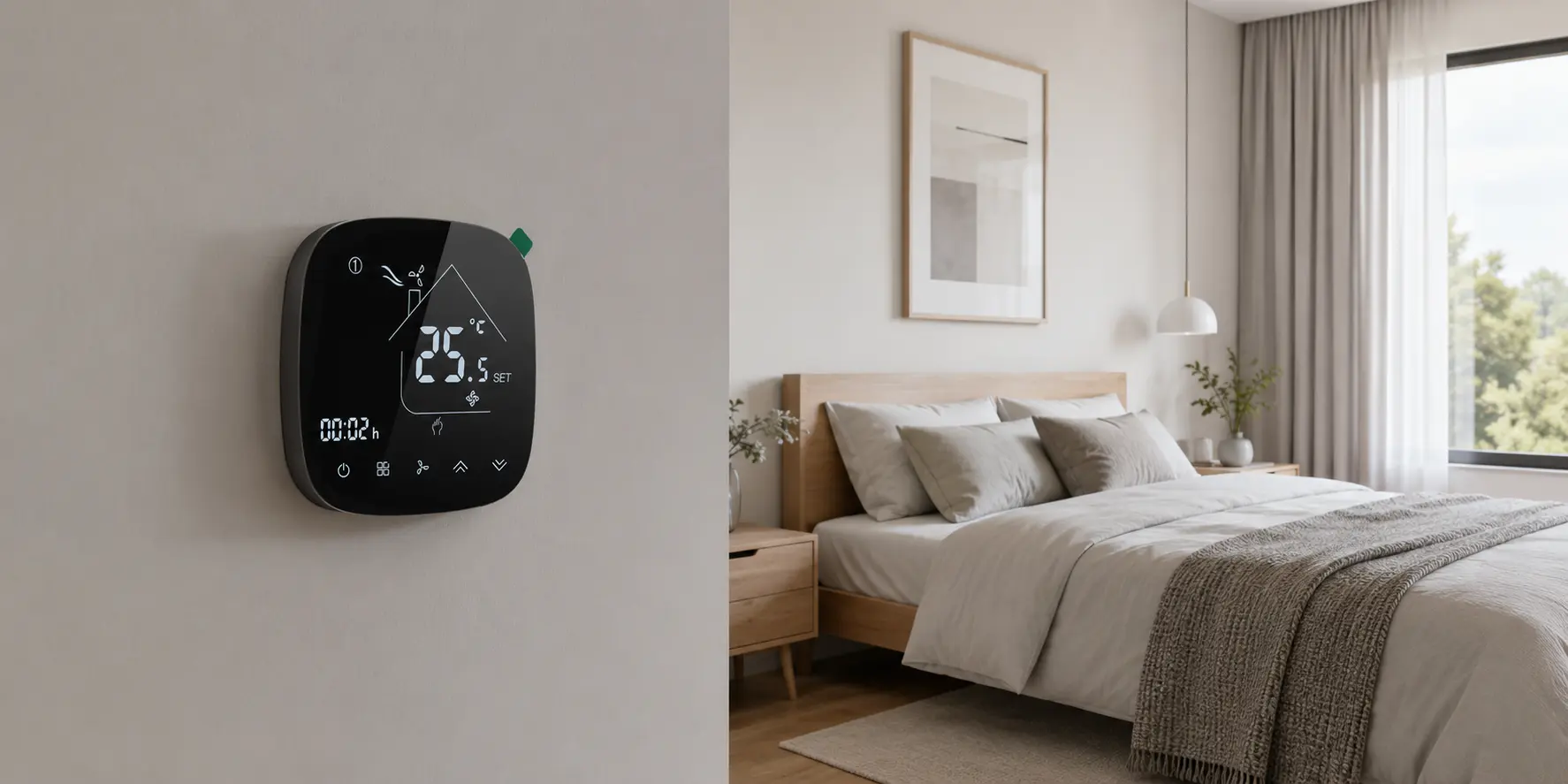
An underfloor heating thermostat is a thermostat designed to control a floor-heating system rather than only a wall-mounted room-heating output. In the simplest terms, it decides when the floor heating should run and when it should stop. But unlike a very basic room thermostat, it may also need to consider the floor surface temperature itself, not only the air temperature in the room.
This is one of the most important reasons it should be treated as its own category. In electric underfloor heating, the thermostat often works with an external floor sensor to measure the floor temperature directly. In some systems, the thermostat can control by floor sensor only, by room air sensor only, or by using both together. In water underfloor heating, the thermostat is still part of the room-control logic, but the heating source and control path are different, because the system is usually controlling warm water circuits rather than a direct electric heating load.
That is why the phrase underfloor heating thermostat is useful. It describes a thermostat whose job is linked to the behaviour of the floor-heating system itself, not just to the room air in a general sense.
How Does an Underfloor Heating Thermostat Work?
The working principle is easier to understand when it is broken into simple steps. First, the thermostat reads temperature from its sensor or sensors. That may be a built-in air sensor, an external floor sensor, or both. Second, it compares that reading with the setpoint. Third, it decides whether the heating system should continue heating or stop. Fourth, it sends the required control action to the electric floor-heating cable or mat, or to the water-heating control path.
In an electric underfloor heating thermostat, that usually means switching the electrical heating load on and off according to the selected control mode. In a water underfloor heating thermostat, the thermostat usually works as part of a wider heating system that may include actuators, manifolds, or boiler-linked zone control. The visible thermostat may look similar in both cases, but the controlled system behind it is not the same.
This is why installers and buyers should not reduce the topic to “it turns the heating on and off.” That is true, but incomplete. What makes an underfloor heating thermostat different is that the thermostat may be controlling floor comfort, floor protection, room comfort, or all three together.
| Part | What It Does | Example |
|---|---|---|
| Sensor | Reads room or floor temperature | Air sensor, floor probe |
| Thermostat | Compares the reading with the setpoint | Digital thermostat or WiFi thermostat |
| Output | Controls the floor-heating response | Electric load switching or water-heating control path |
Electric Underfloor Heating Thermostat vs Water Underfloor Heating Thermostat
This is one of the most important differences to explain clearly. Electric underfloor heating and water underfloor heating are not the same system, so their thermostats should not be treated as if they always do the same job.
Electric underfloor heating uses heating mats or cables connected to mains electricity. The thermostat usually controls that electric heating load directly. This is why electric underfloor heating thermostats are often strongly linked to floor sensors and floor-temperature management.
Water underfloor heating, by contrast, uses warm water circulating through pipes laid beneath the floor. The thermostat usually acts as part of a wider control arrangement involving manifolds, actuators, or boiler-linked zone control. The thermostat still matters, but the control chain is broader.
For buyers, this means product selection should begin with system type. A thermostat that is suitable for electric underfloor heating is not automatically the right thermostat for a water underfloor heating project, even if the front panel looks very similar.
| System Type | How Heating Is Produced | What the Thermostat Usually Controls |
|---|---|---|
| Electric underfloor heating | Heating mats or cables using electricity | Electric output and floor/room sensing logic |
| Water underfloor heating | Warm water through underfloor pipe circuits | Zone or water-heating control logic |
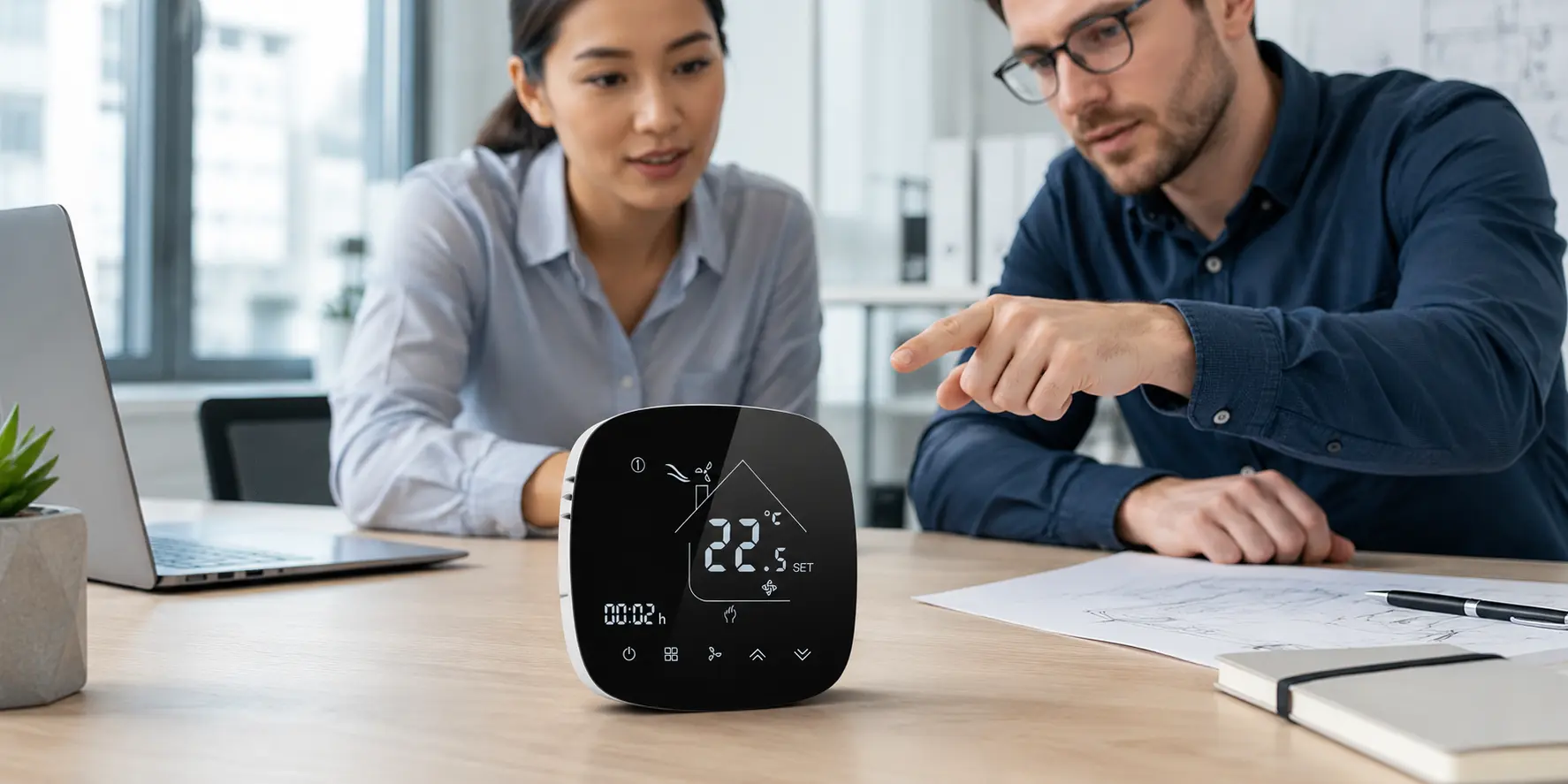
Why Floor Sensor Matters in Underfloor Heating Control
The floor sensor is one of the most important parts of many underfloor heating thermostat systems, especially in electric underfloor heating. This is the key point that most clearly separates an underfloor heating thermostat from an ordinary room thermostat.
In many electric underfloor heating projects, controlling only by room air temperature is not enough. The floor itself can become the key surface that must be monitored. If the floor gets too warm, comfort may decrease and some floor finishes may be less suitable. This is why a floor sensor is often used to keep the floor within a sensible range while still delivering the room comfort the project needs.
Some thermostat documentation in the market explicitly states that electric underfloor heating must not be controlled only by the built-in air sensor. Instead, the thermostat should use the floor sensor alone or use both air and floor sensing together. That is an important project lesson: if a buyer treats an electric underfloor heating thermostat like a normal room thermostat and ignores the floor sensor, the control logic is already incomplete.
The floor sensor is therefore not a minor accessory. In many electric floor-heating systems, it is part of the real control logic.
Air Sensor, Floor Sensor, or Both?
This is one of the most useful buyer questions. Not every underfloor heating project should use the same sensing logic. In some spaces, floor temperature matters most. In others, room air comfort matters more. In some projects, using both gives the most balanced result.
Floor-sensor control
Floor-sensor control is often chosen when the main goal is to regulate the floor surface temperature itself. This can be useful when the floor heating acts as a secondary heat source or when the floor material and comfort profile make direct floor-temperature control especially relevant.
Air-sensor control
Air-sensor control is often more suitable when the underfloor heating system is intended to act as the main source of room comfort and the thermostat is being used more like a room thermostat. But even here, buyers should be careful in electric underfloor heating projects, because floor protection or floor-temperature limits may still be needed.
Air plus floor-sensor control
In many projects, using both is the most practical approach. The air sensor helps manage room comfort, while the floor sensor helps ensure the floor does not move outside a suitable temperature range. This combined logic is often the best bridge between comfort and floor protection.
That is why the best underfloor heating thermostat is not automatically the one with the most app features. It is often the one that supports the right sensing logic for the real system.
Programmable and Smart Underfloor Heating Thermostats
Once the system and sensor logic are clear, buyers often move to the next question: should the project use a basic digital thermostat, a programmable thermostat, or a WiFi thermostat? This is where programmable and smart features come in.
A programmable underfloor heating thermostat allows the user to set schedules so the floor heating runs when needed and reduces runtime when not needed. This can improve comfort and help reduce unnecessary heating. A WiFi thermostat adds app-based control, remote access, and in some systems easier schedule adjustment. These features are useful, especially in modern homes, apartments, or projects where convenience matters.
But programmable and smart functions are still upgrades to the control method, not the core definition of what the thermostat is. The thermostat must still match the heating type, the sensor logic, and the heating role first. A WiFi thermostat that uses the wrong control logic is still the wrong thermostat, even if the app looks good.
Where Underfloor Heating Thermostat Logic Appears in Real Projects
Different underfloor heating thermostat products make more sense in different project roles. That is why buyers should connect thermostat selection to the actual heating application rather than using one broad thermostat idea for every project.
Electric underfloor heating thermostat projects
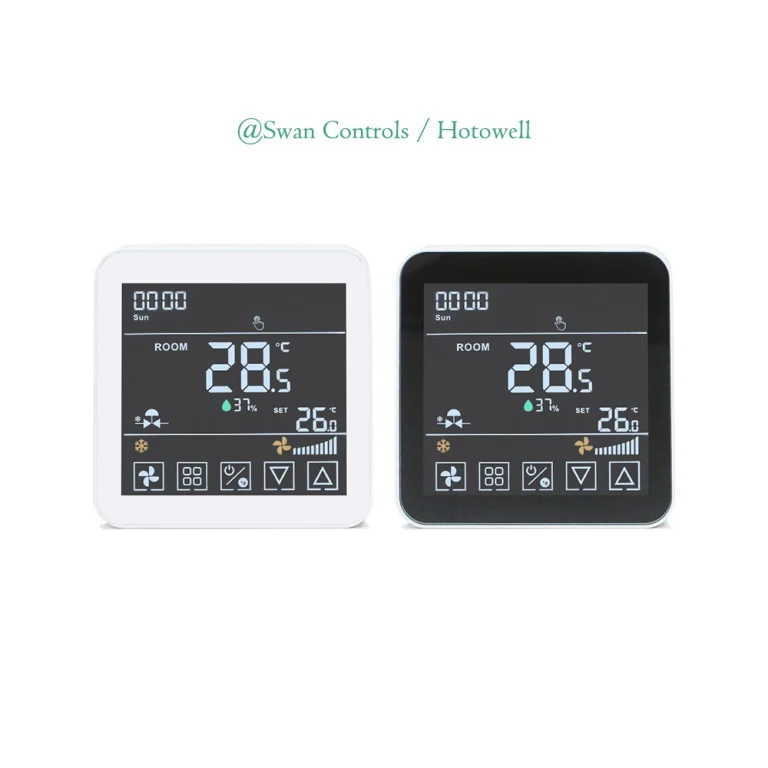
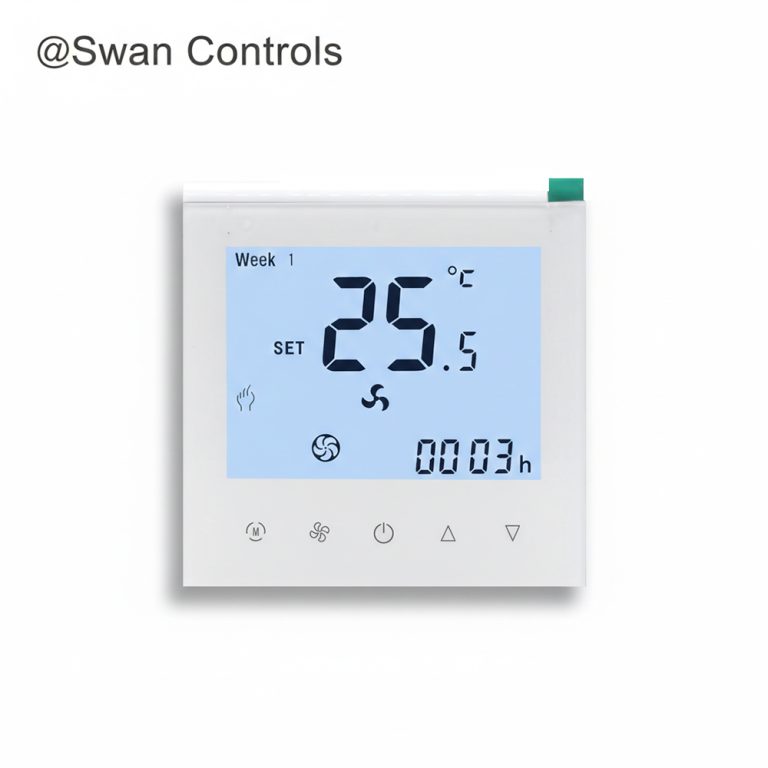
For projects that need a practical electric underfloor heating thermostat, a product such as the LCD Screen Electric Underfloor Heating Thermostat can be evaluated from the viewpoint of basic floor-heating control logic rather than only appearance.
WiFi floor-heating control projects
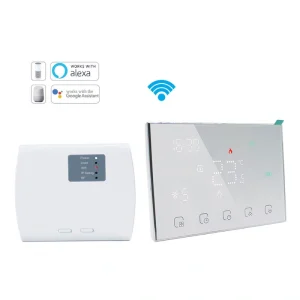
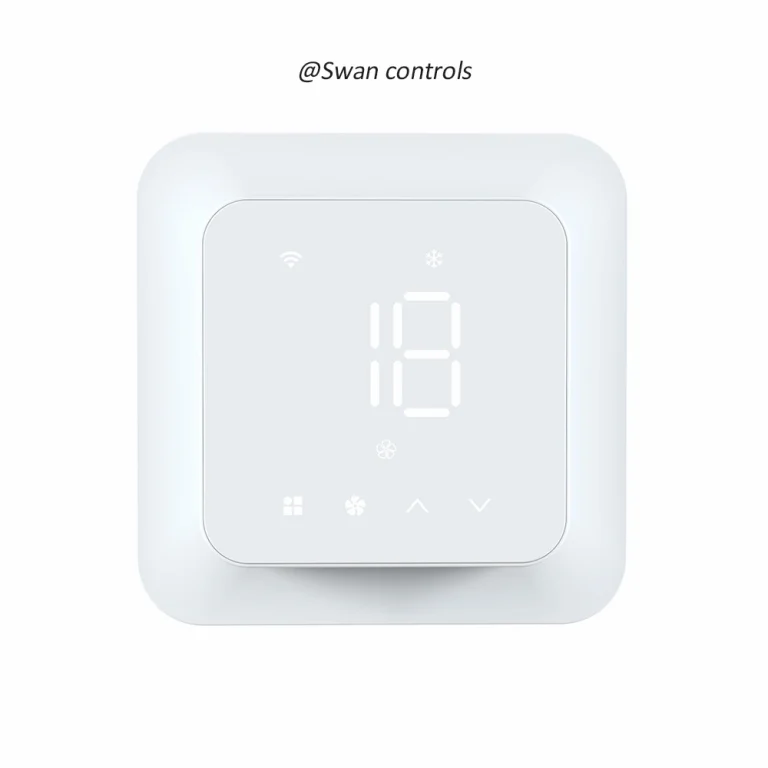
If app access and user convenience are important, then a product such as the Tuya WiFi Electric Underfloor Heating Thermostat or the 16A WiFi Electric Underfloor Heating Thermostat with External Sensor may suit the project better. In those cases, smart functionality is part of the commercial value.
Projects needing external floor sensor logic
Where a dedicated external floor sensor matters more strongly, a product such as the 16A Room Electric Underfloor Heating Thermostat with External Sensor shows why sensor logic is often as important as the thermostat interface.
Water or boiler-linked heating reference
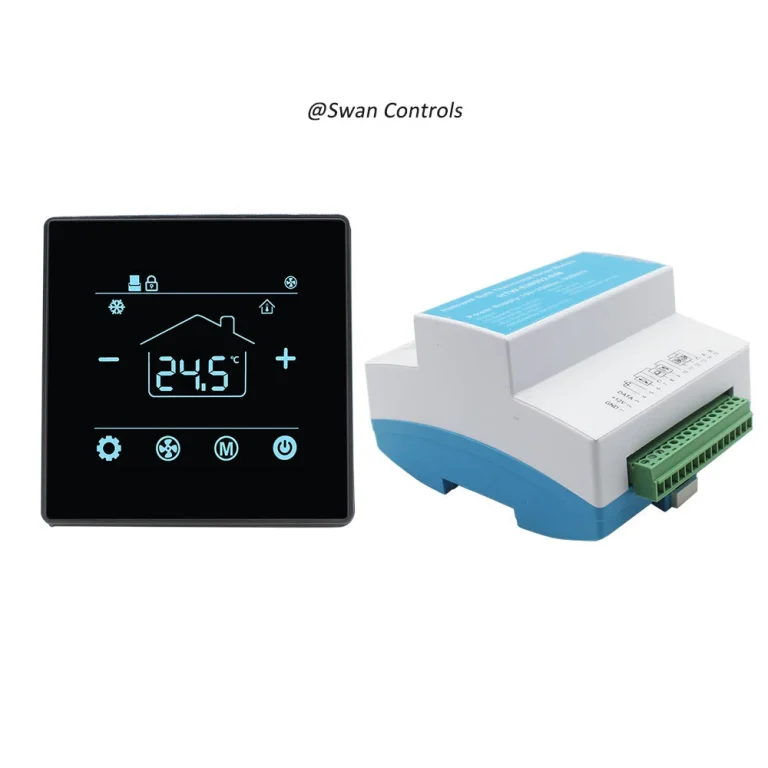
Not every heating project is pure electric floor heating. In broader heating control discussions, a product such as the CE 3A Water Gas Boiler Heating Thermostat reminds buyers that water heating and boiler-linked thermostat roles require different control assumptions from direct electric underfloor heating.
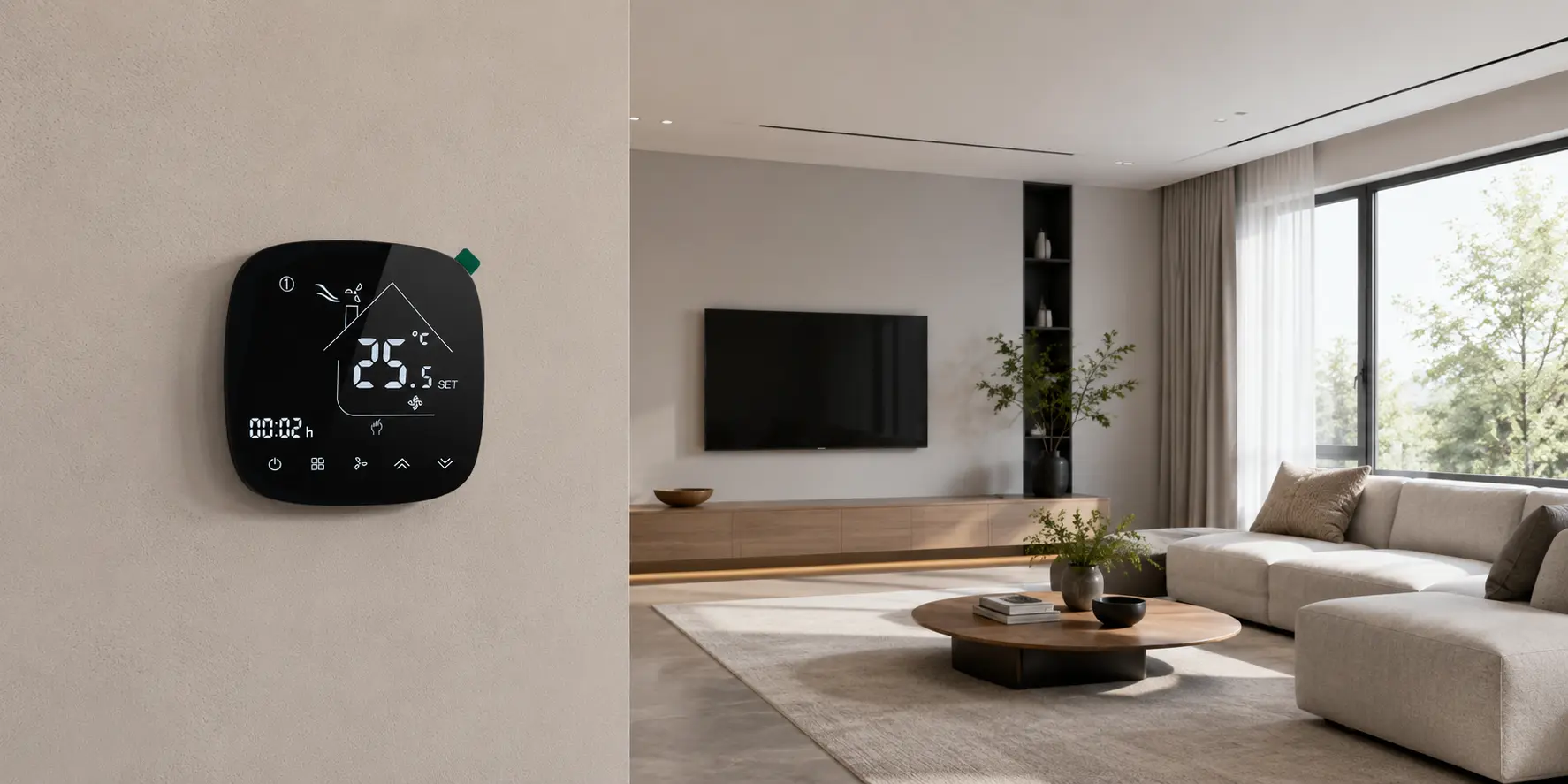
Common Mistakes Buyers Make When Choosing an Underfloor Heating Thermostat
- Treating it like a normal room thermostat and ignoring floor control logic.
- Ignoring the need for a floor sensor in electric underfloor heating projects.
- Not separating electric underfloor heating from water underfloor heating at selection stage.
- Choosing only by screen appearance or touch interface.
- Assuming WiFi thermostat means better control for every project.
- Ignoring floor finish, heat output, and the real heating role of the system.
- Assuming one thermostat mode suits primary and secondary heating use equally well.
These mistakes are common because thermostat products often look similar across categories. But in underfloor heating, the control logic matters more than many buyers first expect.
Expert Commentary: The Best Underfloor Heating Thermostat Is the One That Matches the Heating Role
The most useful way to understand underfloor heating thermostat selection is this: the best thermostat is not simply the smartest one, the cheapest one, or the one with the brightest screen. It is the one that matches the system type, the sensor logic, and the real heating role in the project.
A buyer looking for a reliable electric underfloor heating thermostat should first confirm whether the thermostat needs floor-sensor control, room comfort control, or both. A buyer looking for a water underfloor heating thermostat should first confirm how that thermostat fits into the wider zone and water-heating system. Once those control roles are clear, model selection becomes much more accurate.
We support thermostat projects for electric underfloor heating, WiFi floor heating control, water heating, boiler heating, and broader room-control environments where the right sensor logic matters as much as the thermostat design.
Scientific Data and What It Means
Technical guidance in the underfloor heating market makes several practical points clear. Electric underfloor heating heat output should match room heat loss, and higher heat-loss rooms may need higher wattage systems. Water underfloor heating systems often operate with water temperatures well below the level used in traditional radiators, while the actual floor surface temperature remains in a more moderate range suitable for comfort. These facts matter because thermostat selection should match the real system conditions, not just the product label.
Another highly practical point is that electric underfloor heating should not always rely on air sensing alone. Market guidance for electric floor heating thermostats often requires or strongly recommends floor-sensor use because the floor itself is part of the control target. That is one of the clearest technical differences between underfloor heating thermostat control and ordinary room thermostat control.
Real-World Cases and User Feedback
Case 1: Electric floor-heating project using floor-sensor control
A buyer initially thought any digital room thermostat could control a small electric floor-heating project. After reviewing the role of the floor sensor, the project changed to a more suitable electric underfloor heating thermostat. The heating result became easier to explain and more appropriate for the floor application.
Case 2: WiFi thermostat project focused on user convenience
In another project, the main difference was not the heating type but the user expectation. The buyer wanted easier schedule changes and app access. A WiFi thermostat made sense there, not because the heating logic changed completely, but because the control experience improved for the final user.
Case 3: Water or boiler-linked heating project requiring role clarity
A third project used the phrase “floor heating thermostat” loosely, but the actual control role was closer to a water-heating or boiler-linked thermostat. Once the system type and sensor expectation were clarified, the product discussion became much more accurate.
User feedback pattern: End users rarely describe the problem in technical language. They usually say the floor feels too warm, the room takes too long to heat, the heating feels uneven, or the app is convenient. Behind those simple comments, the real difference often comes from thermostat role and sensor logic.
Frequently Asked Questions
1. What does an underfloor heating thermostat do?
An underfloor heating thermostat reads air temperature, floor temperature, or both, then controls the heating output so the room stays comfortable and the floor remains within a suitable temperature range.
2. Is an underfloor heating thermostat the same as a room thermostat?
Not exactly. A room thermostat usually controls room air temperature only, while an underfloor heating thermostat may control room temperature, floor temperature, or both depending on the system.
3. Do I need a floor sensor for electric underfloor heating?
In many electric underfloor heating projects, yes. A floor sensor is often important because the thermostat may need to control or limit floor temperature rather than relying only on room air temperature.
4. What is the difference between electric and water underfloor heating thermostats?
Electric underfloor heating thermostats usually control electric mats or cables directly, while water underfloor heating thermostats are generally part of a wider water-based zone or heating control system.
5. Can a WiFi thermostat control underfloor heating?
Yes, a WiFi thermostat can control underfloor heating if it is designed for the correct system type and sensor logic. The key is not WiFi alone, but whether the thermostat matches the actual heating application.
References / Sources
- Warmup, Electric Underfloor Heating vs Water Underfloor Heating
- Heatmiser, DT-ETS / DT-ENTS Manual
- Warmup, 3iE Operating Instructions
- OJ Electronics, UDG Programmable Thermostat
- Uponor, Beginner’s Guide to Underfloor Heating in Bathrooms
- Warmup, Guide to Underfloor Heating Temperature and Heat Output
- Warmup, Choosing the Best Underfloor Heating Thermostat
- Warmup, Your Buying Guide for Underfloor Heating
- Wikipedia, Underfloor heating
- Wikipedia, Thermostat