Quick Summary
A wifi thermostat OEM project should not be treated as an app development project. For most overseas buyers, import distributors, and HVAC contractors, the practical goal is to turn a stable, pre-certified thermostat into a branded product that can be sold, installed, and reordered with fewer post-sale technical problems.
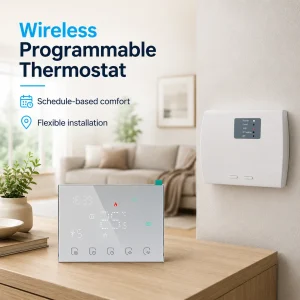
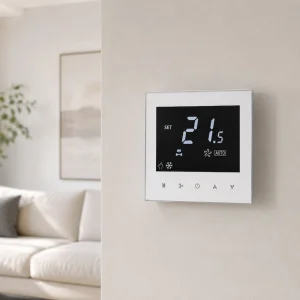
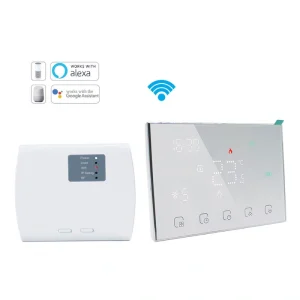
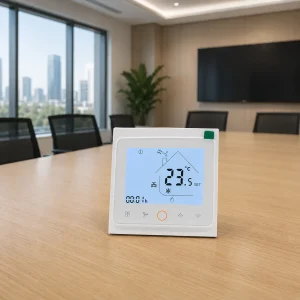
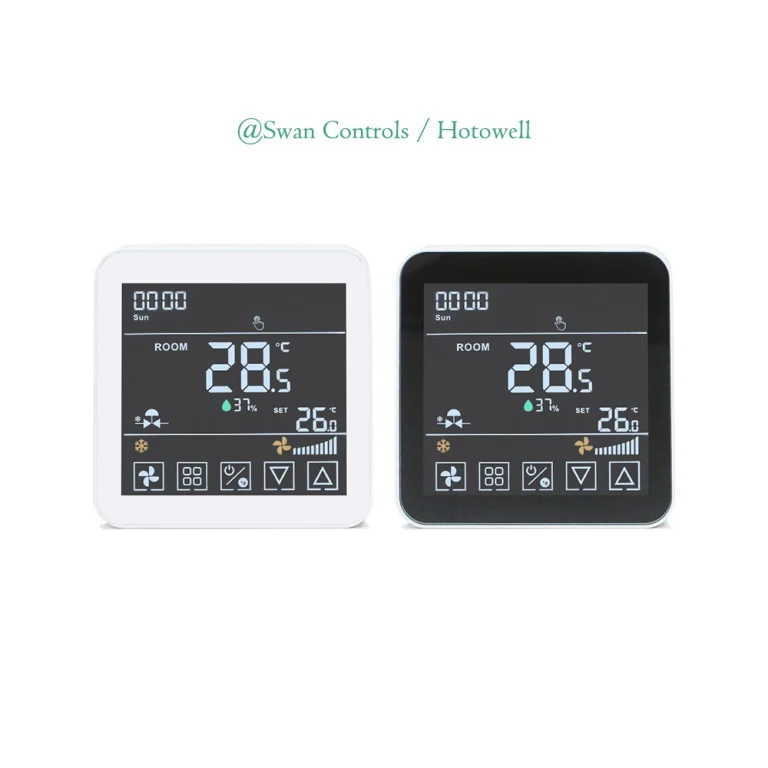
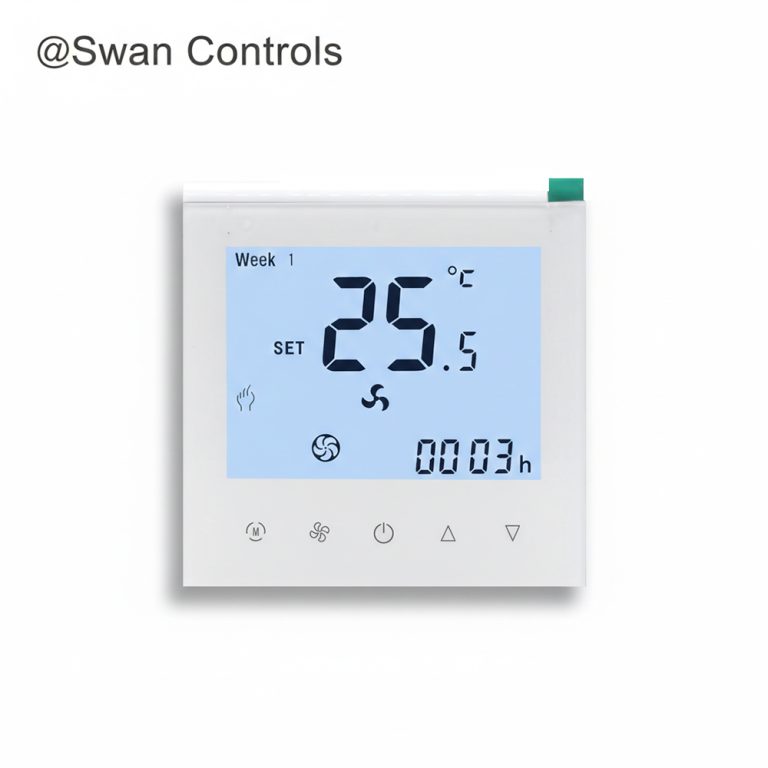
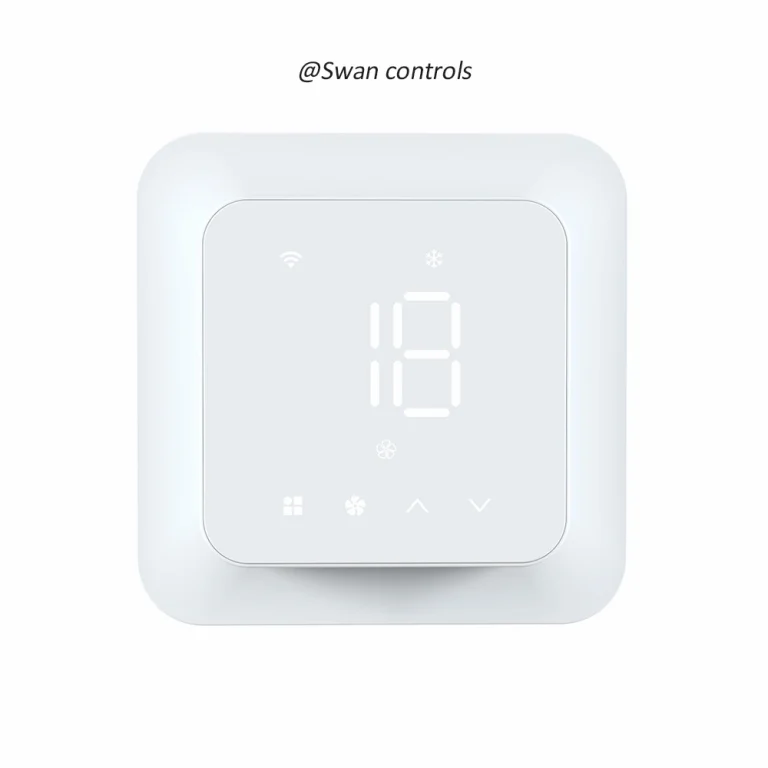
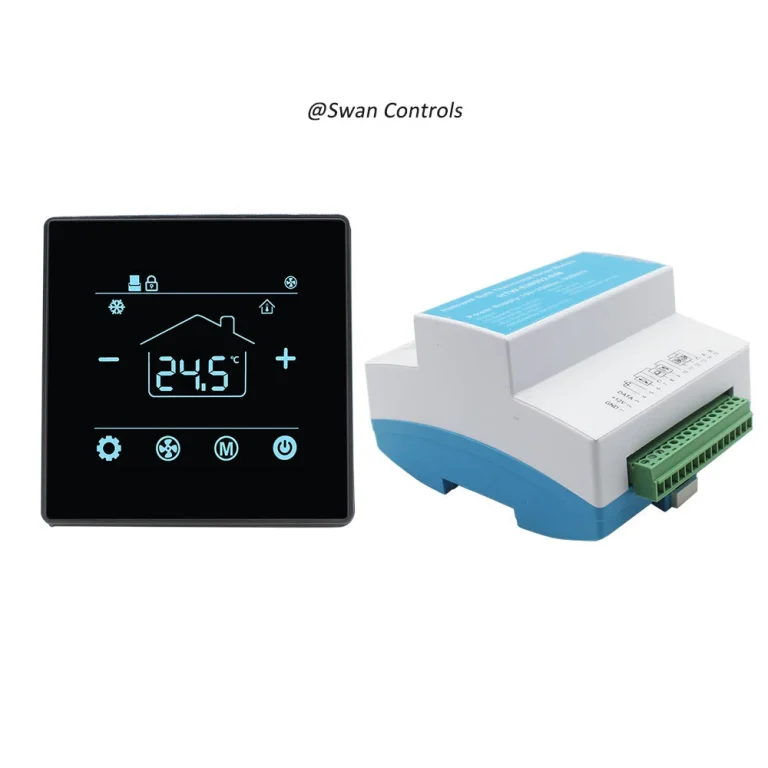
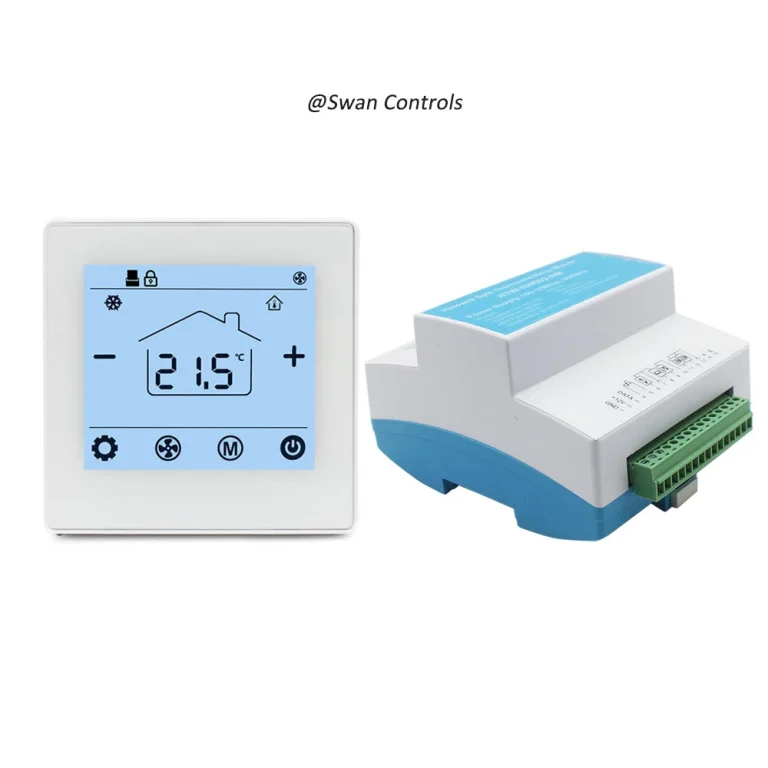
In this article, the wifi thermostat used for reference primarily refers to our fan coil unit thermostat with programmable functions and wireless access, while the programmable thermostat refers to our standalone fan coil unit model with local scheduling. However, the same business logic and customization rules naturally apply to other HVAC applications.
Introduction: Understanding True Thermostat OEM Realities
When bulk buyers launch a customized product line, they often make a common mistake: they look at a smart wifi thermostat and treat the project as if they are developing a mobile phone app from scratch.
In fact, the real value of OEM does not come from changing a stable product that already works well. Instead, it comes from customizing the practical things around the hardware to help us protect the sales margins, clear customs smoothly, and lower installation costs. By focusing on simple choices—what should be standard and what should stay optional—we can build a profitable product line that satisfies both local installers and the business goals.
Sourcing Selection: Matching the Thermostat to the Job Site
Before we discuss logos or printed boxes, we must match the physical configuration of the thermostat with the actual HVAC equipment on the project site.
A fan coil controller needs to drive multi-speed fan motors and open or close water valves based on specific voltage requirements. If we select a model with the wrong hardware outputs, no smart feature will make the system operate correctly in the field.
To simplify the selection process, we have organized our mature, field-tested fan coil options into a clear matrix. This allows you to match your exact technical system layout—such as 3-speed fans, modulating fans, 2-pipe systems, or 4-pipe systems—with the right product model.
| Central Fan Coil Project Technical Requirements | Recommended Model |
|---|---|
| Standard 3-speed fan motor with a 2-pipe on/off water valve control circuit and built-in wireless network access. | HTW-WF06-FC-2W |
| Standard 3-speed fan motor with a 4-pipe on/off water valve control circuit and built-in wireless network access. | HTW-EB-FC-4W |
| Energy-saving modulating EC fan motor, wireless access, embedded Modbus communication, local keycard control, and an external remote sensor circuit. | HTW-FC08-ECNW |
| Advanced wireless access, standard 3-speed fan motor, modulating EC fan support, 2-pipe 0-10V modulating valve loops, and a 24V output for valve control. | HTW-FC09-FVMN-24WF |
| Versatile 3-speed fan motor, compatible with both 2-pipe and 4-pipe on/off valve systems, featuring Modbus industrial networks and wireless access. | HTW-WF11-FC-4ENS1W |
What Features Should Be Standard?
A good OEM project splits standard factory features from custom brand updates. The standard features belong to our tested, ready-made thermostat core. Customization simply changes the outer branding and manuals so you can sell the same reliable device under your own name.
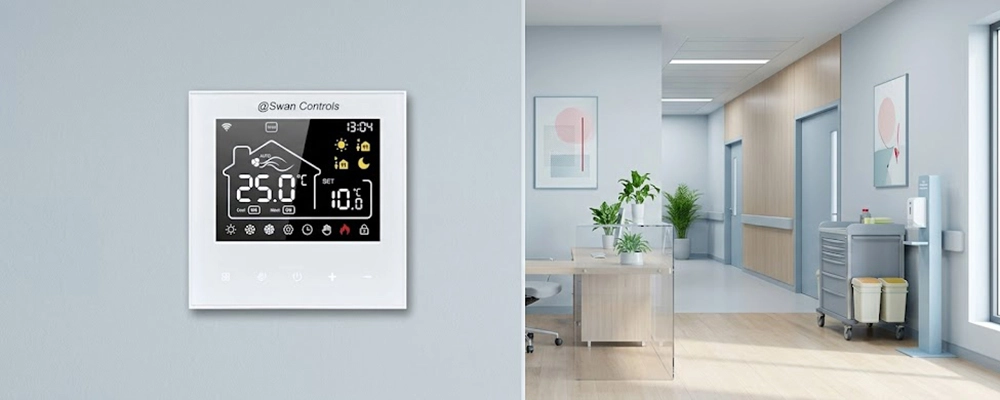
Standard features include app connections, automatic time syncing, internal temperature control, and installer menus. Keeping these blocks standard ensures the product is reliable and completely free from custom software bugs.
| Feature | What is Standard | Why It Matters |
|---|---|---|
| App Control | Built-in app control using a stable global cloud system. | Gives you an instant selling point without the high cost of building your own app server. |
| Scheduling | 7-day programmable timers with 6 periods per day. | Helps users save on energy bills and meets local building efficiency rules. |
| Local Screen | Clean digital display with simple touch buttons. | Ensures users can always control the climate manually if the internet drops. |
| Installer Menu | Hidden settings for temperature calibration and locks. | Allows technicians to adjust the unit to the site and stops users from making wrong changes. |
When selling a wifi thermostat to distributors, keep the explanation simple. For bulk orders, we do not change the app connection logic. We supply a stable, ready-to-use wireless device. The real value comes from localizing the packaging, manuals, and labels for your market, which saves you money while creating a professional brand.
The programmable thermostat options should also stay simple. For hotels, offices, and apartments, a basic schedule is much better than a complex menu. If a schedule is too hard to set up, it creates extra support calls rather than adding value. A clean, simple on-screen menu keeps users happy and stops complaints.
What OEM Customization Steps Should Be Standard?
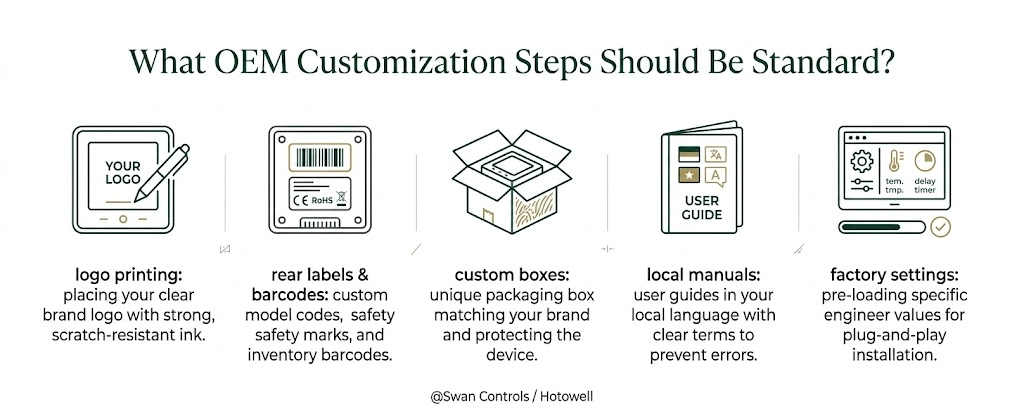
Real customization goes far beyond printing a logo on a plastic case. A practical approach helps wholesale distributors build a strong brand and protect their local market prices. For the initial orders, we recommend a standard scope that includes these core choices:
- Logo Printing: Placing your clear brand logo on the front frame with strong, scratch-resistant ink.
- Rear Labels & Barcodes: Printing your custom model codes, safety marks (CE, RoHS), and inventory barcodes on the back.
- Custom Boxes: Designing a unique packaging box that matches your brand style and protects the device during transit.
- Local Manuals: Rewriting user guides into your local language with clear terms to prevent installation errors.
- Factory Settings: Pre-loading your specific engineer values, like fan delays or temperature locks, so installers can just wire and go.
Using custom model codes is the best way to protect your profits. When we use your unique model number, buyers cannot cross-search it online to find our factory or compare wholesale prices. This stops direct price competition and secures your margins.
Pre-programming your technical settings at our factory also saves valuable time. When devices arrive with your preferred temperature scales and safety limits already loaded, installers do not have to set up each unit manually. This makes your brand the preferred choice for future local projects.
Deeper Customization: What Should Stay Optional?
In B2B manufacturing, classifying an engineering request as optional does not mean it is bad. It simply means that the feature carries significant financial, regulatory, or manufacturing trade-offs that make it poorly suited for initial product rollouts. Keeping high-impact structural alterations optional protects your cash flow, reduces minimum order quantities, and keeps production timelines completely predictable.
Custom enclosure colors are an excellent example of a feature that should remain optional. While a unique housing color can make a product stand out, changing plastic resins requires us to flush our injection molding lines completely and manage strict color-batch consistency. This always leads to higher minimum order quantities and longer production lead times. For your first order, it is far safer to utilize our standard clean white or light grey housing and focus your capital on custom logos and packaging instead.
Modifying LCD glass mask layouts or implementing specialized icon graphics should similarly be treated as a long-term optional goal. Customized display segments require dedicated screen tooling, extended prototyping cycles, and altered quality control test fixtures. This can easily add thousands of dollars to your initial costs and delay your shipment by several months, offering very little immediate business return. It is far more efficient to leverage our standard display layout until market sales volume justifies custom tooling expense.
Deep firmware rewrites and private cloud application builds represent the most complex tier of optional customization. Developing a standalone, custom-branded smartphone app requires significant ongoing software engineering investments, including dedicated server maintenance and continuous operating system compatibility updates for iOS and Android. For the majority of growing brands and regional distributors, utilizing our established app ecosystem provides an enterprise-grade smart home experience at zero added software cost, keeping your business fast, flexible, and insulated from software development risks.
Matching Customization to Your Specific Business Profile
Different businesses use our manufacturing services in different ways, which is why we adapt our project priorities to match your specific position in the HVAC supply chain. Resolving these key friction points streamlines factory workflow and output delivery schedules.
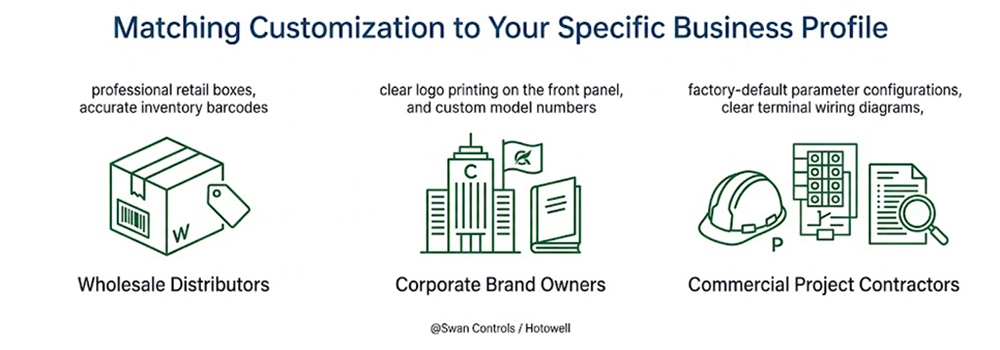
Wholesale Distributors
Independent wholesale distributors operate in a high-volume, price-sensitive environment. Their primary goals are inventory turnover and easy product handling. For this group, the ideal customization plan focuses on standard hardware with standard branding options: professional retail boxes, accurate inventory barcodes, and clear single-page wiring sheets. Distributors need a product that their counter staff can understand quickly and their traditional dealer networks can install without special technical training.
Corporate Brand Owners
Corporate brand owners focus heavily on long-term brand identity, visual style, and premium market positioning. Brand owners want to add our stable WiFi thermostat or programmable thermostat models to their existing product range, creating a consistent product family without taking on high development costs.
Their customisation plan usually focuses on clear logo printing on the front panel, custom model numbers for market protection, and instruction manuals redesigned to match their brand colours.
Commercial Project Contractors
Commercial project contractors operate under tight installation deadlines and strict engineering specifications. When we prepare an order for a large commercial project, the customization focus shifts away from retail packaging and toward factory-default parameter configurations, clear terminal wiring diagrams, and detailed technical sheets. Contractors need a product that arrives pre-configured for the job site, integrates smoothly with local building networks like Modbus RTU, and passes municipal building inspections without delays.
Common Sourcing Mistakes and Financial Consequences
When bulk buyers begin a customization project, they often make mistakes that lead to unnecessary costs and project delays. The most common error is trying to alter too many optional features during the initial order phase. For example, trying to change screen icons or custom housing shapes immediately forces the project into an extended development loop. This delays your market entry and ties up capital that could be spent on local sales and marketing.
Another frequent mistake is neglecting the secondary technical documentation. Some buyers focus so heavily on the physical logo that they forget to review the wiring diagram layout or the language translation quality in the manual. If an installer cannot understand how to connect the fan coil relays because the manual uses confusing terms, they will complain to the distributor. This damages your brand reputation and increases your technical support workload, proving that standard packaging and localized documentation are just as important as the physical product itself.
Finally, we often see buyers rush into developing private mobile apps before testing our stable standard options. Maintaining a custom app requires constant software engineering investments to keep pace with phone operating system updates. Using an established app platform delivers an excellent smart home experience at no extra software cost, allowing you to keep your business flexible and free from technical development risks. Sticking to proven software assets keeps your initial operational liabilities low.
Real-World Case Studies: From Vague Ideas to Market Reality
To see how these principles work in practice, let us examine two real scenarios where practical product choices changed the commercial outcome of a project.
Case 1: Protecting Distributor Margins
An HVAC distributor wanted to launch a smart fan coil controller to compete with premium international brands. Initially, the buyer wanted to create a completely custom smartphone application. We reviewed their local market conditions and found that their contractors primarily handled 2-pipe fan coil installations using standard 3-speed fans.
We advised them to adopt a much more practical strategy. Instead of taking on the high costs of software development, they chose our stable HTW-WF06-FC-2W core product. We made the wireless function and local scheduling a standard part of their sales strategy, and focused customization on the essential branding layers.
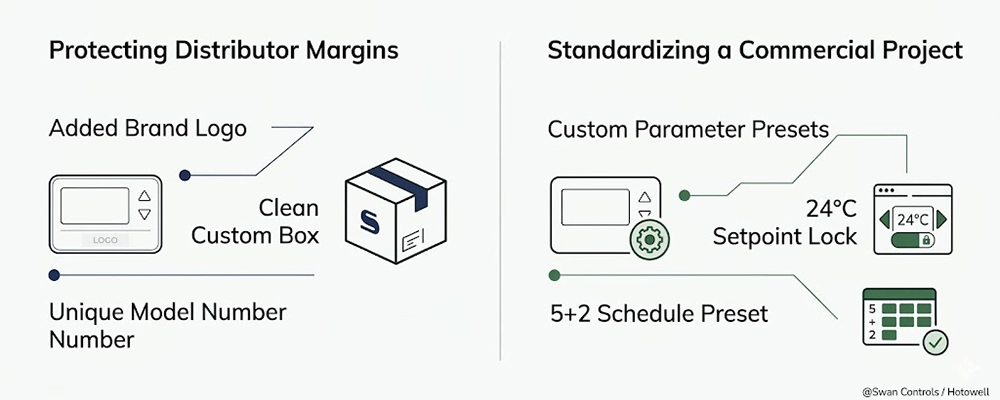
We added their corporate brand logo to the front panel, created a clean custom packaging box, and assigned a unique model number to protect their local pricing. This allowed them to launch a reliable product line in less than two months, completely avoiding technical bugs and establishing a profitable market presence with a very reasonable initial investment.
Case 2: Standardizing a Commercial Construction Project
A mechanical contractor was bidding on a multi-family residential apartment building. The project specifications required a robust programmable thermostat for each apartment, with strict limits on the maximum heating temperature to control utility costs. The contractor was concerned that residents would adjust the settings manually and increase the building’s energy bills.
We solved this problem by applying custom factory-default parameter presets to our standalone programmable thermostat model. Before shipping the order, we locked the maximum heating setpoint at 24°C and pre-configured the local 5+2 comfort schedule directly in the device firmware. The installation team completed the on-site wiring quickly without needing to adjust each device manually. The property management company lowered its heating costs immediately, and the contractor won the project praise for delivering a simple, installer-friendly solution.
Strategic Recommendations for Progressive Sourcing
When you establish a manufacturing relationship with us, we always recommend a step-by-step approach to product customization. This progressive strategy allows you to build a strong brand footprint while keeping your financial risks low and your supply chain predictable.
For your initial order, we suggest focusing on a streamlined customization scope. You can select one of our mature, pre-certified fan coil options and apply your custom logo, technical labels, model numbers, and multi-lingual manuals. This approach ensures that you enter the market quickly with a proven hardware core, allowing you to build customer trust and generate steady cash flow without facing unexpected manufacturing delays.
As your local sales volumes grow and your distribution channels stabilize, we can easily evaluate advanced optional features to keep your brand ahead of the competition. This next phase can introduce custom enclosure colors, specialized factory parameter blocks, or integrated communication networks based on real, documented customer feedback. By growing your product line step-by-step from a stable foundation, you protect your capital and build a resilient business.
If you are preparing a project or OEM order, please feel free to get in touch with us to confirm the suitable model, control logic, wiring requirement, customization scope, and project documents.
Frequently Asked Questions
1. What is the business benefit of an HVAC thermostat OEM project?
The benefit is turning a certified hardware product into a custom line sold under your own brand. Focusing on external branding and unique model codes protects your profit margins without the technical risks of app development.
2. Can we order a programmable thermostat model that upgrades to wireless later?
No, standalone programmable and wireless models use different internal circuit configurations. We recommend choosing your primary hardware configuration based on active project needs before ordering. Contact us to confirm your specific model requirements.
3. How does assigning a custom model number protect my business?
It stops users and competitors from searching that code online to locate our factory page. This simple step protects your local distribution channel, blocks direct price cutting, and helps maintain stable profit margins.
4. Which customization options are best for a first order?
We recommend a focused scope: a clean logo printed on the bezel, clear technical labeling with local safety marks, a customized packaging box, an accurate multi-lingual installation guide, and unique product codes.
5. When should a distributor consider custom enclosure colors?
Consider advanced options once your brand has achieved consistent sales volumes and stable customer reorders that justify the higher minimum order quantities and longer production lead times required for custom material flushes.
References / Regulatory Sources
ASHRAE Handbook: Fundamentals of HVAC Control Systems | American Society of Heating, Refrigerating and Air-Conditioning Engineers | Standard Series
EN 12098 Standard Series: Energy Performance of Buildings — Controls for Heating and Ventilation Systems | European Committee for Standardization | Technical Mandates
EU Ecodesign Framework: Energy Labelling and Efficiency Mandates for Space Heaters and Controls | European Commission | Single Market Documentation
ISO 16484 Series: Building Automation and Control Systems (BACS) Technical Architecture | International Organization for Standardization | Global Engineering Standards
Tuya Developer Platform: Smart Home IoT Protocols, Wireless Module Specifications, and Cloud App Pairing Documentation | Tuya Smart | Reference Library
National Electrical Manufacturers Association: NEMA DC 3-2013 Residential Controls — Electrical Wall-Mounted Thermostats | NEMA Product Guidelines | Industry Consensus
IEC 60730-2-9 Automatic Electrical Controls — Particular Requirements for Temperature Sensing Controls | International Electrotechnical Commission | Safety Certifications
Final Note
A successful Wi-Fi thermostat customization project should begin by matching a robust product with the specific system requirements. After that, the true commercial work centers on optimizing product presentation through logos, clear technical labels, localized manuals, custom boxes, unique model numbers, and high-quality digital sales assets.
For volume distributors, corporate brand owners, and mechanical contractors, this strategic path provides the lowest risk and the fastest time to market. It eliminates unexpected development delays, and delivers a fully branded, high-performance climate control line that the teams can market, install, and scale with confidence.
If you are preparing a project or OEM order, please feel free to get in touch with us to confirm the suitable model, control logic, wiring requirements, customization scope, and project documents.
© 2026 Swan Controls / Hotowell. All rights reserved. Professional HVAC climate controllers manufacturing and global procurement reference documentation.