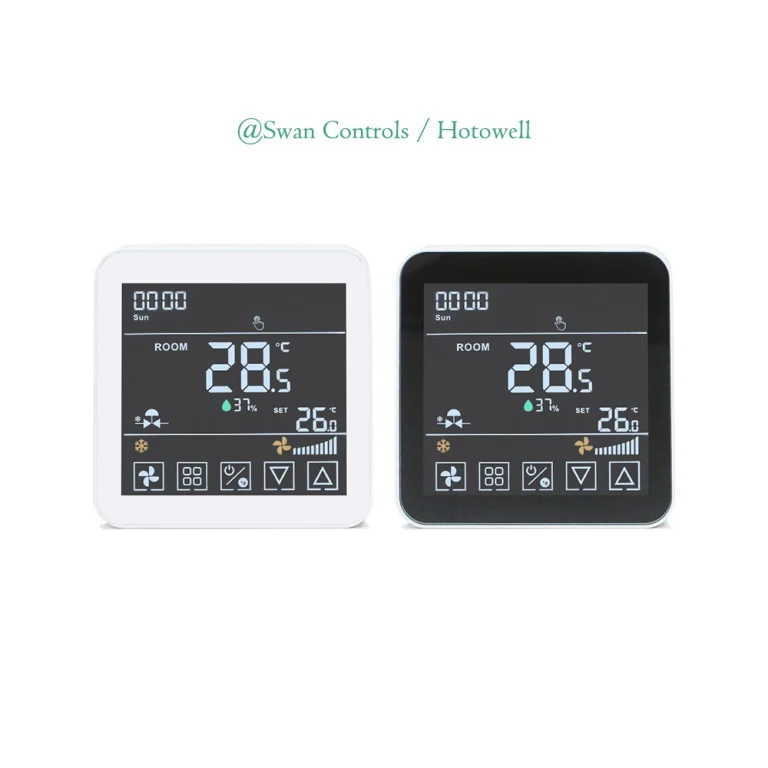
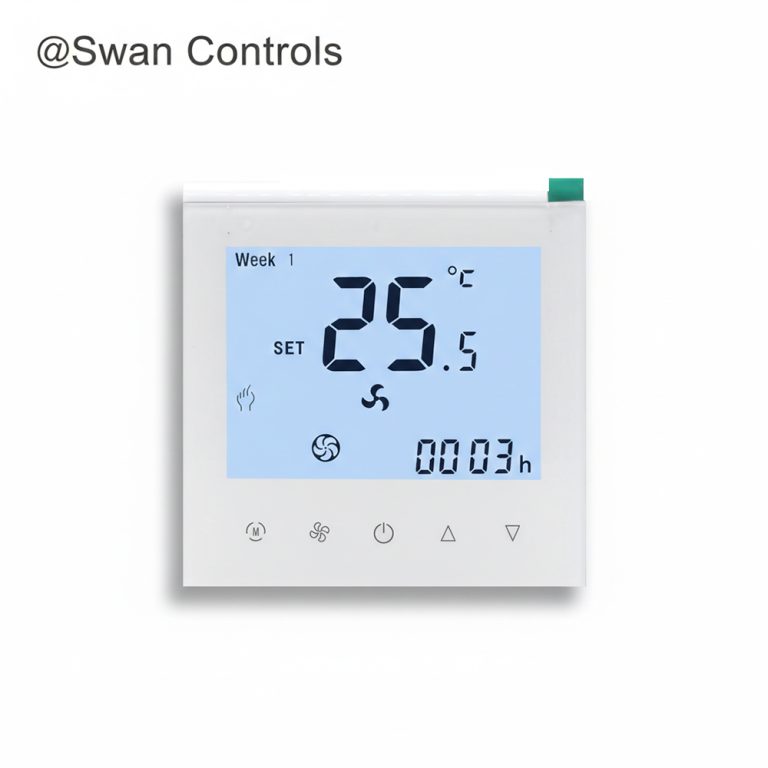
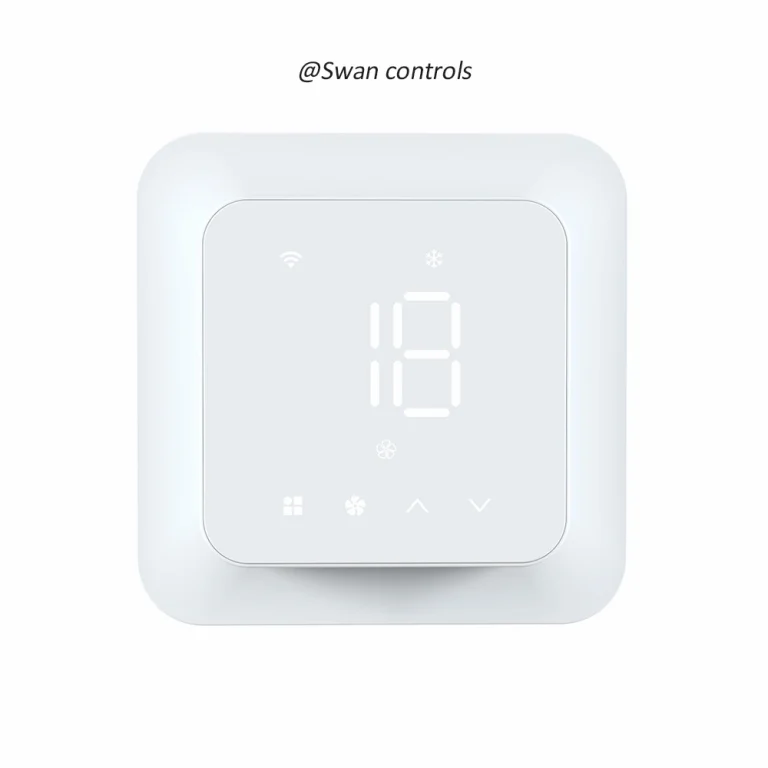
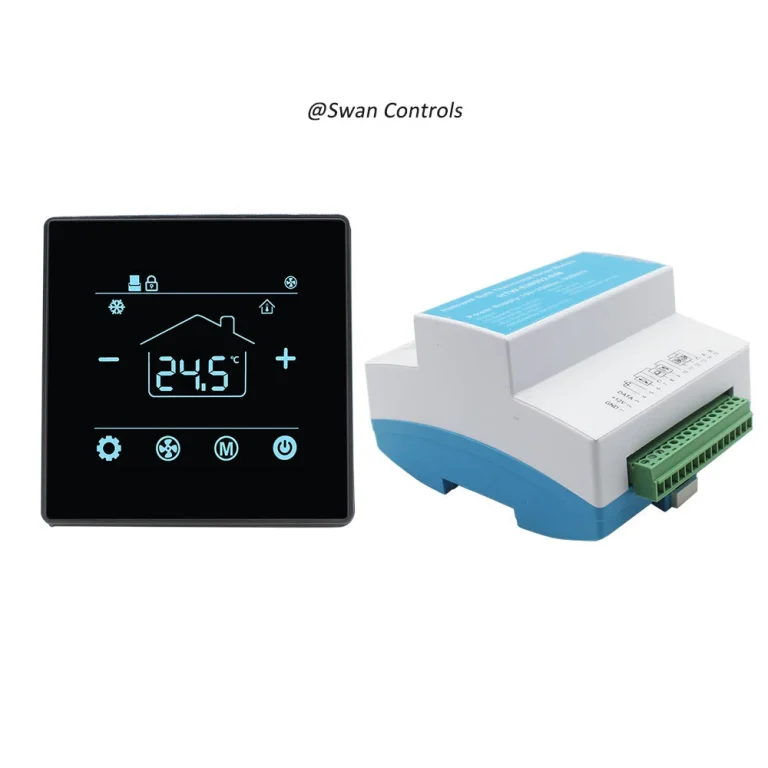
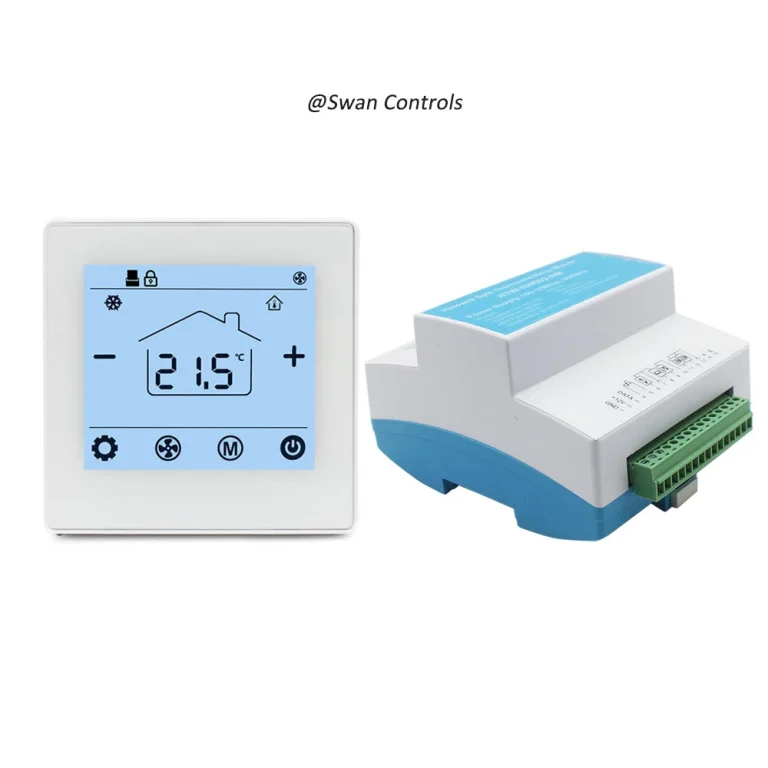
“You only need a thermostat.”
That sounds simple, but in real projects it usually is not.
A homeowner may want easy room comfort and a clean display. A hotel operator may care more about occupancy-based energy saving. A contractor on a fan coil job may need 2-pipe or 4-pipe logic, valve output, or BMS communication. A boiler project may need stable heating control, not just a nice screen. This is why thermostat selection should always start with the application, not the product photo.
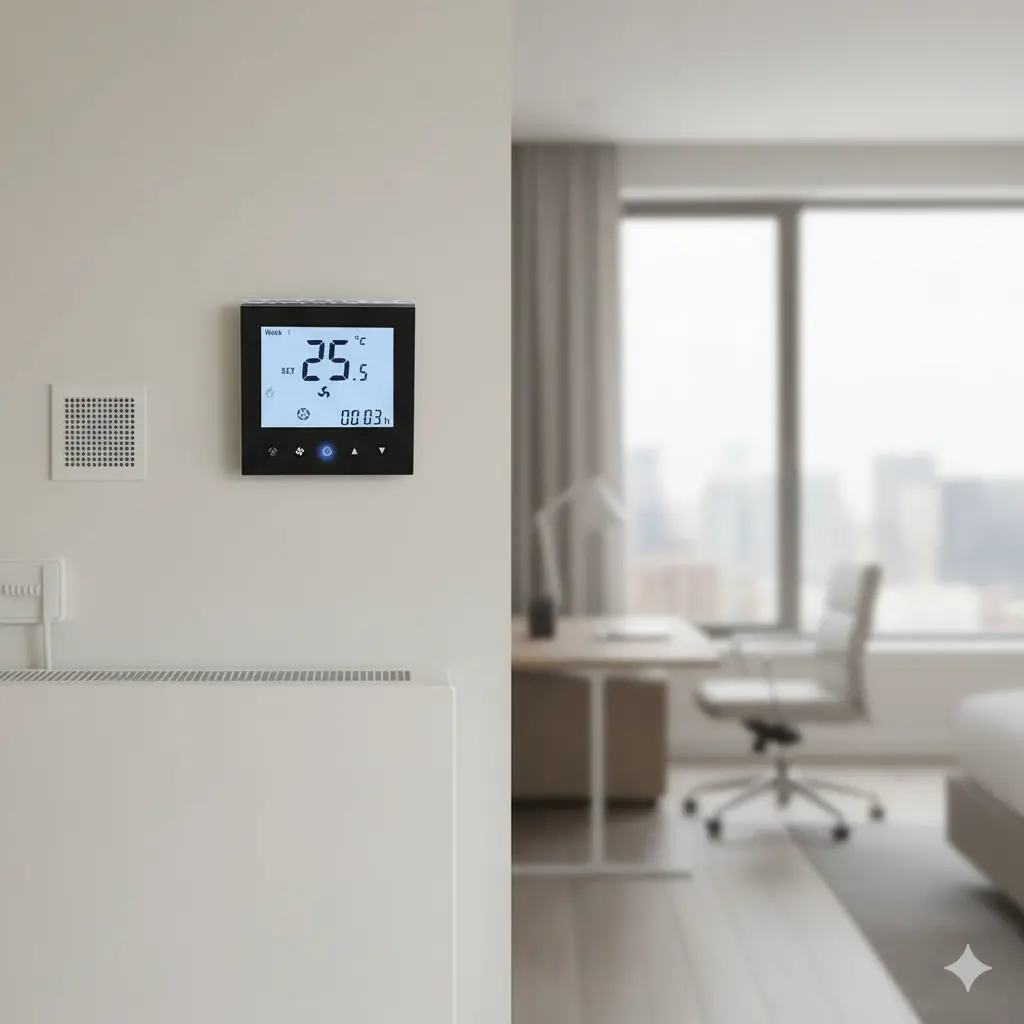
The right thermostat helps match system logic, user behaviour, installation conditions, and energy goals. The wrong one can still power on, but it may create poor comfort, wasted energy, control mismatch, or difficult commissioning. For both residential and commercial projects, thermostat choice is really a control decision. It affects comfort, operation, maintenance, and long-term cost. Official guidance from the U.S. Department of Energy and ENERGY STAR also shows that thermostat strategy can meaningfully affect energy use and heating or cooling bills.
Quick Summary
Choosing the right thermostat starts with the project type, the control method, and the people who will use it. A residential thermostat is usually selected for comfort, simple daily operation, and clear display, while a commercial control unit often needs stronger logic, occupancy strategy, fan coil compatibility, or communication support. The safest buying rule is simple: match the controller to the system and operating goal, not just the appearance.
Why Thermostat Selection Matters More Than Many Buyers Expect
A thermostat is not only a switch. It is the control point between measured temperature and system response. It reads conditions, compares them with the setpoint, and then signals the connected system to heat, cool, stop, or maintain. In simple residential jobs, that may mean keeping one room comfortable. In commercial projects, it may also mean fan control, occupancy mode, valve logic, setback strategy, or building integration.
That is why selection errors are common. A control unit may fit physically on the wall yet still be wrong for the project. It may not support the correct voltage. It may not match the boiler or valve logic. It may not work with 2-pipe or 4-pipe fan coil systems. It may not provide the scheduling, setback, or communication needed for hotels, schools, or office buildings. In other words, choosing the wrong thermostat does not always cause immediate failure. Often it causes inefficient operation, unstable comfort, or poor user experience later.
Start With the Application, Not the Product Style
The fastest way to choose the right thermostat is to ask what kind of project this is.
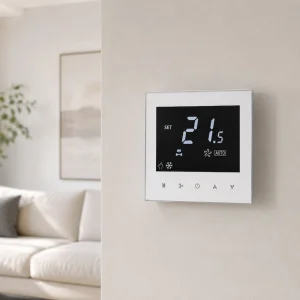
For a house, apartment, or small residential zone, the main goal is usually simple comfort control. Clear display, easy setting adjustment, and reliable temperature response matter most.
For a boiler or water-heating project, stable heating control and output compatibility are more important than decorative design. In that case, a dedicated boiler thermostat or water heating thermostat is often the better path. Relevant product examples include the 220V boiler thermostat, the house thermostat, and the water heating thermostat.
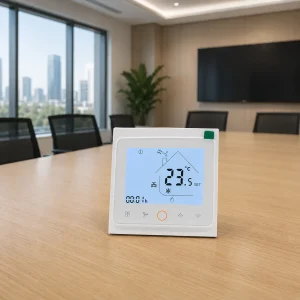
For a hotel, office, school, or fan coil application, the controller may need occupancy logic, 2-pipe or 4-pipe support, fan speed control, or BMS connectivity. Johnson Controls notes that thermostats for 2-pipe and 4-pipe fan coil units commonly provide on/off control, up to three fan speeds, and occupied or unoccupied control in buildings such as schools, offices, and hotels.
For projects that require centralized management or broader system coordination, a Modbus thermostat is often more suitable than a standalone unit. This is where a communication-capable control solution fits naturally.
Commercial vs Residential Thermostat: What Is the Real Difference?
The biggest difference is not simply “home vs office.” The real difference is the control objective.
A residential thermostat is usually selected to make one living space feel comfortable. It focuses on easy daily use, intuitive temperature setting, and stable room comfort.
A commercial thermostat usually has a wider job. It may need to coordinate multiple operating modes, handle more frequent user turnover, support setpoint limitation, control fan coils, work with keycard logic, or communicate with other control systems. ASHRAE’s building standards and guidance repeatedly treat thermostat and control strategy as part of broader HVAC efficiency and building performance, not just room convenience.
Commercial vs Residential Thermostat Comparison
| Comparison Point | Residential Thermostat | Commercial Thermostat |
|---|---|---|
| Main purpose | Room comfort and simple control | System control, energy logic, and operational management |
| Main users | Homeowners, tenants, family members | Guests, staff, operators, facility teams |
| Typical features | Clear display, easy settings, basic scheduling | Occupancy mode, fan control, setpoint limits, communication |
| System types | Boiler heating, floor heating, home HVAC | Fan coil, PTAC, hotel HVAC, multi-zone systems |
| Integration need | Usually standalone | Often linked to BMS, keycard, or control strategy |
| Selection priority | Simplicity and comfort | Compatibility, control logic, and management efficiency |
This is why many “good-looking” home thermostats are still poor choices for commercial projects. They may be too simple for the actual control task.
The 7 Core Questions to Ask Before Choosing a Thermostat
A good thermostat choice usually becomes obvious once the project conditions are clear. These seven questions help buyers avoid most mismatches.
1. What system are you controlling?
This is the first filter. Is the thermostat for a boiler, water heating system, electric heating, DX unit, air-conditioning, or fan coil unit? A controller that works well for one system may be unsuitable for another.
For example, if the project is a simple residential boiler application, a house thermostat or boiler thermostat is often the better fit. If the project uses fan coil units, then fan mode, pipe type, and output logic become much more important. Johnson Controls specifically distinguishes thermostats for 2-pipe or 4-pipe FCU and PTAC applications.
2. Is the project residential or commercial?
For a home, simplicity usually wins. For a commercial space, control features often matter more than minimalism.
If the project is a residence with straightforward daily heating, choose a thermostat designed for comfort and easy use.
If the project is a hotel, office, or multi-room building, choose a control unit that fits operational logic, user turnover, and energy policy.
3. Do you need standalone control or system integration?
A standalone thermostat is often enough for a single residential room or simple heating zone.
A project with central monitoring, BMS, or coordinated control usually needs communication support. In that case, a Modbus thermostat is usually more suitable than a basic standalone model.
ASHRAE guidance on specifying building automation systems also highlights the role of BAS in maintenance optimisation, fault detection, and better building operation. That makes communication-capable controls more relevant in commercial projects than many buyers first expect.
4. Do you need occupancy or setback logic?
This is one of the biggest dividing lines between residential and commercial thermostat selection.
In a home, manual or schedule-based setback may be enough. The U.S. Department of Energy states that setting a thermostat back by 7°–10°F for 8 hours a day can save as much as 10% a year on heating and cooling.
In a hotel or commercial building, occupancy logic becomes more important. Empty rooms should not run at full comfort settings all day. That is why a keycard HVAC thermostat is often the better choice in hospitality projects.
5. How important is energy saving?
Energy saving is often treated as a bonus feature, but in reality it is part of thermostat selection.
ENERGY STAR states that the average certified smart thermostat saves about 8% on heating and cooling bills, or around $50 per year, and homes that are empty for long periods may save around $100 annually.
For a homeowner, that means lower running costs. For hotels or office portfolios, even modest control improvement across many rooms can create a meaningful operating impact.
6. Who will actually use the thermostat?
This question is often ignored.
If the end user is a homeowner, the thermostat should be intuitive and easy to read.
If the end user is a hotel guest, the interface should be simple, but access to advanced parameters may need restriction.
If the end user is a facility operator, communication, mode control, and maintenance clarity may matter more than touch-screen appearance.
ASHRAE Standard 90.1 also includes requirements around setpoint adjustment and display logic, reflecting how user interaction and control clarity matter in real buildings.
7. Does the project need future flexibility?
Some buyers choose the cheapest model that works “for now,” then discover six months later that the project needs BMS integration, scheduling, fan coil reconfiguration, or commercial operating logic.
If future control expansion is even possible, it is often better to select a thermostat with stronger compatibility from the beginning. This is especially true for hotels, office retrofits, and commercial HVAC upgrades.
Types of Thermostats and When to Choose Each One
Room Thermostat
Best for room-level comfort in homes, apartments, and simple zones.
Choose this when the main goal is stable comfort and straightforward local control.
Boiler Thermostat
Best for boiler heating or water-heating control.
Choose this when heating source control and output compatibility matter more than advanced building logic.
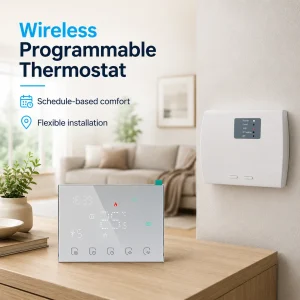
Programmable Thermostat
Best for users with regular daily routines.
Choose this when scheduled setback matters but full networking is not necessary. The U.S. Department of Energy specifically recommends programmable setback strategies for energy savings.
Smart Thermostat
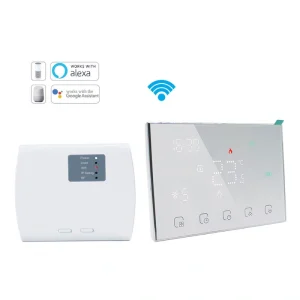
Best for homes that want app control, smarter automation, or better energy visibility.
Choose this when convenience and adaptive energy management are priorities. ENERGY STAR notes that certified smart thermostats are required to meet field-validated savings criteria.
HVAC / Fan Coil Thermostat
Best for FCU, PTAC, and commercial comfort control.
Choose this when fan speed, 2-pipe / 4-pipe configuration, or occupied/unoccupied logic matters.
Modbus Thermostat
Best for building management, central supervision, or networked control.
Choose this when integration and coordinated operation matter more than standalone simplicity.
Keycard Thermostat
Best for hotel guest rooms and serviced apartments.
Choose this when empty-room energy saving is part of the project goal.
A Simple Selection Table for Buyers
| Project Type | Usually Better Choice | Why |
|---|---|---|
| Home room heating | Room thermostat | Easy comfort control |
| Residential boiler system | Boiler thermostat / house thermostat | Better match for heating output |
| Water heating boiler project | Water heating thermostat | Stable heating control logic |
| Smart home comfort upgrade | Smart or programmable thermostat | Better scheduling and savings |
| Hotel guest room | Keycard HVAC thermostat | Occupancy-based energy saving |
| Office fan coil project | HVAC thermostat / FCU thermostat | Fan and mode control |
| Building with BMS | Modbus thermostat | Easier integration and supervision |
Common Mistakes Buyers Make
One common mistake is choosing by appearance first. A clean front panel is nice, but it does not confirm compatibility.
Another mistake is treating all thermostats as general-purpose. They are not. A thermostat for a residential boiler is not automatically suitable for a commercial fan coil project.
A third mistake is ignoring control method. Fan speed outputs, 2-pipe / 4-pipe logic, dry contacts, valve type, and communication needs all matter.
A fourth mistake is overlooking user behaviour. In a hotel, guests do not want a complicated engineering interface. In a building project, operators do not want a thermostat that cannot be monitored or limited.
A fifth mistake is ignoring energy strategy. U.S. Department of Energy and ENERGY STAR sources make clear that better thermostat operation and scheduling can reduce wasted runtime and lower bills.
Expert Insight: What Matters Most in Real Projects
HVAC professionals usually do not judge thermostats by one feature alone. The best thermostat is the one that fits the real operating environment.
In residential projects, the winning combination is usually comfort, easy use, and dependable response.
In commercial projects, the winning combination is usually compatibility, control logic, energy strategy, and operational simplicity.
ASHRAE’s commercial-building framework and BAS guidance reinforce that controls are part of a wider efficiency and maintainability strategy. In practice, this means thermostat choice should support both daily comfort and long-term building performance.
Real Cases and Practical Scenarios
Case 1: Residential Boiler Upgrade
A buyer wanted a simple thermostat for a home heating retrofit. The first instinct was to choose a generic wall thermostat based on looks. But the project required stable boiler switching and practical everyday use, so a house thermostat built for boiler or water-heating applications was a better fit.
Case 2: Hotel Guest Room Energy Management
A hotel wanted to reduce wasted HVAC runtime when rooms were empty. A basic residential thermostat could control temperature, but it could not support the occupancy-linked logic the operator needed. A keycard HVAC thermostat was more suitable because the project goal was not just comfort, but comfort plus energy control.
Case 3: Commercial FCU Project With Integration Needs
A contractor on a commercial fan coil project needed control of fan speeds, room conditions, and future building-system visibility. A standalone residential thermostat would have been too limited. A Modbus thermostat or FCU-focused thermostat gave a more realistic path for the project.
Scientific Data That Supports Better Thermostat Choice
The U.S. Department of Energy says setback control of 7°–10°F for 8 hours a day can save as much as 10% a year on heating and cooling.
ENERGY STAR reports that certified smart thermostats save about 8% on heating and cooling bills on average, around $50 per year, and in homes with long unoccupied periods the savings can reach about $100 annually.
ASHRAE Standard 90.1 remains a benchmark for commercial building energy codes and includes thermostat-related control requirements such as setpoint display and dead-band logic, which shows how important thermostat selection is in commercial efficiency design.
These figures do not mean every thermostat will save the same amount. They do show that thermostat choice and control strategy directly affect building performance.
How to Make the Final Decision
For a residential project, choose the thermostat that best matches the heating or cooling system, is easy for daily use, and supports any needed scheduling or smart control.
For a commercial project, choose the thermostat that matches the control method, user pattern, and management needs. If occupancy, fan coil control, communication, or operating restrictions matter, do not treat it like a simple home thermostat purchase.
A practical rule is this:
If the project is mainly about room comfort, choose for comfort.
If it is mainly about heating control, choose for boiler or water-heating compatibility.
If it is mainly about building operation, choose for control logic and integration.
If it is mainly about hotel energy saving, choose for occupancy-linked management.
FAQ
What is the most important factor when choosing a thermostat?
The most important factor is system compatibility. Before looking at design or price, buyers should confirm what equipment the thermostat will control, how it outputs signals, and whether the project needs standalone control, scheduling, or communication.
Is a residential thermostat suitable for a commercial project?
Sometimes, but often not. Residential thermostats are usually chosen for simple comfort control. Commercial projects often need wider control logic, such as fan speed control, occupancy mode, setpoint limits, or integration with building systems.
Should I choose a smart thermostat or a programmable thermostat?
For homes with regular daily routines, a programmable thermostat is often enough. For users who want app access, adaptive control, or stronger energy management, a smart thermostat is usually the better choice.
When do I need a Modbus thermostat?
A Modbus thermostat is usually the better choice when the project needs centralized monitoring, building-management coordination, or broader control-system integration. It is more relevant in commercial buildings, fan coil projects, and managed properties than in simple single-room residential use.
What type of thermostat is best for a hotel project?
For hotel guest rooms, a keycard HVAC thermostat or other occupancy-based thermostat is often the better choice. It helps reduce unnecessary HVAC runtime in empty rooms while still supporting guest comfort during occupancy.
Expert Commentary & Analysis
The right thermostat for a commercial or residential project is the one that matches the real control task. Residential projects usually need simplicity, comfort, and easy operation. Commercial projects usually need stronger compatibility, better logic, occupancy strategy, or integration support. Start with the system, the user, and the operating goal. That is the safest way to avoid mismatches and choose a thermostat that performs well after installation, not just on paper.
References
- U.S. Department of Energy, “Programmable Thermostats.”
- ENERGY STAR, “Smart Thermostats FAQs for EEPS.”
- ENERGY STAR, “Smart Thermostats Key Product Criteria.”
- ENERGY STAR, “Low- to No-Cost Tips for Saving Energy at Home.”
- U.S. Department of Energy, “Fall and Winter Energy-Saving Tips.”
- U.S. Department of Energy, “Celebrate National Cut Your Energy Costs Day.”
- ASHRAE, “Standard 90.1.”
- ASHRAE, “Energy Standard for Sites and Buildings Except Low-Rise Residential Buildings.”
- ASHRAE, “Specifying Building Automation Systems.”
- Johnson Controls, “FCP Series Thermostats.”
- Johnson Controls, “Thermostats.”
- Johnson Controls, “FCP-NA-701 – Programmable Thermostat – Fan Coil Thermostat.”
- Johnson Controls, “T701DFN-4 / T701DFP-4 Fan Coil Thermostat.”