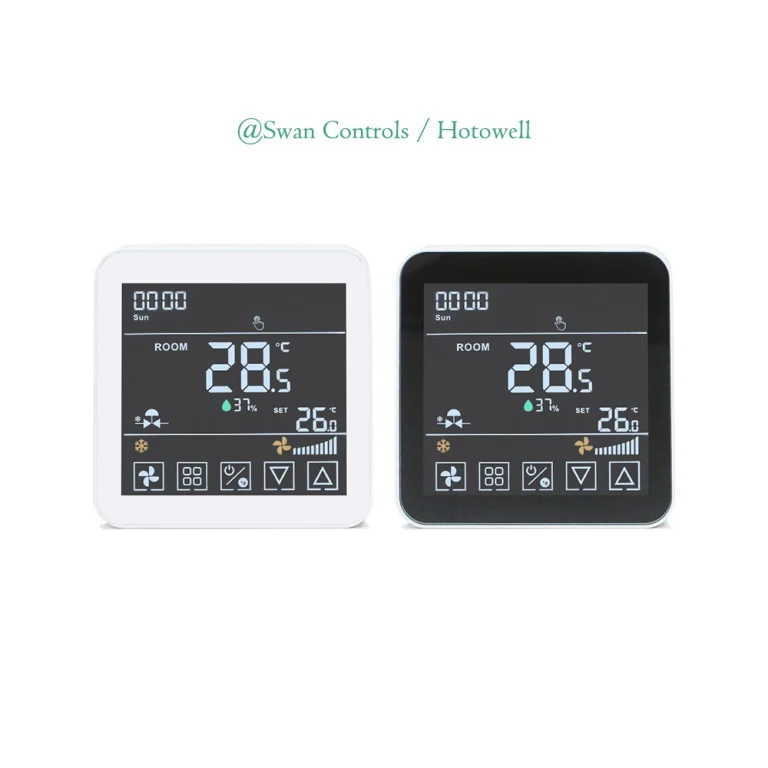
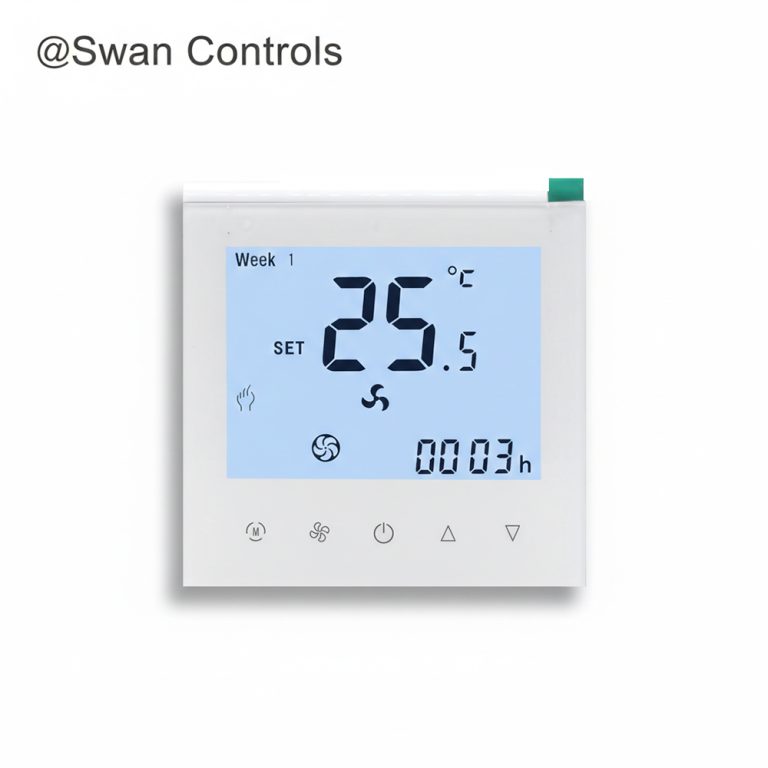
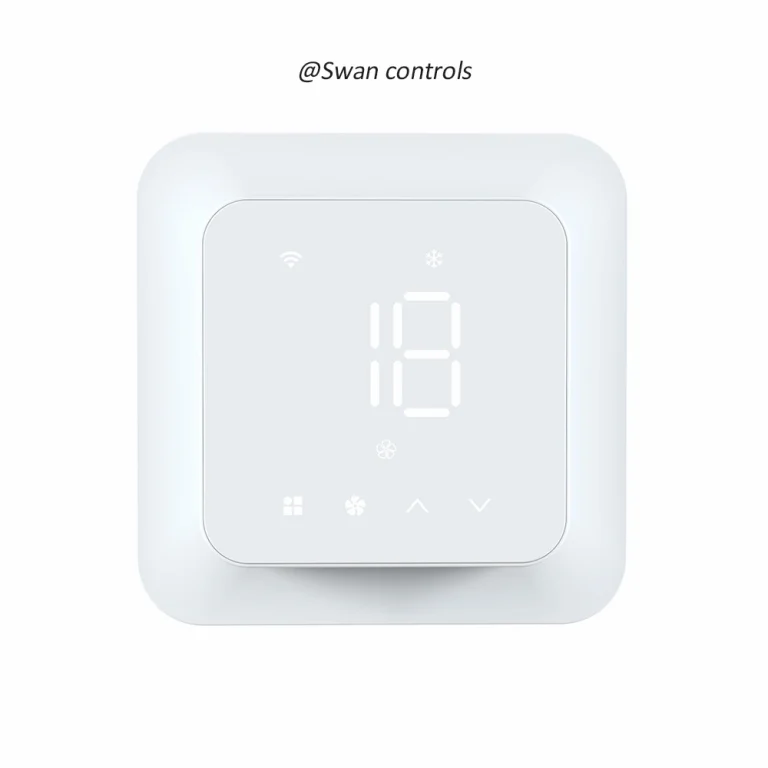
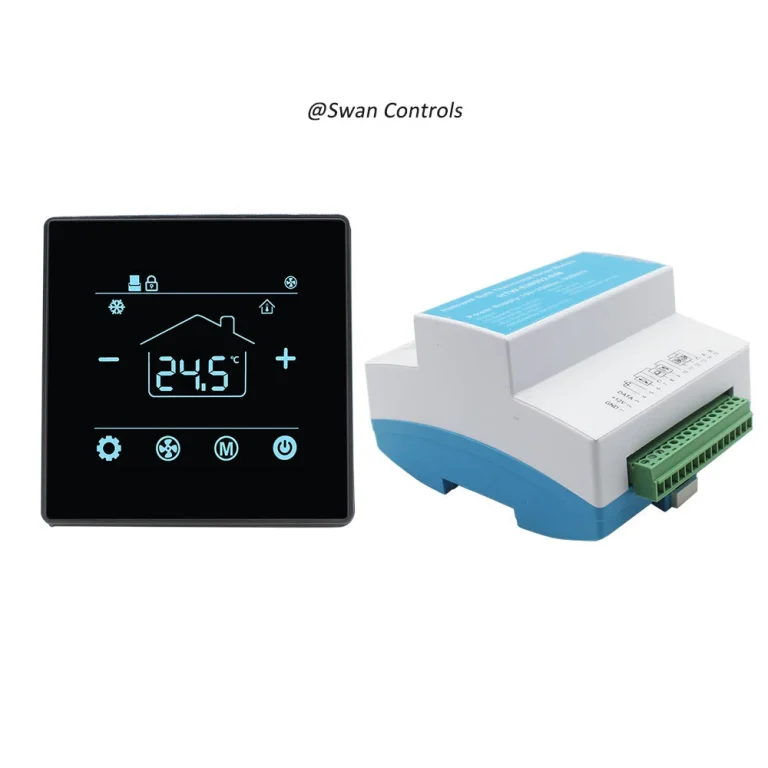
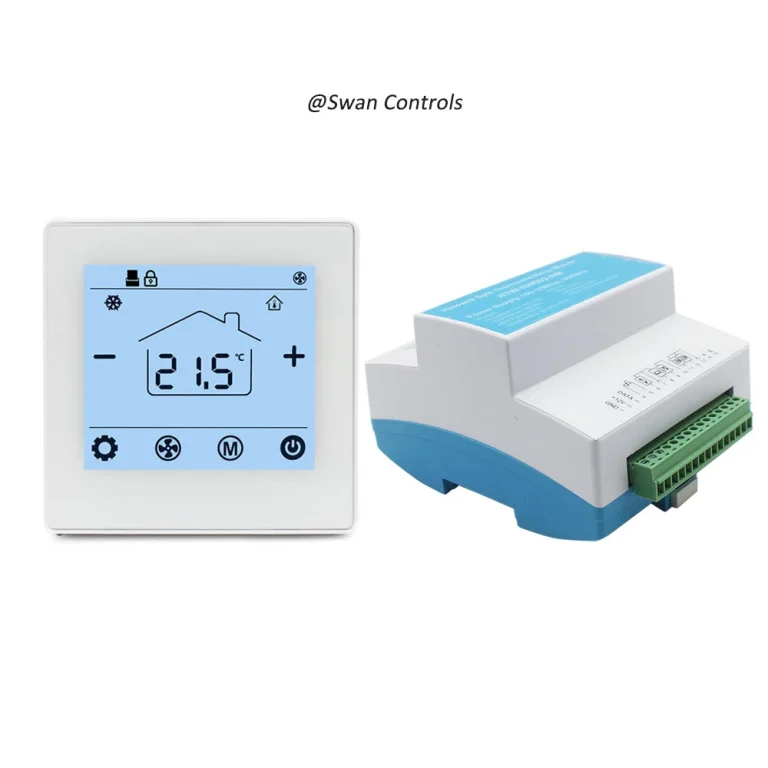
“Why is this room still too warm at night even though the heating system is working?” the hotel engineer asked.
“The boiler may be running fine,” the technician replied, “but the thermostat is the part that decides when the system should start, stop, or hold steady. If the control logic is wrong, the room will never feel right.”
That short exchange explains why the thermostat matters more than many buyers realize. A thermostat is not the machine that creates heat or cooling. It is the control point that senses temperature, compares it with a target setting, and tells connected equipment what to do next. In homes, hotels, boiler systems, and commercial HVAC projects, the right thermostat improves comfort, reduces energy waste, and makes the whole system easier to manage. Thermostats are used to maintain a desired setpoint through closed-loop control, and smart thermostats add scheduling, learning, occupancy-based adjustment, and sometimes remote management.
What Is a Thermostat?
A thermostat is a control device used to keep temperature near a chosen setpoint. It does this by sensing temperature and then switching or regulating connected heating or cooling equipment. In plain English, it is the “decision-maker” between the room condition and the system response. Thermostats are commonly used in central heating, air-conditioning, fan coil units, water heating systems, refrigerators, incubators, and many other temperature-controlled applications.
That distinction matters for buyers. A boiler creates heat. A fan coil distributes conditioned air. A sensor only reads temperature. The thermostat sits in the middle and tells the rest of the system when to act. In many projects, poor comfort complaints are actually thermostat-control problems, not equipment-capacity problems.
Thermostat vs. Sensor vs. Heating Equipment
| Item | Main Function | Typical Example |
|---|---|---|
| Thermostat | Compares temperature with setpoint and sends control action | Room thermostat, HVAC thermostat |
| Temperature sensor | Measures temperature only | Indoor sensor, room probe |
| Heating equipment | Produces or transfers heat | Boiler, electric heater |
| Cooling equipment | Produces or transfers cooling | Air conditioner, fan coil unit |
| Building control system | Coordinates multiple control points | BMS / BAS |
How Does a Thermostat Work?
At its core, a thermostat works through a closed control loop. It senses the current temperature, compares that reading with the target set by the user, and then sends a signal to connected equipment. If the measured temperature is below the target in heating mode, the thermostat tells the system to heat. If the temperature rises above the target, it stops the call for heat. In cooling mode, the logic is reversed. This is the basic control principle behind room thermostats, boiler thermostats, HVAC thermostats, and many smart thermostats.
The Basic Control Sequence
- The thermostat senses the current room or system temperature.
- It compares the reading with the setpoint selected by the user.
- If there is enough difference, it sends a start or stop signal.
- The connected boiler, valve, fan coil, heater, or HVAC unit responds.
- The thermostat keeps repeating this cycle to maintain stable comfort.
Why This Matters in Real Projects
A cheap or poorly matched thermostat may still “work,” but that does not mean it works well. Buyers should care about more than simple on/off switching. Good thermostat performance also depends on sensing accuracy, control stability, readable interface design, output compatibility, fan or valve logic, communication protocol, and application match.
For example, the U.S. Department of Energy notes that programmable thermostats let users adjust heating or cooling according to a preset schedule, while smart thermostats can go further by improving convenience and energy management. ENERGY STAR adds that smart thermostats can learn preferences or adjust settings based on occupancy and indoor/outdoor conditions, rather than relying only on fixed manual programming.
Main Types of Thermostats and Where They Are Used
Not all thermostats are built for the same job. That is where many buyers get into trouble. They search for “thermostat,” buy the first attractive-looking model, and later discover that it does not match the voltage, system type, valve logic, fan coil configuration, or control method required by the project.
Thermostat Types by Application
| Type | Best For | Main Advantage | Typical Environment |
|---|---|---|---|
| Room thermostat | Daily indoor comfort | Simple room temperature control | Homes, apartments |
| Boiler thermostat | Water heating or heating source control | Heating stability | Boiler systems |
| Digital thermostat | Clear interface and basic precision | Easy reading and adjustment | Residential and light commercial |
| Programmable thermostat | Time-based temperature scheduling | Better routine control | Homes, offices |
| Smart thermostat | Learning, app control, occupancy logic | Convenience + energy savings | Residential smart homes |
| HVAC thermostat | Heating/cooling system control | Integrated mode control | Homes, offices, retail |
| Modbus thermostat | Building integration and centralized control | Communication capability | Commercial buildings, hotels |
| Keycard hotel thermostat | Occupancy-linked energy saving | Reduced waste in vacant rooms | Hotels, serviced apartments |
If you are controlling one room for basic comfort, a room thermostat usually makes sense. If you are focused on heating source stability, a boiler thermostat is often the better match. If you need scheduled setbacks, a programmable thermostat is stronger. If you need centralized building logic or communication with other systems, a Modbus thermostat becomes much more practical. And if the project is hospitality-based, a keycard HVAC thermostat is often the smarter energy-saving choice.
Room Thermostat vs. Boiler Thermostat: What Is the Difference?
This is one of the most common buyer questions, and the answer is simple once the control target is clear.
A room thermostat is primarily concerned with how the occupied space feels. It reads room temperature and helps maintain comfort where people actually live, sleep, or work. A boiler thermostat, by contrast, is more directly involved in controlling the heating source or water heating process. Its job is less about how the wall feels in the bedroom and more about whether the heating system is operating steadily and safely.
Room Thermostat vs. Boiler Thermostat
| Comparison Point | Room Thermostat | Boiler Thermostat |
|---|---|---|
| Main control target | Room temperature | Heating source / water heating stability |
| Main purpose | Occupant comfort | Heating system regulation |
| Typical location | Interior wall in occupied zone | Heating system / related control point |
| Best use case | Homes, rooms, zones | Boilers, water heating systems |
| Control focus | Comfort and setpoint response | System output and heating consistency |
In many projects, both can exist at the same time. One manages the heat source. The other manages room-level comfort. Buyers who mix up these functions often end up with unstable performance, user complaints, or avoidable installation adjustments.
For readers comparing actual products, your internal product flow can naturally point to a 220V boiler thermostat, a house thermostat , and a water heating thermostat .
Mechanical, Digital, Programmable, and Smart Thermostats
Mechanical thermostats are the old-school workhorses. They are simple, familiar, and often cost-effective, but they usually offer less precision, fewer settings, and limited user feedback.
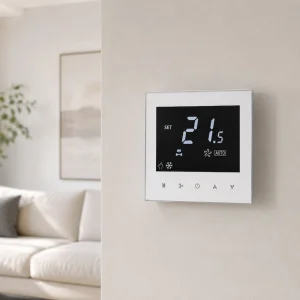
Digital thermostats improve readability and setpoint control. They are easier to adjust, easier to understand, and more suitable for projects where interface clarity matters.
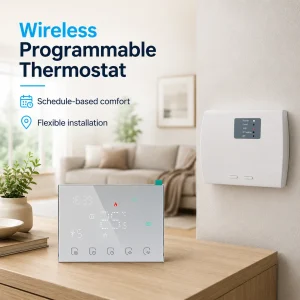
Programmable thermostats add schedule-based control. According to the U.S. Department of Energy, they allow users to preset multiple daily temperature settings that repeat automatically. That can reduce unnecessary operation when the space is empty or when users are sleeping.
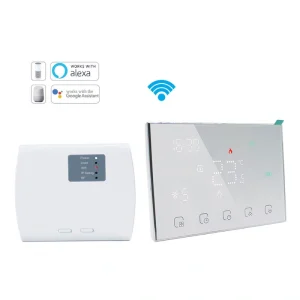
Smart thermostats go a step further. ENERGY STAR states that many smart thermostats learn user preferences, build schedules automatically, and adjust to energy-saving temperatures when users are asleep or away. Geofencing and occupancy-aware logic are also now common in the category. Google Nest similarly describes learning schedule behavior based on user adjustments, while ecobee highlights occupancy sensing and balancing comfort in important rooms.
That means smart thermostat value is not just “remote control from a phone.” The real value is adaptive operation, less manual correction, and better use of runtime when nobody is there.
Why Thermostats Matter for Energy Efficiency
A thermostat affects far more than comfort. It also affects how often equipment cycles, how long systems run, and how much energy is wasted during unoccupied hours.
The U.S. Department of Energy says users can save as much as 10% a year on heating and cooling by setting the thermostat back 7°–10°F for 8 hours a day from its normal setting. ENERGY STAR reports that the average certified smart thermostat saves about 8% of heating and cooling bills, or roughly $50 per year, and homes that are unoccupied much of the day may save around $100 annually.
That matters even more in larger building portfolios. The IEA notes that buildings equipped with digital technologies for demand-side response, such as smart thermostats, can interact with the grid and help limit costly spikes in energy demand. The IEA also reports that digital tools, including smart thermostats and smart lighting, can reduce building energy use by around 10% by using real-time data to improve operational efficiency.
So when buyers ask whether a thermostat is “just a wall switch,” the honest answer is no. In a well-designed system, it is one of the easiest control points to improve comfort, reduce waste, and support smarter building operation.
Common Applications of Thermostats in Real Projects
Residential Heating and Daily Comfort
In homes and apartments, the thermostat is mostly about keeping the living environment stable and comfortable. A room thermostat or house thermostat is often enough when the goal is straightforward heating control with easy daily adjustment. This is where house thermostat fits naturally.
Boiler and Water Heating Systems
Where heating stability is tied to a boiler or a water-based heating setup, a boiler thermostat or thermostat for water heating boiler becomes more relevant. These projects require stable response and reliable switching logic. Your internal product matches here include /products/220v-boiler-thermostat-with-modbus-compact-design/ and /products/3a-water-heating-thermostat-boiler-system-attractive-design/.
Commercial HVAC and Fan Coil Units
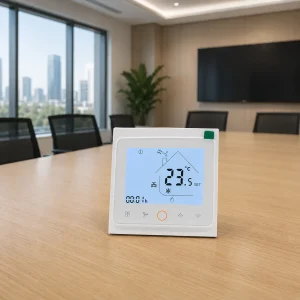
For commercial spaces and fan coil applications, buyers must pay attention to control logic, pipe configuration, and fan modes. Johnson Controls notes that thermostats are commonly used to control 2-pipe or 4-pipe fan coil units, with support for mode, fan control, setpoints, and occupied/unoccupied logic in building types such as schools, offices, and hotels.
This is where a HVAC thermostat or 2 pipe 4 pipe thermostat becomes a more accurate search term than a generic thermostat.
Hotel Guest Rooms and Occupancy-Based Energy Saving
Hotels have a very different operating logic. Comfort still matters, but empty-room energy waste matters too. When thermostat logic is linked to room occupancy or keycard systems, operators can reduce unnecessary HVAC runtime while keeping guest experience manageable. Studies on hotel green retrofits include guest-room keycard strategies among measures used to improve energy performance.
That makes /products/keycard-hvac-thermostat-2-pipe-4-pipe-practical-for-hotel-clear-reading/ a strong internal destination for hospitality-focused readers.
Building Management and Modbus Integration
Some projects require more than local comfort control. They need networked control, centralized adjustment, or building-management integration. ASHRAE’s guidance on building automation system specifications covers direct digital control for HVAC applications and integration of other building systems into BAS workflows. Modbus RTU is also widely used in building automation environments.
That is where a Modbus thermostat is no longer optional decoration. It becomes part of the project architecture. Your internal product page /products/24vdc-output-picv-thermostat-with-modbus-keycard-energy-saving/ fits this path well.
Expert Insight: What Buyers Often Overlook
Professionals in HVAC and building control generally do not judge thermostat value by appearance alone. The real questions are more technical and more commercial.
First, is the thermostat compatible with the connected equipment? A beautiful screen means very little if the output logic does not match the valve, fan coil, or boiler setup.
Second, does the control type fit the building? A simple household-style thermostat might be fine for one room, but weak for a hotel floor, a fan coil system, or a building automation project.
Third, is the thermostat easy enough for the actual end user? In practice, many complaints come from interfaces that are confusing, unclear, or too easy to misconfigure.
Fourth, can the control strategy reduce waste during unoccupied hours? That is where programmable, smart, keycard, and Modbus-linked options become more valuable.
ASHRAE standards and guidance consistently frame HVAC controls within broader goals of efficiency, comfort, and building-system coordination, not just single-point temperature switching.
Scientific Data and Practical Guidance
Scientific and official guidance also shows that thermostat placement and operation matter.
The U.S. Department of Energy warns against placing lamps or televisions near a room air-conditioning thermostat because heat from those appliances can cause the air conditioner to run longer than necessary. That sounds small, but it reveals an important truth: thermostat performance depends on real installation conditions, not just product specs.
The Department of Energy also explains that some heating devices use low-voltage thermostats while others use line-voltage thermostats, and those differences affect how the thermostat interacts with the equipment. In short, thermostat selection is never just about temperature range. It is also about control architecture.
Real Cases and User-Oriented Scenarios
Case 1: Apartment Heating With Better Daily Comfort
A property manager complained that residents were constantly adjusting temperature because some rooms felt hot in the evening and cool in the morning. The heating source itself was not failing. The real issue was inconsistent room-level control and oversimplified manual adjustment. In this case, a clearer house thermostat for water heating applications helped create more stable comfort and reduced constant user intervention. A relevant internal path here is /products/house-thermostat-for-3a-water-heating-boiler-heating-steady-performance/.
Case 2: Boiler Stability in a Water Heating Project
In a water-based heating setup, the client focused first on boiler capacity. But after installation, the operating issue turned out to be switching stability rather than heat generation. A better-matched boiler thermostat improved control consistency and made system response more predictable. This is the type of project where is the more logical next step.
Case 3: Hotel Energy Saving With Occupancy Logic
A hospitality operator wanted to reduce unnecessary HVAC runtime in unoccupied guest rooms without making the user experience feel awkward. A keycard HVAC thermostat offered a better fit than a generic residential thermostat because it matched hotel behavior, not just temperature control. This is exactly the use case for /products/keycard-hvac-thermostat-2-pipe-4-pipe-practical-for-hotel-clear-reading/.
Case 4: Commercial Integration With Modbus
A building contractor needed thermostat control that could support broader building-management logic rather than only local wall-level control. A Modbus thermostat provided a stronger path because the thermostat was part of the control system, not an isolated device. That is the logic behind /products/24vdc-output-picv-thermostat-with-modbus-keycard-energy-saving/.
How to Choose the Right Thermostat
Buyers usually make better decisions when they stop asking “Which thermostat is popular?” and start asking “Which thermostat fits my system?”
1. Define the application first
Is this for a single room, a boiler system, a hotel, a fan coil unit, or a centralized building project? If the application is unclear, the product choice will usually be wrong.
2. Check voltage and output logic
A thermostat must match the system’s control method. This includes voltage, relay logic, valve compatibility, fan speed control, and whether communication is needed.
3. Decide whether scheduling matters
If the building has regular occupied and unoccupied hours, a programmable thermostat or smart thermostat can make much more sense than a basic manual model.
4. Consider user experience
A thermostat can be technically correct and still fail in real use if guests, residents, or staff cannot read it clearly or adjust it easily.
5. Think about integration
If the project needs building-management compatibility, remote logic, or occupancy-linked behavior, a Modbus thermostat or keycard thermostat may be the correct commercial choice.
6. Match the thermostat to the real business outcome
If the goal is comfort, choose for comfort. If the goal is boiler stability, choose for heating control. If the goal is hotel energy saving, choose for occupancy-linked operation. If the goal is centralized management, choose for communication and system integration.
Common Buyer Mistakes and Their Consequences
One common mistake is confusing a thermostat with a sensor. That leads to under-specified projects and installation frustration.
Another is choosing based only on appearance or price. A low-cost model can become expensive very quickly if it causes poor compatibility, user complaints, or repeated replacement.
A third mistake is using a residential-style thermostat in a commercial or hotel application. That often creates control gaps, weak integration, or unnecessary energy waste.
A fourth mistake is ignoring 2-pipe / 4-pipe fan coil requirements. Johnson Controls specifically describes thermostat models designed for those different control environments, which shows how application-specific this category really is.
A fifth mistake is forgetting communication needs. If the project eventually needs BMS or BAS coordination, buying a standalone thermostat with no appropriate protocol can create redesign work later.
FAQ
1. What does a thermostat actually do?
A thermostat senses temperature, compares that reading with a chosen setpoint, and tells connected heating or cooling equipment when to start, stop, or hold. It does not generate heat or cooling by itself. Its job is to control the system so the temperature stays near the target.
2. Does a thermostat control heating, cooling, or both?
That depends on the thermostat and the connected system. Some thermostats are designed only for heating, such as certain boiler or water-heating applications. Others are built for both heating and cooling, especially in HVAC and fan coil systems. Buyers should always check application compatibility before choosing a model.
3. What is the difference between a room thermostat and a smart thermostat?
A room thermostat refers mainly to where and how the device controls comfort in an occupied space. A smart thermostat is a feature category. It may still be a room thermostat, but it adds capabilities such as scheduling, learning user behavior, occupancy-based adjustment, or app control.
4. Can a thermostat really help reduce energy bills?
Yes. Official guidance from the U.S. Department of Energy and ENERGY STAR shows that better thermostat control, setback scheduling, and smart operation can reduce wasted heating and cooling runtime. The savings depend on climate, occupancy, and equipment, but thermostat strategy can absolutely affect energy bills.
5. How do I choose the right thermostat for a boiler or hotel HVAC system?
Start with the application. For boiler and water-heating systems, prioritize stable heating control and compatibility with the heating setup. For hotel HVAC projects, look for occupancy-aware or keycard-linked logic, clear display, and, where needed, support for 2-pipe / 4-pipe fan coil control or communication features such as Modbus.
Final Note / Practical Takeaway
References
- U.S. Department of Energy, “Programmable Thermostats,”
- ENERGY STAR, “Smart Thermostats FAQs for EEPS,”
- ENERGY STAR, “Smart Thermostats,”
- International Energy Agency, “Buildings – Energy System,”
- International Energy Agency, “Digitalization Set to Transform Global Energy System,”
- U.S. Department of Energy, “Spring and Summer Energy-Saving Tips,”
- U.S. Department of Energy, “Electric Resistance Heating,”
- Johnson Controls, “FCP Series Thermostats,”
- Johnson Controls, “Thermostats,”
- ASHRAE, “Titles, Purposes, and Scopes,”
- Google Nest Help, “Use Smart Schedule on your Nest Learning Thermostat,”
- ecobee, “Remote Occupancy and Temperature Sensor,”
- Wikipedia contributors, “Thermostat”
- Elsevier / ScienceDirect, E. Periyannan et al., “Assessment of costs and benefits of green retrofit …,”