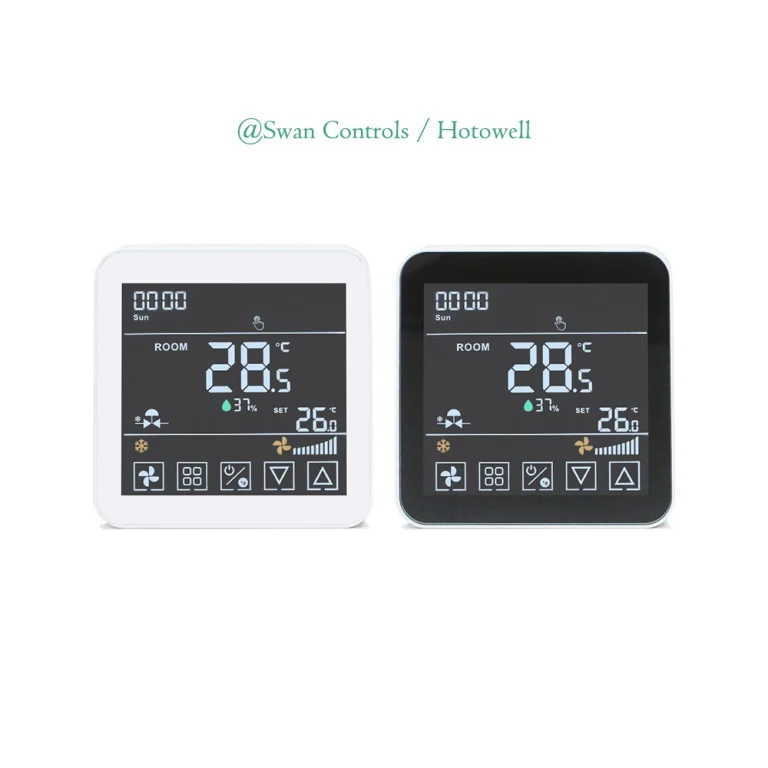
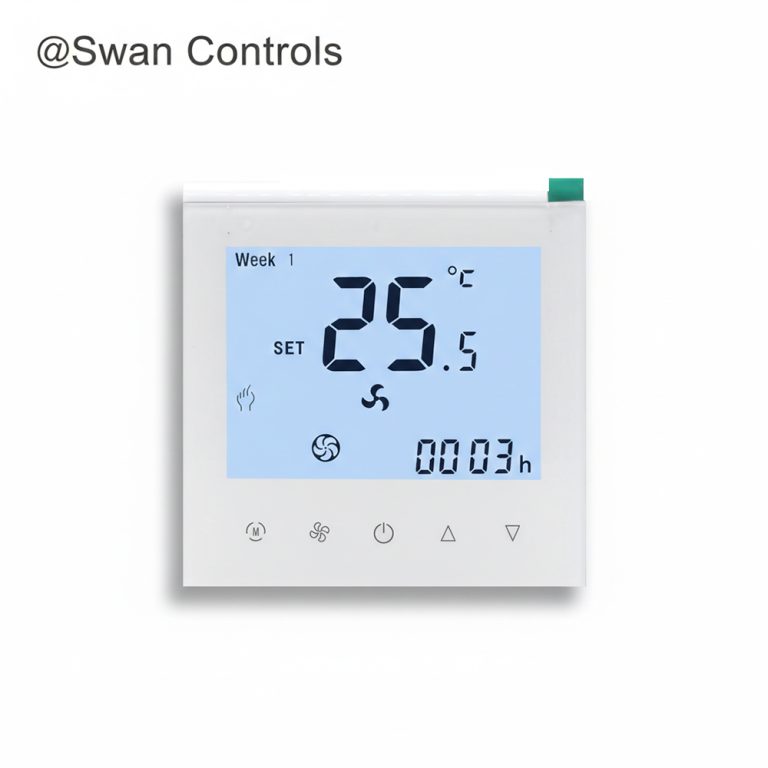
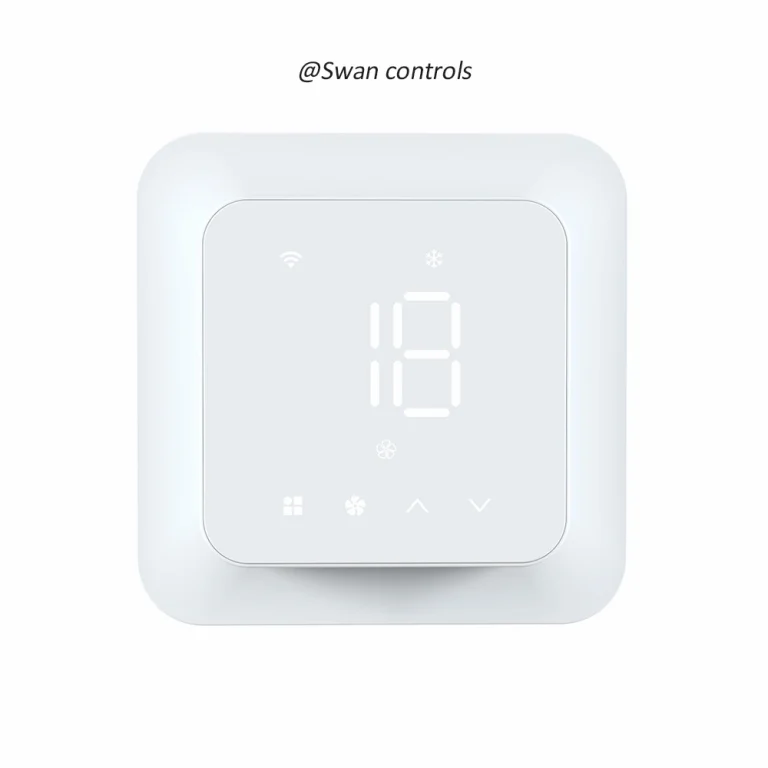
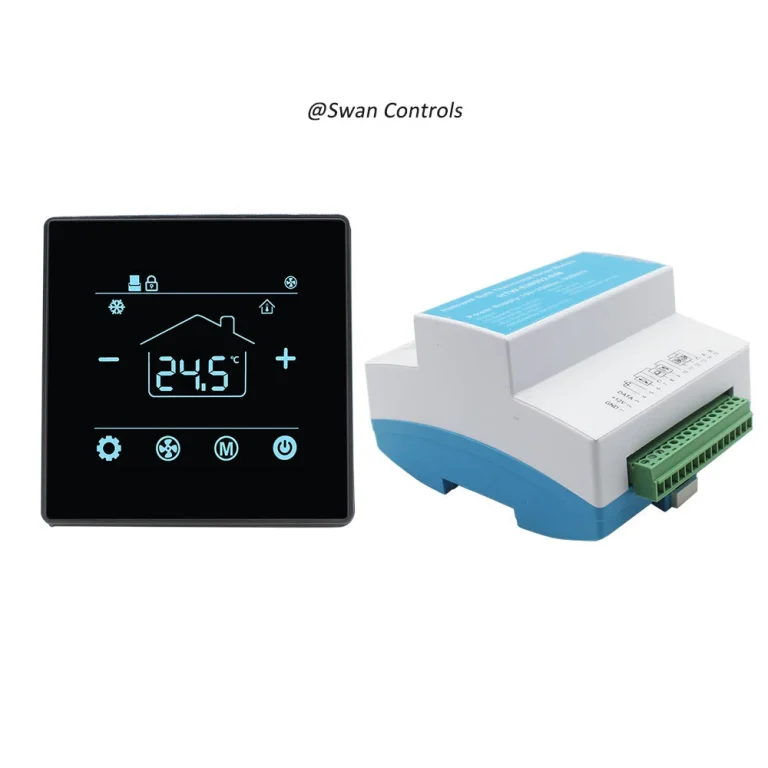
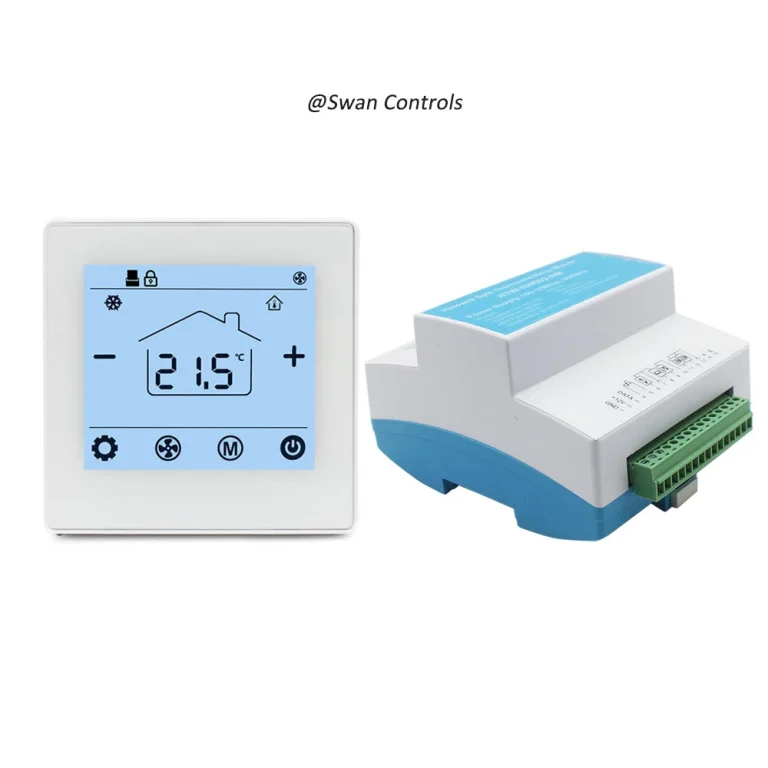
Choosing a thermostat should not start with the screen design or app interface. It should start with the real system, the control method, the project scale, and the market requirement. That is where many buyers make expensive mistakes.
This guide is written to help buyers make a safer decision. It explains where Zigbee makes sense, where it does not, which risks are easy to miss, and how to choose the right thermostat manufacturer, supplier, or factory for OEM, wholesale, or project purchasing.
Introduction — Why More Buyers Are Looking at Zigbee Thermostats
The demand for connected room control is growing because buyers now expect more than basic temperature adjustment. They want stable control, easier scheduling, lower energy waste, and better management across homes, apartments, hotels, and commercial spaces.
A standard digital thermostat can still work well in simple installations. A smart thermostat adds app control and convenience. A programmable smart thermostat adds time-based automation. Zigbee brings another advantage: it usually performs better in projects where many devices need to work together reliably.
For a small home with one or two rooms, a WiFi model is often enough. For projects with more rooms, more devices, or future expansion plans, Zigbee is often the more practical option.
That is why more buyers now search not only for a general thermostat, but also for terms like smart thermostat manufacturer, underfloor heating thermostat supplier, gas boiler thermostat factory, and smart fan coil thermostat wholesale.
What Is a Zigbee Thermostat — And When Does It Make Sense?
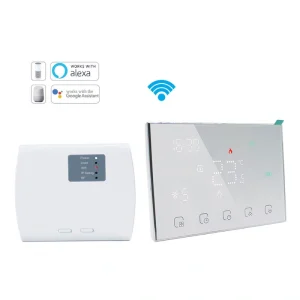
A Zigbee thermostat communicates through a gateway and works as part of a wider device network. In practical use, this means the thermostat is not trying to operate as a completely isolated unit. Instead, it becomes part of a more stable control structure for multiple connected devices.
From a buyer’s perspective, the technical definition matters less than the real result. Zigbee is attractive because it can reduce network pressure, improve stability in multi-room use, and support easier expansion later.
For a single-room installation, a direct WiFi thermostat may be simpler and fully sufficient. For larger homes, apartment projects, hotel rooms, and other multi-zone applications, Zigbee is usually more suitable because the control system is easier to scale.
For buildings that require direct BMS communication, Zigbee may not be the final answer. In those cases, Modbus or BACnet models are often the better fit.
The better choice depends on the system type, the communication requirement, and the scale of the project.
Buyer Pain Points Before Choosing a Zigbee Thermostat
Many buyers do not begin with a clear model number. They begin with a project problem.
Some need to reduce energy waste in hotel rooms. Some need a more stable alternative to basic WiFi control. Some want one thermostat platform that can work across apartments, villas, or fan coil rooms without creating too many SKUs. Others need a thermostat that looks suitable for the market but also reduces complaint risk after installation.
This is where many product pages fall short. They list features, but they do not help buyers decide.
A thermostat may look modern online but still be wrong for the actual control method. A supplier may offer a low price but give weak technical support. A buyer may choose Zigbee because it sounds more advanced, then realise too late that the real issue was dry contact compatibility, voltage matching, or sensor logic.
For distributors and wholesalers, the pain point is different. The main concern is not whether the thermostat looks premium in a photo. It is whether the product can be sold repeatedly with stable quality, clear documents, and low return risk.
That is why professional buyers increasingly compare thermostat manufacturer, thermostat supplier, and thermostat factory options based on matching support, not only on first price.
Real Application Scenarios
Hotel Energy Saving with a Smart Fan Coil Thermostat
In hotel projects, room control is not only about comfort. It is also about reducing unnecessary operation in empty rooms.
In projects where the thermostat needs to drive a valve actuator directly, a Zigbee thermostat with 24V output can help simplify control logic and improve installation matching.
A Zigbee-based smart fan coil thermostat can help support a more connected room control strategy, especially when the project includes occupancy logic, keycard input, or central room supervision. When a guest leaves the room, the thermostat can move the system into a lower-energy mode instead of keeping full cooling or heating active.
For hotel retrofits and multi-room accommodation projects, Zigbee often makes more sense than isolated standalone thermostats because it is easier to manage many rooms together. In these cases, stability and easier central control are usually more important than having the simplest possible setup.
Residential Underfloor Heating Control
An underfloor heating thermostat needs to be selected more carefully than many buyers expect. The wrong thermostat may still power on, but that does not mean it is the right product for the floor system.
For residential floor heating, especially under wood or other sensitive finishes, buyers should pay close attention to floor sensor support, temperature limit function, and switching accuracy. A thermostat with suitable sensor logic helps reduce overheating risk and supports more stable comfort.
For these applications, a model with external sensor support is usually more suitable than a simple air-sensing-only thermostat. If floor protection matters, control logic should come before appearance.
Gas Boiler Smart Control
A gas boiler thermostat often uses dry contact control. This is one of the most common areas where buyers make mistakes because the thermostat category looks similar on the surface, but the output logic can be very different.
For gas boiler systems, the key question is not whether the thermostat is Zigbee or WiFi first. The first question is whether the output matches the boiler requirement. Once that point is clear, Zigbee can be a useful upgrade for app control, scheduling, and easier day-to-day management.
For boiler applications, a dry-contact model is usually the right starting point. Communication choice comes after control compatibility is confirmed.
Technical Specifications That Actually Matter
Many thermostat pages show many parameters, but buyers usually need only a few of them to make the right decision.
Key Parameters Table
| Parameter | Typical Value |
|---|---|
| Temperature Accuracy | ±0.5°C |
| Setpoint Range | 5–35°C |
| Power Supply | 95–240VAC / 24VAC |
| Communication | Zigbee 3.0 |
| Relay Capacity | 3A / 5A / 16A |
| Sensor Type | NTC 10K (3950) |
These numbers are helpful only when they are matched to the real application.
What Buyers Often Ignore
Voltage mismatch
A thermostat designed for 24VAC is not the same as one designed for 95–240VAC. Confusing them can create installation failure or equipment damage.
System mismatch
A thermostat for electric floor heating is different from a thermostat for hydronic heating. A thermostat for 2-pipe fan coil use is different from one for 4-pipe use.
Output mismatch
An on/off relay output is not the same as a 0–10V modulating signal. Many buyers find this out only after installation planning begins.
Protocol mismatch
A Zigbee smart thermostat is not automatically a Modbus thermostat. It is also not automatically suitable for direct BMS integration.
If the voltage, output, or system type is still uncertain, it is better to confirm the wiring logic first. That usually saves more time than comparing app functions at the beginning.
Hidden Risks That Cost More Than the Unit Price
The visible product price is only one part of the buying cost. In real projects, the larger cost often comes from mismatch and delay.
A thermostat with the wrong voltage may require rewiring. A model with the wrong relay logic may fail to control the real heating source. A Zigbee product selected without gateway planning may lead to grouping problems, unstable deployment, or more support time on site.
In wholesale business, inconsistent firmware or unclear version control can create repeat-order problems that are harder to solve than a slightly higher first price. A model that looks acceptable in a sample may create trouble later if the supplier cannot maintain stable software, components, or packaging standards.
There is also compliance risk. If the target market needs CE, RoHS, FCC, or related documents, missing paperwork can delay customs clearance and affect project approval.
For project buyers, a cheap thermostat without proper documents is often more expensive in the end.
The better question is not “Which thermostat is cheaper?” It is “Which thermostat is less likely to create installation, compliance, and after-sales problems?”
Comparison — Zigbee vs WiFi vs Modbus Thermostat
Side-by-Side Comparison
| Type | Best For | Advantages | Limitations |
|---|---|---|---|
| Zigbee Thermostat | Multi-room projects | Stable, scalable, lower wireless load | Needs gateway |
| WiFi Thermostat | Simple residential use | Easy setup, direct app link | Less ideal for many devices |
| Modbus Thermostat | BMS and technical projects | Deeper control and integration | More complex installation |
How to Think About the Choice
For a single flat or a simple home setup, a WiFi digital thermostat is often enough.
For projects that need stable control across multiple rooms, a Zigbee smart thermostat is usually the better fit.
For buildings that require direct BMS communication, Modbus or BACnet models are normally more suitable.
The right option depends on project size, communication requirement, and control depth. Buyers usually get better results when they think about real use conditions first and product category second.
Materials & Build Quality — What Defines a Reliable Thermostat
A reliable thermostat is not defined by a glossy front panel alone. Build quality affects lifecycle, failure rate, and long-term project support.
Housing and Component Quality
Many dependable thermostat products use engineering plastics such as:
- ABS
- PC
- ABS+PC blends
For practical purposes, buyers usually care about durability, heat resistance, and safe long-term operation. In more demanding projects, flame-retardant housing performance may also matter.
Screen type is another practical consideration:
- LED: simple and cost-effective
- LCD: balanced for common use
- TFT: more visual and premium
For consumer retail, screen style may influence first impression. For B2B buyers, relay life, communication stability, and supply consistency usually matter more.
Durability Data Buyers Should Care About
| Item | Typical Value |
|---|---|
| Button lifecycle | 100,000+ presses |
| Relay cycles | 1,000,000+ |
| Operating temperature | 0–50°C |
For commercial projects, durability is often a better buying standard than visual novelty.
Common Buying Misconceptions
Some mistakes happen because the product description is unclear. Others happen because the buying logic starts in the wrong place.
Misconception 1: Smart means compatible.
A smart thermostat may support app control, but that does not mean it supports the real boiler, valve, fan coil, or floor sensor logic.
Misconception 2: Zigbee is always the better option.
Zigbee is often more suitable for multi-room or scalable projects, but it may be unnecessary for a small single-room installation.
Misconception 3: The screen is the main buying factor.
For project buyers, communication stability, relay life, certification, and supply consistency are often more important than display style.
Misconception 4: The lowest quote is the best offer.
A lower ex-works price can turn into a higher total project cost if the supplier cannot support matching, samples, OEM details, or stable repeat supply.
This is why experienced buyers do not choose by product photo alone. They usually choose by application fit, risk control, and long-term supply value.
Industry Trends — Where the Thermostat Market Is Moving
The thermostat market is changing because buyers now expect more than local temperature control. They want scheduling, app access, room-by-room control, energy-saving support, and easier system visibility.
At the same time, more buyers are searching by application instead of by simple product name. They are searching for terms such as digital thermostat manufacturer, smart thermostat factory, underfloor heating thermostat wholesale, gas boiler thermostat supplier, and smart fan coil thermostat OEM.
This matters because it changes what a good product page needs to do. A page should not only explain what the thermostat is. It should also help buyers understand where it fits, what mistakes to avoid, and what kind of purchasing path makes sense.
There is also a clear trend toward simpler smart building control. Many projects do not need full BMS complexity. They need dependable room-level control, occupancy logic, stable wireless communication, and practical energy-saving performance. For those applications, Zigbee often remains a strong option.
Compliance, Certification, and Regulatory Considerations
For overseas buyers, compliance is not an extra feature. It affects customs clearance, distributor confidence, and project approval.
CE
Important for many products entering the European market.
RoHS
Important for environmental compliance and for regulated distribution channels.
FCC
Important for wireless products entering the US market.
UKCA
Important for products sold into Great Britain where required.
ERP and Energy-Related Compliance
This becomes more important when projects, tenders, or channel buyers focus on energy-saving performance and lifecycle value.
For Europe, North America, and formal project channels, certification should be checked early rather than after quotation is finalised. This helps reduce the risk of relabelling, customs issues, shipment delay, or failed approval during project review.
How to Choose the Right Thermostat Manufacturer, Supplier, or Factory
A buyer searching for a thermostat manufacturer, thermostat supplier, or thermostat factory is usually trying to reduce technical risk and commercial risk at the same time.
A reliable supplier should be able to answer these questions clearly.
Can they match the product to the real system?
They should understand the difference between electric floor heating, hydronic underfloor heating, gas boiler control, fan coil control, modulating valve control, and multi-room Zigbee control.
If a supplier cannot explain those differences clearly, model mismatch becomes more likely.
Can they support OEM or custom requirements?
Typical B2B needs include:
- private label
- custom front panel
- custom packaging
- adjusted control logic
- protocol options
- market-specific compliance support
Can they support sample testing?
A sample often confirms:
- wiring logic
- gateway compatibility
- screen readability
- app operation
- installation fit
Can they support stable repeat supply?
Low price is not enough if the supplier cannot maintain quality consistency, lead time, packaging stability, or version control.
For OEM, wholesale, or project orders, sample validation is usually the safest next step. It helps confirm both technical matching and supply consistency before volume commitment.
Recommended Selection Path for Buyers
If the aim is to reduce selection mistakes, the buying process should follow a practical order.
Step 1 — Define the system.
Start by identifying whether the application is electric floor heating, hydronic underfloor heating, gas boiler control, or fan coil control.
Step 2 — Confirm power and output.
Check the voltage, relay logic, and whether the controlled device needs dry contact, standard on/off output, or modulating control.
Step 3 — Confirm project scale.
For a small home installation, a simple WiFi model may be fully sufficient. For a larger site with many rooms or future expansion plans, Zigbee is usually more suitable.
Step 4 — Confirm market requirement.
If the goods will be sold into Europe, North America, or formal distribution channels, documents and certification should be checked early.
Step 5 — Confirm business model.
For resale, wholesale, or OEM projects, supply consistency is usually more important than first-order appearance.
This path is simple, but it prevents many of the mistakes buyers make when searching only for a general thermostat, digital thermostat, or programmable smart thermostat online.
Wholesale and OEM Buying Advice for Zigbee Thermostats
If the goal is project supply or distribution, the decision process is different from ordinary retail buying.
A retail buyer may focus on style and app interface. A wholesale buyer should focus on:
- compatibility
- failure risk
- firmware stability
- certification support
- sample speed
- OEM flexibility
- packaging efficiency
- after-sales clarity
A practical B2B purchasing path often includes sample evaluation first, then a pilot order, then a bulk order after validation.
This sequence helps reduce risk and gives buyers time to confirm installation details before committing to volume.
For distributors, it is often better to start with two or three validated models rather than launch too many mixed SKUs at once. For project buyers, it is usually wise to confirm the wiring logic before PI stage. For OEM buyers, app, gateway, packaging, and firmware version should be checked together rather than separately.
Final Buying Checklist — How to Choose the Right Zigbee Thermostat
Before placing an order, confirm the following:
System Type
Is it for electric heating, water floor heating, gas boiler control, or fan coil unit control?
Power Supply
Does the thermostat require 24VAC or 95–240VAC input?
Output Type
Does the controlled device require dry contact, standard relay output, or 0–10V control?
Sensor Requirement
Do you need an internal sensor only, or an external floor sensor too?
Communication Requirement
Do you need Zigbee, WiFi, Modbus, BACnet, or standalone operation?
Installation Requirement
Does the product fit the target wall box and market preference?
Certification Requirement
Which documents are needed for customs, projects, or distribution?
Purchase Model
Do you need standard product, OEM branding, or deeper ODM discussion?
If the project details are available, the model range can usually be narrowed down quickly based on application type, voltage, and control method. That helps reduce quotation errors and speeds up the buying decision.
Conclusion — Is a Zigbee Thermostat the Right Choice?
A Zigbee thermostat is not the right answer for every project, but it is often the right answer for projects that need stable wireless control, multi-room scalability, and easier long-term management.
For one simple room controller, a standard digital thermostat or WiFi smart thermostat may be enough. For projects with multiple rooms, higher device counts, or future expansion plans, Zigbee is often the more reliable option. For buildings that need deeper BMS integration, Modbus or BACnet may be more suitable.
For buyers comparing digital thermostat, smart thermostat, programmable smart thermostat, underfloor heating thermostat, gas boiler thermostat, or smart fan coil thermostat options, the best choice is rarely the model with the longest feature list. It is usually the model that fits the real system, the market requirement, and the business plan with the lowest total risk.
If the application is still unclear, do not choose by keyword alone. Start with the system type, voltage, control logic, and project scale. That usually removes most selection mistakes before quotation stage.
Sample testing is strongly recommended before bulk order, especially for wholesale, hotel, apartment, or OEM projects. If needed, the suitable model can be narrowed down based on the heating system, wiring logic, and communication requirement. Custom and project-based options can then be discussed more efficiently.
Frequently Asked Questions
1. Is a Zigbee thermostat better than a WiFi thermostat?
A Zigbee thermostat is usually better for projects with multiple rooms, multiple devices, or centralised control needs. It uses a mesh-style communication structure and is often more stable when many connected devices are involved. A WiFi thermostat is usually easier for a small home because it does not need a gateway, but it may not scale as well in larger projects. The better choice depends on project size, network layout, and control goals.
2. Can a Zigbee thermostat work with underfloor heating and gas boilers?
Yes, but only if the model is designed for the correct application. An underfloor heating thermostat may need floor sensor support, floor temperature limit logic, and the correct relay rating. A gas boiler thermostat often needs dry contact output rather than powered voltage output. Buyers should not assume one smart thermostat fits all systems. The heating source, wiring method, and output logic must match the real application.
3. Do I need a gateway for a Zigbee thermostat?
In most cases, yes. Zigbee devices usually communicate through a compatible gateway or hub, which connects the thermostat to the wider control system or app. This extra step is often worthwhile in projects where stability, lower wireless load, and multi-device control matter. If you want the simplest direct setup without a hub, a WiFi thermostat may be easier, but it may not perform as well in larger installations.
4. What should I check before buying a thermostat from a manufacturer or supplier?
Check system compatibility first, then power supply, output type, communication protocol, certification status, and installation format. After that, review whether the supplier supports samples, OEM branding, stable lead time, and technical documentation. For wholesale and project buyers, the most important question is whether the supplier can match the product to the real application rather than simply offering a low unit price.
5. What is the best thermostat option for hotel, apartment, or commercial projects?
For many hotel, apartment, and light commercial projects, a Zigbee-based smart fan coil thermostat or connected heating thermostat is often a strong choice because it supports centralised management, stable wireless communication, and easier multi-room expansion. If the project also needs occupancy logic, scheduling, or room-by-room supervision, Zigbee becomes even more attractive. However, if the building already uses a dedicated BMS framework, Modbus or BACnet-based thermostats may be more suitable.
References
- Smart Thermostats FAQs for EEPS — U.S. Environmental Protection Agency, ENERGY STAR, ENERGY STAR
- Smart Thermostat Best Practices Guide — U.S. Environmental Protection Agency, ENERGY STAR, ENERGY STAR
- Smart Thermostats — U.S. Environmental Protection Agency, ENERGY STAR, ENERGY STAR
- Method to Demonstrate Field Savings for Smart Thermostat Products — ENERGY STAR Program, U.S. Environmental Protection Agency, ENERGY STAR
- Zigbee Specification — Connectivity Standards Alliance, Connectivity Standards Alliance, CSA
- Restriction of Hazardous Substances in Electrical and Electronic Equipment — European Commission, European Commission, European Commission
- Directive 2011/65/EU on the Restriction of Hazardous Substances — European Parliament and Council of the European Union, EUR-Lex, Official Journal of the European Union
- Equipment Authorization – RF Device — Federal Communications Commission, FCC, FCC Office of Engineering and Technology
Why Zigbee Thermostats Are Becoming a Smarter Buying Choice
How does a Zigbee thermostat create real value? A Zigbee thermostat improves more than temperature control. It helps projects manage multiple rooms more efficiently, reduces network pressure compared with many direct WiFi connections, and supports more stable smart control in hotels, apartments, offices, and upgraded residential systems. For buyers, this means lower operating friction and a better fit for projects that may expand later.
Why are more buyers comparing by application instead of by product name? The thermostat market is shifting from simple product search to scenario-based buying. Buyers are no longer looking only for a digital thermostat or a smart thermostat. They are searching by real use case, such as underfloor heating thermostat for timber floor protection, gas boiler thermostat for dry contact control, or smart fan coil thermostat for hotel and commercial room management. Pages that explain these differences clearly are more useful to both buyers and AI summarisation systems.
What are the most important options to compare before buying? Buyers should compare system type, voltage, relay logic, communication protocol, sensor requirement, and compliance documents before comparing appearance or app screenshots. A thermostat that looks modern but does not match the actual system can create installation delays, returns, and support costs. A technically correct model usually creates more long-term value than a feature-heavy but mismatched option.
Which considerations matter most for wholesale, OEM, and project buyers? Commercial buyers should focus on consistency, not only price. That includes firmware stability, sample response, carton efficiency, certification support, private label options, and whether the factory can explain the real application logic. A capable thermostat manufacturer or supplier should be able to support standard models, OEM branding, and practical matching advice for project conditions. This is often what separates a simple vendor from a dependable long-term supply partner.
What is changing in the market? Energy efficiency rules, smart building upgrades, and stronger buyer expectations around app control and remote management are pushing the market toward connected thermostat solutions. At the same time, buyers are becoming more careful about compliance, installation risk, and long-term maintenance. This means the best-performing product pages are no longer purely promotional. They need to explain product fit, market relevance, risk control, and purchase logic in a way that is useful for both search engines and AI answer engines.
What is the practical takeaway? For one simple room controller, a standard digital thermostat may be enough. For projects that need scalable, stable, and easier multi-room smart control, a Zigbee thermostat is often the stronger option. For buildings that require deeper BMS integration, Modbus or BACnet may be more suitable. The best buying decision comes from matching the thermostat to the real system, not from chasing the broadest feature list.