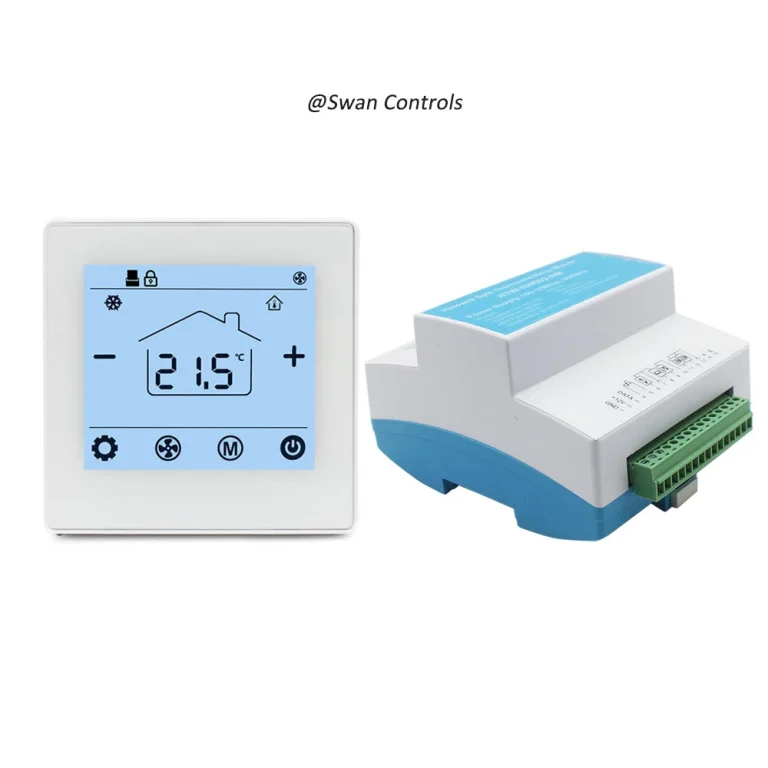
“Do we really need a Modbus thermostat for this HVAC project?”
“That depends on whether you only need local temperature control or you also need the thermostat to communicate with a wider system.”
That short exchange describes the real buying question much better than a long list of features. Many buyers first meet the phrase Modbus thermostat in commercial HVAC, fan coil unit projects, or room-control systems connected to a building management platform. Some assume it is just a more advanced room thermostat. Others assume it is necessary in every professional project. Neither assumption is always correct. A Modbus thermostat is valuable when communication and system-level visibility matter. It is much less important when the project only needs simple local adjustment in one room.
This is why the title of this article matters. The real question is not only what a Modbus thermostat is. The more useful question is when it is worth choosing. If the thermostat needs to send data, receive commands, and fit into a wider HVAC or BMS structure, Modbus can be a practical advantage. If the thermostat only needs to control one room locally, Modbus may add cost and complexity without enough benefit. So this article will explain both sides: what Modbus means in thermostat applications, where it is commonly used, and how buyers can decide whether it is truly necessary.
Quick Summary: The 4 Situations Where a Modbus Thermostat Is Usually Worth Choosing
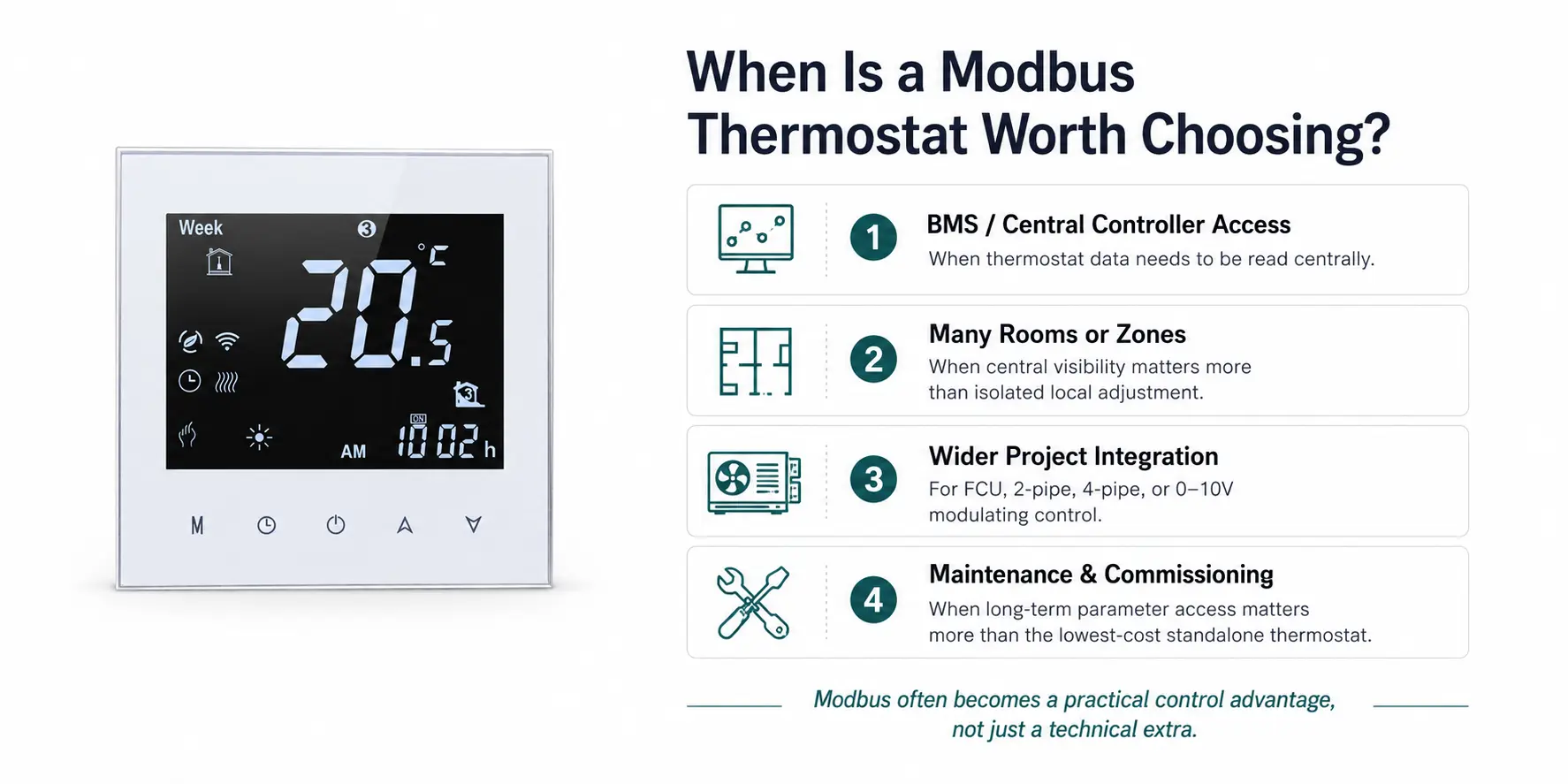
A Modbus thermostat is usually worth choosing in four situations. First, when a BMS or central controller needs to read thermostat data. Second, when many rooms or zones need central visibility rather than isolated local adjustment. Third, when FCU, 2-pipe, 4-pipe, or 0–10V modulating control must be integrated into a wider project. Fourth, when long-term maintenance, commissioning, and parameter access matter more than the lowest-cost standalone room thermostat. If those conditions are present, Modbus often becomes a practical control advantage rather than just a technical extra.
What Is a Modbus Thermostat?
A Modbus thermostat is a room thermostat or HVAC thermostat that can communicate through the Modbus protocol, often using RS485 in serial communication environments. That means the thermostat is not limited to local control through its own buttons or screen. It can also exchange data with a broader control structure, such as a BMS, a supervisory controller, a gateway, or another management platform.
The most important point is this: a Modbus thermostat is defined more by communication capability than by appearance. Two thermostats may look almost identical on the wall. One may only control room temperature locally. The other may also send operating status, receive commands, expose setpoints and parameters, and fit into a wider networked control system. From the user side, the difference may not always be visible. From the project side, it can be very important.
So when buyers search for a Modbus thermostat, they are often looking for more than temperature control. They are looking for communication, visibility, integration, and easier system-level management.
What Is Modbus and Why Is RS485 Mentioned So Often?
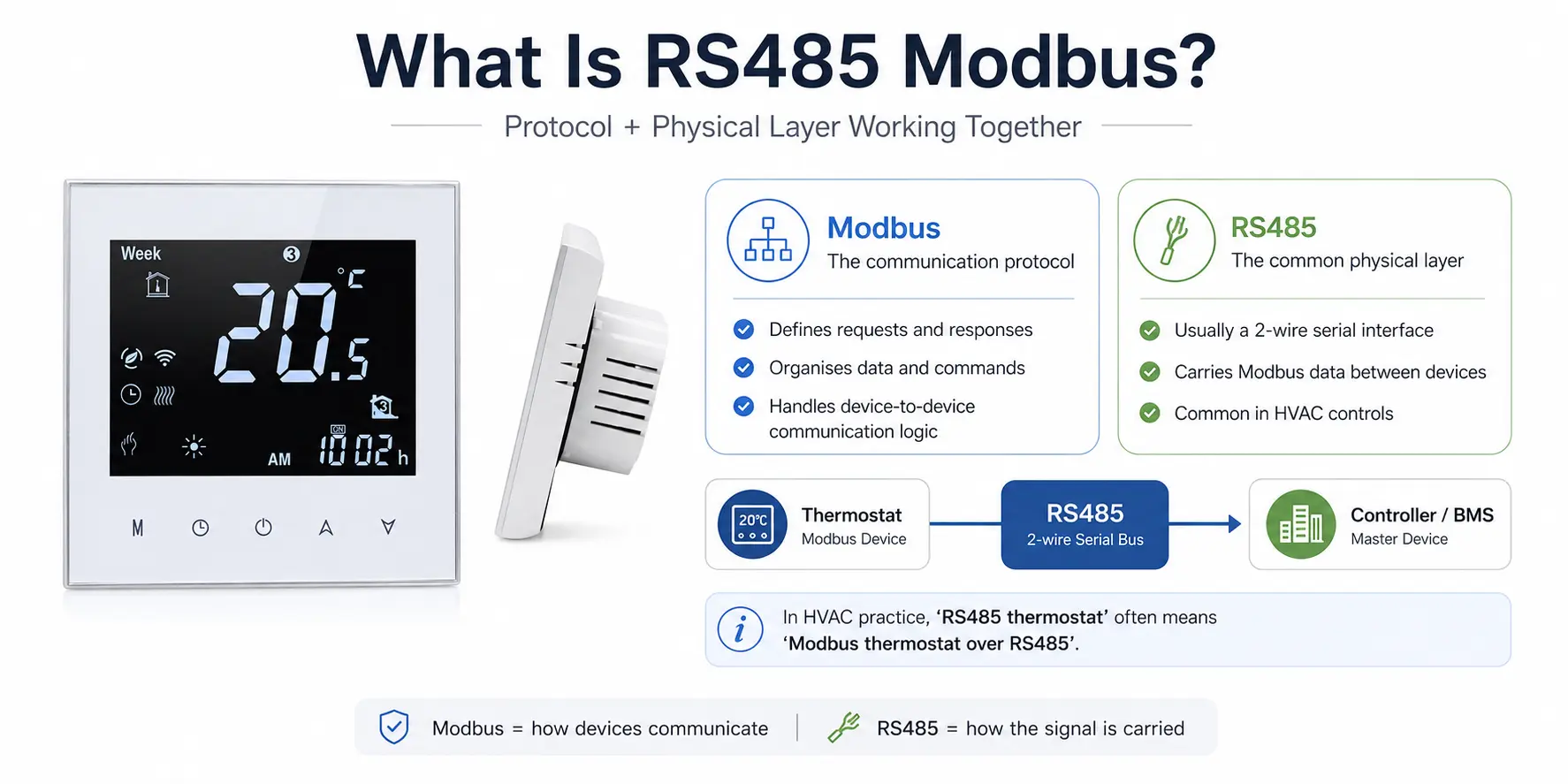
To understand a Modbus thermostat, it helps to separate two closely related terms: Modbus and RS485. They are related, but they are not the same thing.
Modbus is the communication protocol. It defines how devices exchange requests and responses, what kind of data structure is used, and how commands or values are organised for communication. The Modbus Application Protocol Specification defines Modbus as an application layer messaging protocol, positioned at level 7 of the OSI model, for client/server communication between devices connected on different types of buses or networks.
RS485, by contrast, is commonly the physical communication layer in many serial Modbus applications. The Modbus serial-line documentation explains that the TIA/EIA-485 two-wire interface is the most common physical interface for Modbus over serial line. This is why many buyers say “RS485 thermostat” when what they really want is “Modbus thermostat over RS485.” In practical HVAC language, those two often travel together.
| Term | What It Means | Why It Matters in Thermostats |
|---|---|---|
| Modbus | Communication protocol | Lets the thermostat exchange data with wider systems |
| RS485 | Common serial physical interface | Often carries Modbus RTU in HVAC and building-control projects |
| Modbus RTU | Common Modbus serial format | Typical for room thermostats, FCU controls, and BMS communication |
That distinction helps buyers ask better questions. If a project asks for Modbus, it usually means the thermostat must communicate using a standard protocol. If it asks for RS485, it often means the project is already thinking about the physical communication path. Good product selection usually confirms both.
Where Is a Modbus Thermostat Usually Used?
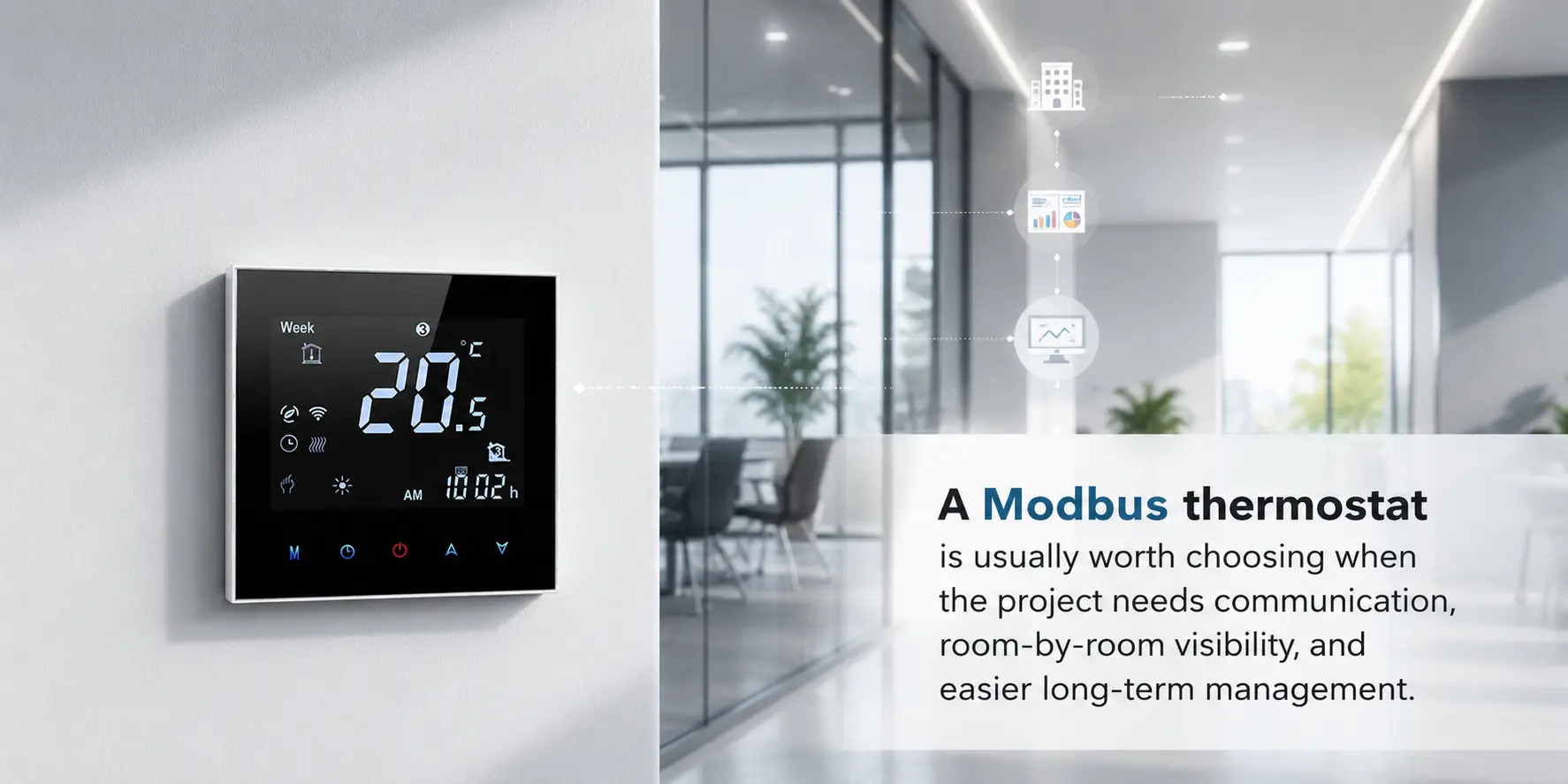
A Modbus thermostat is most commonly used where a thermostat needs to be part of a wider managed HVAC system rather than a standalone room device. This includes fan coil unit projects, room temperature control in commercial buildings, zone-based systems that need central visibility, and building-management environments where many thermostats must be monitored or adjusted together.
In these applications, the thermostat is not just a local endpoint. It becomes part of a communication structure. A BMS may want to read room temperature, fan speed, operating mode, valve command, or setpoint. A project engineer may want commissioning access without walking to every room. A facilities team may want easier monitoring of alarm or occupancy-related behaviour. That is where Modbus becomes useful.
This is why Modbus thermostat demand is especially natural in HVAC contexts such as 2-pipe and 4-pipe FCU systems, room-based commercial control, and projects where integration matters more than purely local adjustment. It is much less important in simple single-room residential spaces with no wider control network.
What Is Modbus Usually Used for in HVAC?
In HVAC projects, Modbus is usually used to make room-level devices part of a broader communication system. It is often less about “smart-home convenience” and more about structured control, standardised communication, and system visibility.
For thermostats, that often means three practical benefits. First, the thermostat can be read centrally. Second, the thermostat can be configured or coordinated more consistently. Third, the thermostat can fit into a wider control architecture through gateway or supervisory systems. The Modbus messaging guide on TCP/IP also describes a client/server communication model and explains gateway implementation, which is exactly why Modbus is so often associated with larger integrated projects rather than only simple local control.
This also explains why Modbus is still relevant even when other smart-home protocols exist. In HVAC and building control, the issue is often not consumer app interaction first. It is compatibility with broader automation structures.
When Is a Modbus Thermostat Worth Choosing?
This is the key decision section of the article. A Modbus thermostat is worth choosing when the project needs more than local control.
When central monitoring matters
If the project operator needs to read room data, operating mode, setpoints, or basic status without visiting every thermostat physically, Modbus is often worth choosing. Central visibility is one of its clearest advantages.
When many rooms or zones must be managed together
In projects with multiple rooms, hotel zones, FCU areas, or office spaces, standardised communication becomes more useful. The thermostat is no longer one isolated device. It becomes one node in a broader managed system.
When the thermostat must talk to a BMS or gateway
If the thermostat needs to communicate with a building-management platform, central controller, or gateway, Modbus becomes a practical interface rather than an optional extra. This is one of the strongest reasons to choose it.
When future maintenance and commissioning matter
Many buyers choose Modbus not only for launch-day function, but for long-term clarity. A thermostat that can expose data and fit into a standard communication structure is often easier to support, diagnose, or commission later.
In these situations, Modbus is not simply “more advanced.” It is more appropriate.
When Is a Modbus Thermostat Not the Best Choice?
A Modbus thermostat is not automatically the best choice for every thermostat project. If the project is a simple standalone room-control application, with no integration need, no central visibility requirement, and no building-management interface, then a non-Modbus thermostat may be more suitable.
This is especially true in small residential or one-room applications where the thermostat only needs to let the user change temperature locally. In that kind of project, Modbus may add cost, setup complexity, and communication requirements without adding enough practical value.
So the right question is not “Is Modbus more advanced?” The better question is “Does this project benefit from communication?” If the answer is no, then Modbus may not be worth paying for.
| Topic | Modbus Thermostat | Non-Modbus Thermostat |
|---|---|---|
| Local control | Yes | Yes |
| Central visibility | Usually yes | Usually limited |
| BMS integration | Stronger fit | Often not the main strength |
| Standalone simplicity | Lower | Higher |
| Best project type | Managed multi-room or integrated systems | Simple local room control |
Why Modbus Matters in FCU and Room-Control Projects
Fan coil and room-control projects are where Modbus thermostat value often becomes very concrete. The buyer is no longer comparing only temperature control. The buyer is comparing how well the thermostat fits a whole HVAC control strategy.
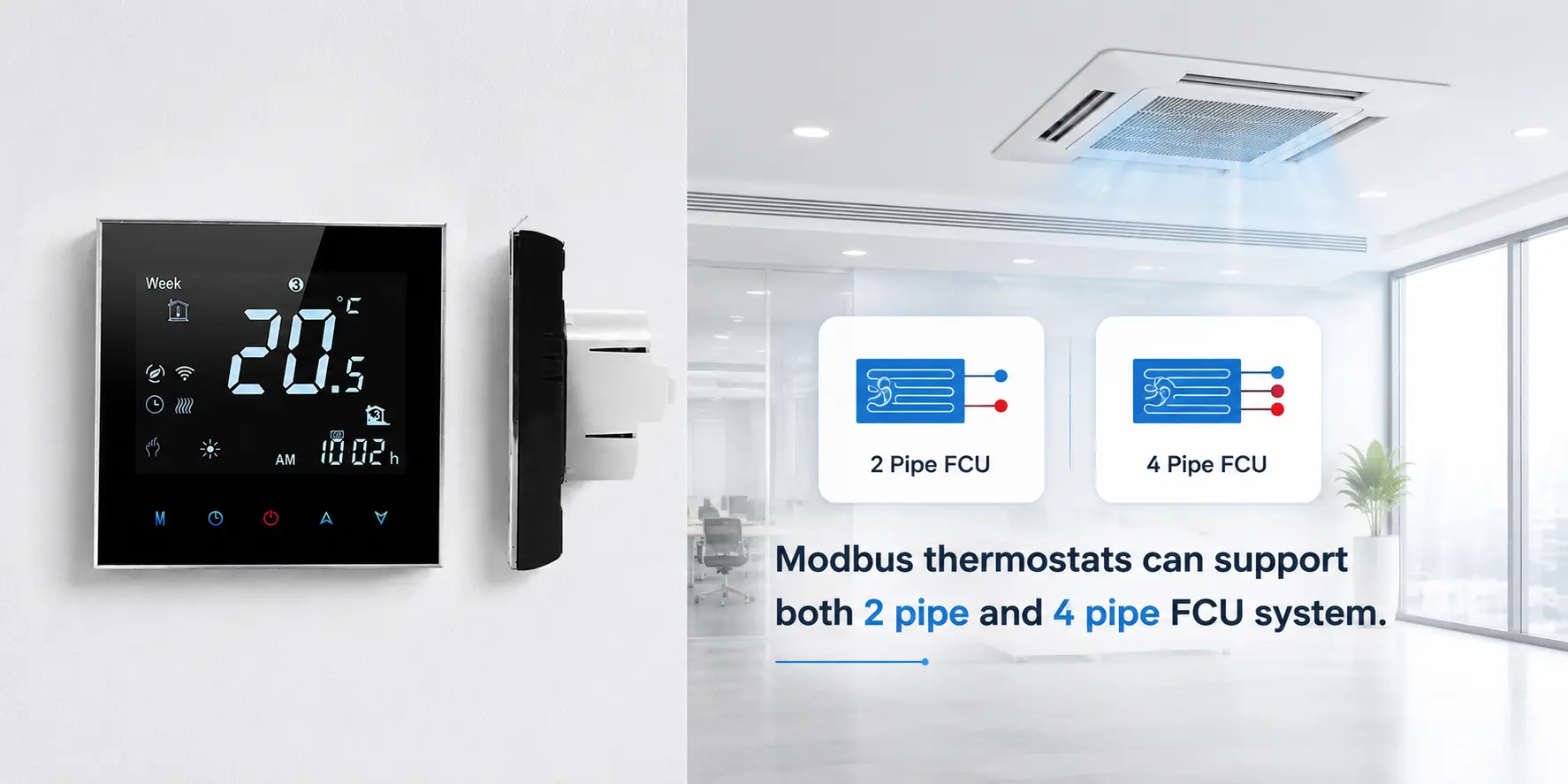
In a 2-pipe or 4-pipe FCU project, a thermostat often needs to coordinate fan behaviour, valve control, mode logic, and room comfort. If those devices also need to be monitored or coordinated centrally, Modbus becomes much more valuable. The same is true when a 0–10V modulating thermostat is part of a larger FCU or room-control system. Communication is no longer a side feature. It becomes part of the control architecture.
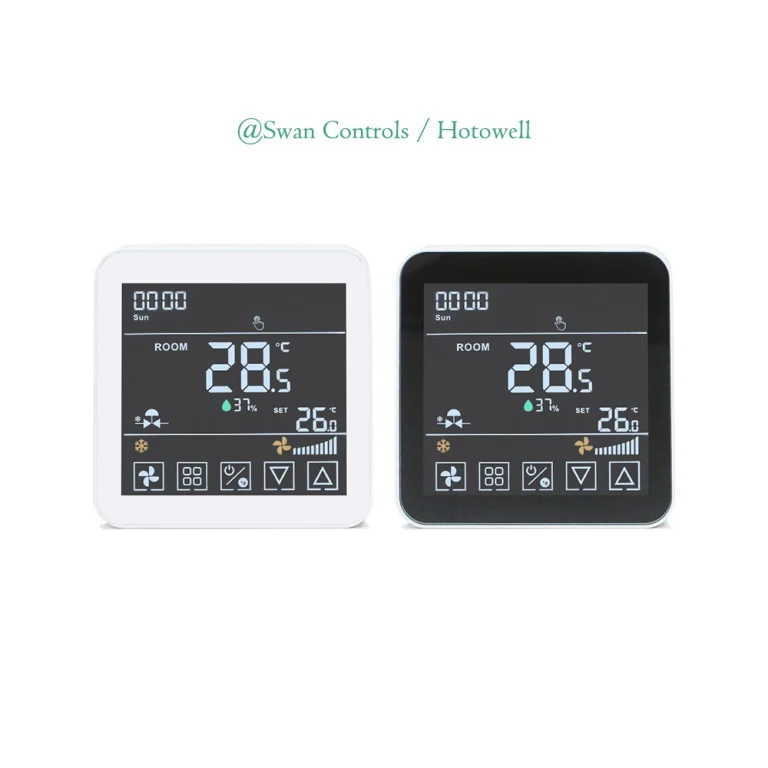
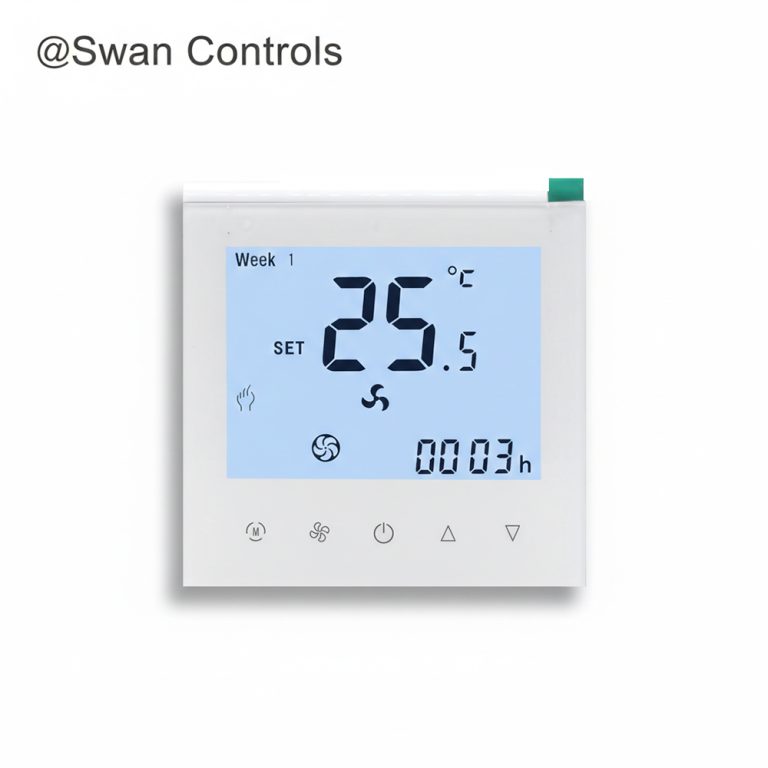
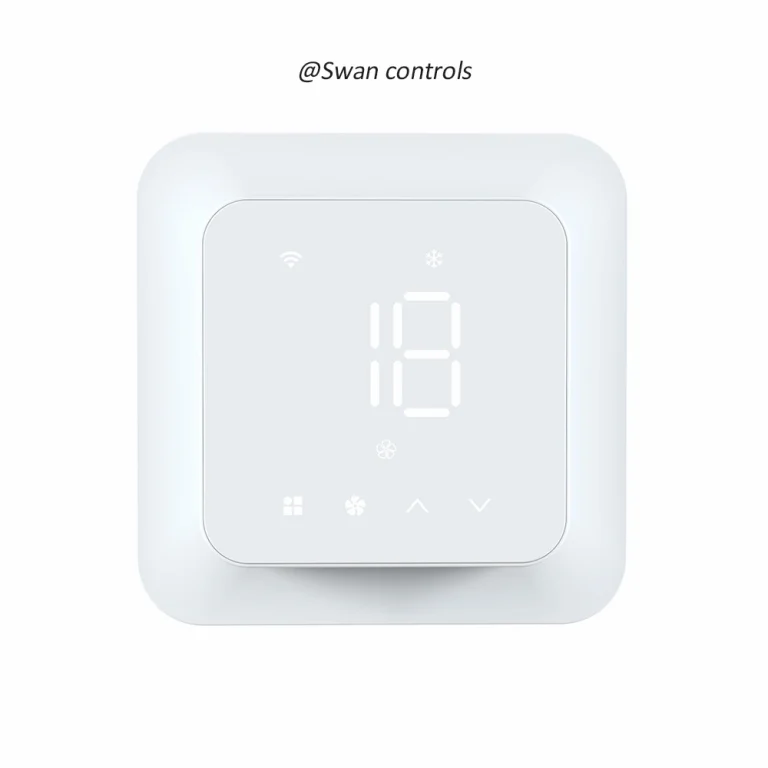
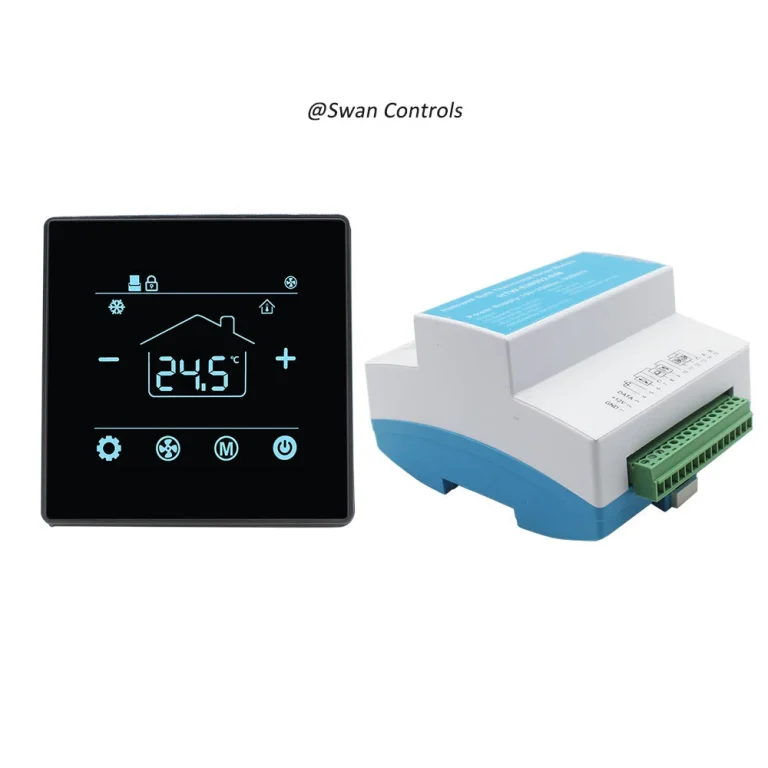
This is where your product references are useful. A thermostat such as the indoor Modbus thermostat for 2-pipe FCU system, the popular Modbus thermostat for 4-pipe fan coil unit systems, the FCU 3 fan speed 0–10V modulating thermostat with Modbus, the RS485 Modbus thermostat for 2-pipe system room temperature control, or the HVAC CE RS485 Modbus thermostat for indoor 4-pipe FCU system all represent slightly different project paths where Modbus is useful not because it sounds technical, but because the project wants structured integration.
Expert Commentary: What Buyers Often Misunderstand About Modbus
There are three misunderstandings that appear often in Modbus thermostat buying discussions. The first is thinking that Modbus is a display feature. It is not. It is a communication feature. The second is treating RS485 and Modbus as identical. They are related, but one is typically the physical communication layer and the other is the protocol. The third is assuming that Modbus is always better. It is not always better. It is more valuable only when the project needs integration, visibility, or structured communication.
This is why the best Modbus thermostat projects usually begin with a control question, not a feature question. If the project needs central management, Modbus becomes easier to justify. If the project needs only local control, Modbus may not repay its cost.
Industry Trend: Why Modbus Still Matters in Building Automation
Modbus remains relevant because it continues to solve a real integration problem in industrial and building-control environments. The Modbus Organization still maintains core protocol specifications, serial-line implementation guidance, TCP/IP messaging guidance, and Modbus Security specifications. That alone shows that the protocol remains active as a practical interoperability standard rather than only a historical technology.
In thermostat terms, this matters because building automation is not always driven by consumer smart-home logic. Many commercial HVAC projects still need open, familiar, and standardised communication paths that engineers, integrators, and facilities teams already understand. That is why Modbus still matters in room-control and FCU projects even as other ecosystems continue to grow.
Scientific Data and What It Means
There are several technical facts that help explain why Modbus thermostat selection should be a project decision rather than a marketing decision. First, Modbus is defined as an application layer protocol at OSI level 7, which means its main role is structured communication. Second, the Modbus serial-line guide identifies RS485 two-wire as the most common physical interface in Modbus serial implementations, which explains why RS485 is so often mentioned in thermostat products. Third, the protocol family also includes Modbus TCP communication and a security protocol using port 802, which shows that the ecosystem has continued to evolve. For HVAC buyers, the practical meaning is simple: Modbus is not just a brand term. It is a standardised communication path that supports long-term interoperability.
Real Cases and Buyer Feedback
Case 1: The buyer asked for “smart” but needed central visibility
One buyer initially asked for a smart thermostat because the project sounded modern and connected. Later, after reviewing the control requirement, it became clear that the real need was not consumer-style smart control. The real need was room-by-room visibility through a wider building system. In that case, Modbus became the more suitable answer.
Case 2: A 2-pipe / 4-pipe FCU discussion became a communication discussion
Another buyer began by comparing 2-pipe and 4-pipe fan coil thermostat functions. As the discussion developed, it became clear that system integration and central access were also important. The final selection was not decided only by pipe configuration, but by communication fit as well.
Case 3: The thermostat needed easier maintenance, not a more complex screen
In a third project, the visible front panel was not the problem. The issue was long-term maintenance clarity. The project team wanted a thermostat that could be read and managed more systematically later. That made Modbus valuable not because it looked more advanced, but because it reduced ambiguity in a larger managed environment.
User feedback pattern: Buyers rarely complain that they clarified communication needs too early. They usually complain when they assumed communication was unnecessary, then discovered later that the project needed central visibility after all.
Frequently Asked Questions
1. What is a Modbus thermostat?
A Modbus thermostat is a thermostat with Modbus communication capability, usually over RS485, that can control room temperature locally while also exchanging data with a wider HVAC or building-management system.
2. What is the difference between RS485 and Modbus?
RS485 is commonly the physical communication interface, while Modbus is the communication protocol. In many thermostat projects, RS485 is the hardware path used to carry Modbus RTU communication.
3. When is a Modbus thermostat worth choosing?
It is usually worth choosing when the project needs central monitoring, BMS integration, room-by-room visibility, or easier long-term system management rather than simple standalone local control.
4. Can a Modbus thermostat work as a normal room thermostat?
Yes. A Modbus thermostat can still work as a room thermostat locally, but its added value comes from communication and integration beyond local control alone.
5. Is a Modbus thermostat better than a normal thermostat?
Not always. It is better for projects that need communication and integration. For simple standalone control, a non-Modbus thermostat may be more practical and cost-effective.
References / Sources
- Modbus Organization, Modbus Protocol Specification
- Modbus Organization, Modbus over Serial Line Specification and Implementation Guide V1.02
- Modbus Organization, Modbus Messaging on TCP/IP Implementation Guide V1.0b
- Modbus Organization, Specifications and Implementation Guides
- Modbus Organization, Introduction to Modbus
- Modbus Organization, About Us
- Modbus Organization, Modbus Organization Replaces Master-Slave with Client-Server
- Modbus Organization, Modbus/TCP Security
- Wikipedia, Modbus
- Wikipedia, RS-485