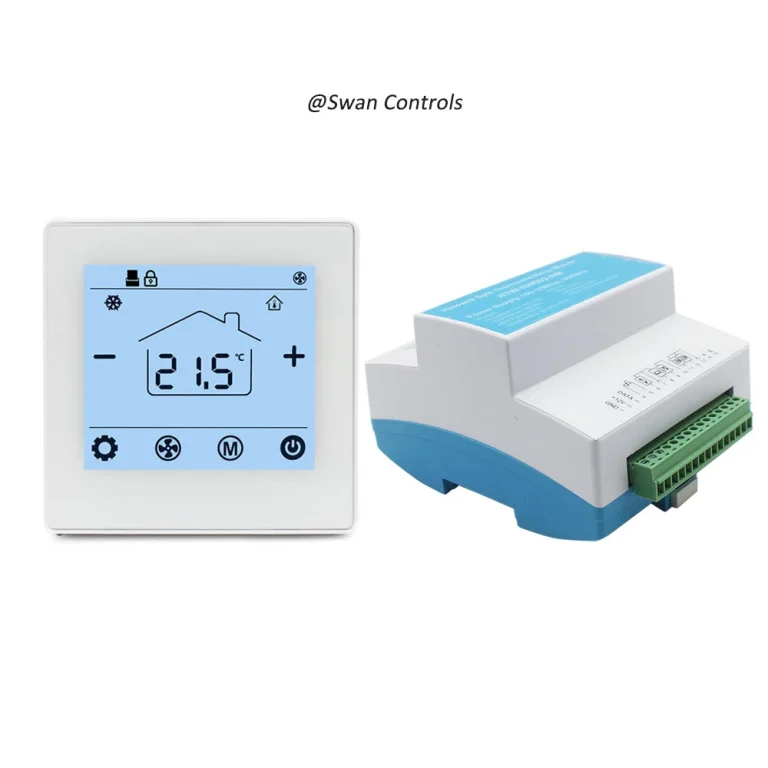
“Can you quote your cheapest underfloor heating thermostat for our brand?”
“We can, but before price, we should confirm what the thermostat must really do in your market, your project type, and your product line.”
That is the better starting point for most OEM discussions. In underfloor heating thermostat projects, the lowest quotation is not always the lowest project cost. A product can look competitive at sample stage and still become expensive later if the sensor logic is wrong, the control role is unclear, the smart-home positioning is weak, the documents are not ready, or the target market expects a different user experience. In other words, many OEM problems do not start in production. They start much earlier, when a buyer compares products mainly by casing, screen, or price while missing the features that actually decide whether the thermostat will work well in the field.
This matters even more in underfloor heating because the thermostat is not only a front-end display. It is also the control point that decides how the floor-heating system behaves. In electric underfloor heating, sensor logic is especially important. Heatmiser’s public documentation states clearly that electric under-floor heating should not be controlled by built-in air sensor only, and that floor sensor only or both should be used instead. That single point already shows why OEM buyers should not compare underfloor heating thermostats the way they compare simple room thermostats. Control logic matters too much. ([heatmiser.com](https://www.heatmiser.com/wp-content/uploads/bsk-pdf-manager/2019/10/Heatmiser-SmartStat-Manual.pdf?utm_source=chatgpt.com))
Quick Summary: The 5 OEM Checks That Usually Matter More Than Price
Most OEM underfloor heating thermostat mistakes can be reduced by checking five points early. First, confirm the real control role: is the product mainly for electric floor heating, general room control, or a broader smart-heating offer? Second, confirm the sensor logic, especially whether floor sensor support is required. Third, confirm whether WiFi, Matter, or basic non-connected control is the best fit for the target market. Fourth, confirm the document package, including wiring notes, sensor-mode explanations, and installation guidance. Fifth, confirm whether the thermostat’s interface and control behaviour suit the countries and channels where it will actually be sold. If those points are clear, price comparison becomes much more meaningful.

Why Low Unit Price Can Create High OEM Cost Later
In OEM sourcing, a thermostat can look inexpensive in a quotation file and still become expensive after launch. That usually happens when the product is treated as a housing-and-screen item rather than as a control solution. If the sensor logic is unclear, if the target market expects app control that is not fully supported, if the thermostat is marketed for electric underfloor heating without the right floor-sensor positioning, or if the manual is too weak for installers, then the hidden cost appears later. It appears in repeated sample adjustments, extra technical explanation, packaging changes, app questions, installer complaints, and brand damage from confused end users.
This is why experienced buyers do not ask only for price, logo options, and packaging. They also ask what the thermostat really controls, what kind of heating logic it supports, whether it fits local installer habits, and whether the supplier can support a full product launch rather than only a shipment. Those questions are not secondary. They are the real cost-control questions in OEM work.
| Buying Focus | Price-Only Approach | OEM Product-Line Approach |
|---|---|---|
| Main concern | Lowest unit quotation | Lowest long-term project risk |
| Comparison method | Screen, casing, basic price | Sensor logic, ecosystem fit, support, and brand usability |
| Typical hidden risk | More complaints after launch | More stable roll-out and stronger repeat business |
Start with the Real Control Role, Not the Front Panel
Before comparing OEM underfloor heating thermostat offers, buyers should define what role the thermostat is expected to play in the final project. That may sound basic, but it is one of the most common missing steps in OEM discussions. A buyer asks for an underfloor heating thermostat, but the real project may need an electric underfloor heating thermostat with internal and external sensor logic. Another buyer asks for a smart thermostat, but the market may only need a stable, easy-to-use room thermostat with a floor limit. Another wants a premium smart-home compatible model because the distribution strategy depends on broader platform integration.
This matters because thermostat categories overlap visually much faster than they overlap functionally. Two products can both look like modern thermostats and still support very different roles. In OEM work, the screen and casing often converge quickly. The control logic does not.
A buyer who defines the control role early usually reduces later revision rounds. A buyer who starts with logo, colour, and packaging first often discovers the real technical questions too late.
Sensor Logic Matters More Than Most OEM Buyers Expect
This is probably the most important technical point in an underfloor heating thermostat OEM project. In electric floor-heating applications, sensor logic is not a small feature choice. It is one of the product’s core definitions. Heatmiser’s documentation states that electric under-floor heating must not rely on built-in air sensor only. Instead, floor sensor only or air plus floor together should be used. That means any OEM buyer selling an underfloor heating thermostat for electric heating should understand that sensor logic is part of the value proposition, not only part of the settings menu. ([heatmiser.com](https://www.heatmiser.com/wp-content/uploads/bsk-pdf-manager/2019/10/Heatmiser-SmartStat-Manual.pdf?utm_source=chatgpt.com))
From an OEM perspective, this changes product comparison immediately. A thermostat with weak messaging around floor sensor, internal and external sensor logic, or floor protection may still look attractive in a catalogue, but it may create confusion later. A thermostat that clearly supports the expected electric underfloor heating control mode is often a much better OEM platform, even if its unit price is slightly higher.
This is also why model naming, datasheets, and product-positioning subtitles matter so much. If the buyer is building a branded underfloor heating thermostat line, the sensor logic should be visible in both technical documents and commercial communication.
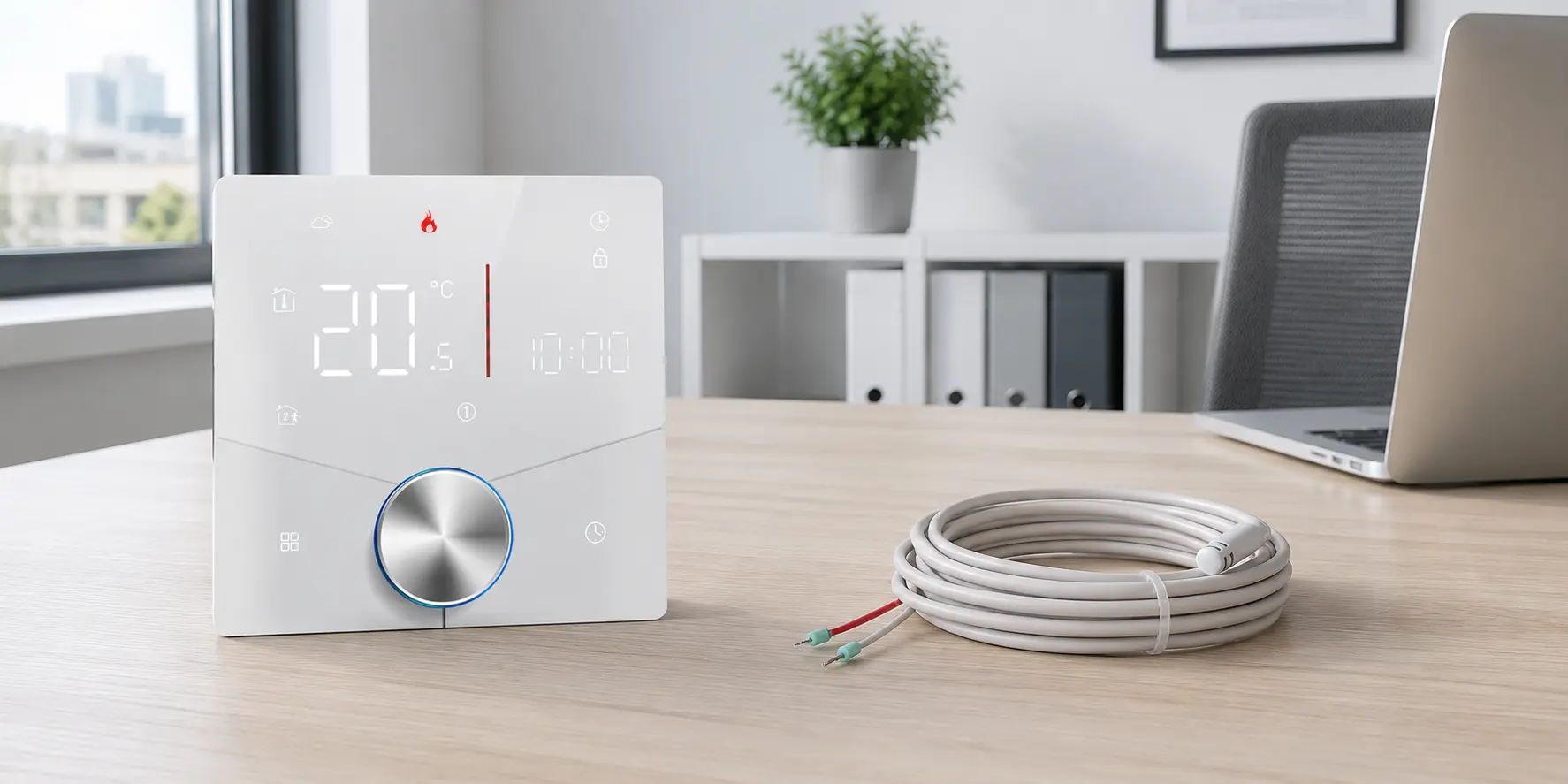
WiFi vs Matter: Which Advantage Matters More?
For connected thermostat projects, OEM buyers are increasingly asking about WiFi and Matter. These two should not be treated as the same thing. They solve different commercial and ecosystem questions.
Where WiFi is strong
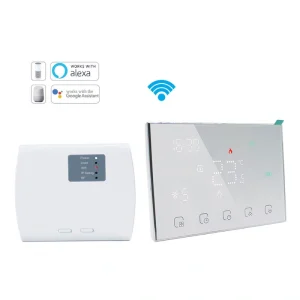
WiFi is practical because it uses familiar home-network logic and supports app-based remote control directly. For many retail and residential thermostat projects, this is enough. Buyers can position the product as a WiFi thermostat, support schedule changes, remote adjustment, and daily visibility, and reach a large audience with relatively familiar usage logic.
Where Matter is strong
Matter is stronger when interoperability and ecosystem compatibility become part of the value story. The Connectivity Standards Alliance describes Matter as a foundation for simple, secure interoperability across smart-home devices and ecosystems. For OEM buyers, that means Matter can be commercially important when the product line must work more naturally across different platforms and smart-home environments. Matter 1.4 also adds thermostat-related improvements such as better support for scheduling and preset-style capabilities, which strengthens its value for connected climate-control products.
Which one is “better”?
The better question is not which one is better in general. The better question is what kind of product line the buyer is trying to build. For a practical retail product where direct app control is enough, WiFi may be the more straightforward answer. For a future-facing ecosystem product, Matter may become more strategically valuable. In OEM work, these are not only technical decisions. They are positioning decisions.
The Practical Value of Knob, VA Screen, and Interface Style
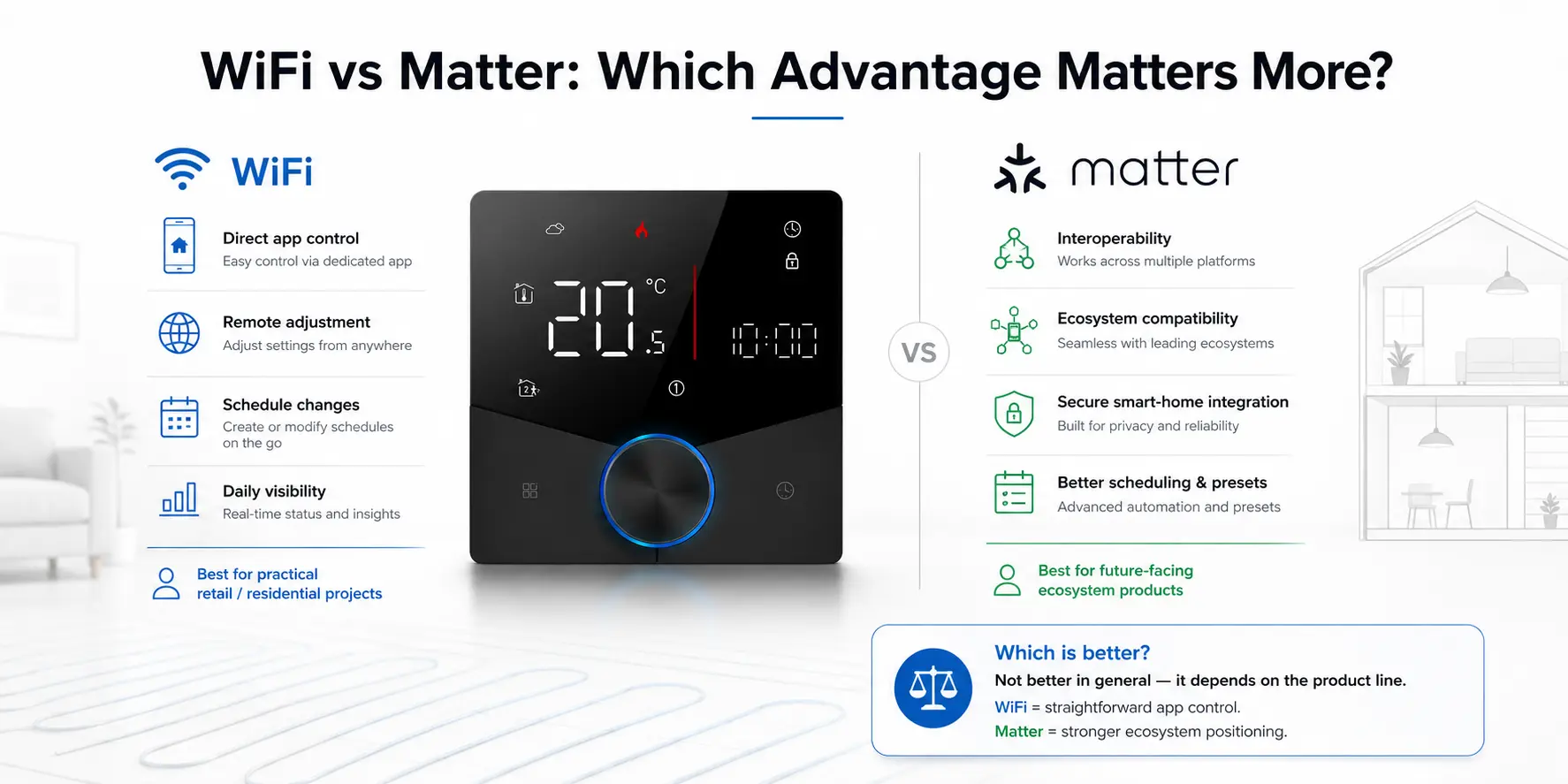
Interface style is easy to underestimate in OEM projects because it looks cosmetic at first. In reality, it shapes how the thermostat feels in the target market. A knob thermostat often gives a more tactile, accessible, and less intimidating experience. This can be especially attractive in renovation retail, traditional residential channels, or markets where users still prefer direct physical interaction. A colourful knob or a modern white-backlit knob design can make the product line feel more lifestyle-oriented without becoming technically difficult.
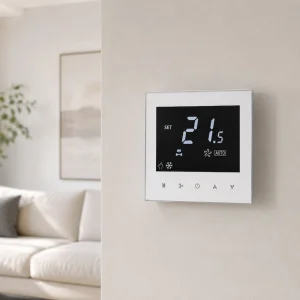
A VA screen thermostat can create a more premium and more “technical” identity. In OEM projects, that can help when buyers want a cleaner, more modern visual presence, clearer parameter display, or stronger alignment with a smart-home or connected-control product line. The screen itself is not the whole product, but it shapes the user’s first impression and the installer’s perceived product level.
This is why interface format should be treated as part of market fit rather than as a beauty choice only. The best interface is the one that matches the intended channel, installer comfort, and end-user expectations.
Why Wireless and Desktop-Style Flexibility Can Matter in OEM Planning
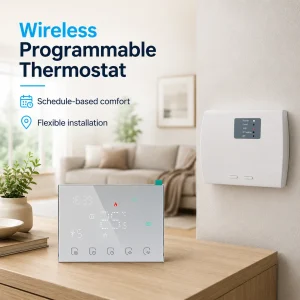
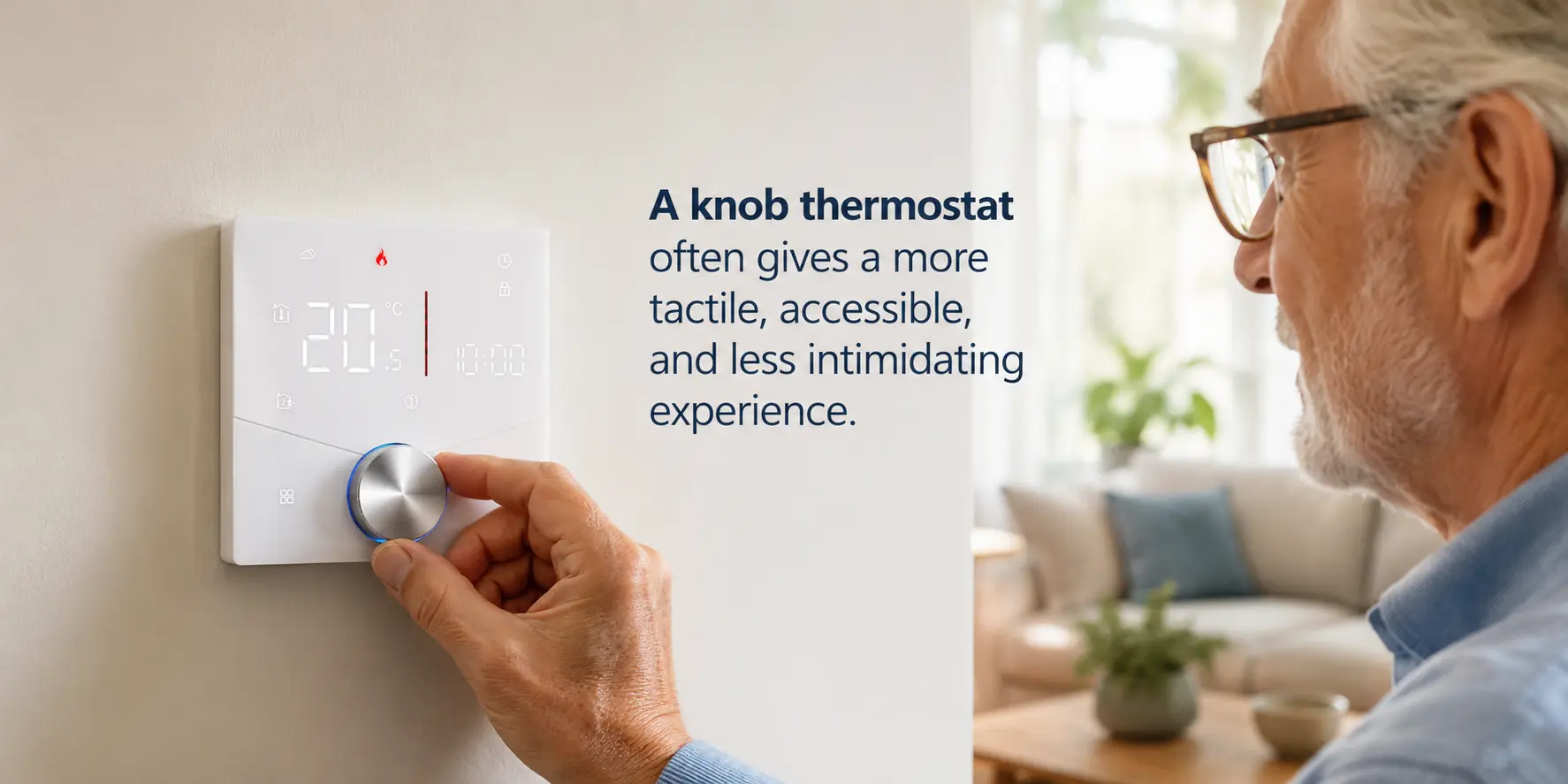
Some thermostat OEM projects benefit from more flexible control formats, especially when the target market includes retrofits, finished interiors, rental spaces, or projects where wall wiring is inconvenient. A battery-powered wireless thermostat or a more flexible placement format can be attractive because it lowers installation disruption and makes the control point easier to position practically.
This is especially useful in channels where speed of installation and ease of use matter more than built-in architectural integration. In those markets, wireless convenience can be as commercially valuable as the screen or the protocol. The advantage is not that a wireless thermostat is automatically better. The advantage is that it may solve a site or installer problem more effectively.
This is a project-use inference based on wireless thermostat applications rather than a strict protocol claim. For OEM planning, that kind of inference still matters because it helps define which product form factors deserve investment in the line-up.
Country and Market Context: Where Underfloor Heating Thermostats Are Most Relevant
Underfloor heating thermostat demand is not evenly distributed by country or project type. It tends to be more relevant where underfloor heating itself is already understood and where energy efficiency, comfort control, or floor-heating renovation demand is stronger. Public materials from European floor-heating brands and control suppliers suggest especially strong relevance in markets where electric or water underfloor heating is already familiar in residential and light commercial projects. That makes many parts of Europe especially important for thermostat positioning. ([uponor.com](https://www.uponor.com/en-gb/products/room-temperature-controls?utm_source=chatgpt.com))
For OEM buyers, this means the “best” product is partly market-dependent. A connected Matter-compatible thermostat may be more attractive in one country, while a simpler WiFi thermostat or a tactile knob design may perform better in another. The same is true for residential and commercial focus. Some markets are driven by home renovation retail. Others are more project-oriented through installers or system planners.
This is why country strategy should influence OEM decisions early. A thermostat designed for one region’s installer habits or smart-home expectations may not automatically succeed in another market without adaptation.
Industry Trend: More Connectivity, But Still Strong Need for Clear Control Logic
The broad industry trend is toward more connected control, better scheduling, easier app management, and stronger ecosystem positioning. Warmup and Uponor both frame their control ranges around smarter operation, efficiency, and easier system management. Matter’s ongoing development also points in the same direction: ecosystem-level compatibility is becoming commercially more important, not less.
But a second trend is just as important: better connectivity does not remove the need for correct floor-heating logic. Buyers still need internal and external sensor support. Electric underfloor heating still needs the correct control mode. Installers still need clear documentation. That means good OEM strategy is not to choose between connectivity and control logic. It is to build a product line where the connected layer supports, rather than hides, the real heating-control logic.
Real Product Paths for Different OEM Directions
Different OEM directions can be built from different thermostat formats. That is why product-line planning should group models by real commercial role rather than by appearance only.
Knob-style electric underfloor heating thermostat direction
For buyers who want a tactile, approachable product line, a model such as the modern knob design electric underfloor heating thermostat can support a simpler and more lifestyle-friendly positioning. This is especially useful when the target market values direct physical control and a less technical appearance.
WiFi knob thermostat with internal and external sensor logic
Where the goal is to combine tactile UI with stronger electric floor-heating functionality, a product such as the colorful knob 16A WiFi electrical underfloor heating thermostat shows how OEM buyers can build a product line that is both visually distinctive and functionally clear.
Matter and Tuya WiFi smart-home positioning
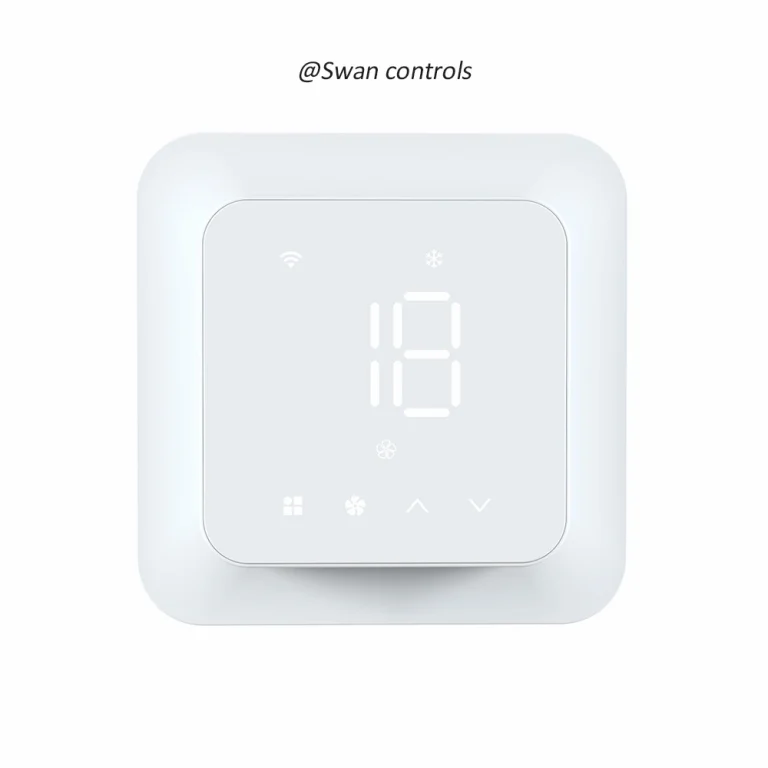
For buyers who want stronger ecosystem relevance, the modern Tuya WiFi Matter protocol electric underfloor heating thermostat is a strong reference because it aligns connected control with modern smart-home positioning.
VA screen electric thermostat with internal and external sensor support
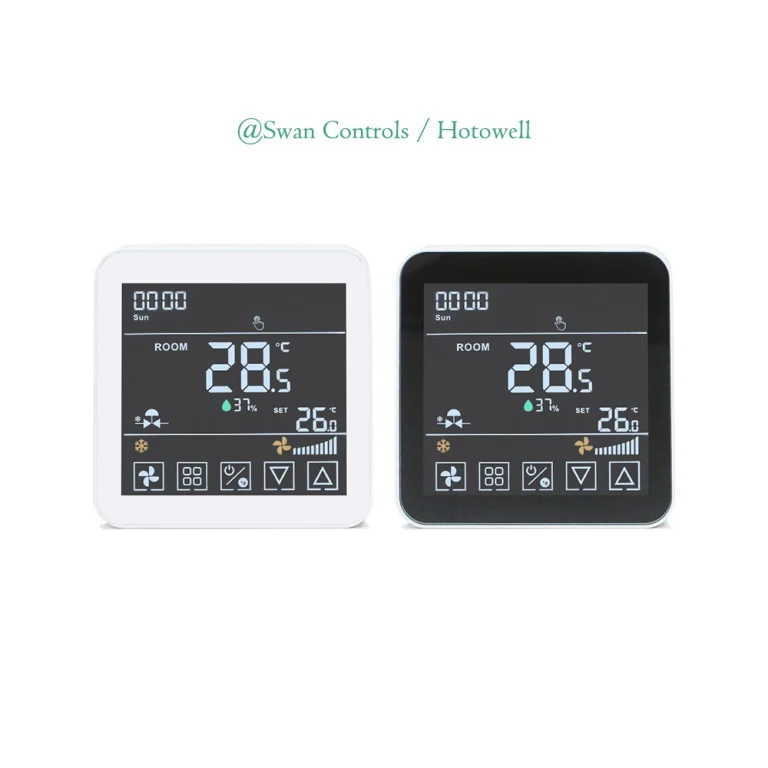
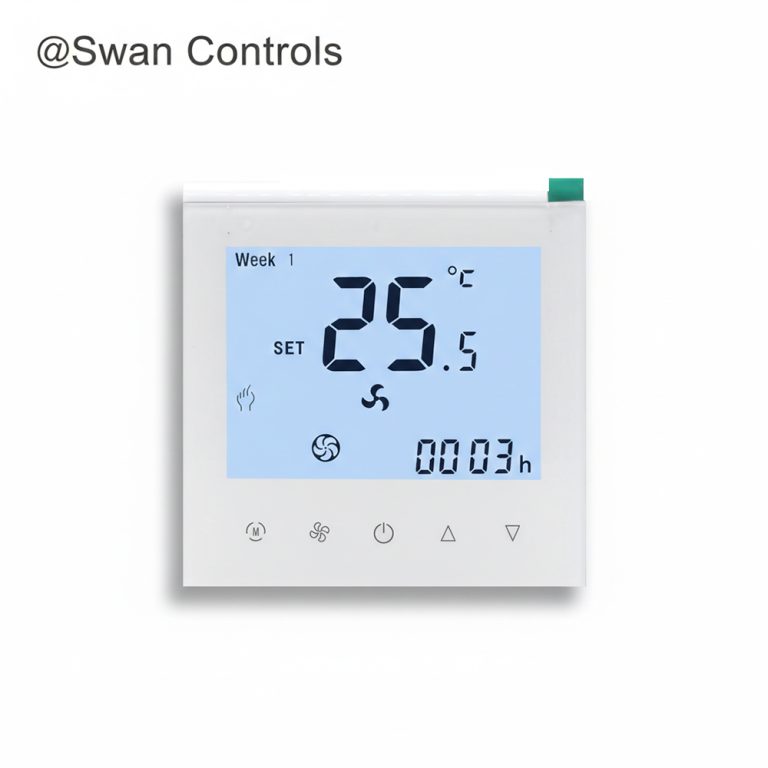
For projects that want a cleaner, more premium visual direction while keeping strong electric floor-heating logic, the 16A VA screen electrical underfloor heating thermostat with internal and external sensor offers a clear reference path. This type of model often fits OEM programs that want a more technical and higher-spec visual identity.
These product paths show why the best OEM decision is not “which one is cheapest.” It is “which product line is commercially coherent and technically correct for the target market.”
Expert Commentary: The Best OEM Thermostat Is Usually the One That Explains Itself Well
One of the strongest patterns in thermostat OEM projects is that good products reduce explanation effort. They make their own control role clearer through the right combination of sensor support, interface style, connected features, and documentation. Bad OEM choices do the opposite. They create more explanation burden after launch because the product logic was not obvious enough from the start.
For underfloor heating thermostat OEM projects, the best product is often not the one with the longest feature list. It is the one with the clearest product definition. Buyers who choose the right combination of sensor logic, smart positioning, and interface style usually build a more stable product line than those who focus only on visual similarity and price.
Scientific Data and What It Means for OEM Buyers
Public technical information supports this OEM view. Heatmiser makes clear that electric under-floor heating should not use built-in air sensor only, which confirms that sensor support is fundamental in this category. OJ Electronics positions programmable electric floor-heating thermostats around optimal comfort temperature and minimum energy consumption, linking settings quality directly with performance value. The Connectivity Standards Alliance states that Matter is designed to support secure, simple interoperability, and its Matter 1.4 update adds thermostat-related improvements such as scheduling and preset support. Taken together, these sources show that good OEM thermostat planning should combine correct floor-heating logic with practical smart-control value.
Real Cases and Buyer Feedback
Case 1: OEM buyer focused on design first, then changed direction after sensor review
An OEM buyer first shortlisted products mainly by screen style and industrial design. Later, the project review showed that internal and external sensor support was more important than the original screen preference. Once that became clear, the shortlist changed quickly and the OEM direction became more realistic.
Case 2: WiFi project that became a smarter retail line, not just a smart-looking product
Another buyer wanted a more modern product line. At first, that meant “WiFi.” Later, the stronger insight was that the market needed easier app-based scheduling, better positioning for residential comfort, and a clearer retail story. The WiFi feature became more valuable once its real role was understood.
Case 3: Matter became a strategic decision, not a simple feature addition
In one smart-home-oriented project, Matter was considered not because the buyer wanted another protocol name on the spec sheet, but because cross-platform compatibility had become part of the product strategy. That changed the conversation from “Which feature is cheaper?” to “Which ecosystem direction is more valuable?”
User feedback pattern: OEM buyers rarely complain that they clarified too much before launch. They usually complain that they assumed too much from the appearance, the protocol label, or the price sheet.
Frequently Asked Questions
1. What matters most in an OEM underfloor heating thermostat project?
The most important factors are usually sensor logic, project fit, smart-home positioning, documentation quality, and whether the thermostat suits the target market. These points usually matter more than a slightly lower unit price.
2. Is WiFi always the best choice for an OEM underfloor heating thermostat?
Not always. WiFi is very useful when the market wants direct app control and remote schedule adjustment, but it should be chosen because it suits the product strategy, not only because it looks modern.
3. How is Matter different from WiFi in thermostat OEM planning?
WiFi is mainly useful for direct network-based app control, while Matter is more valuable for wider smart-home interoperability and cross-platform ecosystem compatibility. They solve different product-planning questions.
4. Why is sensor support so important in electric underfloor heating thermostats?
Because electric underfloor heating often requires floor-sensor or combined sensor logic rather than built-in air sensor only. If the sensor logic is wrong, the thermostat may still look attractive but behave poorly in real use.
5. Can interface style really matter in OEM thermostat projects?
Yes. Knob, screen style, and control format all influence how the product is positioned, how installers perceive it, and how comfortable end users feel using it in real projects.
References / Sources
- Heatmiser, Heatmiser SmartStat Manual
- Heatmiser, DT-ETS WiFi RF Manual
- Warmup, Underfloor Heating Thermostats
- Warmup, Element User Guide
- Warmup, 7iE User Guide
- OJ Electronics, Floor heating products
- OJ Electronics, Programmable Thermostats
- Connectivity Standards Alliance, Build with Matter
- Connectivity Standards Alliance, Matter 1.4 Enables More Capable Smart Homes
- Uponor, Room Temperature Controls