“Why is the boiler still running when the room already feels warm?”
“Before blaming the thermostat, we should check whether the control role, the setting, the location, and the wiring were correct in the first place.”
That short exchange sounds simple, but it describes a very common pattern in real heating projects. The customer feels uncomfortable. The installer believes the product is working. The project buyer thinks the correct model was ordered. The supplier says the thermostat passed testing. In many cases, all of them are partly right. The trouble is that boiler thermostat complaints rarely come from one isolated cause. More often, they come from a chain of small mistakes that together create wrong control, unstable comfort, unnecessary boiler runtime, or repeated customer complaints.
Some buyers think the issue is always product quality. Some installers think the issue is always user settings. Some end users assume the thermostat should fix every heating problem by itself. In practice, the real cause is often much more ordinary. The wrong thermostat role was assumed. The flow temperature was left too high. The thermostat was installed in a poor sensing location. The boiler demand wiring was not checked carefully enough. Or a smart thermostat was expected to solve a problem that actually started with basic control setup. These mistakes are common because they look small at the start. But once the system is live, they can create room-temperature complaints, inefficient heating, confusing boiler behaviour, and costly after-sales discussion.
This article focuses on those mistakes. It is written for overseas buyers, distributors, project teams, and anyone who needs to understand why a boiler thermostat may appear correct on paper but still create real-world complaints after installation. The goal is not only to explain what goes wrong. The goal is to help buyers recognise what should be checked earlier so the same mistakes are less likely to appear in real projects.
Quick Summary
Most boiler thermostat complaints do not start with a bad product. They start with the wrong control expectation, the wrong setting, the wrong location, or the wrong wiring logic. If buyers and installers check those points early, many “thermostat problems” disappear before they reach the customer.
Quick Summary: The 5 Mistakes Behind Most Boiler Thermostat Complaints
The most common complaints usually come from five mistakes: confusing boiler thermostat with room thermostat, setting the boiler flow temperature higher than necessary, installing the thermostat in the wrong place, ignoring wiring and call-for-heat logic, and assuming smart thermostat features will automatically solve boiler control complaints. These mistakes seem basic, but they directly affect how the heating system behaves in real use. That is why they continue to appear in homes, boiler upgrades, export orders, and after-sales feedback.
Why Boiler Thermostat Complaints Are Often Misunderstood
Boiler thermostat complaints are often misunderstood because the thermostat is the most visible part of the heating system. When something feels wrong, people naturally look at the control on the wall first. If the room feels too warm, too cool, unstable, delayed, or wasteful, the thermostat becomes the easiest thing to blame. But heating comfort is created by a full control chain. The room thermostat, the boiler thermostat, the boiler itself, the flow temperature, the wiring logic, and even the thermostat installation location all affect the result.
This means the visible complaint and the real cause may be different. A customer may say, “The thermostat is inaccurate,” when the real issue is poor installation position. Another may say, “The boiler thermostat is wrong,” when the actual problem is confusion between boiler-side temperature control and room-temperature demand control. Another may believe the smart thermostat failed, when the project really needed the boiler flow temperature adjusted or the wiring checked. These are not rare edge cases. They are normal examples of how heating systems are judged by comfort but controlled by multiple linked components.
For overseas buyers, this matters even more. The person choosing the thermostat, the person wiring it, and the person living with the result are often not the same person. The buyer may focus on voltage and appearance. The installer may focus on terminals. The user may focus only on room comfort. If the product role is not clearly understood before ordering, complaints become much more likely later.
Mistake 1: Confusing Boiler Thermostat with Room Thermostat
This is the most common mistake, and it often creates the most confusion. Many people say “boiler thermostat” when they really mean “room thermostat.” In practice, these two controls do not do the same job.
A boiler thermostat mainly relates to how hot the boiler water becomes before it leaves the boiler and enters the heating system. A room thermostat mainly relates to room air temperature and whether the system should still be calling for heat. When these two roles are confused, customers may think the thermostat is faulty because the system behaves differently from what they expected.
| Control Type | Main Job | Common Complaint If Misunderstood |
|---|---|---|
| Boiler thermostat | Helps manage boiler water or flow temperature | “The boiler runs, but the room still feels wrong” |
| Room thermostat | Monitors room temperature and asks for heat | “The room reaches the setpoint, but the boiler behavior seems strange” |
| Smart control | Adds scheduling, app access, or adaptive logic | “The app works, but comfort is still inconsistent” |
Once this distinction is missed, the whole project can move in the wrong direction. A buyer may compare a room thermostat against a boiler-side control. A user may adjust the room setpoint and expect the boiler water temperature to change. An installer may think the product has failed because the room is not warming as expected, when the actual issue is that the boiler is delivering water at a temperature that does not match the heating load.
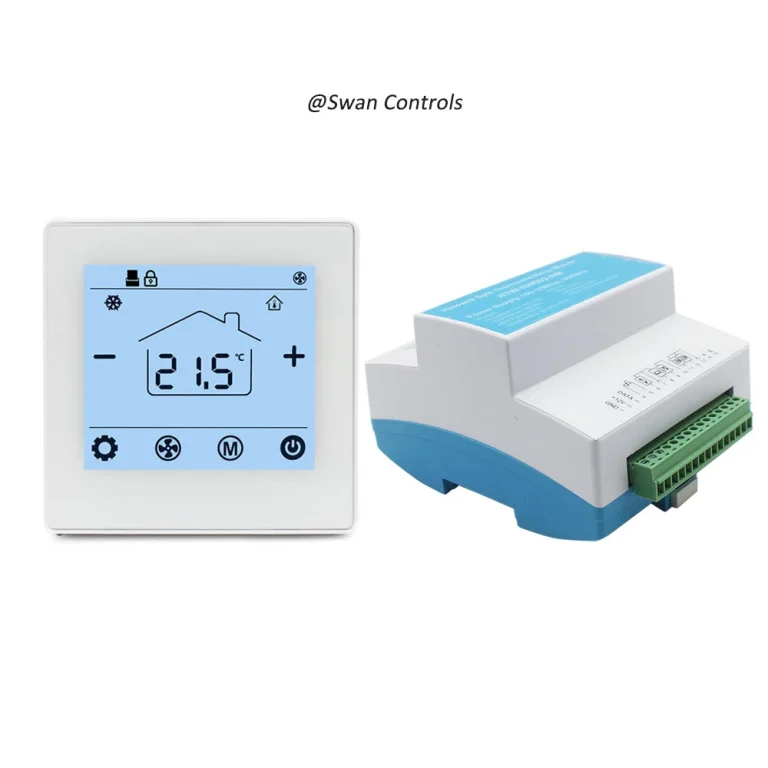
For project buyers, this means one thing: before choosing a model, confirm which control role the project really needs. A 220V boiler thermostat with Modbus or a house thermostat for water heating and boiler heating should be evaluated by its real heating role, not only by the word thermostat in the title.
Mistake 2: Setting the Boiler Temperature Higher Than Necessary
Another very common mistake is to set the boiler flow temperature too high by default. This often comes from a simple assumption: higher temperature should mean faster or better heating. In real use, that is not always the best result.
If the flow temperature is higher than the building actually needs, the boiler may still heat the space, but not as efficiently as it could. The heating can feel less even, and the customer may complain that the system is too aggressive, too expensive to run, or less comfortable than expected. In condensing systems, unnecessarily high flow temperature can also reduce the efficiency benefit that buyers hoped to achieve.
This point matters because buyers often evaluate a thermostat by maximum capability rather than by suitable control range. In reality, a thermostat that supports better practical control is often more valuable than one that simply supports a very high setting range. High by default does not mean better by default. A more appropriate setting often gives a better room experience and better boiler behaviour.
For overseas buyers, this point matters because complaints about “wrong control” are often really complaints about “wrong setting logic.” The better question is not “How high can the thermostat go?” The better question is “What setting suits the real heating demand of the project?”
This also affects customer perception. If the home heats quickly but feels stuffy, uneven, or too expensive to run, the user is likely to blame the thermostat first. The control may not actually be defective, but the chosen boiler water temperature may not suit the building or the emitters. That is why buying guidance should always talk about setting logic, not only device features.
Mistake 3: Installing the Thermostat in the Wrong Place
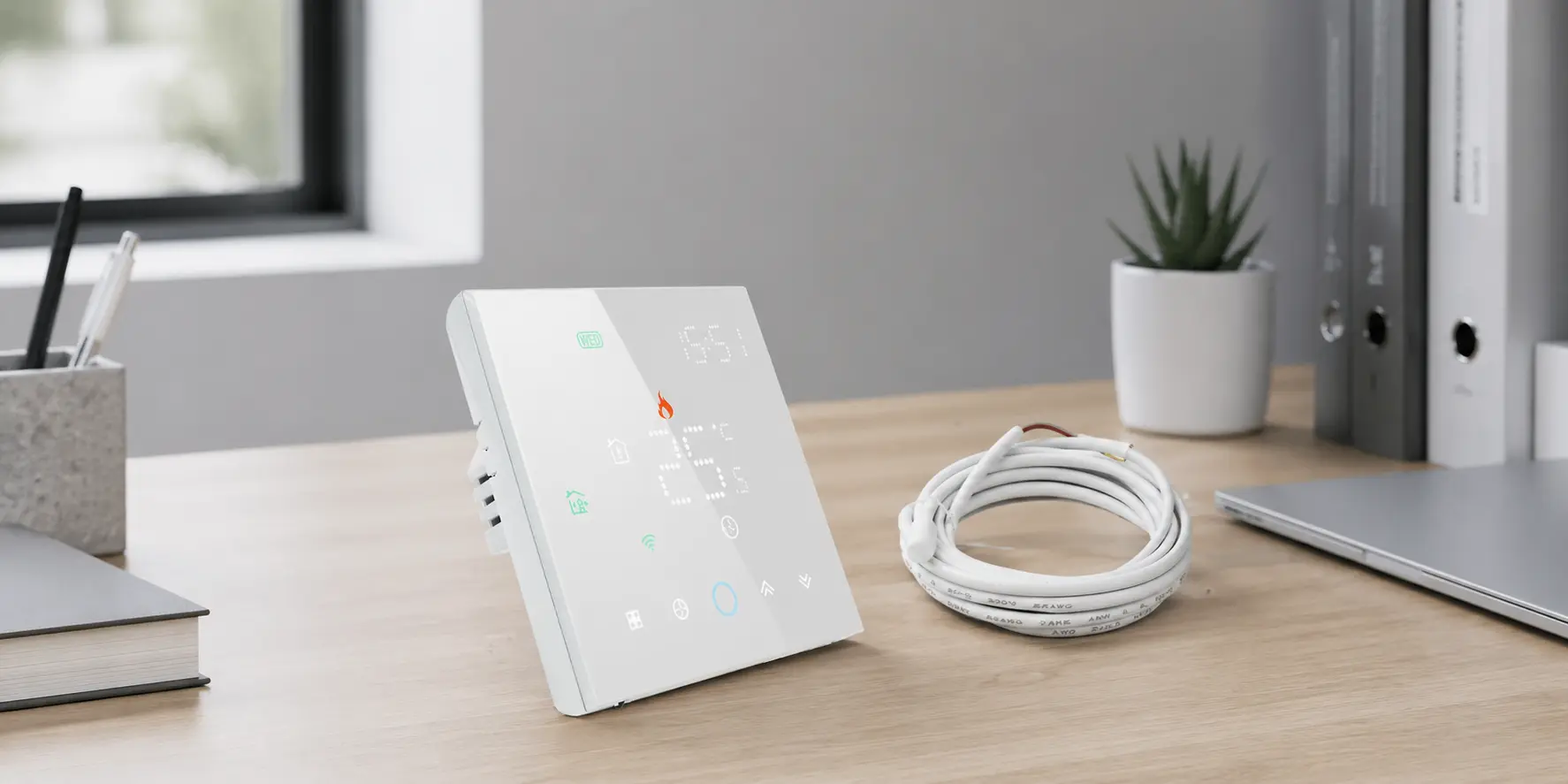
Some boiler thermostat complaints are really room sensing complaints. The boiler may respond correctly, but the thermostat is reading the wrong local condition because the installation location is poor. This happens when the thermostat is placed near direct sunlight, close to a draft, behind furniture, near a door, or in another position that does not represent the occupied room temperature properly.
When this happens, the customer may say the thermostat is inaccurate or unstable. In reality, the problem is that the thermostat is reading a small local temperature zone instead of the real room condition. A badly placed room thermostat can therefore make a correct boiler control system feel incorrect.
This is especially important in room thermostat and central heating thermostat projects, where the customer judges the system by how the room feels, not by whether the product can technically switch the boiler on and off. A thermostat that reads warm air from sunlight or a nearby heat source may shut the heating down too early. A thermostat that sits in a cold draft may keep asking for heat after the rest of the room is already comfortable.
For buyers and specifiers, this means product selection alone is not enough. Installation guidance matters too. A technically correct thermostat can still produce poor control if the sensing location is wrong. That is one reason why documentation, application notes, and installer support should be treated as part of the buying decision rather than as secondary paperwork.
Mistake 4: Ignoring Wiring and Call-for-Heat Logic
Wiring errors do not always look like wiring errors at first. A thermostat may power on. The screen may respond. The product may even appear to be configured correctly. But if the call-for-heat path is wrong, the boiler may not come on, or it may behave in a way the customer describes as inconsistent or faulty.
In many boiler-related controls, the heating demand logic depends on a simple but important switching path. If that path is assumed incorrectly, or if the installer and buyer are working from different control expectations, the end result is usually a complaint about the thermostat rather than a complaint about the wiring decision.
This is why buyers should not only compare screen style or smart functions. They should also confirm whether the thermostat matches the project’s real control logic and expected boiler response. This matters for basic home heating and it matters even more in export projects where the buyer, installer, and manufacturer may all be in different markets.
Many overseas buyers do not need a full technical wiring course before ordering, but they do need clarity on the control role. Does the product send a simple call for heat? Does it expect a standard room-thermostat control path? Does the project involve another control layer that changes how the thermostat interacts with the boiler? These are practical buying questions, and they help prevent very ordinary installation complaints later.
Mistake 5: Assuming Smart Thermostat Always Solves Boiler Complaints
Smart thermostat products are useful, but they are not automatic solutions for every boiler problem. This is a very common buying mistake. A project sees comfort complaints or control complaints and assumes the answer must be a more advanced thermostat with app control.
Sometimes that is true. If the project genuinely needs better scheduling, remote access, or more adaptive heating behavior, a smart thermostat can add real value. But if the real problem is poor room sensing, bad installation location, incorrect control role, or wrong wiring expectation, then a smart thermostat may only hide the root cause for a short time.
Buyers should therefore ask a more useful question: is this project missing smart features, or is it missing clear heating logic? Those are not the same problem.
It is also important to check whether the smart features match the customer’s real expectations. Some buyers need app access because the end user wants remote scheduling. Some need more adaptive logic because the heating system should respond more smoothly. Others simply want a stable room thermostat with no extra complexity. If the project does not benefit from the extra features, smart control can become a cost increase rather than a complaint solution.
Mistake 6: Treating Boiler Control as a Single Device Instead of a System
Many complaints appear because the project treats boiler control like one isolated product rather than a full heating control system. In a typical heating setup, control may involve a programmer, at least one room thermostat, thermostatic radiator valves, and possibly hot water control or smart scheduling as well. If one part of the control chain is misunderstood or badly matched, the customer may still blame the visible thermostat on the wall.
This systems view matters because the thermostat itself may be working correctly while another control element is limiting or changing the result. A boiler thermostat buying guide therefore should not focus only on the front panel. It should help buyers understand how the thermostat fits into the wider boiler controls and heating controls arrangement.
For example, if the project also needs water heating logic, then a 3A water heating thermostat may be more relevant than a product selected only as a simple room thermostat. If the application is broader room control rather than direct boiler heating, then products such as a 24VDC output PICV thermostat with Modbus or a keycard HVAC thermostat help remind buyers that thermostat logic always depends on the wider project environment.
This system-based view is especially useful for distributors and project buyers. They are often responsible for customer satisfaction across the whole control experience, not only for whether one thermostat screen powers on. When the system logic is treated as a whole, product complaints become easier to predict and reduce.
Mistake 7: Blaming the Product Before Checking the Control Setup
One of the most expensive mistakes is to blame the thermostat hardware before checking the setup. This often happens because the thermostat is the visible part of the system, so it becomes the easiest thing to blame. But many wrong-control complaints come from setup mismatch instead of hardware failure.
The control role may be misunderstood. The flow temperature may be set too high. The room thermostat may be in the wrong place. The wiring logic may not match the boiler expectation. The smart features may be irrelevant to the real issue. If these points are not checked first, buyers and installers may waste time replacing a product that was not the true cause of the complaint.
In other words, the thermostat is often blamed first because it is visible first. That does not mean it is the real fault first. For overseas buyers, this is a very important point. A replacement shipment or product-return discussion is expensive. A setup check is usually cheaper. That is why the first response to a complaint should be diagnostic, not emotional.
Expert Commentary: Wrong Boiler Control Usually Starts with the Wrong Assumption
Most boiler thermostat complaints start with a wrong assumption rather than a dramatic technical failure. The buyer assumes boiler thermostat and room thermostat are the same. The installer assumes the location is acceptable. The project team assumes a higher setting is safer. The customer assumes a smart thermostat will correct every heating problem. These assumptions are simple, but they create practical control errors.
That is why a strong buying guide should not only describe product features. It should also help buyers avoid the mistaken thinking that causes wrong control. If the role, setting, location, and wiring are checked properly, many customer complaints become much easier to prevent.
We support thermostat projects for boiler heating, water heating, room control, hotel HVAC, and commercial environments where stable control depends more on correct logic than on the display alone. Buyers who understand the real control chain earlier usually solve complaints faster and choose products more accurately.
Scientific Data and What It Means
Practical heating guidance shows why these mistakes matter. Lowering boiler flow temperature when it is higher than needed can improve efficiency by lowering return temperature. Room thermostat settings between 18°C and 21°C are also commonly recommended as a practical range to balance comfort and energy savings. This means many complaints about “weak heating” or “poor efficiency” are actually questions about the right control setting, not just about the thermostat model.
More advanced heating controls can improve this further. Load compensation can reduce the boiler output when only a small increase in room temperature is needed. Instead of running strongly until the room reaches the target, the boiler can respond more smoothly. That can improve comfort, reduce waste, and support longer equipment life.
For buyers, the practical lesson is clear. Correct control logic is often more important than stronger-looking settings or more impressive product labels. A thermostat with the right role and the right setup usually gives a better customer result than a thermostat with more features but the wrong control assumptions behind it.
Real-World Cases and User Feedback
Case 1: Complaint caused by thermostat role confusion
A buyer selected a product as a boiler thermostat, but later the installer and user treated it as the main room thermostat for the whole project. The resulting complaints were about comfort, not product quality. Once the control roles were clarified, the system behavior became easier to understand. The hardware had not changed. The explanation had.
Case 2: Complaint caused by wrong heating expectation
In a water heating project, the first assumption was that a higher temperature setting would give better results. Later, the buyer found that stable and practical control mattered more than simply using the highest setting. The complaint was resolved by adjusting logic rather than replacing the thermostat. That outcome is common in projects where “stronger” and “better” are treated as the same idea.
Case 3: Complaint caused by smart upgrade expectations
Another project expected a smart thermostat to solve comfort complaints automatically. After review, the real issue turned out to be installation location and system setup. The smart features were useful, but they were not the original answer to the complaint. The control problem existed before the smart upgrade, and it would have continued if the setup had not been corrected.
User feedback pattern: Customers often say the heating feels wrong, the boiler runs too often, or the temperature is unstable. Behind those simple complaints, the root cause is usually one of the mistakes already listed above.

A Practical Checklist Before You Blame the Boiler Thermostat
- Confirm whether the product role is boiler thermostat or room thermostat.
- Check whether the flow temperature is higher than the project really needs.
- Check whether the thermostat is installed in a representative room location.
- Check wiring and call-for-heat logic.
- Check whether smart functions are really relevant to the complaint.
- Check the wider heating controls arrangement.
- Check setup before assuming a hardware fault.
This checklist is simple, but it helps buyers and installers solve the most common wrong-control complaints in a practical way. It also gives distributors and suppliers a clearer path for after-sales support. Instead of jumping immediately to replacement or blame, the project can move through the most likely control checks first.
Frequently Asked Questions
1. Why is my boiler thermostat not controlling the heating correctly?
In many cases, the issue is not a broken thermostat. The more common causes are wrong control role, poor installation location, flow temperature set too high, incorrect wiring logic, or a mismatch between thermostat expectation and the actual heating system.
2. Is a boiler thermostat the same as a room thermostat?
No. A boiler thermostat mainly relates to boiler water temperature, while a room thermostat monitors room air temperature and decides when the heating system still needs to run.
3. What boiler thermostat setting is best for comfort and efficiency?
There is no single setting for every project. The best practical approach is to use a flow temperature that is high enough to heat the space properly but not higher than necessary, because unnecessarily high settings can reduce efficiency.
4. Can thermostat location affect boiler control?
Yes. If the thermostat is installed in a poor location, such as near sunlight, drafts, or blocked airflow, the system may respond to the wrong local temperature and create comfort complaints even when the boiler is working normally.
5. Will a smart thermostat fix boiler heating complaints?
Not always. A smart thermostat can help if the project needs scheduling, app control, or smarter heating behavior. But if the real problem is poor setup, wrong control role, or bad installation location, smart features alone will not solve it.
Most boiler thermostat complaints do not come from one single hardware fault. They come from control role confusion, poor setting, bad location, or incorrect wiring. If those points are checked early, many “product problems” disappear before they reach the customer.
References / Sources
- Energy Saving Trust, Heating controls
- Energy Saving Trust, When should I put my heating on?
- Worcester Bosch, Boiler Controls Explained
- Worcester Bosch, What are timers, programmers and programmable room thermostats?
- Vaillant Professional, Domestic Controls Brochure January 2025
- Vaillant Professional, sensoHOME / sensoHOME RF
- Honeywell Home, My thermostat is set to heat, but my boiler isn’t coming on. Why?
- Wikipedia, Thermostat
- Wikipedia, Boiler
- Wikipedia, Central heating