Quick Summary
Most wireless thermostat complaints are not caused by the room unit alone. The real problems often come from poor signal range, wrong receiver output, incorrect pairing, weak batteries, poor installation position, or system mismatch. A wireless room thermostat must be checked as a complete control system. Buyers and installers should test the thermostat, receiver, wireless range, relay output, and HVAC connection before blaming the product.
“The thermostat shows heating, but the boiler does not start.”
“The room temperature is not stable, even after pairing.”
“The customer says the wireless thermostat works sometimes, but not always.”
These are common complaints in wireless HVAC control projects. Many people first think the wireless thermostat is defective. In real cases, the problem is often caused by installation, receiver mismatch, poor signal, low battery, or wrong application.
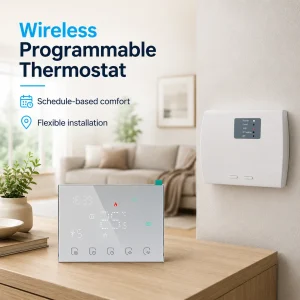
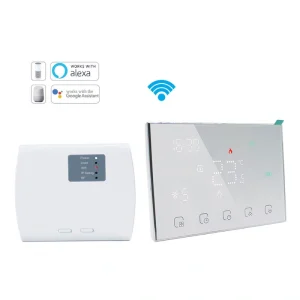
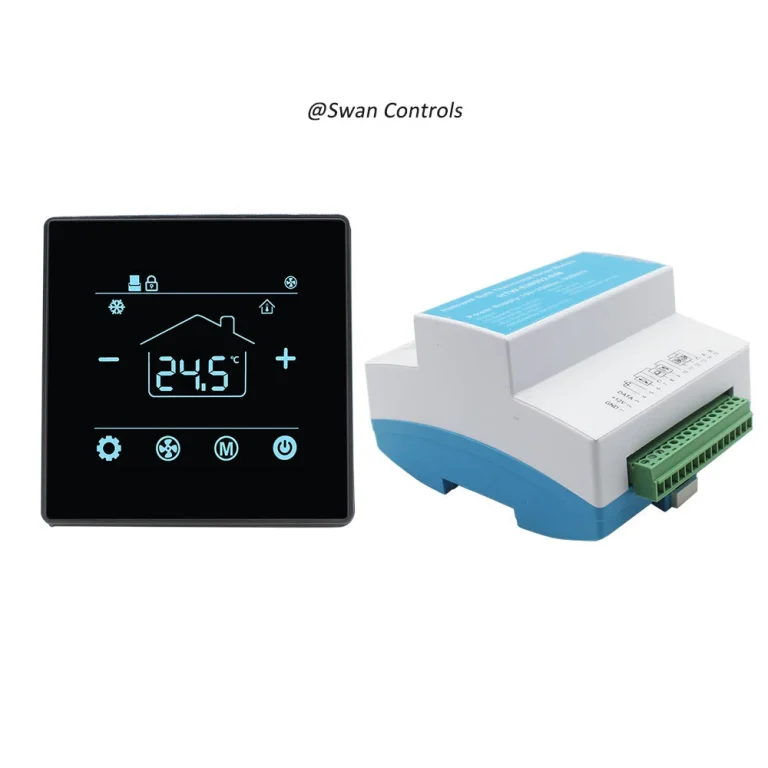
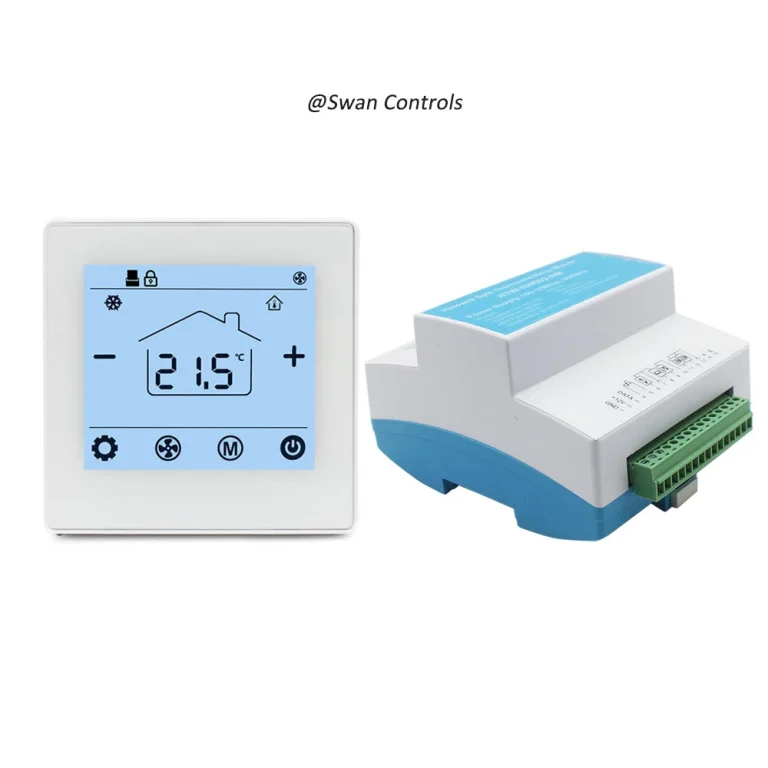
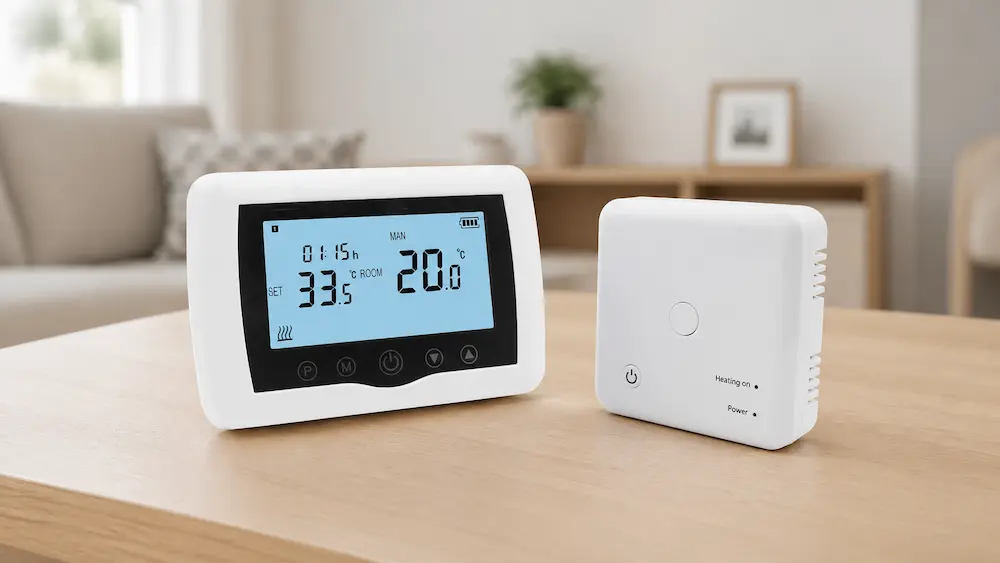
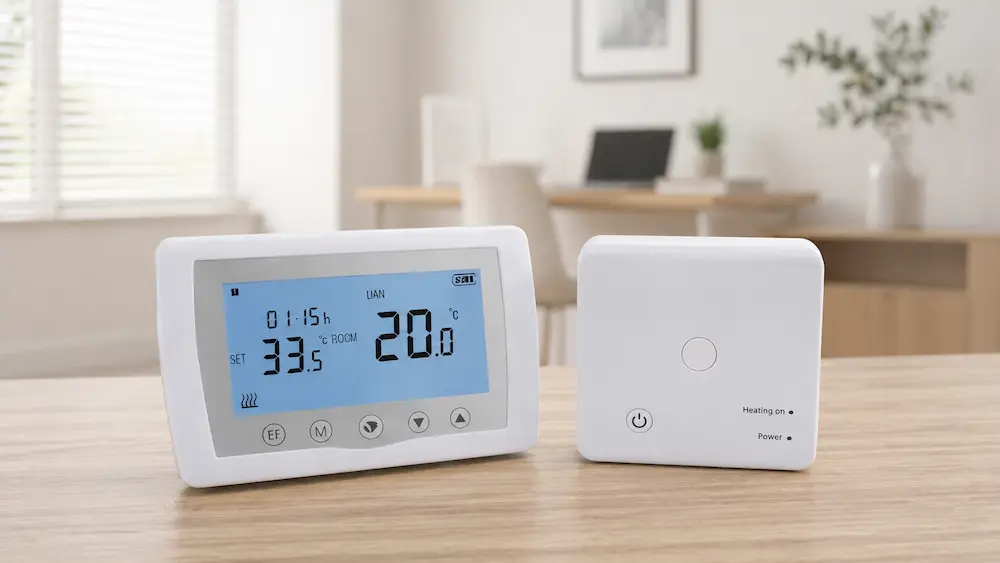
A wireless room thermostat is different from a simple wall controller. It has at least two parts: the room thermostat and the receiver. If either part is not matched or installed correctly, the system may not work as expected.
This article explains the most common wireless thermostat mistakes that cause wrong control or customer complaints. It is written for overseas buyers, HVAC distributors, installers, and project contractors who want fewer after-sales problems and better product performance.
Using the Wrong Receiver Output
The receiver is the part that controls the real HVAC equipment. Many complaints start here.
The room thermostat may send the correct signal. The display may show heating or cooling demand. But if the receiver output does not match the HVAC system, the equipment will not respond correctly.
Common receiver output mistakes include:
- Using relay output when dry contact is required
- Using the wrong voltage output for a valve or actuator
- Connecting normally open output when normally closed logic is needed
- Using a receiver with insufficient load rating
- Not checking boiler control requirements
For boiler heating, dry contact output is often needed. For valve control, actuator voltage and relay logic must match. For electric heating, load capacity is critical.
This mistake causes clear complaints:
- The thermostat looks active, but the boiler does not start
- The valve does not open or close correctly
- The system works in reverse logic
- The receiver relay fails too early
The solution is simple. Always check the receiver wiring diagram before installation. Do not only check the thermostat screen or product photo.
Poor Wireless Signal Between Thermostat and Receiver
A wireless thermostat depends on stable communication. If the room unit and receiver cannot communicate well, control becomes unstable.
This problem is common in homes with thick walls, villas with several floors, or boiler rooms far from the living area. The thermostat may work during testing, but fail after doors are closed or after the receiver is installed inside a cabinet.
Common signal problems include:
- Too much distance between thermostat and receiver
- Concrete walls blocking the signal
- Metal cabinets around the receiver
- Receiver installed too close to electrical noise
- Thermostat placed in a poor communication position
Typical complaints include:
- Heating starts late
- Control works sometimes but not always
- Receiver does not respond
- Pairing is lost after some time
- Customer thinks the thermostat is defective
Buyers should not rely only on open-area range. Open-area range is measured in easy conditions. Real rooms are different. Before bulk order or project installation, test the wireless room thermostat in a real building environment.
Incorrect Pairing or Pairing Loss
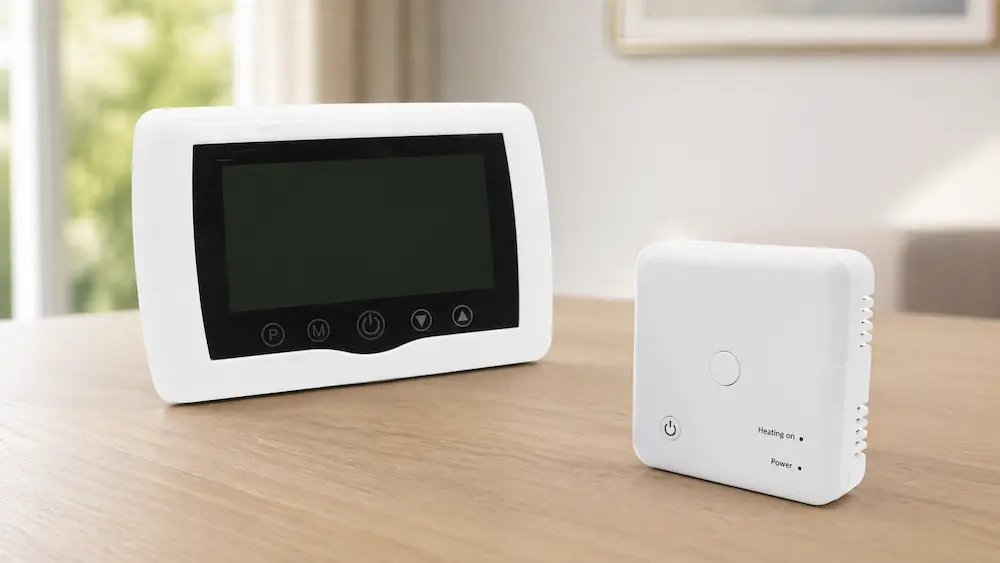
Pairing connects the wireless thermostat and receiver. If pairing is not done correctly, the system cannot work.
This mistake is very common when installers are not trained. It also happens when the manual is unclear or when several thermostats are installed in the same project.
Typical pairing mistakes include:
- Pairing the thermostat with the wrong receiver
- Not completing the pairing process
- Resetting the receiver by mistake
- Installing multiple sets too close during pairing
- Not checking the receiver indicator after pairing
In apartment or villa projects, several wireless thermostats may be installed at the same time. If the installer does not label each receiver and room unit clearly, pairing confusion can happen.
This causes serious complaints. One room may control another room. One thermostat may not control anything. The user may adjust the setpoint, but the wrong receiver responds.
Good practice:
- Pair one set at a time
- Label each thermostat and receiver
- Check receiver status after pairing
- Test ON/OFF response before final installation
- Keep pairing instructions clear in the manual
For OEM buyers, pairing steps should be written in simple language. A difficult pairing process increases after-sales pressure.
Wrong Thermostat Placement in the Room
Wireless placement is flexible, but this does not mean the thermostat can be placed anywhere.
A wireless thermostat still needs a proper temperature sensing position. Poor placement can cause wrong temperature reading and wrong control.
Common placement mistakes include:
- Placing the thermostat near a window
- Placing it under direct sunlight
- Placing it near a radiator or heater
- Placing it near a supply air outlet
- Putting it behind curtains or furniture
- Placing it too close to doors
The result is often temperature error. The thermostat may read warmer or colder than the real room condition. The system may stop too early or run too long.
Customer complaints usually sound like this:
- The display temperature looks wrong
- The room feels cold but the thermostat stops heating
- The room overheats
- The temperature changes too slowly
The correct solution is to place the wireless room thermostat in a stable room area. Avoid sunlight, airflow, heat sources, and blocked locations. The flexible placement advantage should be used to improve sensing, not create new problems.
Ignoring Battery Condition
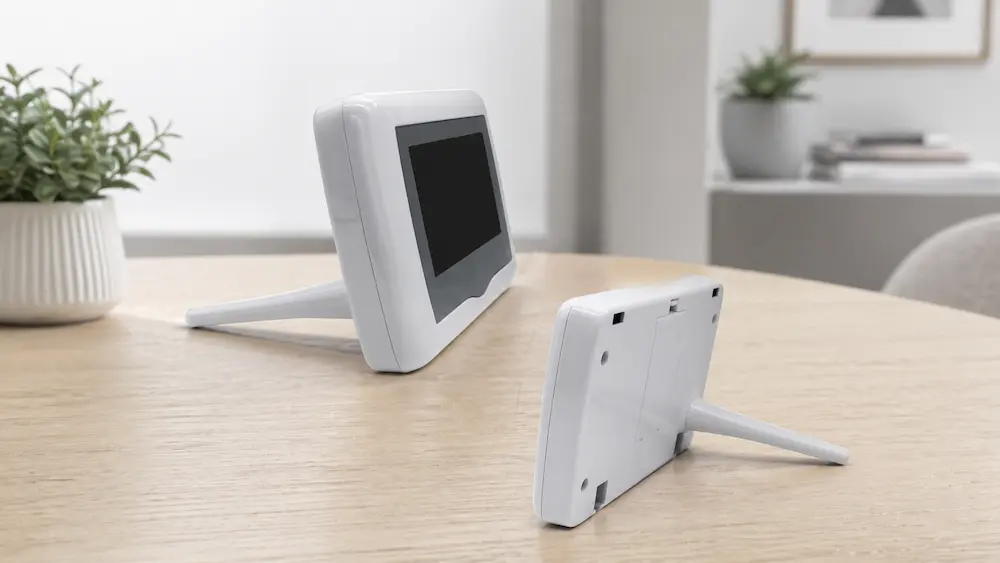
Many wireless thermostats use batteries for the room unit. This makes installation easier, but it also creates a maintenance risk.
Low battery can cause unstable display, weak signal, slow response, or communication loss. Some customers may not understand that battery condition affects control.
Common battery-related mistakes include:
- Using low-quality batteries
- Not replacing batteries in time
- Ignoring low-battery warning
- Installing batteries with wrong polarity
- Assuming all settings remain after battery removal
Battery issues can look like product failure. The thermostat may still show a display, but wireless transmission may become weak. The receiver may respond slowly or not respond at all.
For rental homes, hotels, and light commercial projects, battery maintenance should be planned. Buyers should check expected battery life, low-battery warning, and memory retention before choosing the product.
Wireless Frequency Interference
Wireless thermostats may use different communication methods, such as 433MHz, 868MHz, 915MHz, 2.4GHz, Zigbee, or Wi-Fi. Each option has its own market and application conditions.
Interference can happen when many wireless devices use the same environment. It may also happen near routers, metal panels, electrical cabinets, or thick building structures.
Possible interference sources include:
- Wi-Fi routers
- Wireless alarms
- Smart home devices
- Metal distribution boxes
- Electrical panels
- Other RF control devices
When interference happens, the problem may not be constant. This makes it hard to diagnose. The thermostat may work during one test and fail later.
Overseas buyers should confirm the wireless frequency and target market requirements before ordering. Some regions may also require CE, RED, FCC, or other RF-related compliance documents.
Choosing Wireless When Wired Is More Suitable
Wireless control is useful, but it is not always the best choice.
Some buyers choose wireless only because it sounds modern. This can be a mistake. If the project already has control wiring, a wired thermostat may provide more stable long-term communication.
A wireless thermostat is often more suitable for:
- Finished homes
- Retrofit projects
- Rooms without control wiring
- Boiler rooms far from living areas
- Flexible thermostat placement needs
A wired thermostat may be more suitable for:
- New construction projects
- Large commercial buildings
- Projects with planned control wiring
- Installations where signal stability is the top priority
- Buildings with strong wireless interference
The right choice depends on the project. Wireless is not automatically better. It is better when it solves a real wiring or placement problem.
Not Testing the Full System Before Handover
Some installers only check whether the thermostat display turns on. That is not enough.
A wireless thermostat system should be tested from the room unit to the receiver and then to the HVAC equipment. If the full control chain is not tested, problems may appear after handover.
Before finishing installation, test:
- Thermostat display and setpoint
- Pairing status
- Receiver output response
- Heating or cooling start
- Heating or cooling stop
- Signal through walls and doors
- Low-battery warning if possible
- Manual override function
This test should be done in the real installation position, not only on a desk. The receiver should be installed where it will actually stay. Doors should be closed. The thermostat should be placed where the user will actually use it.
Full-system testing prevents many after-sales complaints.
Scientific Data
The following data gives practical reference values for diagnosing wireless thermostat problems. Actual performance depends on building structure, receiver design, battery condition, HVAC load, and installation quality.
| Problem Area | Typical Reference Value | Complaint Risk |
|---|---|---|
| Open-area wireless range | 50 m to 100 m possible | May not reflect real indoor performance. |
| Typical indoor range | 20 m to 30 m | Shorter range may cause signal loss. |
| Signal loss through walls | 30% to 70% range reduction | Thick walls can cause unstable control. |
| Temperature sensor accuracy | ±0.5°C to ±1.0°C | Poor accuracy causes comfort complaints. |
| Bad placement error | 2°C to 3°C possible | Sunlight or airflow can mislead control. |
| Battery life reference | 6 to 24 months by model | Short life increases service calls. |
| Relay mechanical life | 100,000 to 1,000,000 cycles | Weak relay increases receiver failure risk. |
| Quiet room noise reference | 30 dB to 45 dB | Relevant when controlling fan coil systems. |
| Common relay rating range | 3A to 16A by model | Wrong rating may damage output contacts. |
These values show why complaints are often caused by installation and matching issues. A thermostat with good open-area range may still fail inside a concrete building. A room unit with good sensor accuracy may still read incorrectly if placed near sunlight.
Battery condition is also important. A low battery may reduce communication stability before the display fully turns off. This can make the problem look random.
Relay life matters because the receiver controls the actual load. If the relay is not suitable for the connected equipment, the receiver may fail earlier than expected.
For buyers and installers, the practical lesson is clear. Test the product under real installation conditions. Do not judge only by catalogue values.
Practical Cases
Case 1: A villa project had several wireless room thermostats. One room often failed to control heating. The product was not defective. The receiver was installed inside a metal cabinet, which reduced signal stability. After moving the receiver outside the cabinet, control became stable.
Case 2: A boiler heating project had a thermostat that showed heating demand, but the boiler did not start. The cause was wrong receiver output. The boiler required dry contact, but the selected receiver was not suitable. After changing to the correct receiver version, the system worked normally.
Case 3: An apartment user complained that the room was always too cold. The wireless thermostat was placed near a sunny window. The thermostat read a higher temperature than the real room condition. After moving it to a better position, comfort improved.
These cases show that wireless thermostat complaints often have practical causes. Most can be avoided with correct selection, installation, and testing.
If you‘re Looking for related products, kindly check the following details:
Electric Underfloor Thermostat
Expert Insights
Wireless thermostat demand is increasing because many projects need easy installation. Retrofit homes, apartments, villas, and boiler heating projects often benefit from wireless control.
However, wireless products need better project discipline. Buyers and installers must treat the thermostat and receiver as one system. They must check signal, output, pairing, battery, and load together.
For overseas buyers, good after-sales performance depends on clear manuals, correct receiver options, stable quality, and proper sample testing. A wireless thermostat that is easy to pair and easy to install will reduce support pressure.
For suppliers and manufacturers, it is not enough to sell the room display. The full system must be explained clearly. This includes receiver wiring, output logic, wireless range, pairing method, and maintenance points.
Final Troubleshooting Checklist
| Complaint | Possible Cause | Recommended Check |
|---|---|---|
| Thermostat shows heating, but equipment does not start | Wrong receiver output or wiring | Check receiver terminals and dry contact requirement. |
| Control works sometimes | Weak signal or interference | Test range in real room conditions. |
| Wrong room responds | Pairing confusion | Re-pair one thermostat and receiver at a time. |
| Room temperature feels wrong | Poor thermostat placement | Move thermostat away from sunlight and airflow. |
| Signal becomes unstable after months | Weak battery | Replace battery and check low-battery warning. |
| Receiver fails early | Relay load mismatch | Confirm load type and relay rating. |
This checklist helps buyers, installers, and after-sales teams find the real cause faster. It also helps reduce unnecessary product returns.
FAQ
1. Why does my wireless thermostat show heating but the boiler does not start?
This is often caused by wrong receiver output, incorrect wiring, or a mismatch with the boiler dry contact requirement.
2. Why does my wireless thermostat work sometimes but not always?
The most common causes are weak wireless signal, wall interference, receiver location, low battery, or unstable pairing.
3. Can poor placement affect a wireless room thermostat?
Yes. Sunlight, airflow, radiators, windows, and blocked locations can cause wrong temperature readings and unstable control.
4. How can installers avoid pairing mistakes?
They should pair one thermostat and receiver at a time, label each set clearly, and test receiver response before handover.
5. What should buyers check to reduce wireless thermostat complaints?
Buyers should check receiver output, wireless range, pairing method, battery life, relay rating, frequency, manual clarity, and real installation performance.
Wireless thermostat complaints usually come from system mismatch, poor installation, weak signal, low battery, or receiver output errors. The safest approach is to test the wireless room thermostat as a complete control system. Check the room unit, receiver, signal path, output wiring, relay load, and placement before handover or bulk order.
References / Sources
- Federal Communications Commission (FCC) — Radio Frequency Devices Compliance Guidance
- European Telecommunications Standards Institute (ETSI) — Short Range Devices Technical Guidance
- Radio Equipment Directive (RED) — Wireless Product Compliance Requirements
- International Electrotechnical Commission (IEC) — IEC 60730 Automatic Electrical Controls for Household and Similar Use
- UL Standards — Electrical Control and Switching Device Safety References
- Intertek — Wireless Product Testing and Certification Resources
- TÜV SÜD — Radio Equipment and Wireless Device Testing Guidance
- Honeywell Home — Wireless Thermostat Installation and Pairing Guides
- Danfoss — Room Thermostat and Heating Control Technical Publications
- Siemens Building Technologies — Room Thermostat and HVAC Control Literature
- ISO 9001 — Quality Management Systems Requirements
- General HVAC Wireless Control Installation References