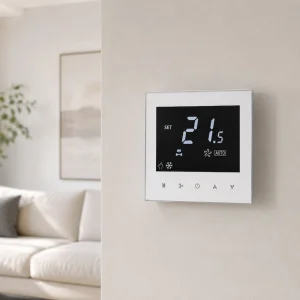
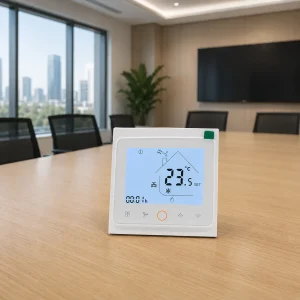
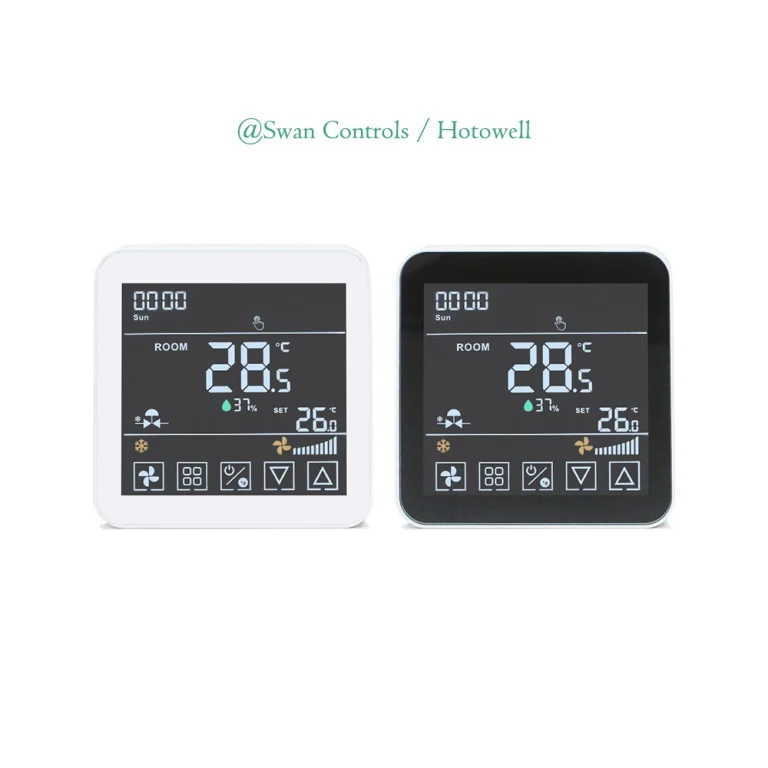
“Because boiler thermostat settings do more than just make the boiler run. They affect how hot the water gets, how smoothly the system responds, and how much energy the project uses.”
That is the point many buyers, installers, and end users miss at first. A boiler thermostat is not only about turning heat on or off. It is also about how the boiler behaves while it is running. In practical heating systems, the boiler thermostat settings affect the flow temperature of the water leaving the boiler, while the room thermostat decides whether the space still needs heat. Those two controls work together, not separately.
When the settings are sensible, the result is usually better comfort, more stable room conditions, and more efficient heating. When the settings are poorly matched to the building or the control logic, the result can be overheating, underheating, unstable room temperatures, wasted energy, repeated callbacks, or customer complaints that are difficult to diagnose. Energy Saving Trust explains this distinction clearly: the boiler thermostat controls how hot the water gets before it is pumped to radiators, while the room thermostat controls whether the home still needs heat based on room temperature.
Quick Summary
Quick Summary: The 3 Boiler Thermostat Setting Questions That Matter Most
Most projects become easier to manage when three questions are answered early. First, what flow temperature does the boiler actually need for this building and heating load? Second, how does that setting interact with the room thermostat and the wider heating controls? Third, does the project need simple control, or would smart thermostat functions, scheduling, load compensation, or Modbus control improve comfort and efficiency?
These questions matter because they help explain why the same boiler thermostat can feel stable in one project and problematic in another. A thermostat is not selected in isolation. It must match the boiler type, water temperature requirement, building insulation level, radiator or heating circuit design, control wiring, user behaviour, and project expectations.
What Boiler Thermostat Settings Really Control
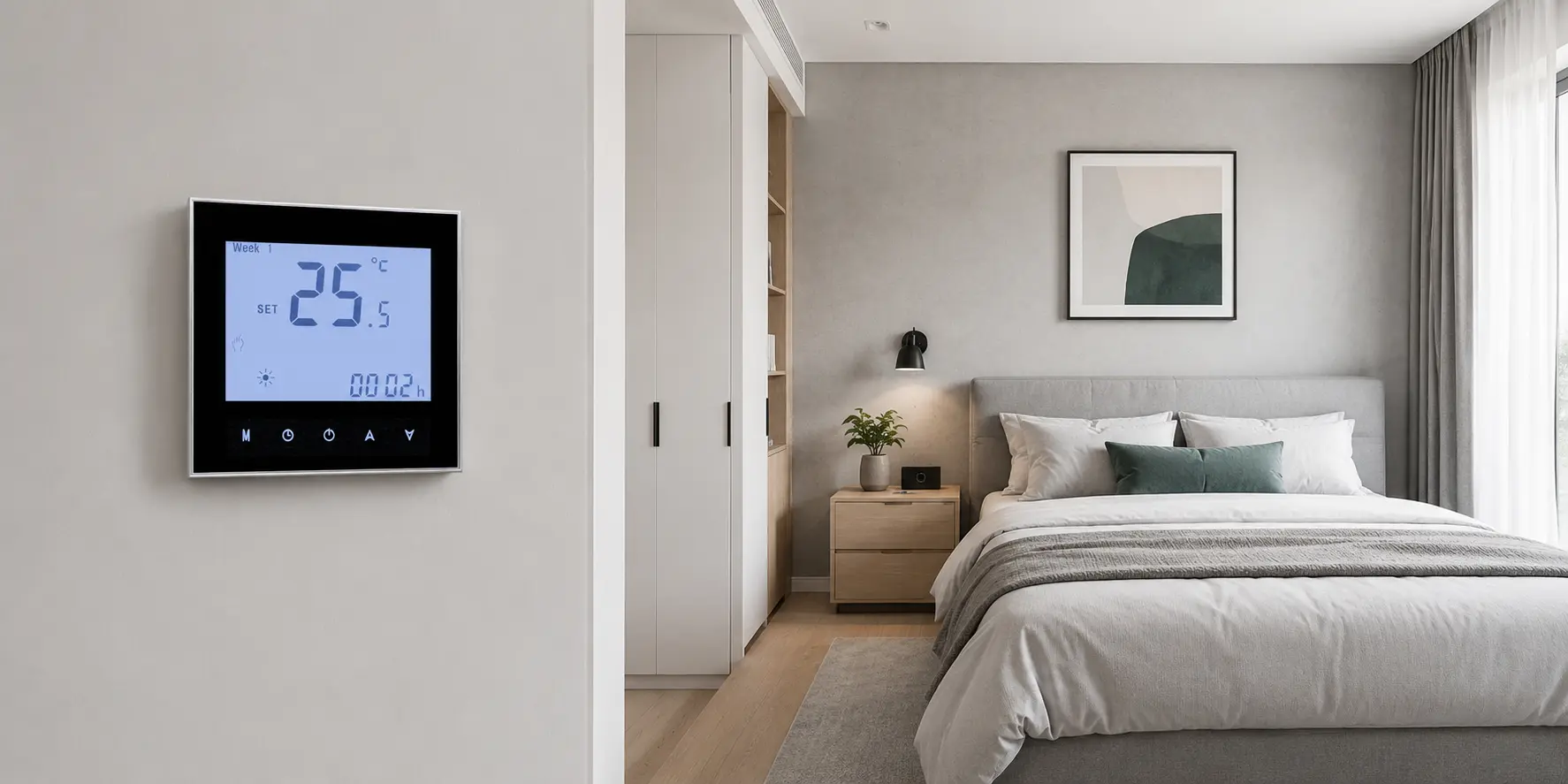
Many people think a boiler thermostat setting simply means “more heat” or “less heat.” That is too simple. In practice, the setting is closely linked to the flow temperature of the water leaving the boiler. If that water is hotter, radiators or heating circuits can deliver heat more aggressively. If it is lower, the heating may feel gentler and the boiler may run in a different efficiency range.
That means the boiler thermostat setting is directly connected to the character of the heating system, not just to whether the system is on. Energy Saving Trust specifically notes that the boiler thermostat controls the temperature of the water pumped to the radiators, while room thermostats manage the room-temperature demand side.
This is also why buyers should not assume that a higher setting automatically means a better result. A boiler thermostat set too high can still warm the building, but it may do so in a less efficient and less stable way. A boiler thermostat set too low may save some energy in theory but struggle to satisfy the heating demand in practice. The best result usually comes from matching the setting to the building, heat emitters, and control strategy rather than chasing the highest possible output.
For overseas buyers, this matters during supplier communication. If a buyer only asks for a boiler thermostat model without explaining whether the project is for radiator heating, water heating, underfloor heating, hotel rooms, apartments, or commercial buildings, the supplier may recommend a technically usable product but not the best-matched control solution.
Boiler Thermostat vs Room Thermostat: Why the Difference Matters
One of the biggest reasons boiler thermostat settings are misunderstood is that many people mix up the boiler thermostat and the room thermostat. The room thermostat monitors the air temperature in the room and switches the boiler on when the room is too cold and off when it reaches the chosen level. Worcester Bosch states this directly in its explanation of room thermostats. The boiler thermostat, by contrast, is concerned with the boiler water temperature.
These two controls are related, but they do not do the same job. The room thermostat answers one question: “Does this space still need heat?” The boiler thermostat answers another question: “How hot should the boiler water be while the heating system is working?”
This distinction matters because customers often judge the system by room comfort, not by boiler behaviour. If the room feels unstable, they may blame the thermostat on the wall. But the real issue may be a flow temperature that is too high, too low, or poorly matched to the room-control strategy. In the same way, a room thermostat set correctly can still feel disappointing if the boiler thermostat setting is not suitable for the building and heating loop.
| Control Type | Main Job | Main Effect on the System | Common Buyer Mistake |
|---|---|---|---|
| Boiler thermostat | Controls or influences boiler water temperature | Changes heating intensity, boiler behaviour, and efficiency range | Assuming the highest setting gives the best comfort |
| Room thermostat | Measures room air temperature and calls for heat | Changes when the heating demand starts or stops | Blaming room control when the boiler-side setting is wrong |
| Smart heating control | Adds schedule, app, adaptive logic, or remote control | Improves convenience and can refine comfort and efficiency | Expecting smart functions to fix poor setup logic |
How Boiler Thermostat Settings Affect Comfort
Comfort is the most visible result of thermostat settings, but it is not just about getting warm. Good comfort means the room warms at a reasonable speed, stays close to the desired temperature, and does not swing too far between too cold and too warm. Boiler thermostat settings influence this because they shape how strongly heat is delivered into the system.
If the flow temperature is much higher than the building needs, radiators may heat up fast and then stop sharply once the room thermostat is satisfied. That can create an uneven feel. Some rooms may feel warm too quickly, while other spaces remain cooler. The user may then adjust the room thermostat repeatedly, even though the real issue is the heating delivery pattern.
If the flow temperature is too low for the building and weather conditions, the room may take too long to recover or may never fully feel comfortable. This is especially important in older buildings, colder climates, poorly insulated rooms, or projects with undersized radiators. A low setting may look efficient on paper, but if it fails to meet comfort demand, the project still fails from the user’s point of view.
Comfort also depends on how the room thermostat and boiler controls work together. A room thermostat does not create heat by itself. It asks for heat. The boiler thermostat determines what kind of heat is then delivered into the system. This is why a home can have a correctly set room thermostat and still feel disappointing. The room control may be asking for heat correctly, but the boiler-side setting may be delivering it in a way that feels too aggressive or too weak.
How Boiler Thermostat Settings Affect Stability
Stability means how consistently the system holds comfort over time. It is possible for a heating system to feel warm and still feel unstable. This often happens when the boiler thermostat setting is poorly matched to the room demand.
High flow temperature can sometimes drive the system into a pattern of rapid warm-up followed by quick shut-off, especially if the room thermostat is satisfied quickly and the boiler then stops. Low settings can sometimes create the opposite problem, where the heating runs longer and struggles to recover the room promptly in colder conditions. Both situations can produce customer complaints, even though the thermostat itself may not be defective.
Load compensation matters here. Vaillant’s controls guidance explains that load compensation works with a room thermostat to determine how much energy is needed to reach the desired temperature. When only a small increase is needed, the boiler can run at reduced output to use the minimum energy needed. Vaillant states that this supports comfort, saves money and energy, and can improve the lifetime of the boiler.
For project buyers, this means stability is not only a product feature. It is a matching result. A suitable thermostat, correct boiler-side setting, reliable room sensing, and sensible control logic work together. If one part is wrong, the whole heating experience may feel unstable.
How Boiler Thermostat Settings Affect Energy Use
Energy use is where boiler thermostat settings become especially important for buyers. If the flow temperature is unnecessarily high, the boiler can still meet demand, but it may not operate in the most efficient way. Energy Saving Trust states that lowering boiler flow temperature can help make the boiler more efficient and lower energy bills when done appropriately. Its guidance also mentions around 65 degrees as a common practical flow temperature for conventional boilers, while keeping safety requirements for hot water in mind.
This does not mean every project should be pushed to the lowest possible setting. The target should still match the building, the heating emitters, and the actual user comfort requirement. But it does mean buyers should stop assuming that higher flow temperature is automatically safer or better.
In commercial projects, hotels, apartments, and rental properties, poor thermostat settings can create two types of cost. The first is operating cost, because the system may use more energy than necessary. The second is service cost, because unstable heating leads to complaints, site visits, troubleshooting, and sometimes unnecessary product replacement.
| Setting Situation | Likely System Behaviour | Possible Consequence | Buyer Recommendation |
|---|---|---|---|
| Flow temperature too high | Fast heating, sharp cycling, aggressive output | Uneven comfort, higher energy use, more complaints | Review building demand and reduce gradually where suitable |
| Flow temperature too low | Slow recovery, long heating time | Underheating, comfort failure, user dissatisfaction | Confirm radiator size, insulation, climate, and heating load |
| Room thermostat poorly placed | Wrong room temperature feedback | False heating demand or early shut-off | Place thermostat away from sunlight, doors, curtains, and heat sources |
| Smart control added without setup review | Better interface but same root issue | Buyer expects improvement but still receives complaints | Check control logic before upgrading features |
Common Boiler Thermostat Setting Mistakes
Setting the boiler too high “just in case”
This is one of the most common habits in the market. Buyers and users often think a higher setting is safer because it gives the system more heating power. In real use, this can increase energy use and make the system feel less even if the building does not need that level of flow temperature. It is a typical cause of energy-related complaints.
The consequence is not only higher energy consumption. A system that heats too aggressively can create comfort swings. The room heats quickly, the room thermostat stops demand, the system cools down, and then heating starts again. Users may describe this as “unstable,” even though the boiler and thermostat are technically functioning.
Expecting the room thermostat to solve a boiler-side problem
The room thermostat may be set correctly, but the room may still feel unstable if the boiler-side setting is poorly matched. Customers often adjust the visible room thermostat first because it is easy to access, even when the real issue is the boiler water temperature. This creates confusion and often delays the real fix.
For suppliers and installers, this creates unnecessary after-sales pressure. The thermostat may be blamed, returned, or replaced, while the system setup remains unchanged. That is why clear buyer education is valuable before project delivery.
Ignoring the wider heating controls setup
Boiler thermostat performance does not exist alone. The project may also include programmers, smart controls, TRVs, zoning controls, load compensation, or BMS communication. If the buyer thinks only in terms of one thermostat product, they may miss the wider control logic that actually affects stability and comfort.
Energy Saving Trust describes heating controls as a broad set of components that tell heating when to come on and off and what temperature to maintain. This is exactly why boiler thermostat settings should be reviewed together with the full control environment.
Choosing by product appearance instead of project logic
A clean screen, modern housing, and smart app interface are valuable, but they do not replace correct technical matching. A thermostat that looks premium may still be wrong for the project if it does not support the correct output, voltage, load, communication logic, or installation environment.
For B2B buyers, the practical rule is simple: design helps the product sell, but correct control logic helps the project succeed.
Room Thermostat Placement Still Matters in Boiler Projects
Even though this article focuses on boiler thermostat settings, room thermostat placement still matters because the room thermostat is the control that decides when more heat is needed. Worcester Bosch advises that room thermostats are often installed in hallways or landings and should be kept away from direct sunlight, curtains, and furniture.
If the room thermostat is badly placed, it may call for heat too early or too late, which then changes how the boiler behaves in practice. This means some boiler-side complaints are actually room-sensing complaints in disguise. The buyer may think the boiler thermostat setting is unstable, but the room thermostat may simply be reading a misleading local temperature.
In practical terms, comfort and stability depend on both the boiler side and the room side. A correct boiler thermostat setting cannot fully compensate for poor room sensing. Likewise, a well-placed room thermostat cannot fully solve a boiler flow temperature that is too high or too low for the project.
Do Smart Thermostats Change Boiler Thermostat Behaviour?
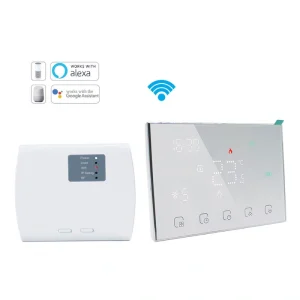
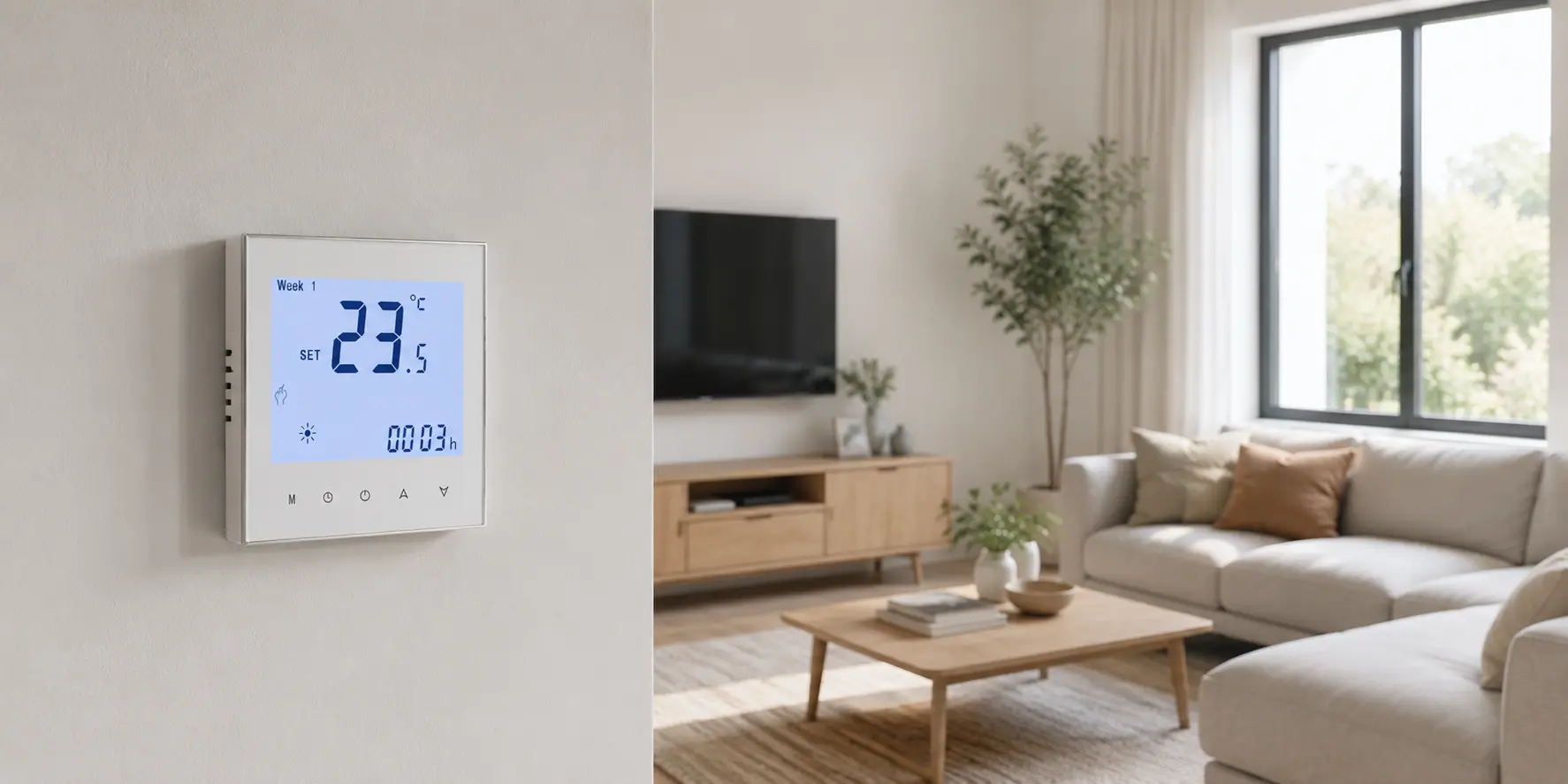
Smart thermostats can change the experience of boiler control, but not always in the way buyers first imagine. Worcester Bosch promotes smart heating controls for remote control and efficient scheduling, while Vaillant highlights app access and smarter control behaviour in its controls range. These features can improve convenience and allow better schedule management. But they do not remove the need to understand the underlying heating logic.
A smart thermostat helps most when the project actually needs schedule flexibility, app access, adaptive logic, or remote control. It does not automatically solve every comfort complaint. If the room thermostat is in the wrong location, if the boiler flow temperature is too high, or if the project misunderstands the control role, a smarter interface alone will not fix the root cause.
For distributors and OEM buyers, this is an important sales point. Smart thermostat functions should be presented as a control improvement, not as a cure for every heating problem. Buyers still need to confirm wiring, load, power supply, installation position, communication needs, and heating system type.
Real Project Context: Boiler, Water Heating, and Wider Control Logic
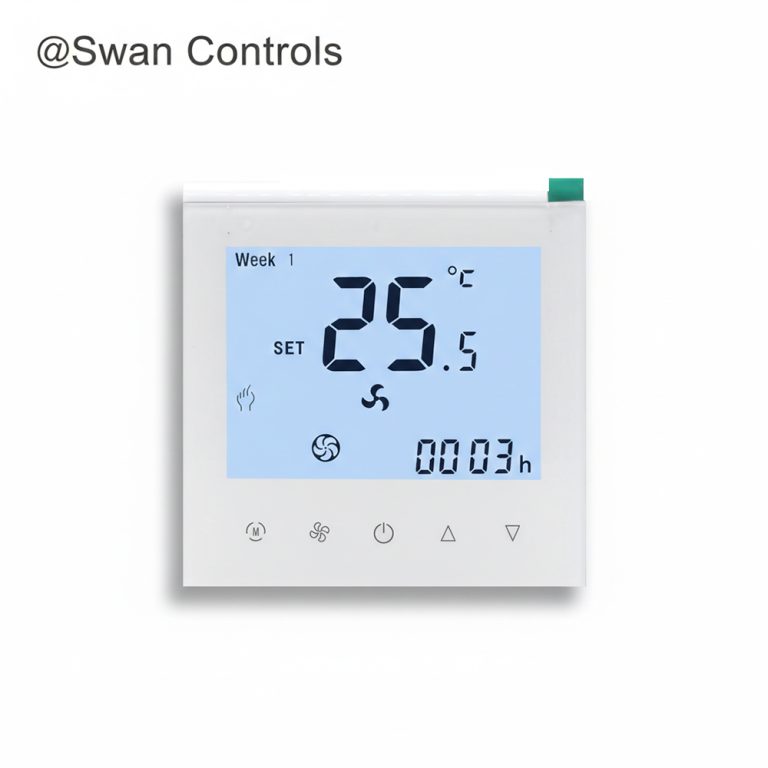
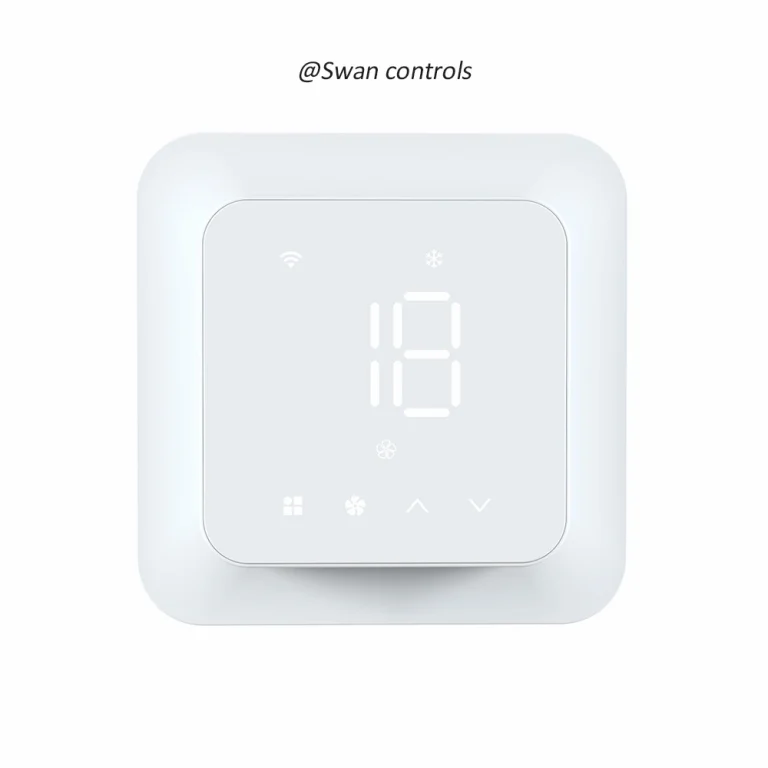
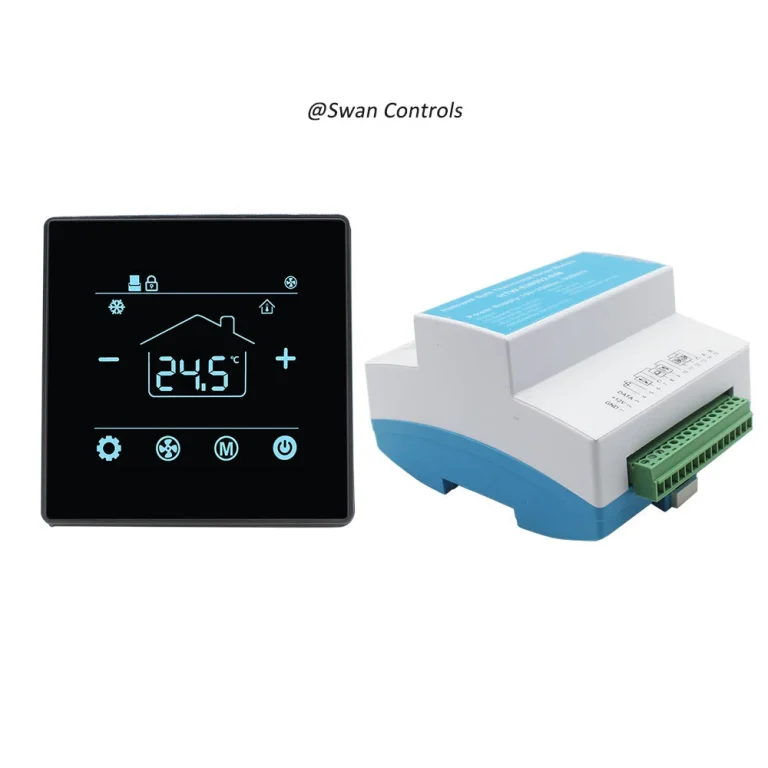
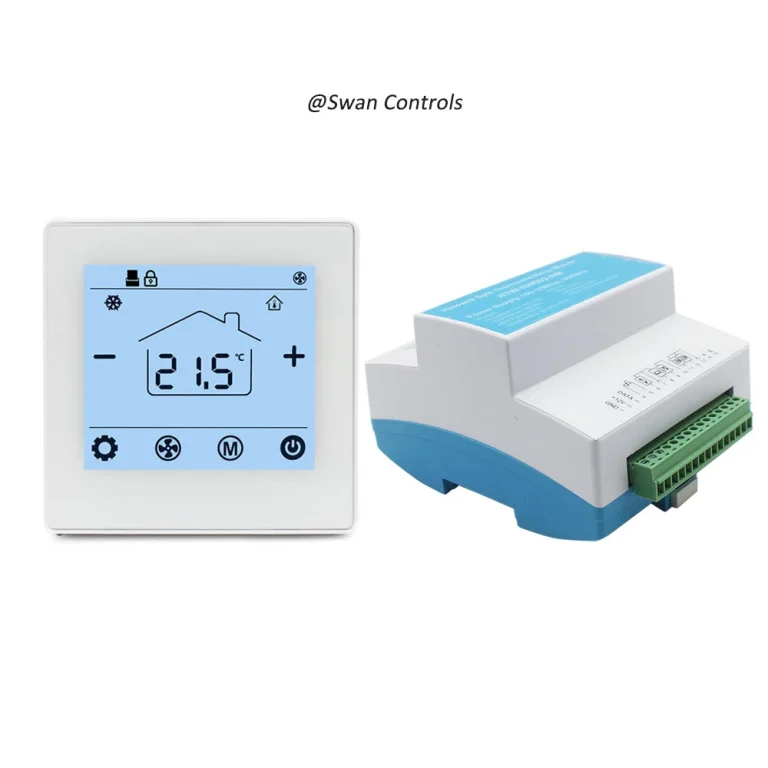
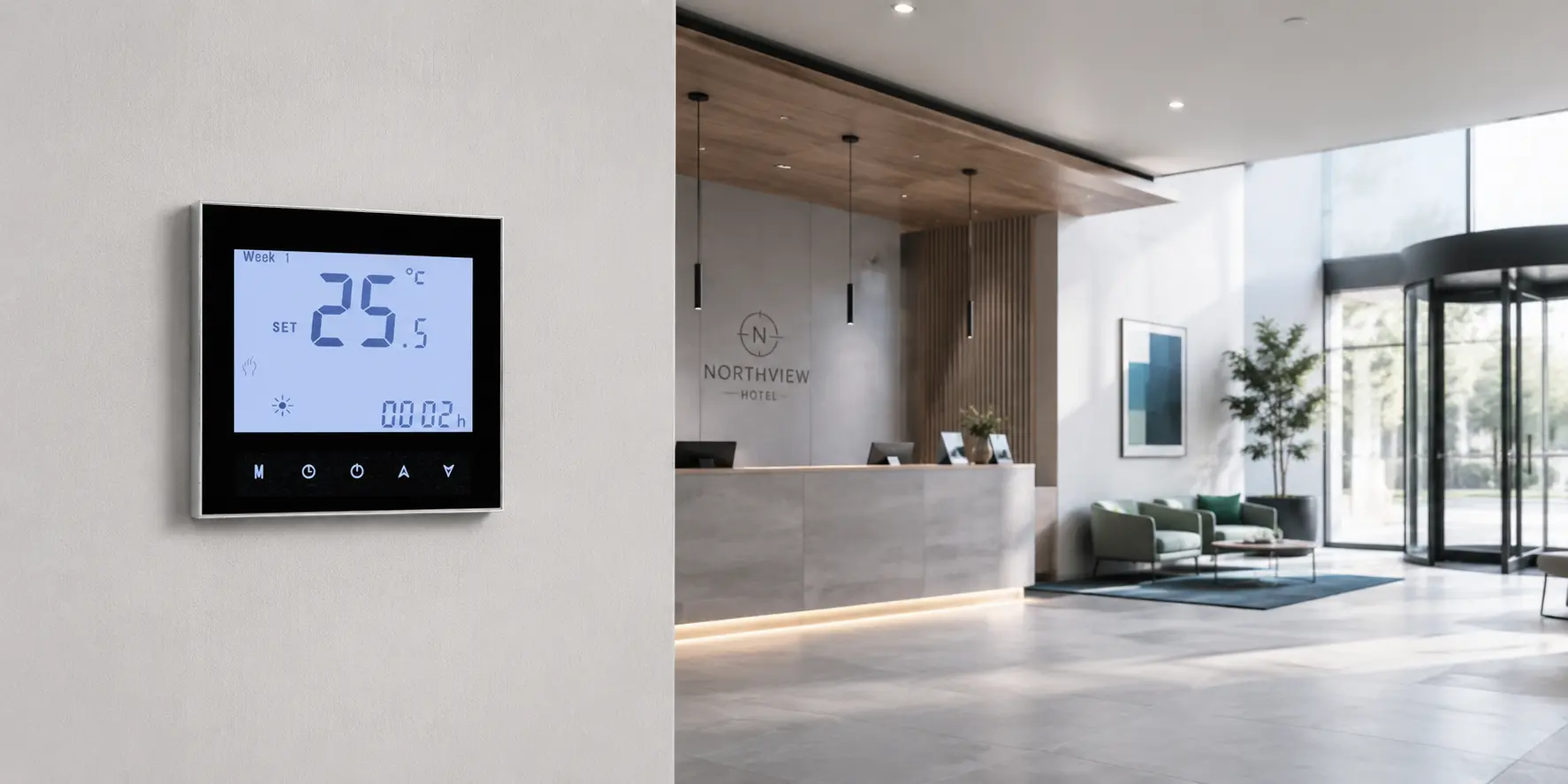
Boiler thermostat setting logic also matters when buyers compare related thermostat projects. A 220V boiler thermostat with Modbus or a house thermostat for water heating and boiler heating should be selected with the real heating role in mind. If the project is actually a water-heating control role, then a 3A water heating thermostat may be a closer fit.
These products are related, but they should not all be treated as the same control solution. Their value depends on how well they match the project logic. A boiler heating project, domestic water heating project, apartment heating control project, and commercial heating project may all use thermostat products, but their control priorities can be different.
At the same time, broader room-control references can still be useful. A 24VDC output PICV thermostat with Modbus or a keycard HVAC thermostat is not a classic boiler thermostat, but it helps remind buyers that thermostat performance always depends on the wider control environment. Room comfort complaints are often a control-chain issue, not only a product-label issue.
Expert Commentary: Wrong Boiler Thermostat Settings Usually Reflect a Wider Control Assumption
One useful way to think about boiler thermostat settings is this: the visible setting mistake often reflects a wider project assumption. A buyer assumes that higher flow temperature is always safer. A user assumes the room thermostat and the boiler thermostat do the same thing. A project team assumes a smart thermostat will automatically improve comfort. These are not random mistakes. They are predictable ways people simplify heating logic.
Once those assumptions are corrected, the heating system usually becomes easier to understand and easier to tune. We support thermostat projects for boiler heating, water heating, room control, hotel HVAC, and commercial heating environments where stable control depends more on correct logic than on display style alone.
For many buyers, the most useful step is not adding more features first. It is understanding what the current heating controls are already trying to do and then setting them more intelligently. This is also where a professional supplier can add value. A supplier should not only quote a model. It should help confirm whether the thermostat specification matches the project’s wiring, heating load, user behaviour, and control expectation.
Scientific Data and What It Means
Practical guidance from Energy Saving Trust shows why these settings matter. It states that lowering flow temperature can improve boiler efficiency when it is higher than needed, and it points to around 65 degrees as a common practical setting for conventional boilers while keeping safe hot water requirements in mind. It also notes that room thermostat settings in the 18–21°C range are typical for balancing comfort and savings.
These are useful reference points because they connect heating comfort with real operating efficiency rather than with guesswork alone. They also show why boiler thermostat settings should be adjusted with care. A setting is not good because it is high or low. It is good because it matches the real heating condition.
Vaillant’s load compensation guidance adds a second important point: when only a small temperature increase is needed, the boiler can run at reduced output. Vaillant explicitly says this supports comfort, saves money and energy, and can improve boiler lifetime. That is strong evidence that stability and efficiency are not only about hardware quality. They are also about how the controls are set and how intelligently they respond to demand.
| Technical Factor | Typical Reference Point | What It Means for Buyers |
|---|---|---|
| Conventional boiler flow temperature | Around 65°C is often discussed as a practical reference | Useful starting point, but must still match comfort, safety, and system design |
| Room thermostat comfort range | 18–21°C is commonly referenced for comfort and savings | Room-side demand should be matched with boiler-side heat delivery |
| Load compensation | Boiler output adapts to actual room demand | Can improve stability, efficiency, and boiler operating behaviour |
| Smart heating control | Scheduling, app access, adaptive control | Useful when the project needs control flexibility, not just a better-looking panel |
Real-World Cases and User Feedback
Case 1: A home heating complaint caused by control-role confusion
A homeowner believed the room thermostat should directly control how hot the boiler water became. When the room felt unstable, the boiler thermostat was blamed. After the difference between room thermostat and boiler thermostat was explained, the system behaviour made more sense.
The complaint was not caused by a broken thermostat. It was caused by a misunderstanding of what each control was supposed to do. This type of case is common in residential heating because users interact mostly with the wall thermostat and rarely think about boiler-side water temperature.
Case 2: A water-heating project with the wrong “more is better” assumption
A buyer expected that a higher boiler-side setting would always give stronger and better heating. In practice, the result was more aggressive system behaviour and complaints about uneven comfort. The improvement came from better matching the setting to the heating load, not from increasing it further.
This kind of complaint is common because “stronger” sounds positive during buying, but “more suitable” is usually more valuable in real use. In B2B sourcing, the right product is not the one with the highest setting range. It is the one that matches the system requirement most reliably.
Case 3: A smart-upgrade project where the real issue was setup logic
Another buyer believed that adding smart thermostat functions would solve comfort complaints automatically. Later review showed the problem was a poor combination of room-sensing location and boiler setting logic. The smart features were still useful, but they were not the original solution to the comfort problem.
This is a good example of why smart controls should be evaluated as part of the full heating system, not as isolated fixes. A smart interface can improve convenience, but control accuracy still depends on sensing, boiler settings, wiring, and system design.
User feedback pattern: Customers usually describe the result in simple words. They say the room feels too hot, the heating feels unstable, the boiler runs too much, or the bills seem too high. Behind those simple complaints, the root cause is often a setting that does not match the real demand or a misunderstanding of how the boiler thermostat and room thermostat work together.
A Practical Boiler Thermostat Settings Checklist
- Confirm whether the complaint relates to boiler water temperature or room temperature.
- Check whether the flow temperature is higher than the project really needs.
- Check whether the room thermostat is in a representative location.
- Check how the room thermostat and boiler controls work together.
- Check whether smart thermostat features are relevant to the actual complaint.
- Check whether the project should be treated as boiler heating, water heating, or a broader control application.
- Check the power supply, relay rating, wiring logic, and communication requirement before ordering samples.
- Check the setup before blaming the hardware.
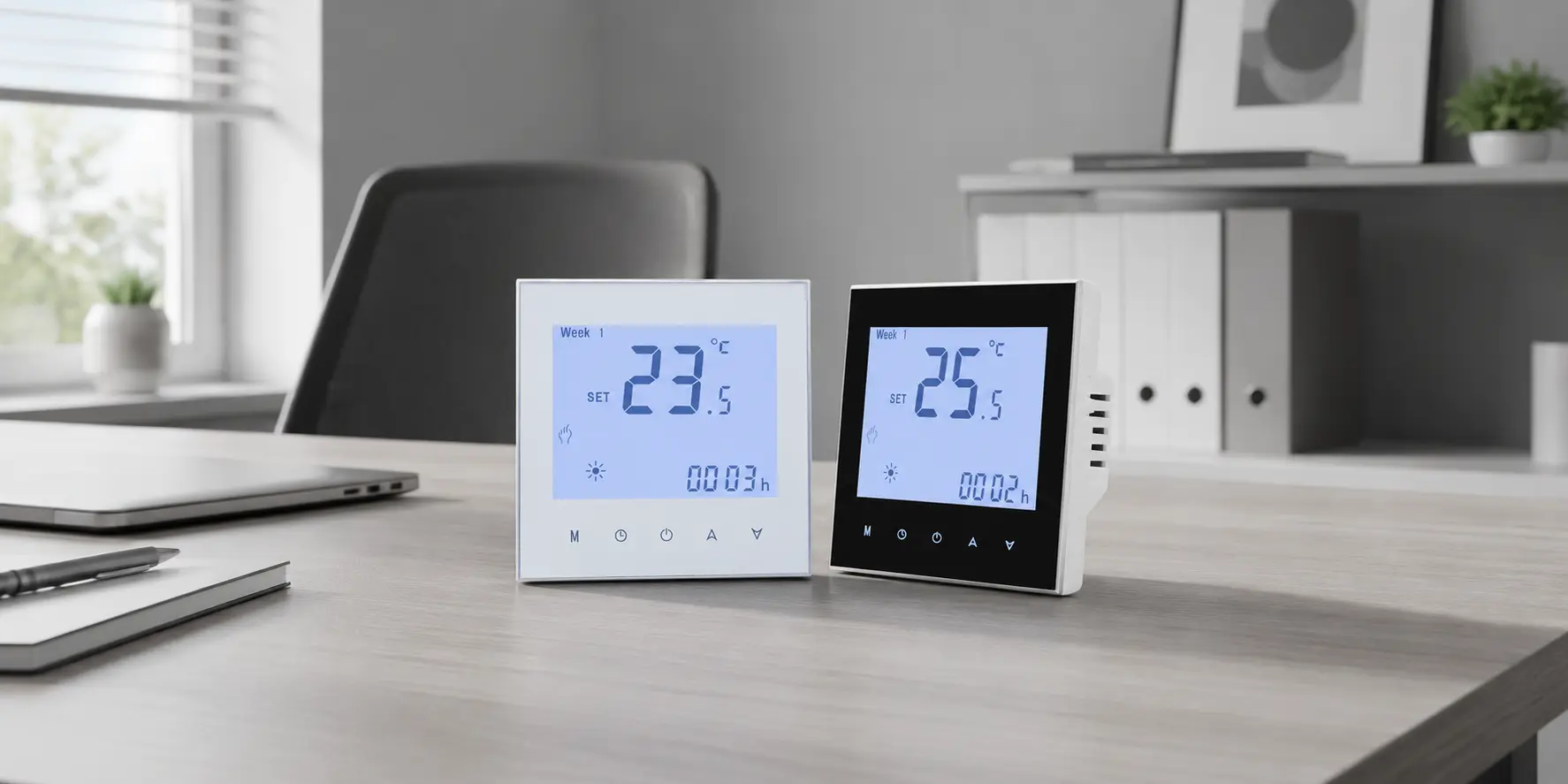
This checklist is simple, but it helps buyers and installers move from guesswork to diagnosis. It also helps reduce the tendency to blame the visible thermostat first without examining the heating logic around it.
How Buyers Should Choose the Right Boiler Thermostat
The right boiler thermostat should be selected according to system type, not only product design. If the project needs basic boiler heating control, a simple and reliable thermostat may be enough. If the project needs water heating control, the buyer should confirm the current rating, load type, and wiring logic. If the project needs Modbus communication, the buyer should confirm whether the thermostat supports the correct communication points. If the project needs smart control, the buyer should confirm whether remote access, scheduling, and adaptive logic actually solve the project problem.
| Project Situation | Better Thermostat Direction | Reason |
|---|---|---|
| Basic residential boiler heating | Simple boiler thermostat | Stable local control matters more than complex features |
| Water heating application | Water heating thermostat with suitable current rating | Load matching and safe switching are key |
| Apartment or commercial heating | Programmable or smart thermostat | Scheduling and user control can improve management |
| Project requiring building control integration | Modbus or communication-enabled thermostat | Communication points must match project monitoring needs |
| Comfort complaint after installation | Review settings before replacing thermostat | The issue may come from flow temperature or sensor placement |
Supplier Questions Before Ordering a Boiler Thermostat
Before ordering a boiler thermostat, buyers should send more than a product picture or voltage requirement. A reliable supplier needs enough project information to confirm whether the thermostat fits the system. This reduces the chance of wrong samples, wiring problems, and after-sales complaints.
| Information to Send | Why It Matters |
|---|---|
| Boiler or heating system type | Confirms whether the thermostat is for boiler heating, water heating, or wider room control |
| Power supply | Prevents voltage mismatch and wiring mistakes |
| Load current | Helps confirm whether the relay capacity is suitable |
| Room thermostat location | Helps identify possible sensing problems |
| Smart control requirement | Confirms whether app, scheduling, or remote access is needed |
| Communication requirement | Confirms whether Modbus or other integration is needed |
| Sample testing plan | Allows the supplier to recommend a model that can be verified before bulk order |
Final Recommendation for Heating Project Buyers
If the project is simple, do not overcomplicate the thermostat choice. Choose a stable boiler thermostat that matches the voltage, load, and heating control logic. If the project involves water heating, confirm the current rating and switching requirement first. If the project requires smart control, make sure the smart functions solve a real problem rather than only improving appearance. If the project requires communication, confirm the Modbus or control points before sample approval.
The most expensive thermostat mistake is not always buying the wrong display. It is buying a product that looks right but does not match the heating system. That mistake can lead to slow commissioning, unstable comfort, unnecessary replacement, and customer dissatisfaction.
For overseas buyers, the best approach is practical: describe the project clearly, confirm the boiler-side setting logic, check room thermostat placement, review smart control needs, and ask the supplier to verify the wiring and load before ordering samples.
Semantic Closure: What Boiler Thermostat Settings Really Mean for Buyers
Boiler thermostat settings are not just small user adjustments. They shape how a heating system delivers comfort, how stable room temperature feels, and how efficiently the boiler operates. The best option is not always the highest setting or the smartest-looking thermostat, but the control solution that matches the boiler, water temperature demand, room sensing condition, wiring logic, and project application.
Buyers should avoid three common mistakes: treating boiler thermostats and room thermostats as the same thing, assuming higher flow temperature always means better heating, and expecting smart thermostat functions to solve poor setup logic automatically. As heating projects become more efficiency-focused, correct control matching will matter more for comfort, energy use, after-sales performance, and long-term supplier trust.
Frequently Asked Questions
1. How do boiler thermostat settings affect comfort?
Boiler thermostat settings affect comfort by changing how hot the boiler water becomes and how strongly heat is delivered into the system. If the setting is too high or too low for the building, the room may feel unstable, slow to warm, or too aggressive.
2. Do boiler thermostat settings affect energy use?
Yes. If the flow temperature is higher than necessary, the boiler may run less efficiently. A more suitable boiler thermostat setting can improve efficiency and reduce unnecessary energy use when it matches the heating demand properly.
3. Is a boiler thermostat the same as a room thermostat?
No. A boiler thermostat mainly relates to boiler water temperature, while a room thermostat monitors room air temperature and decides when the heating still needs to run.
4. Can a smart thermostat improve boiler control stability?
It can help when the project benefits from scheduling, remote access, or smarter control logic. But a smart thermostat does not automatically fix poor room sensing, unsuitable boiler settings, or a misunderstanding of the heating control roles.
5. What is a practical boiler thermostat setting for efficiency?
There is no single perfect setting for every project, but Energy Saving Trust notes that around 65 degrees is a common practical flow temperature for conventional boilers, provided hot water safety requirements are still met.
References / Sources
- Heating Controls — Energy Saving Trust — Energy Saving Trust Guidance
- Should I Turn My Boiler’s Flow Temperature Down? — Energy Saving Trust — Energy Saving Trust Advice Platform
- Boiler Controls Explained — Worcester Bosch — Worcester Bosch Homeowner Guidance
- Boiler Controls — Worcester Bosch — Worcester Bosch Heating Advice
- Domestic Controls Brochure January 2025 — Vaillant Professional — Vaillant Professional Documentation
- Heating Controls — Vaillant Professional — Vaillant Control Guidance
- Thermostat — Wikipedia Contributors — Wikipedia Reference Platform
- Central Heating — Wikipedia Contributors — Wikipedia Reference Platform