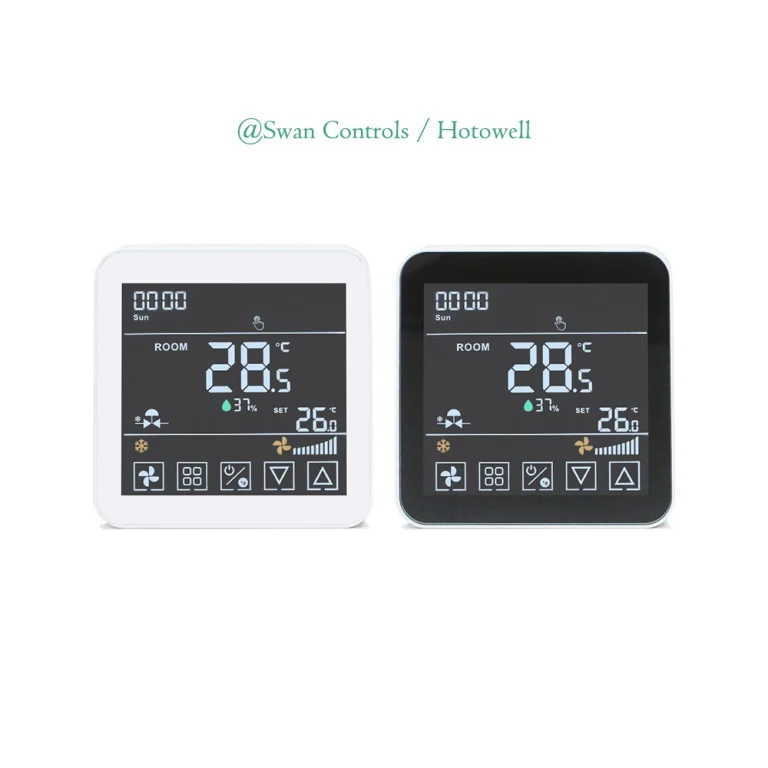
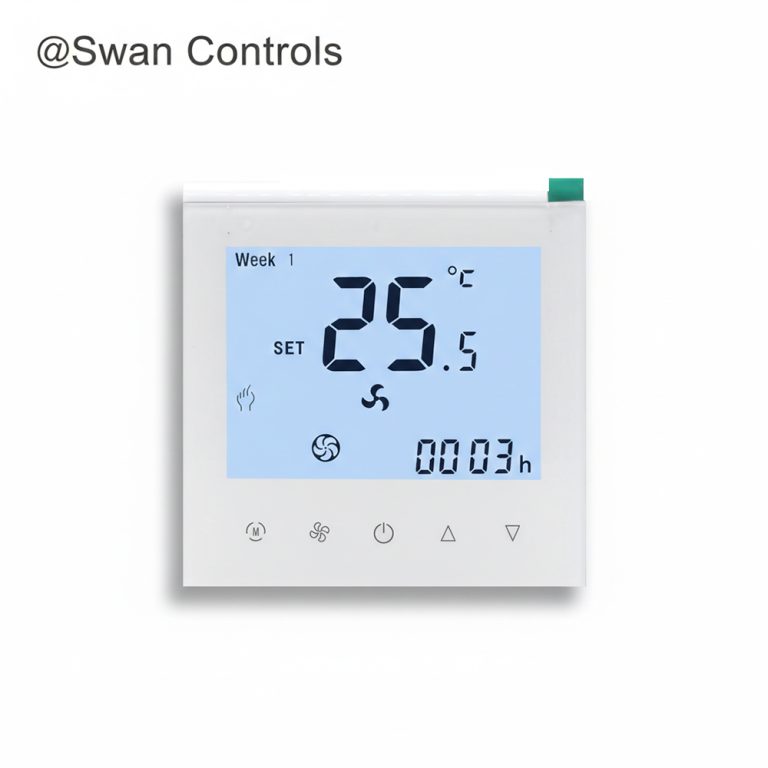
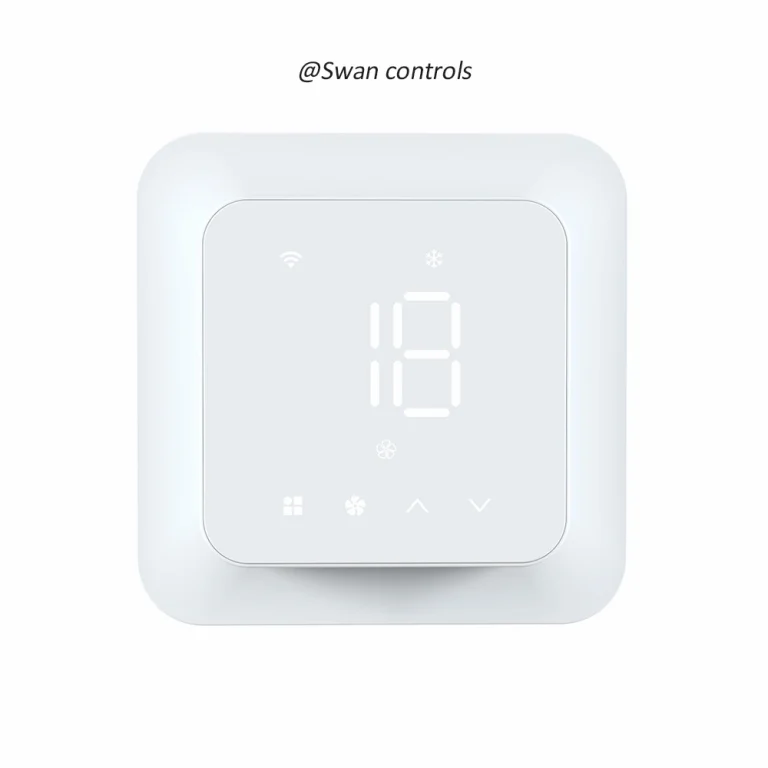
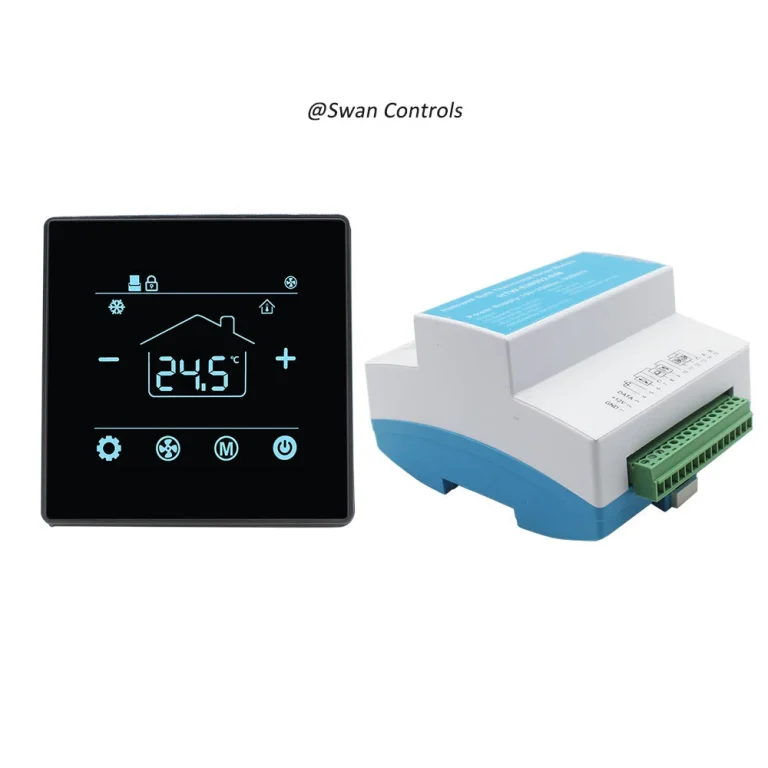
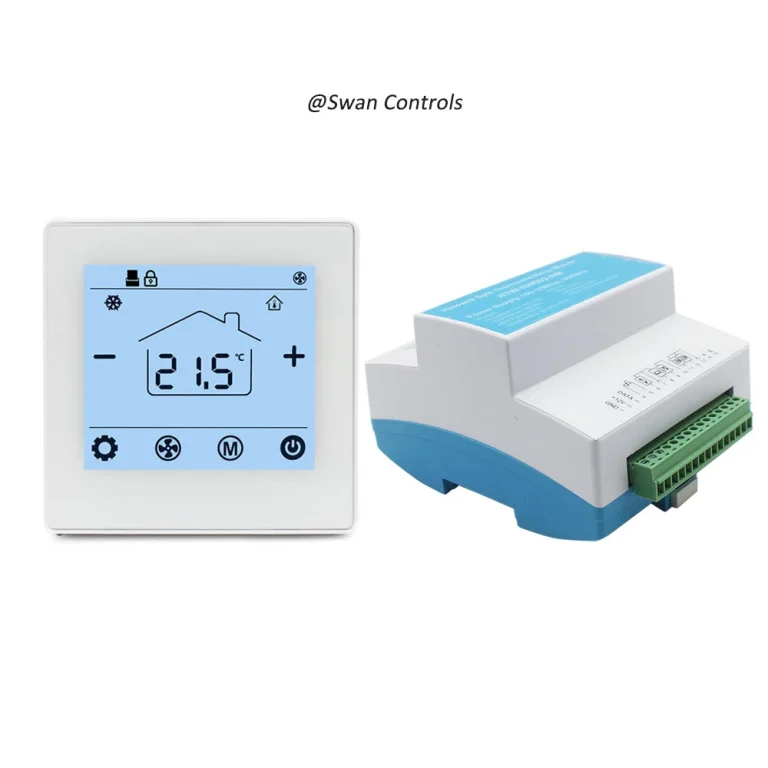
“Can you quote this underfloor heating thermostat for us?”
“Yes, but before price, we should confirm whether your project is electric or water-based, whether it needs a floor sensor, and whether the thermostat is for residential use or a wider commercial control project.”
That is the better way to start an export order. In many overseas projects, the wrong thermostat is not chosen because the buyer lacks interest or experience. It is chosen because the request sounds clear on the surface but is still incomplete underneath. The buyer asks for an underfloor heating thermostat. The supplier sends a quotation. The project moves forward. Later, it becomes clear that one side meant electric floor heating with external sensor control, while the other side assumed a broader room thermostat role. Or the buyer wanted a WiFi thermostat because the interface looked modern, but the real project first needed stable floor-sensor logic. Or the buyer wanted one thermostat specification for both an apartment project and a commercial multi-room site, even though the control priorities were not the same.
This is why a buying guide for overseas buyers should not begin with appearance or price alone. It should begin with the questions that decide whether the thermostat is truly suitable for the job. Underfloor heating thermostat buying is not only a product decision. It is a system-fit decision. The project should first confirm system type, sensor logic, control role, installation environment, and documentation requirements. Once those points are clear, product comparison becomes much safer and much more useful.
Quick Summary: The 5 Checks That Prevent Most Buying Mistakes
Most underfloor heating thermostat purchasing problems can be reduced by checking five points early. First, confirm whether the project uses electric underfloor heating or water underfloor heating. Second, confirm whether the thermostat must use a floor sensor, an air sensor, or both together. Third, confirm whether the project is residential or commercial, because those two project types often need different control priorities. Fourth, confirm whether WiFi and app control are truly useful or only visually attractive. Fifth, confirm the document package before order confirmation, including datasheet, sensor explanation, wiring notes, and installation guidance. If these five points are written clearly before sampling or mass production, the risk of wrong selection becomes much lower.
What Overseas Buyers Usually Mean by “Underfloor Heating Thermostat”
One of the first export risks is terminology. Many buyers say underfloor heating thermostat as if it refers to one simple category, but in practice the phrase may describe several different control needs. One buyer may mean an electric underfloor heating thermostat with external floor sensor support. Another may mean a water underfloor heating room thermostat used in a zoned manifold system. Another may mean a WiFi room thermostat for floor comfort in a residential renovation. Another may even compare an underfloor heating thermostat with a broader room thermostat or boiler-linked heating thermostat because the visual appearance is similar.
That is why the supplier and buyer should not assume the product role is obvious from the name alone. In export work, a broad thermostat phrase can hide an important mismatch. The thermostat may look suitable, but the system type, sensor mode, and load expectation may still be wrong. A buying guide therefore needs to help overseas buyers narrow the definition before discussing detailed features.
A practical rule is simple: if the project uses underfloor heating, do not stop at the word thermostat. Ask what type of floor heating it is, what the thermostat must sense, and what the thermostat is expected to control.
Check 1 — Confirm Whether the System Is Electric or Water Underfloor Heating
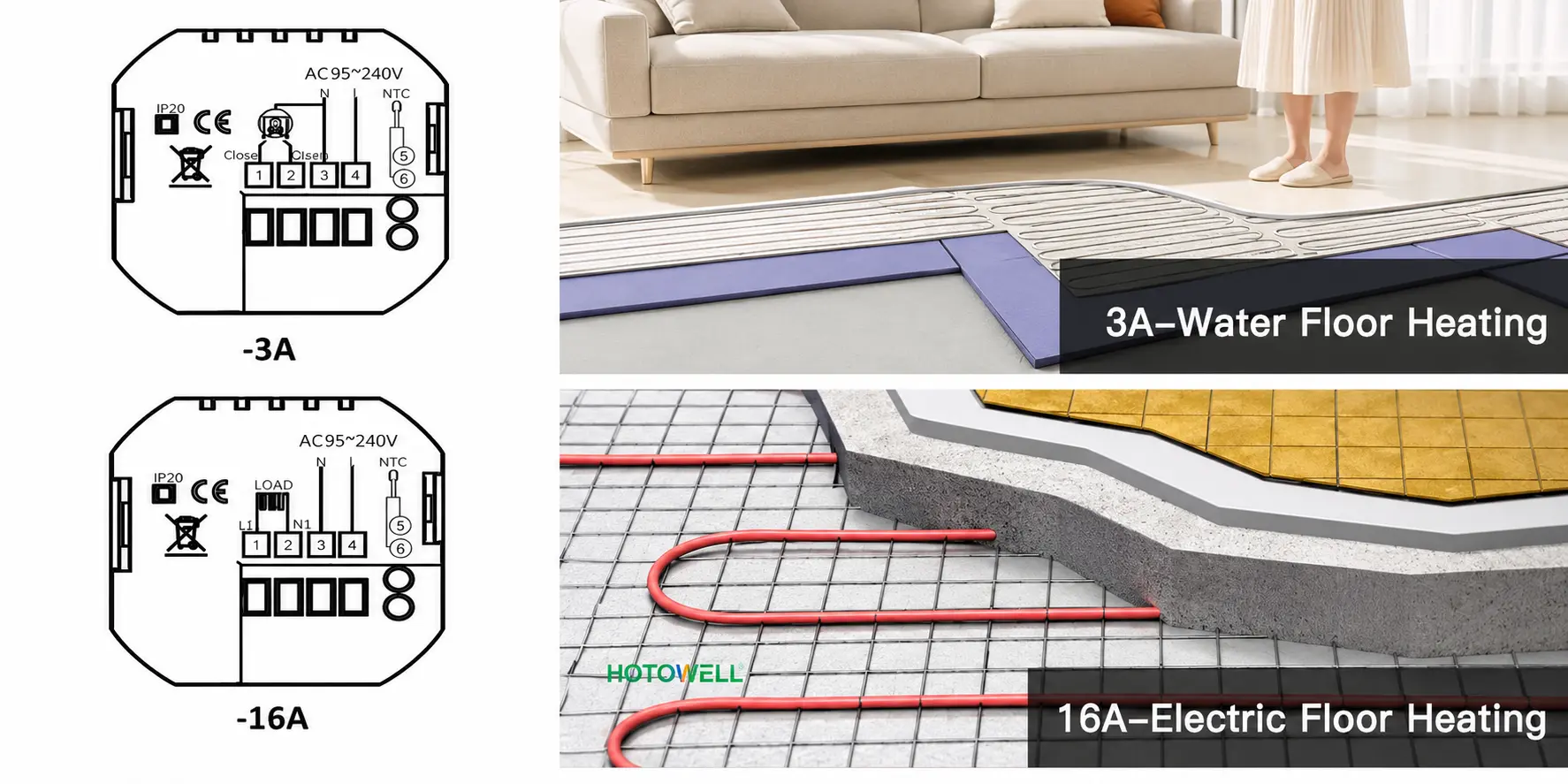
This is the first and most important buying check. If the system type is misunderstood, almost everything after it can also be wrong. Electric underfloor heating and water underfloor heating may both be sold under the same broad heating category, but the thermostat role is not identical.
Electric underfloor heating usually uses heating mats or cables. In these systems, the thermostat often controls the electric heating load directly. This makes current handling, floor-sensor support, and direct switching logic much more central to the buying decision. Water underfloor heating, by contrast, is usually part of a wider heating system. The thermostat often works with water zones, actuators, manifold logic, or a larger room-control structure. The visible thermostat may still look familiar, but the controlled system behind it is different.
For overseas buyers, this means system type should be written into the inquiry before product comparison begins. A thermostat suitable for electric floor heating is not automatically the right thermostat for a water system, even if the display size and product category look similar.
| System Type | Typical Project Use | What Buyers Should Confirm First |
|---|---|---|
| Electric underfloor heating | Renovation, smaller rooms, direct electric floor heating | Load type, floor sensor logic, current rating, direct control mode |
| Water underfloor heating | New build, larger zones, water-based control system | Zone logic, room control role, broader heating compatibility |
When this distinction is checked early, the buyer usually avoids the biggest category-level mistake in underfloor heating thermostat sourcing.
Check 2 — Confirm Whether the Thermostat Needs a Floor Sensor
Many overseas buyers treat the floor sensor like a secondary accessory. In many electric underfloor heating projects, that is the wrong mindset. The floor sensor is often part of the main control logic, not an optional add-on.
This is especially important in electric floor-heating systems where the thermostat may need to regulate the floor temperature itself or keep it within a practical range. If the thermostat only measures room air and ignores the floor, the control result may not match what the project actually needs. The user may feel the floor is too warm, too cool, or too inconsistent. In some cases, the wrong sensor assumption may also create avoidable flooring concerns.
From a buying perspective, the correct question is not “Does it have a sensor?” The better question is “Does the project require floor-sensor logic, and is that requirement written clearly in the order?” If the answer is yes, that point should appear in the quotation, the sample confirmation, and the document pack.
Check 3 — Confirm the Control Mode: Air, Floor, or Both
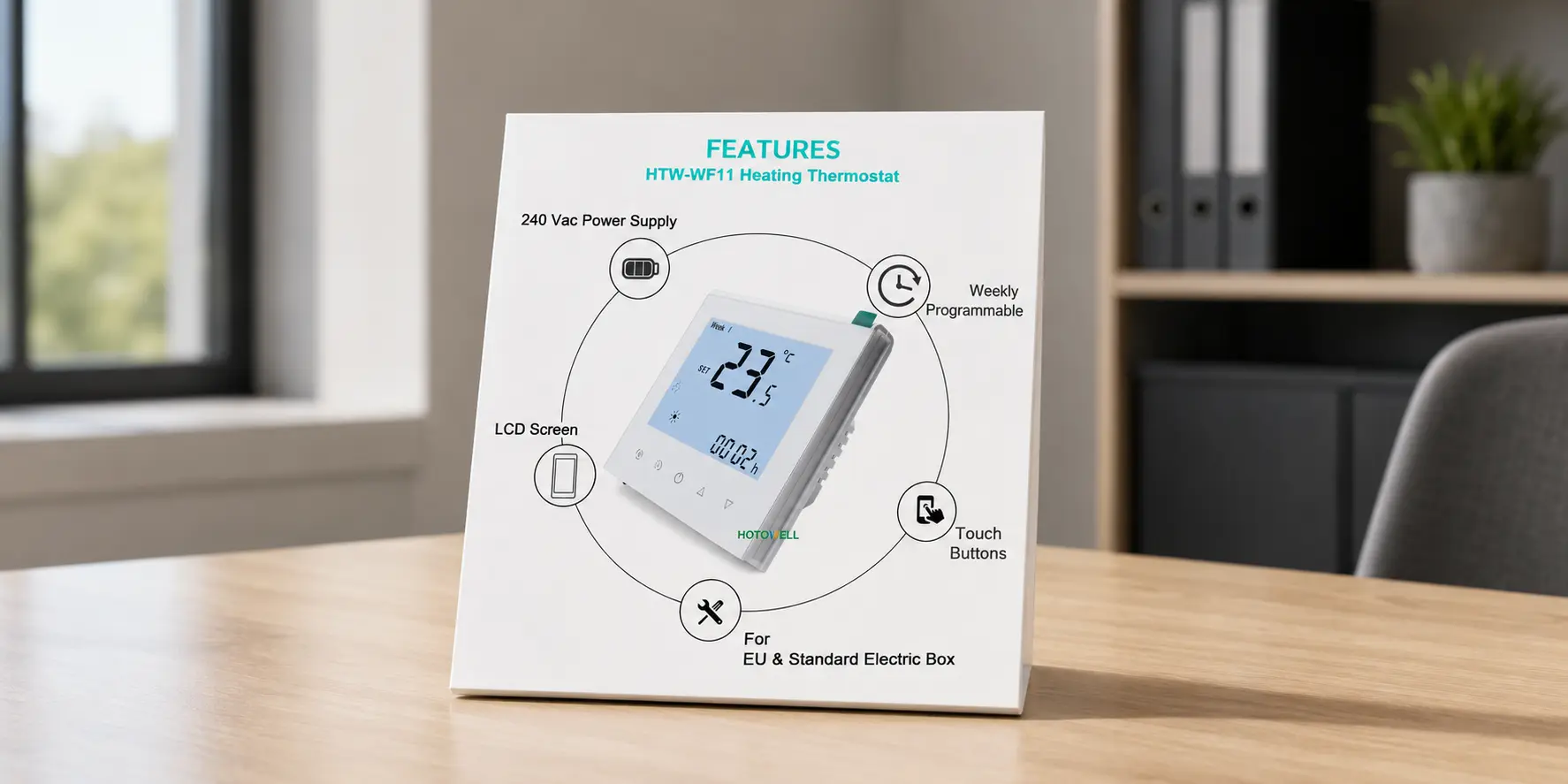
After confirming that floor-sensor support matters, the next buying question is the actual control mode. The thermostat may work as air-sensor control, floor-sensor control, or a combined air-plus-floor control. If that mode is not written clearly, the order may still look complete on paper but remain vague in practice.
Floor-sensor control
Floor-sensor control is often the more natural fit when the floor temperature itself is a central concern. This is very common in electric underfloor heating projects, especially where floor comfort or floor-surface management is important.
Air-sensor control
Air-sensor control is closer to a normal room thermostat style of operation. It focuses more on room air temperature as the primary control reference. This may be acceptable in some floor-heating projects, but it should never be assumed automatically for every system.
Air plus floor control
Combined air and floor control is often one of the most balanced approaches. The thermostat can consider room comfort while still keeping the floor within a suitable temperature range. In many practical projects, this is the most reassuring choice because it supports both user comfort and better control behaviour.
For overseas buyers, the practical message is simple: do not place the order with only the product name and voltage. Write the control mode into the specification so the thermostat role is clear before production and before site installation.
Check 4 — Confirm Whether the Project Is Residential or Commercial
This is where many buyers use the wrong decision logic. A thermostat that suits a home does not always suit a commercial project in the same way. The product may still function, but the buying priorities are different.
Residential project priorities
Residential buyers often focus more on comfort, user convenience, programmability, and visual fit. They usually care about daily operation, clear icons, easy schedule changes, and sometimes WiFi thermostat control through an app. In a home, the thermostat is part of the user experience every day, so the interface and convenience layer matter more naturally.
Commercial project priorities
Commercial buyers often focus more on consistency, repeatability, installation clarity, and control stability across multiple spaces. In offices, hospitality, or wider commercial areas, the thermostat may be installed in large numbers. The project may care more about easier commissioning, clearer control structure, and less user confusion than about remote app control for every room.
This is why overseas buyers should not use residential buying logic for a commercial project without checking it first. In residential work, attractive UI and smart scheduling may be major benefits. In commercial work, simpler and more consistent control behaviour may create more long-term value.
| Project Type | Main Priority | Buying Risk if Misjudged |
|---|---|---|
| Residential | Comfort, convenience, daily user experience | Product may feel too technical or inconvenient for end users |
| Commercial | Consistency, installation clarity, control structure | Product may be harder to manage at scale or across multiple rooms |
Check 5 — Confirm Whether WiFi Is Really Needed
WiFi looks attractive in quotations and product photos, but it should not be the first buying filter. The real question is whether WiFi thermostat control improves the actual use case.
In residential projects, WiFi can add strong value. Homeowners often like remote access, easier scheduling, and app-based daily control. In those cases, a WiFi thermostat may genuinely improve the experience. But in some commercial projects, WiFi may not be the main priority. The building may need repeatable zone control and simpler setup more than app-level room-by-room changes. In some export projects, WiFi can also create a support burden if the local market expects a simpler and more stable interface.
So the correct buying sequence is not “screen first, WiFi second, system logic later.” It should be the reverse. First confirm the heating system and sensor logic, then decide whether WiFi adds real value to that project.
Check 6 — Confirm Heat Load, Room Use, and Floor Finish Risk
Another point many buyers skip is the room context itself. A bathroom, bedroom, apartment, office, hotel room, showroom, or renovation area may all use underfloor heating, but they do not always create the same thermostat expectation.
Some rooms have higher heat loss. Some are used only occasionally. Some are part of larger control zones. Some require faster comfort response. Others prioritise stable, background warmth. The floor finish also matters because the heating response of tile, wood, or other surface types can differ in practical use. That means a thermostat that feels suitable for one room type may not be the strongest fit for another.
For overseas buyers, this means the room or project use should be written into the buying brief. Do not ask only for an underfloor heating thermostat. Ask for an underfloor heating thermostat for a bathroom renovation, for a residential apartment, for a multi-room office project, or for a hotel-style comfort environment. That level of clarity produces better selection and fewer later surprises.
Check 7 — Confirm the Document Package Before Placing the Order
Documentation is part of the product in export work. This is especially true for underfloor heating thermostats because the product role is often misunderstood when the document package is too weak.
Before placing an order, overseas buyers should confirm that they will receive at least a usable datasheet, wiring note, sensor-mode explanation, installation instructions, and a clear statement of product application. If the thermostat is electric underfloor heating with external sensor logic, the documents should say so clearly. If it is better suited to a water or broader room-control role, that should also be explained. Clear documentation reduces site confusion and gives distributors stronger confidence in the product they are selling.
Weak documents create hidden costs. They slow sample approval, increase installer questions, and create more after-sales discussion. For B2B buyers, this is a real commercial issue, not a minor paperwork issue.
Broader Thermostat References Buyers Should Not Confuse with Underfloor Heating Control
Some overseas buyers compare underfloor heating thermostats with broader thermostat categories simply because the front panel looks similar. This is understandable, but it can create selection mistakes.
For example, a 220V boiler thermostat with Modbus, a house thermostat for water heating and boiler heating, or a 3A water-heating thermostat may all be useful control products in the broader heating market. But they should not automatically be treated as underfloor heating thermostat equivalents unless the heating role actually matches.
Likewise, broader control references such as a 24VDC output PICV thermostat with Modbus or a keycard HVAC thermostat may help buyers understand wider room-control logic, but they are not direct substitutes for a dedicated underfloor heating thermostat. This is why product naming alone should never be the final purchase logic.
Common Ordering Mistakes Overseas Buyers Should Avoid
- Ordering by screen appearance before confirming the heating system type.
- Not separating electric underfloor heating from water underfloor heating.
- Not writing floor-sensor requirement into the order.
- Assuming every WiFi thermostat is suitable for electric underfloor heating.
- Using residential logic for a commercial control project.
- Placing an order without installation and sensor-mode documents.
- Assuming the product name alone fully defines the control role.
These mistakes are common because thermostat categories overlap visually. But in export work, visual similarity does not guarantee control suitability.
Expert Commentary: The Best Buying Decision Usually Starts with Better Clarification
Most underfloor heating thermostat buying problems do not start with bad hardware. They start with unclear project definition. The buyer asks for one product category, but the project really needs a more specific control role. The supplier responds with a visually suitable model, but the sensor logic is still not fully aligned. The thermostat arrives, yet the project still needs clarification about floor sensor, WiFi function, or room-vs-floor control mode.
This is why the best buying decision usually starts with better clarification. Buyers who define the project role more clearly almost always compare products more accurately, sample more efficiently, and reduce future support pressure.
We support thermostat projects for electric floor heating, WiFi floor heating control, water heating, boiler-linked heating, and broader room control environments where correct sensor logic matters more than attractive appearance alone.
Scientific Data and What It Means
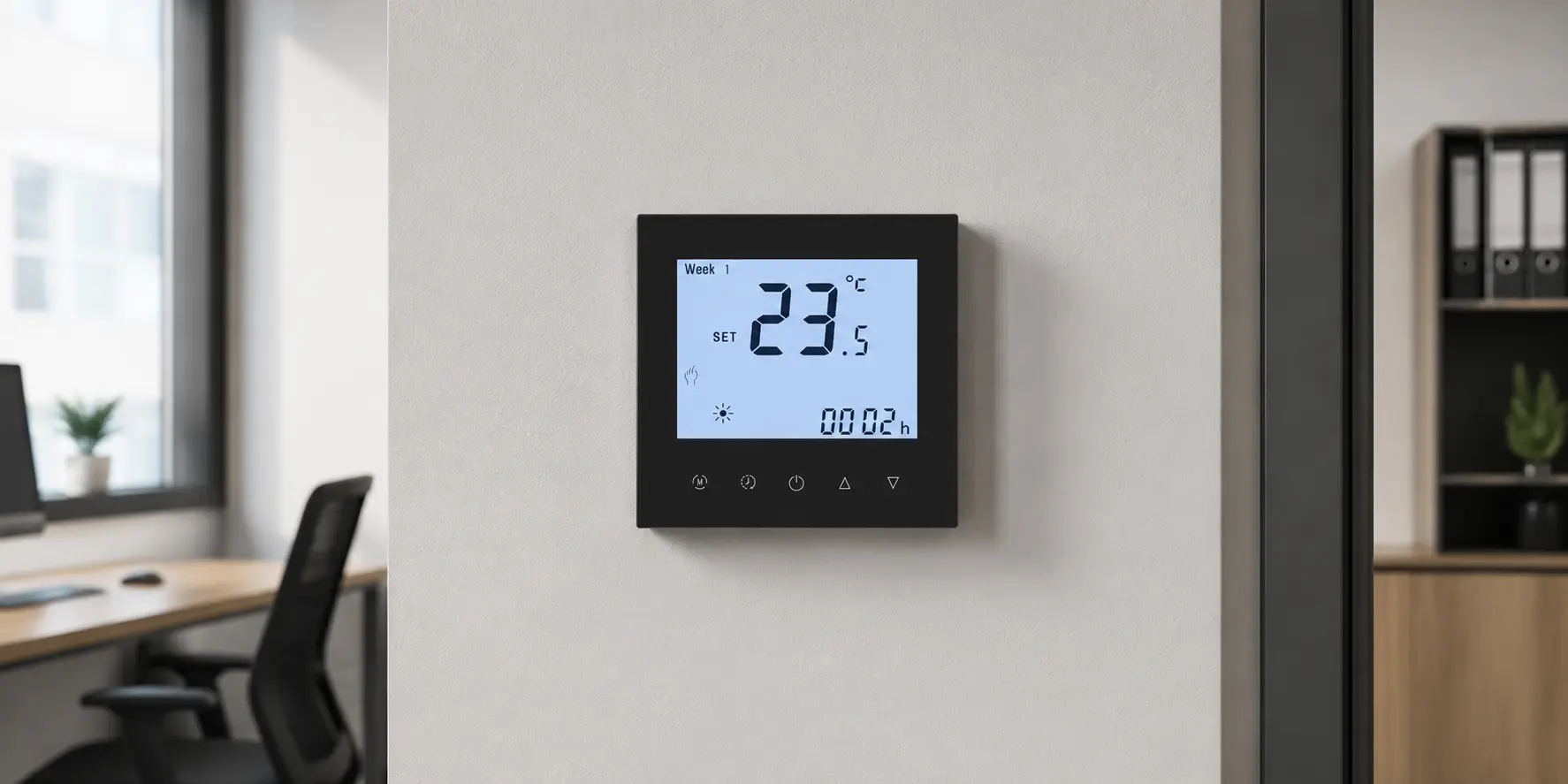
Public technical guidance shows why these checks matter. Electric underfloor heating systems often allow independent room control with floor and air sensors, while water systems may group smaller adjacent rooms into one zone depending on the design. That means system type already changes thermostat expectations. Guidance for electric floor-heating thermostats also makes it clear that built-in air sensor only should not be used by itself in many electric underfloor heating applications. And wider room-control solutions marketed for both residential and commercial projects repeatedly emphasise comfort, energy savings, easy setup, and installation fit. For buyers, the practical lesson is simple: selection should follow control logic, not only product category labels.
Real Cases and Buyer Feedback
Case 1: Buyer ordered WiFi first, then discovered the sensor mode gap
An overseas buyer first focused on WiFi because the target market liked smart-looking thermostats. Later, the project team realised the electric floor-heating application required clearer floor-sensor logic than the original shortlist had defined. The WiFi feature was still useful, but it was no longer the first selection filter.
Case 2: One thermostat spec was used for both apartment and office project
A buyer tried to standardise one thermostat specification across a small residential development and a commercial office area. After review, the project had to split the selection because daily user expectations and control priorities were not the same. The product category looked similar, but the project logic was different.
Case 3: Buyer compared floor-heating thermostat with broader heating-control thermostat
In another inquiry, the buyer compared an underfloor heating thermostat with a broader water or boiler-linked room thermostat because the front panels looked alike. Once the heating role and sensor requirement were clarified, the comparison became much more realistic and the ordering discussion became easier.
User feedback pattern: Buyers rarely regret checking too many project details before ordering. They usually regret assuming the product role was clearer than it actually was.
Frequently Asked Questions
1. What should I check before buying an underfloor heating thermostat?
You should check the heating system type, whether the thermostat needs a floor sensor, the control mode, whether the project is residential or commercial, and whether the document package clearly explains installation and application.
2. Do I need a floor sensor for electric underfloor heating?
In many electric underfloor heating projects, yes. Floor-sensor logic is often essential because the thermostat may need to control floor temperature or use combined air-and-floor control rather than relying only on room air sensing.
3. Is a WiFi underfloor heating thermostat always better?
No. A WiFi thermostat is useful when the project benefits from remote access or easier scheduling, but it should come after system type and sensor logic are confirmed. A smart-looking thermostat with the wrong control role is still the wrong thermostat.
4. What is the difference between buying for a residential and a commercial project?
Residential projects usually focus more on comfort, convenience, and user experience. Commercial projects usually focus more on consistency, easier setup, repeatability, and clearer control structure across multiple rooms or zones.
5. Can I use the same thermostat for electric and water underfloor heating?
Not automatically. Electric and water underfloor heating systems use different control logic, so the thermostat should first be checked against the actual system type before it is treated as interchangeable.
References / Sources
- Warmup, Which Underfloor Heating System Is Best for Me?
- Warmup, Understanding Your Underfloor Heating Control Options
- Heatmiser, Heatmiser SmartStat Manual
- Heatmiser, DT-ETS / DT-ENTS Manual
- Uponor, Room Temperature Controls
- Uponor, Wired Room Temperature Control 230 V
- OJ Electronics, UDG Programmable Thermostat
- Wikipedia, Underfloor heating
- Wikipedia, Thermostat
- Warmup, Choosing the Best Underfloor Heating Thermostat