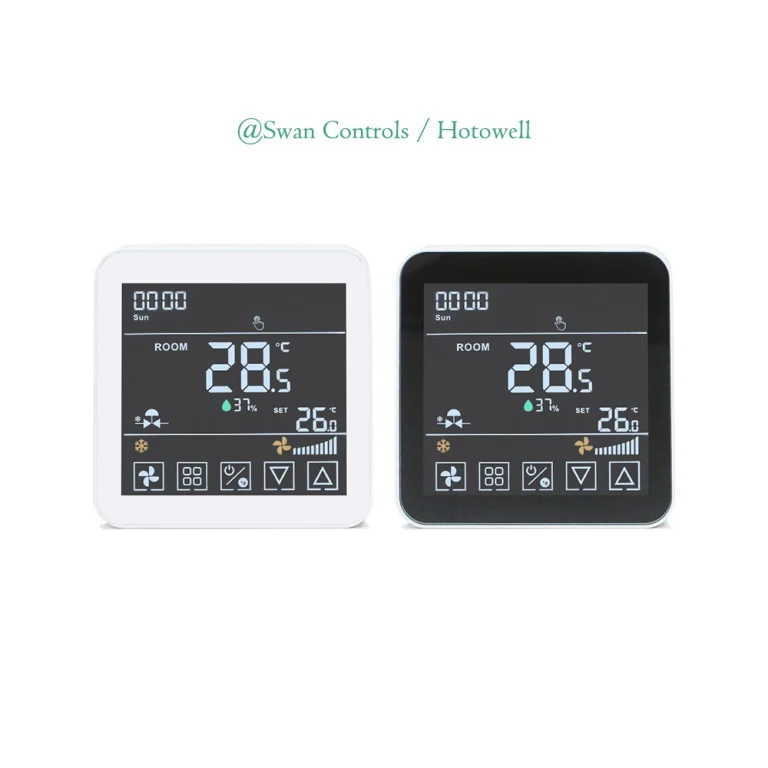
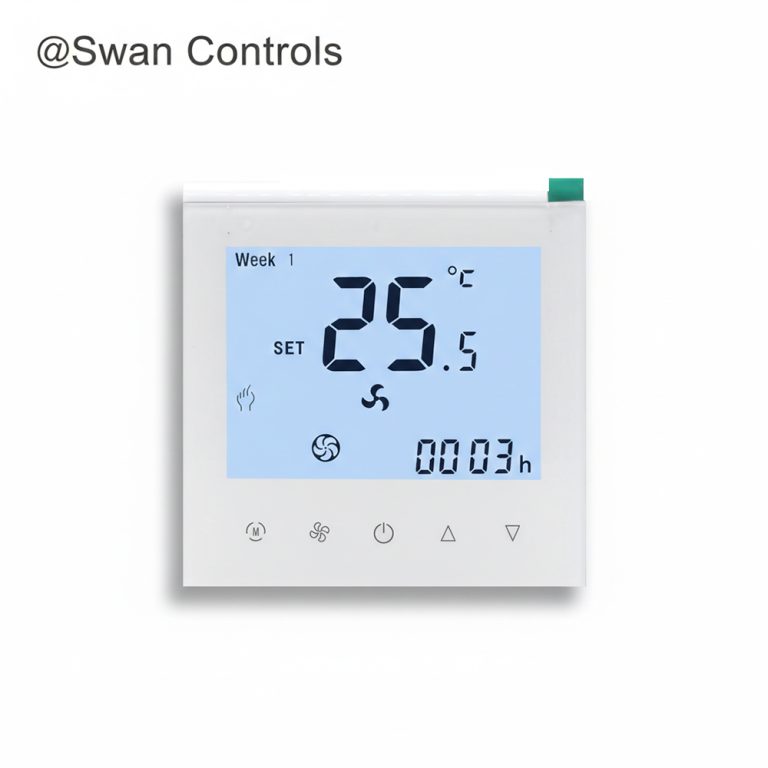
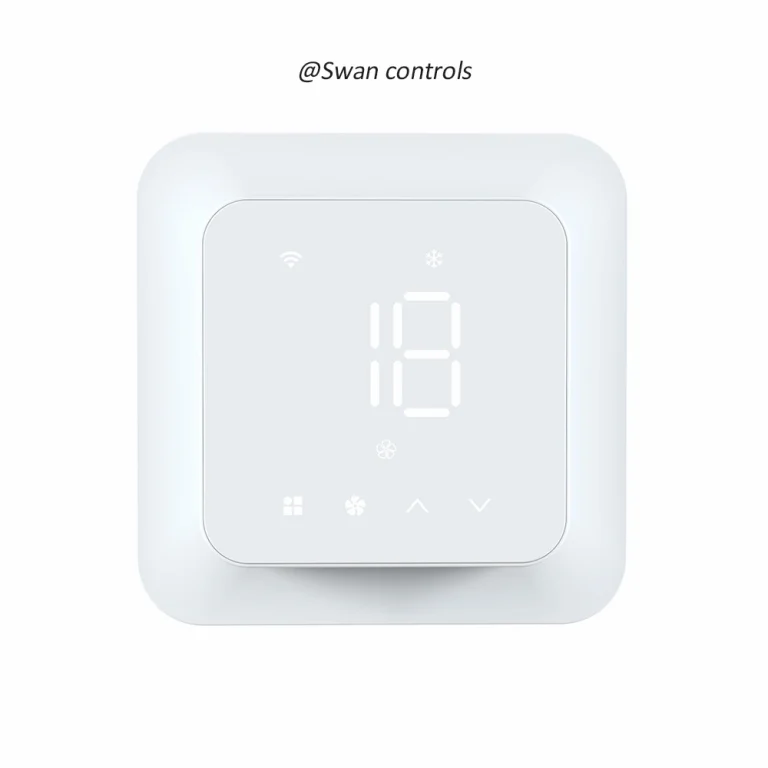
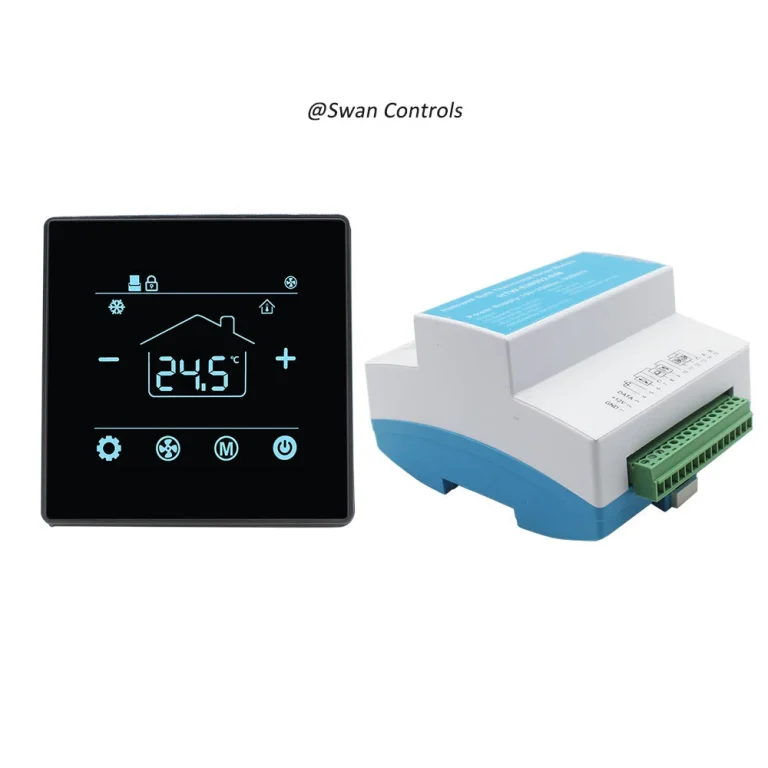
“Why does the room feel cold in the morning and too warm at night?”
“I keep adjusting the thermostat every day.”
“Is there a way to control temperature automatically?”
These are common questions from homeowners, contractors, and HVAC project buyers. In many cases, the heating or cooling system is not the main problem. The real issue is the way the temperature is controlled during the day.
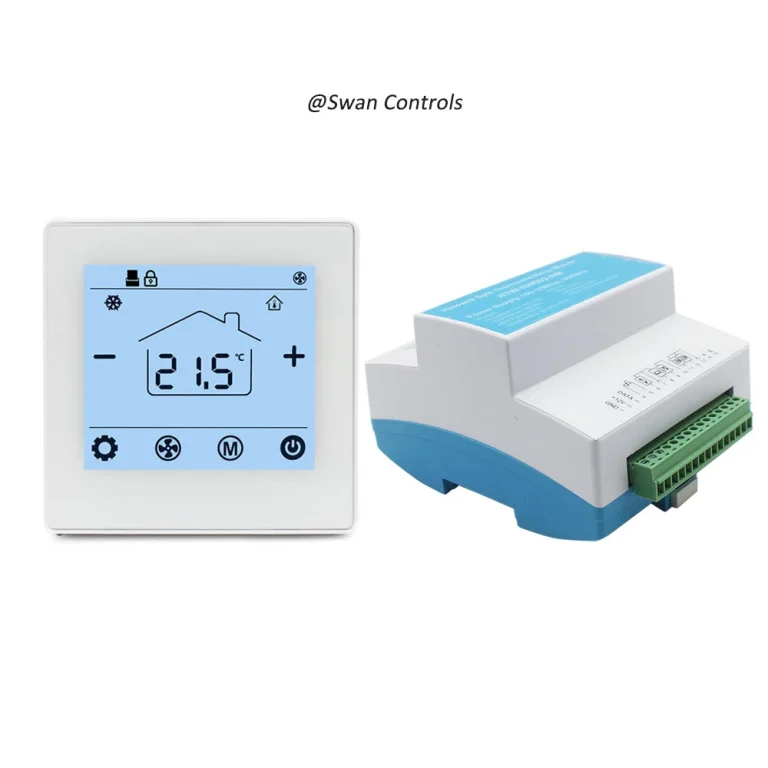
A programmable thermostat is designed to solve this problem. It allows users to set a temperature schedule before the system runs. The thermostat then follows that schedule automatically. It can raise or lower the setpoint based on time, day, and room use.
This is different from a basic manual thermostat. A manual model depends on the user. A programmable model depends on a pre-set plan. This makes it more suitable for homes, apartments, offices, and small commercial rooms with regular use patterns.
This article explains what a programmable thermostat is, how it works, and when a 7 day programmable thermostat is the better choice. It also explains what buyers should check before choosing one from a thermostat supplier or manufacturer.
What Is a Programmable Thermostat
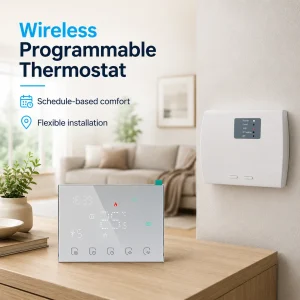
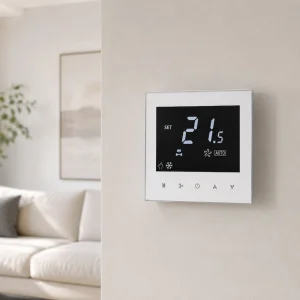
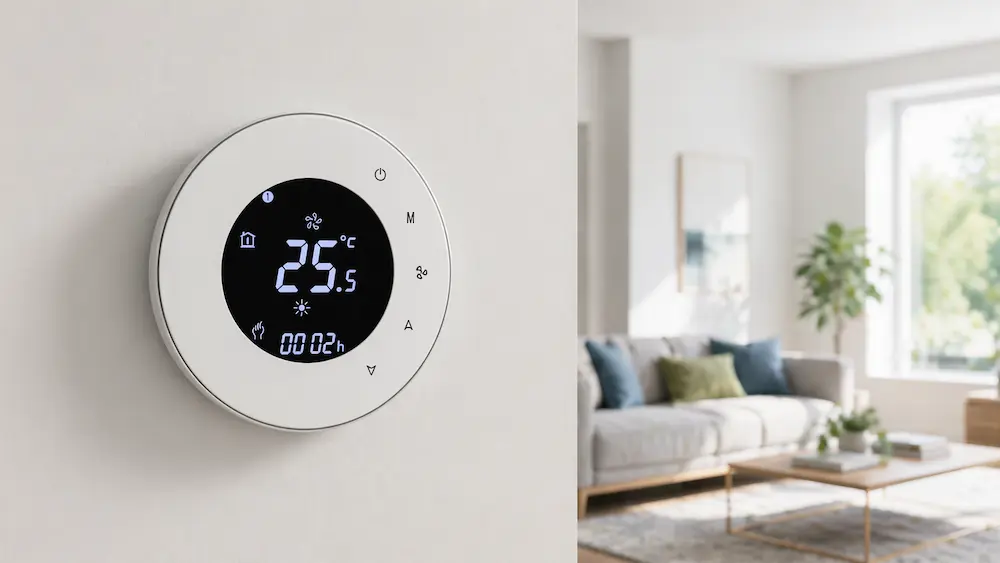
A programmable thermostat is a thermostat that lets users set temperature plans in advance. The user can choose different temperatures for different time periods. The thermostat then controls the HVAC system according to that schedule.
For example, a user may want a warm room in the morning, lower operation during working hours, and a comfortable temperature again in the evening. A programmable thermostat can do this without daily manual adjustment.
Typical functions include:
- Setting different temperatures for day and night
- Reducing heating or cooling when no one is home
- Keeping the room comfortable during active hours
- Reducing repeated manual adjustment
- Supporting more stable daily temperature control
This type of room thermostat is widely used in residential HVAC systems. It is also useful in offices, apartments, rental rooms, and small commercial buildings. It works best when the space has a regular daily or weekly schedule.
For buyers, the main value is clear. A programmable thermostat improves comfort and reduces waste. It also gives end users a simple way to control HVAC operation without needing advanced smart functions.
How a Programmable Thermostat Works
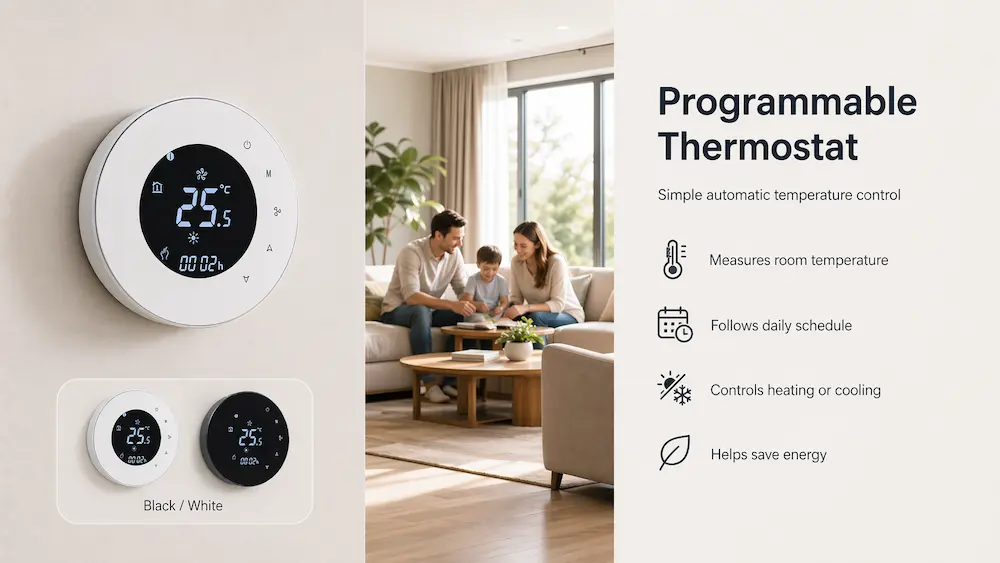
The working principle is simple. The thermostat measures the room temperature. It compares the measured temperature with the setpoint. If the room is too cold or too warm, it sends a signal to the heating or cooling system.
With programming function, this process becomes automatic. The setpoint changes according to the schedule. The user does not need to adjust the thermostat every time.
Basic working steps:
- The sensor reads the room temperature
- The thermostat compares it with the scheduled setpoint
- The control output starts or stops heating or cooling
- The system runs until the room reaches the target range
- The thermostat repeats this process through the day
A simple daily schedule may look like this:
- Morning: comfortable temperature before people wake up
- Daytime: lower energy use when the room is empty
- Evening: comfortable setting when people return
- Night: stable sleeping temperature
This control logic is easy to understand. It is also easy to explain to end users. That is why programmable thermostats are still popular, even when smart thermostats are available.
What Is a 7 Day Programmable Thermostat
A 7 day programmable thermostat allows users to set a different schedule for each day of the week. This gives more flexibility than simple weekday and weekend programming.
This is useful because many users do not have the same routine every day. Some people work from home on certain days. Some families stay home more on weekends. Some offices have different operating hours on Friday or Saturday.
Key advantages include:
- Separate schedule for each day
- More flexible comfort control
- Better match with real room use
- Less energy waste from fixed settings
- More suitable for mixed-use spaces
For example, Monday to Friday may use an office schedule. Saturday may use a shorter schedule. Sunday may use a comfort schedule for the full day. A 7 day programmable thermostat can handle this without forcing users into one fixed routine.
For homeowners, this means better comfort. For project buyers, it means easier adaptation to different user needs. For distributors, it gives a stronger selling point than a basic manual thermostat.
Why Programmable Thermostats Improve Comfort
Comfort depends on timing. A room can feel uncomfortable even when the HVAC system is powerful enough. This happens when temperature control reacts too late or depends too much on manual changes.
A programmable thermostat solves this by preparing the room before comfort is needed. The system can start earlier, reach the target temperature, and keep the room stable during use.
Comfort benefits include:
- Less temperature fluctuation
- More stable morning and night comfort
- Less need for manual adjustment
- Better control for regular living patterns
- Improved user experience in homes and offices
For residential use, this means the room feels more predictable. Users do not need to keep changing the setpoint. For office use, this means the room can be ready before working hours. For rental or apartment projects, this means the thermostat is easier for different users to understand.
A good digital thermostat should not make control more complicated. It should make control easier. That is the main value of a programmable model.
Energy Saving Benefits
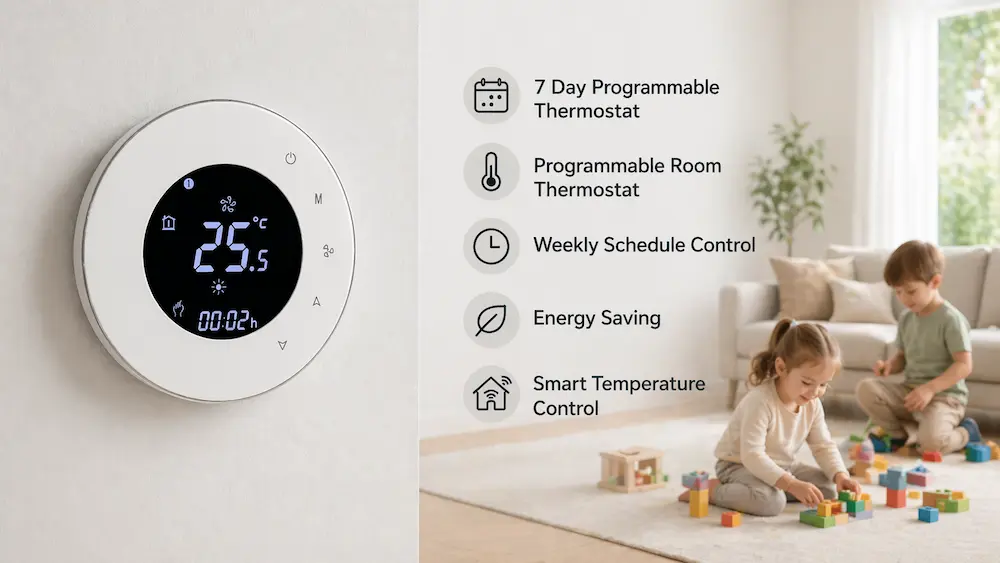
One of the main reasons buyers choose a programmable thermostat is energy saving. The thermostat helps reduce operation when full comfort is not needed.
Energy is often wasted when heating or cooling runs at the same level all day. This is common in homes, offices, and rental spaces. A programmable thermostat helps reduce this waste by adjusting the setpoint based on the schedule.
Energy saving comes from:
- Lower operation during empty hours
- Less overheating in winter
- Less overcooling in summer
- Shorter unnecessary system runtime
- Better match between HVAC output and room use
According to industry energy guidance, correct thermostat control can help reduce HVAC energy use. The final saving depends on climate, insulation, user habits, and system type. But the control direction is clear. Better scheduling reduces waste.
For buyers, this makes the programmable thermostat a practical upgrade. It is not only a comfort device. It is also a simple energy management tool.
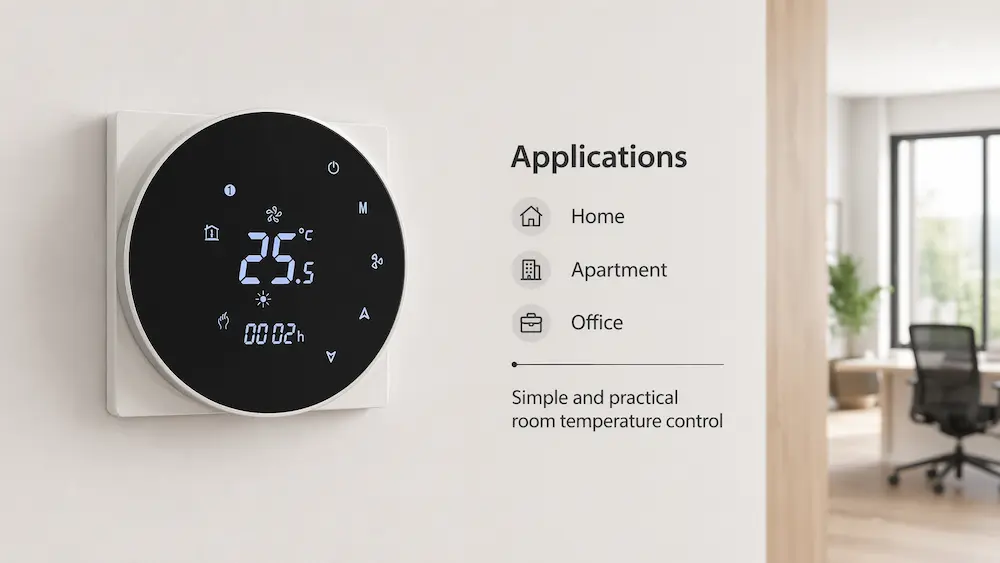
Where Programmable Thermostats Are Used
| Application | Why Suitable | Result |
|---|---|---|
| Home | Daily schedule control | Better comfort and energy saving |
| Apartment | Regular living pattern | Stable temperature |
| Office | Fixed working hours | Reduced energy waste |
A programmable thermostat is most useful when room use is predictable. It fits homes with daily routines. It fits offices with fixed working hours. It also fits apartments where users want simple scheduled comfort.
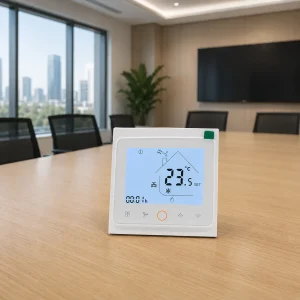
It may also be used in light commercial rooms, meeting areas, and small service spaces. The key point is not the building type. The key point is the use pattern. If the room has a clear schedule, programmable control can add real value.
When a Programmable Thermostat May Not Be Ideal
A programmable thermostat is useful, but it is not always the best choice. Some spaces do not follow a fixed schedule. Some users prefer app control. Some projects require central BMS integration(Thermostat for BMS Systems, please refer to here).
Potential limitations include:
- Irregular schedules may reduce the benefit
- Wrong programming may cause discomfort
- Some users may not want to set schedules
- Advanced projects may need Modbus or BACnet
- Remote control may require a smart thermostat instead
For users with changing routines, a smart thermostat may be more suitable. For commercial projects, a Modbus thermostat may be better if the system needs central control. For simple homes, a 7 day programmable thermostat is often enough.
This is why buyers should not choose only by feature name. They should choose by application. The best thermostat is the one that matches the system and user habit.
How to Choose the Right Programmable Thermostat
When selecting a programmable thermostat, buyers should focus on practical fit. The product should match the HVAC system, wiring, voltage, and user needs.
Important checks include:
- Confirm the system type before ordering
- Check voltage and wiring terminals
- Choose 7 day programming if weekly routines vary
- Choose a clear display for easier operation
- Ask the supplier for wiring and setup support
For home projects, the thermostat should be simple and stable. For office projects, the schedule should match working hours. For OEM or wholesale buyers, the thermostat should also support consistent quality and clear documentation.
A professional thermostat manufacturer should be able to explain the control logic, wiring method, and application range. This reduces risk before the order is placed.
Expert Insights
The HVAC market is moving toward smarter control. However, programmable thermostats still have strong value. They are simple, stable, and easy to use. They do not always need Wi-Fi, apps, or cloud platforms.
For many projects, this is an advantage. A programmable thermostat can work independently. It can give scheduled comfort without adding network complexity. This is useful for buyers who want simple control and low maintenance.
Industry practice shows that many complaints come from wrong selection, not poor product quality. A programmable thermostat works better when the user has a stable schedule. A 7 day programmable thermostat works better when each day has different needs.
For contractors and distributors, this type of thermostat is also easier to sell. The benefit is simple: set the schedule once, and the thermostat controls automatically. This message is easy for end users to understand.
Scientific Data
Programmable thermostat performance can be checked with simple HVAC control data. The values below are practical reference ranges used in many room control projects. Actual results depend on insulation, HVAC capacity, sensor location, and installation quality.
| Item | Typical Reference Value | What It Means for Buyers |
|---|---|---|
| Room temperature control accuracy | ±0.5°C to ±1.0°C | Better accuracy gives more stable comfort. |
| Acceptable room temperature deviation | About ±1.0°C to ±2.0°C | Larger deviation may cause complaints. |
| Poor sensor placement error | Up to 2°C to 3°C | Wrong location can make control inaccurate. |
| Typical setpoint setback range | 2°C to 4°C | Useful for energy saving during empty hours. |
| Common fan noise range in rooms | 30 dB to 45 dB | Lower fan speed can improve night comfort. |
| Relay mechanical life reference | 100,000 to 1,000,000 cycles | Higher relay life supports long-term reliability. |
These numbers show why correct thermostat selection matters. A small sensor error can create a clear comfort problem. For example, if the thermostat reads 2°C higher than the real room temperature, the heating system may stop too early. The user may feel cold, even when the thermostat display looks normal.
Temperature setback also needs balance. A 2°C to 4°C setback is often practical for saving energy without making the room recover too slowly. A very large setback may save energy during empty hours, but it may also cause long recovery time when users return.
Fan noise is another comfort factor. In fan coil systems, low fan speed can stay near the lower part of the noise range. High fan speed can increase airflow, but it may also increase sound level. For bedrooms, hotel rooms, and quiet offices, lower noise usually improves satisfaction.
Relay life also affects product quality. A relay with stronger cycle life can support more stable switching over time. This is important for heating, cooling, and fan control outputs that operate many times each day.
For buyers, the conclusion is simple. A good programmable thermostat should not only have a schedule function. It should also provide stable sensing, reasonable control accuracy, clear switching, and reliable components.
Practical Cases
Case 1: A home user adjusted the temperature manually every morning and night. The room was often too cold before waking up. After switching to a programmable thermostat, the heating schedule started earlier. The room became comfortable before use.
Case 2: An office HVAC system ran at full comfort setting after working hours. Energy use was higher than expected. A programmable thermostat was added. The schedule reduced operation during empty hours. The office was still comfortable during work time.
Case 3: An apartment project needed simple control for different tenants. A 7 day programmable thermostat was used. Users could set weekday and weekend schedules. The control was simple, and the comfort level improved.
These cases show that programmable control is practical. It is not only a feature. It is a way to match HVAC operation with real room use.
FAQ
1. What is a programmable thermostat?
A programmable thermostat allows users to set temperature schedules so the system adjusts automatically.
2. How does a programmable thermostat work?
It follows preset schedules and adjusts heating or cooling based on time and temperature.
3. What is a 7 day programmable thermostat?
It allows different temperature schedules for each day of the week.
4. Is a programmable thermostat energy efficient?
Yes, it reduces unnecessary operation and improves system efficiency.
5. Can it be used with all HVAC systems?
It depends on compatibility. Buyers should check system type and wiring.
A programmable thermostat is a practical solution for better comfort and lower energy waste. For users with regular schedules, a 7 day programmable thermostat gives better flexibility. Buyers should choose based on system type, wiring, voltage, and daily use pattern. More smart thermostat products reference.
References / Sources
- U.S. Department of Energy, Energy Saver — Programmable Thermostats
- U.S. Department of Energy, Energy Saver Guide — Heating and Cooling
- ASHRAE — ASHRAE Handbook: Fundamentals
- ASHRAE — ASHRAE Handbook: HVAC Systems and Equipment
- ASHRAE — Fundamentals of HVAC Control Systems
- Honeywell Home — Programmable Thermostat User Guides
- Honeywell Home — 7-Day Programmable Thermostat Installation and User Manuals
- Siemens Building Technologies — HVAC Controls and Building Automation Literature
- Schneider Electric — Building Automation and HVAC Control Resources
- Danfoss — Heating Controls and Room Thermostat Technical Publications
- Carrier — Fan Coil Unit System Design Guide
- Carrier — HVAC System Design Manual
- Trane — Commercial HVAC Systems and Controls Resources
- Johnson Controls — Building Efficiency and HVAC Control Materials
- ENERGY STAR — Smart Thermostats Product Guidance
- General Fan Coil Unit Control Engineering References