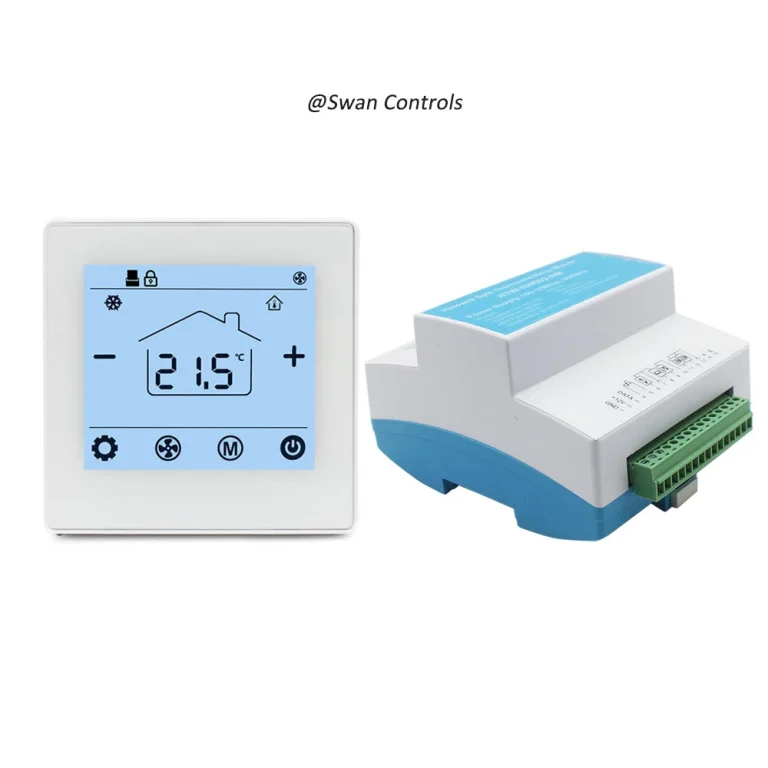
“Can you quote your the best price boiler thermostat?”
“We can. But before price, we should confirm what the thermostat must actually do in the project.”
That is the better starting point for most OEM boiler thermostat discussions. In real export and private-label projects, the lowest unit price is not always the lowest project cost. A boiler thermostat that looks competitive on paper can still create problems later if the control role is unclear, the wiring logic does not match the boiler, the room thermostat expectation is different from the boiler-side expectation, or the customer wants smart control features that were never included in the first place. In other words, many OEM mistakes do not begin in production. They begin when a buyer compares products only by screen style, casing, and price, while missing the features that actually decide whether the thermostat will work well in the field.
That is especially true in boiler projects because “boiler thermostat” is often used too broadly. Some buyers mean a thermostat that directly supports boiler-side heating control. Some mean a room thermostat that sends heating demand to the boiler. Some mean a smarter heating control with scheduling, app access, or load compensation. If those roles are not separated before sampling or mass production, the project can easily drift into false comparisons and poor product choices.
Quick Summary: The 5 OEM Checks That Usually Matter More Than Price
Most boiler thermostat OEM buying mistakes can be reduced by checking five points early. First, confirm whether the project really needs a boiler thermostat, a room thermostat, or a broader heating control. Second, confirm the wiring and call-for-heat logic. Third, confirm whether basic control is enough or whether smart thermostat functions are truly required. Fourth, confirm the documentation package and technical support level. Fifth, confirm that the product design and control behaviour match the real customer complaint risks in the target market. These five checks usually matter more than a small difference in unit price.
Why Low Unit Price Can Become a High Project Cost
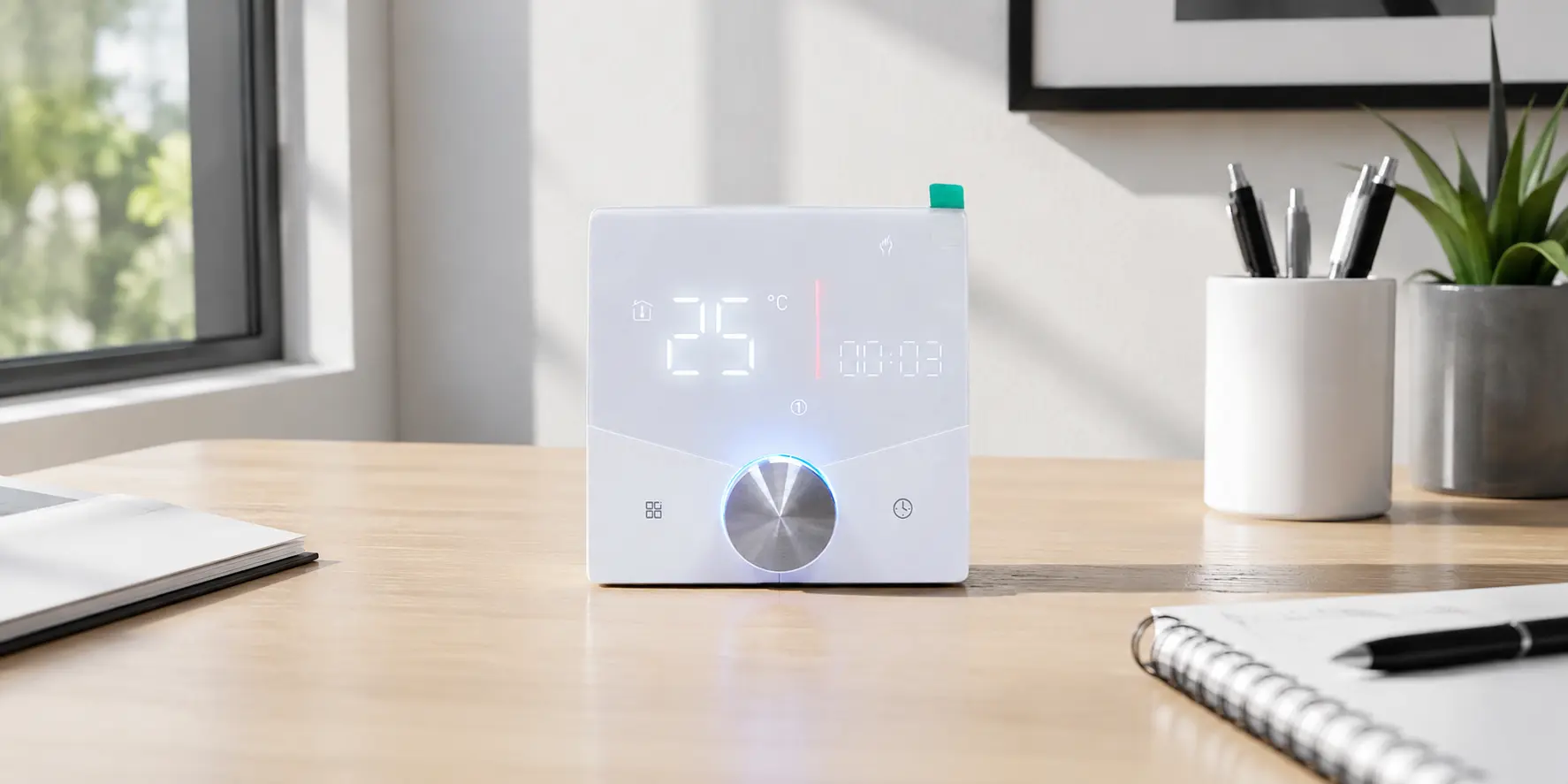
In OEM sourcing, a boiler thermostat can look inexpensive at quotation stage and still become expensive later. This usually happens because the thermostat is purchased as a product shell rather than as a control role. If the wiring logic is wrong, if the project expected room thermostat behaviour rather than boiler-side behaviour, or if smart control expectations were not clarified, the project cost rises after sampling. Engineering changes, repeated approval rounds, customer complaints, repacking, revised manuals, and after-sales support all add cost that never appeared in the original quotation.
This is why experienced buyers do not ask only, “How much is it?” They also ask, “What does this thermostat control?” “What type of boiler logic does it support?” “Will the end customer understand it?” “Does it fit our market?” “Can the supplier support changes properly?” These questions are not secondary. They are the real cost-control questions in boiler thermostat OEM work.
| Buying Focus | Price-Only Approach | OEM Project Approach |
|---|---|---|
| Main concern | Lowest unit cost | Lowest total project risk |
| Product evaluation | Screen, casing, and basic price | Control logic, compatibility, support, and documentation |
| Main risk | Wrong role, wrong fit, more complaints later | More stable launches and fewer hidden costs |
Start with the Real Heating Role, Not the Screen
Before comparing boiler thermostat OEM offers, buyers should first confirm what the product is expected to do in the final project. That sounds obvious, but it is one of the most common gaps in OEM requests. A buyer asks for a boiler thermostat, but the actual project may need a room thermostat for heating demand control. Another buyer asks for a smart thermostat, but the target market only needs basic on/off room control. Another wants boiler control, but the project is really a water-heating or mixed application.
This matters because thermostat categories overlap visually but not functionally. Two products can both look like heating thermostats and still perform different jobs. In real OEM projects, the appearance often converges much faster than the control logic. That is why the project role should be defined before casing decisions or logo discussions begin.
Boiler heating thermostat role
In some projects, the thermostat is expected to support direct boiler-related heating logic. In that case, the project team should confirm what kind of call-for-heat behaviour, output expectation, and boiler compatibility are actually required. A 220V boiler thermostat with Modbus is easier to evaluate when the buyer already knows the project needs a boiler-related heating solution rather than a general room-control product.
Water heating or mixed heating role
Other projects use “boiler thermostat” more loosely while the actual control need is closer to water-heating or combined heating logic. A house thermostat for water heating and boiler heating or a 3A water heating thermostat may fit better when the real project is not a classic boiler-only role. OEM buyers who define the use case more carefully usually reduce revision rounds later.
Broader heating-control reference
Even when the project is focused on boiler heating, it is useful to remember that thermostat logic often extends into broader room-control applications. Products such as a 24VDC output PICV thermostat with Modbus or a keycard HVAC thermostat are not classic domestic boiler thermostats, but they show an important principle: the same front-panel category can support very different control roles. That is exactly why OEM comparison by appearance alone is dangerous.
Boiler Thermostat vs Room Thermostat: A Critical OEM Distinction
One of the most expensive mistakes in OEM boiler thermostat projects is failing to separate boiler thermostat logic from room thermostat logic. In many heating systems, the boiler thermostat and the room thermostat do not do the same job. The room thermostat measures the room air temperature and decides when heat is needed in the space. The boiler thermostat relates more directly to the temperature of the water or the heating behaviour at the boiler side. When those roles are mixed together, the finished product may confuse installers, distributors, and end users.
This distinction should shape both product definition and marketing language. If the product is really a room thermostat for boiler heating demand, the OEM materials should make that clear. If the product role is more directly tied to boiler-side heating control, the buyer should not present it to the market like a generic room thermostat. Many customer complaints start because the product is described too broadly and the end user expects a different control job from the one the thermostat actually performs.
| Product Role | Main Control Focus | OEM Risk if Mislabelled |
|---|---|---|
| Boiler thermostat | Boiler-side heating behaviour or water temperature influence | Wrong customer expectation about room comfort response |
| Room thermostat | Room air temperature and heating demand | Confusion about boiler-side settings and efficiency behaviour |
| Smart thermostat | Scheduling, remote access, smarter control logic | Overpromising when basic control setup is still weak |
Wiring and Call-for-Heat Logic Matter More Than Cosmetic OEM
For OEM buyers, wiring compatibility and control logic usually matter more than front-panel changes. This is one of the clearest places where price alone becomes misleading. A lower-cost boiler thermostat with attractive housing may still create problems if the wiring expectation does not match the target boiler or the intended call-for-heat arrangement.
Many boiler thermostat complaints described as “the thermostat does not work” are really complaints about the control path. The screen may power on. The interface may look normal. But if the heating demand path is not what the boiler expects, the result will still feel wrong in the field. For an OEM project, this means the supplier should not only provide the unit. It should provide sufficiently clear control-role and wiring documentation so the buyer, installer, and local support team all understand how the thermostat should behave.
This is also why OEM buyers should ask early whether the target market expects basic relay-style control, a specific room-thermostat demand logic, or more advanced control integration. These are not technical side notes. They are purchase criteria.
Flow Temperature Logic Is More Valuable Than a Fancy Screen
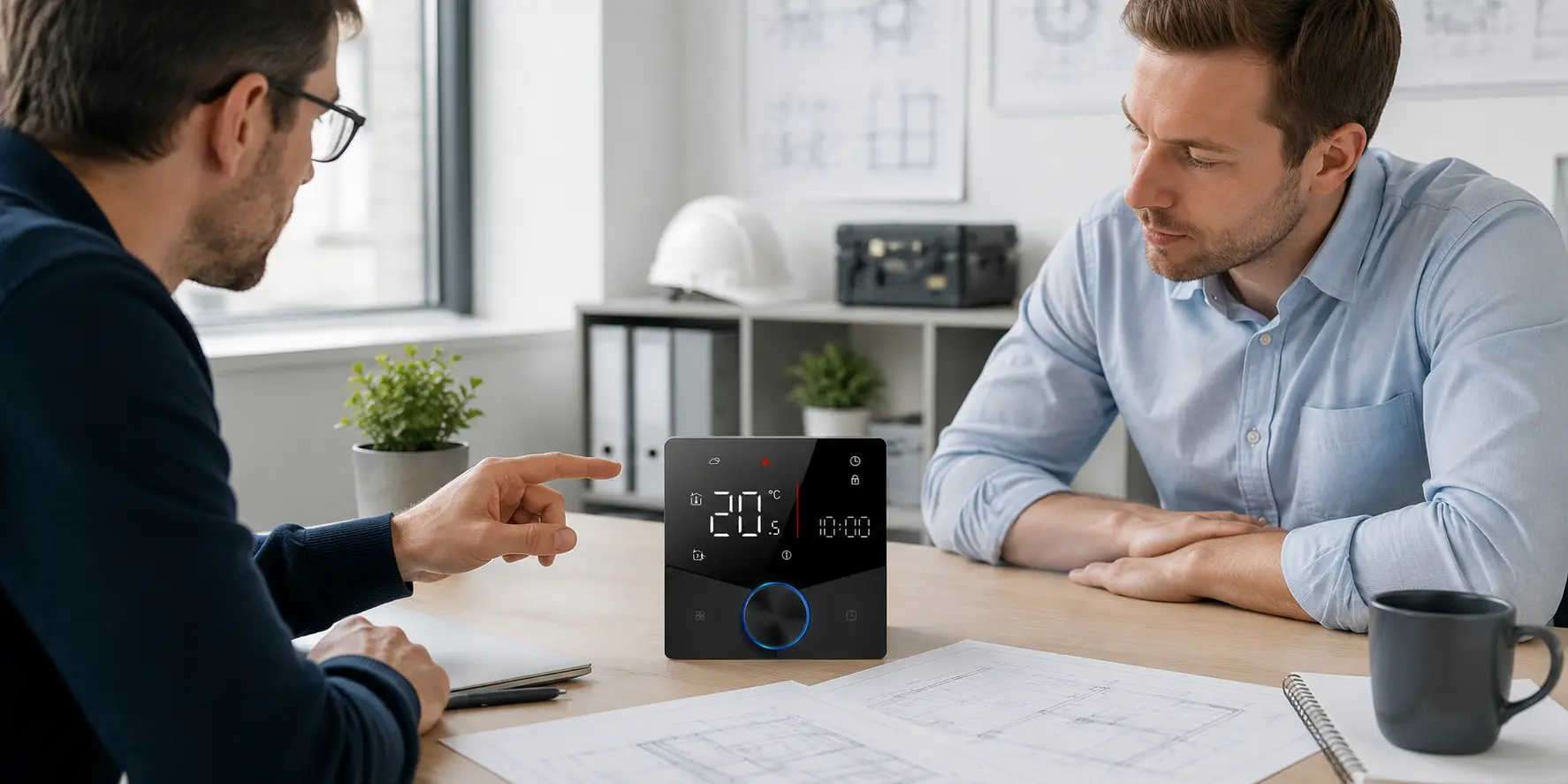
One of the most important reasons buyers should look beyond price is that boiler thermostat projects are closely linked to heating efficiency and perceived comfort. The thermostat is not only a user interface. It is part of the logic that shapes flow temperature and overall heating behaviour. If the product is marketed or used as if higher settings are always better, the project may later face complaints about comfort, stability, or energy cost.
For OEM buyers, this means a more valuable thermostat is often the one that supports a sensible heating-control outcome, not just the one that looks more premium. If a thermostat encourages better practical settings, clearer room control understanding, or smoother boiler behaviour, it may create stronger long-term customer satisfaction than a visually attractive but poorly positioned product. In boiler and water-heating projects, that difference often matters far more than a minor difference in housing cost.
This is especially relevant for markets where end users are increasingly aware of energy bills and heating efficiency. In those markets, a boiler thermostat that supports a more practical control story can become commercially stronger than a cheaper product that leads to confusion or complaint.

Smart Thermostat Features: When They Matter and When They Do Not
Many OEM buyers assume smart thermostat features automatically make a boiler thermostat project stronger. Sometimes that is true. If the target market values app control, schedule flexibility, remote access, or adaptive heating behaviour, smart features can be a real differentiator. They can also support premium positioning, distributor interest, and better customer convenience.
But smart does not automatically mean better for every OEM boiler project. If the target customer really needs simple and stable room control, then adding app complexity may increase cost without improving the experience enough. If the real complaint risk comes from poor installation logic or confusing heating roles, a smarter interface alone will not solve it. OEM buyers therefore need to ask not “Can it be smart?” but “Will these smart functions genuinely help this product line in the target market?”
That question becomes even more important when pricing pressure is strong. A market that wants practical, reliable heating control may value stability, clear UI, and simple setup more than remote-control features. Another market may expect app-based control as a basic condition. Both are valid. The key is that the decision should come from market role and project purpose, not from feature trend alone.
Documentation Quality Matters More Than Many OEM Buyers Expect
A boiler thermostat is not only the device itself. It is also the documents that explain the device. In OEM work, documentation quality often decides whether the thermostat feels professional or frustrating in the field. This includes datasheets, application descriptions, wiring diagrams, user manuals, carton labels, model code explanations, and compatibility notes.
Weak documentation creates several types of hidden cost. It slows sample approval because the buyer is not fully sure what the product role is. It slows installation because the technician has to interpret unclear control logic. It increases after-sales pressure because end users and distributors do not know whether the behaviour they see is correct. It also weakens trust in the buyer’s own brand, because the end customer does not distinguish between factory weakness and label-owner weakness.
For this reason, a boiler thermostat supplier that can provide clear and buyer-friendly documentation may be more valuable than a supplier with a slightly lower price but vague technical support. In OEM projects, the manual and the wiring note are part of the product experience.
Stability and Complaint Prevention Are OEM Features Too
Many OEM buyers compare features that are easy to list, such as display type, touch buttons, casing colour, app availability, or packaging options. But some of the most valuable boiler thermostat features are not the easiest to show in a quick product table. Stability is one. Complaint prevention is another.
A thermostat that helps reduce confusion between room thermostat and boiler thermostat roles has value. A thermostat with clearer control behaviour has value. A thermostat supported by better installation guidance has value. A thermostat that fits the target project more accurately has value. These are not cosmetic points. They are what help prevent the complaints that damage repeat business.
That is why experienced OEM buyers often become less interested in “feature count” and more interested in “feature relevance.” They have seen projects where one missing logic note created more trouble than several missing cosmetic extras ever would.
Where Boiler Thermostat OEM Logic Appears in Real Product Decisions
One practical way to understand OEM value is to compare boiler thermostat logic across related project types. A 220V boiler thermostat with Modbus may suit a project that needs clear boiler-related logic plus communication support. A house thermostat for water heating and boiler heating may suit a project that combines practical home heating logic with wider heating use. A 3A water heating thermostat may be a better fit when water-heating behaviour matters more than broader smart-control positioning.
These examples show why the phrase “boiler thermostat” is not enough by itself in OEM buying. The buyer still has to ask what type of project the thermostat is entering, what role it will play, and how the final customer will understand it. A product title may sound similar across models, but the real value depends on matching control logic to project reality.
Even broader control references, such as a 24VDC output PICV thermostat with Modbus or a keycard HVAC thermostat, remind OEM buyers of a useful principle: the same front-end thermostat category can support very different project roles. That principle should make any serious buyer more cautious about choosing only by price.

Expert Commentary: The Best OEM Boiler Thermostat Is Usually the One That Prevents Future Confusion
There is a simple pattern behind many OEM thermostat failures. The product was bought like a shell, but sold like a system component. In other words, the casing, screen, and price were compared first, while the control role, installation logic, and customer expectation were treated as secondary. That works only when the market is extremely forgiving. Most boiler thermostat markets are not.
Boiler thermostats sit close to comfort, heating cost, and user trust. If the product confuses room control with boiler-side behaviour, if the documentation is unclear, or if the feature set is mismatched to the market, the end user feels that quickly. That is why the best OEM boiler thermostat is often not the cheapest quoted unit. It is the thermostat that creates fewer wrong expectations and fewer support problems after launch.
Scientific Data and What It Means for OEM Buyers
Practical heating guidance makes this even clearer. Lowering boiler flow temperature when it is higher than needed can improve efficiency, which means thermostat settings and control logic directly affect perceived product value in the field. Guidance also commonly points to a practical room thermostat range of around 18–21°C, which shows that comfort expectations are not infinite. Customers do not need “maximum heating” all the time. They need controllable and stable heating. That means a thermostat that supports good control behaviour can create stronger commercial value than one that only looks more advanced.
Vaillant’s load compensation explanation adds another point that matters for OEM thinking: if the control can reduce output when only a small increase is needed, comfort may improve, energy use may fall, and equipment lifetime may benefit. That is highly relevant to OEM projects because it shows why control logic and project fit can become stronger selling points than simple feature inflation.
Real-World Cases and Buyer Feedback
Case 1: A buyer focused on display and price first
An overseas buyer shortlisted several boiler thermostat options mainly by appearance and quotation. Later, it became clear that one lower-cost option did not match the expected heating role in the target market. The product looked acceptable, but the control explanation was too weak. The buyer spent more time clarifying the role than expected, and the “cheap” option lost much of its advantage.
Case 2: A project wanted smart features, but not full smart complexity
Another buyer wanted a smarter product line for a boiler heating market. After discussion, the real need was not every available smart feature. The real need was better scheduling and a clearer premium positioning. That helped narrow the OEM direction and avoid unnecessary complexity.
Case 3: A water-heating project used boiler wording too broadly
In one project, the buyer used “boiler thermostat” as a broad category term. Later, the application review showed that water-heating logic mattered more than the original wording suggested. Once the role was clarified, a more suitable product path was selected and the project discussion became much more efficient.
User feedback pattern: OEM buyers rarely complain that they checked too many project details before ordering. They usually complain that they assumed too much from the product name, the price list, or the casing design.
A Practical OEM Boiler Thermostat Checklist Before Ordering
- Confirm the real heating role. Is the project asking for boiler-side logic, room thermostat demand control, or a wider smart-heating solution?
- Confirm the wiring and call-for-heat expectation. Do not assume the target boiler logic is universal.
- Confirm whether smart features are necessary. Add them because the market needs them, not only because they look modern.
- Confirm the flow-temperature and efficiency story. End users increasingly care about practical efficiency, not only heating strength.
- Confirm documentation quality. Datasheet, wiring note, manual, and model explanation are part of the OEM product.
- Confirm branding and UI fit. Visual OEM changes matter, but only after the control role is clear.
- Confirm sample-to-mass consistency. A good sample should translate into a stable product line, not just a one-off approval.
This checklist is simple, but it helps buyers treat the boiler thermostat as a system component rather than as a commodity casing with a screen.
Frequently Asked Questions
1. What matters most in an OEM boiler thermostat project?
The most important factors are usually the real control role, compatibility, wiring logic, documentation quality, and whether the thermostat fits the target market’s heating expectations. These points usually matter more than a slightly lower unit price.
2. Is the cheapest boiler thermostat usually the best OEM choice?
No. A lower unit price can still create higher project cost later if the thermostat causes confusion, mismatches the heating role, or needs repeated support and revision after launch.
3. Should OEM buyers choose a smart thermostat for every boiler project?
Not always. Smart thermostat features are valuable when the target market needs app control, scheduling, or more adaptive heating behaviour. But basic and stable boiler control may be more important in some projects.
4. Why is documentation so important in boiler thermostat OEM orders?
Documentation affects installation, technical sales, after-sales support, and customer understanding. A boiler thermostat with weak documentation can create support problems even if the hardware itself is acceptable.
5. How do I know whether a thermostat is really suitable for my boiler project?
You should confirm the real heating role, the control logic, the wiring expectation, the target market needs, and the documentation package before comparing the product mainly by price.
References / Sources
- Energy Saving Trust, Heating controls
- Energy Saving Trust, Take control of your heating at home
- Worcester Bosch, Boiler Controls Explained
- Worcester Bosch, Boiler Controls
- Vaillant Professional, Domestic Controls Brochure January 2025
- Vaillant Professional, sensoHOME / sensoHOME RF
- Vaillant Professional, sensoCOMFORT / sensoCOMFORT RF
- Honeywell Home, How do I wire my thermostat?
- Wikipedia, Thermostat
- Wikipedia, Central heating